Rug Care
How to Clean a Wool Rug
One rule matters more than all the others: never let hot water near it.
The short answer
Cool water only, as little as possible, and dry it fast. Hot water causes felting — the microscopic scales on the wool fiber interlock and the pile mats permanently. Blot spills, use a pH-neutral wool-safe detergent, never a high-alkaline cleaner, and never steam clean.
Why heat is the enemy
Each wool fiber is covered in overlapping scales, like roof tiles. Heat, moisture and agitation together cause those scales to open and interlock irreversibly — that is felting, and it is the same process used deliberately to make felt. Once a wool rug has felted, the pile is matted and hard and there is no way back. A steam cleaner supplies all three conditions at once, which is why it ruins wool rugs so reliably.
Routine care
Vacuum with suction, not a beater bar
Especially on a new rug during the shedding period — an aggressive brush pulls out fiber that would have stayed put. See vacuuming rugs.
Rotate the rug once or twice a year
Evens out sun fading and traffic wear across a wider area, which meaningfully extends how long it looks new.
Shake or beat it outdoors twice a year
Removes the deep grit a vacuum cannot reach. This is the grit that cuts fibers from below.
Keep a pad under it
Most wool rug wear happens from underneath. A pad absorbs the grinding between grit and the backing.
RUGPADUSA Superior-Lock Rug Pad
Protecting the investment
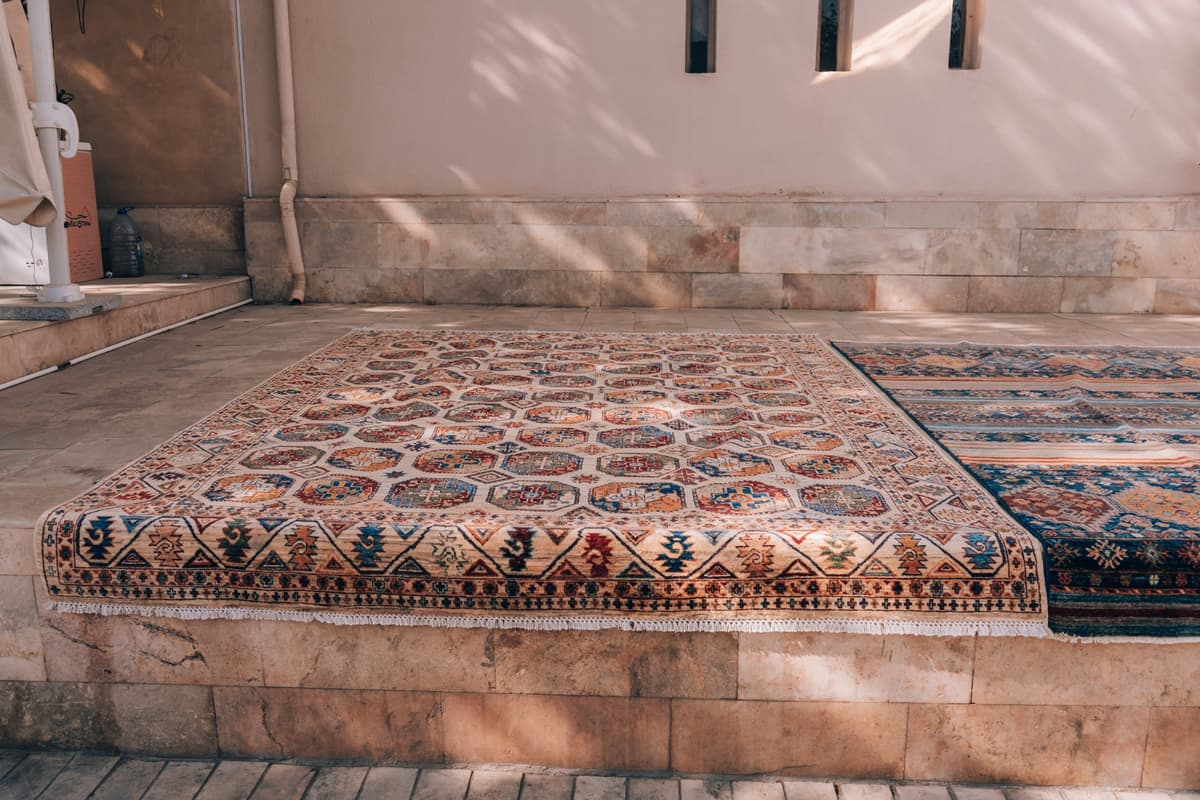
Illustrative photo of this rug type — not manufacturer imagery. Current product photos are on the Amazon listing.
A wool rug is a long-term asset and most of its wear happens from underneath. A felt-and-natural-rubber pad is the highest-value thing you can put under one.
What it is
- Dense heat-pressed felt over a natural rubber gripping layer
- Available in quarter-inch and half-inch thicknesses
- Cuts to size with household scissors
What it does well
- Natural rubber rather than PVC or an adhesive-backed synthetic — this is the distinction that protects a hardwood finish
- The felt layer does real sound-dampening work in a room with hard floors
- Grips on glossy finishes where thinner pads slide
Don't buy it if
- Expensive relative to the rug it protects, which stops a lot of people buying one
- The half-inch version raises the rug enough to catch a door
- Heavy and awkward to handle at large sizes
The pad to buy if the floor under the rug is worth more than the rug, which on hardwood it almost always is.
Dealing with a fresh spill
Lift the solids first
A spoon, not a cloth. Pressing a cloth onto solids pushes them into the pile.
Blot with a dry white cloth
White so you can see what is transferring, and so no dye moves from the cloth to the rug. Work outside in.
Apply cool water sparingly
Dampen the cloth rather than pouring water onto the rug. You want to lift the spill, not soak the backing.
If needed, use a pH-neutral wool detergent
Diluted, on the cloth. Never a high-alkaline cleaner, oxygen bleach or an enzyme cleaner — all three attack the protein in wool fiber.
Dry it fast
Blot out as much moisture as you can with a dry towel, then a fan on the area. Wool held damp for long enough will smell and can mildew.
Set-in stains
Be honest about the odds. A set-in stain in wool is a professional job, and attempting it with supermarket products is how a stain becomes a stain plus a bleached patch plus a felted area. A specialist who washes rugs off-site can do things — controlled immersion, proper drying, pH correction — that are not possible in a living room. For a rug worth keeping, that cost is small.
Shedding is not a cleaning problem
A new hand-tufted wool rug sheds for the first few months and no amount of cleaning changes that — it is loose fiber from the tufting process working out. Vacuum gently and regularly and it tapers off. Vacuuming aggressively to 'get it over with' pulls out more fiber and prolongs it. See wool rugs.
Questions people actually ask
Can you steam clean a wool rug?
No. Heat, moisture and agitation together felt the fiber and mat the pile permanently. It is the most common way a good wool rug is ruined.
What detergent is safe on wool?
A pH-neutral wool-specific detergent, diluted and applied to a cloth. Avoid high-alkaline cleaners, bleach and enzyme cleaners.
Why can't I use an enzyme cleaner on wool?
Enzymes break down protein, and wool is a protein fiber. An enzyme cleaner will damage the rug along with the stain.
How do I dry a wool rug after cleaning?
Blot out as much moisture as possible with dry towels, then use a fan. Wool held damp will smell and can mildew.
Will a wool rug shrink?
It can felt and tighten if exposed to hot water and agitation, which is effectively shrinking and is irreversible. Cool water prevents it.
Read next
- Wool RugsWhat wool physically does that synthetics cannot — crimp recovery and lanolin — and what that buys you.
- Vacuuming RugsWhich setting for which construction, why beater bars help some rugs and wreck others, and how often to vacuum.
- How to Clean an Area RugHow to identify your rug's fiber, the three rules that apply to all of them, and where to go next.
- Rug PadsWhat a pad does, the four constructions, and how to match one to hardwood, vinyl, tile or carpet.
- Pet Stains and OdorsWhy old pet stains keep smelling, how enzyme cleaners work, and the one mistake that makes them permanent.
- Rug CareCleaning method by fiber — wool, jute, sisal, polypropylene, outdoor — plus pet stains, vacuuming and off-season storage.