Rug Materials
Wool Rugs
Two physical properties explain almost everything about wool — the price, the lifespan, and the shedding.
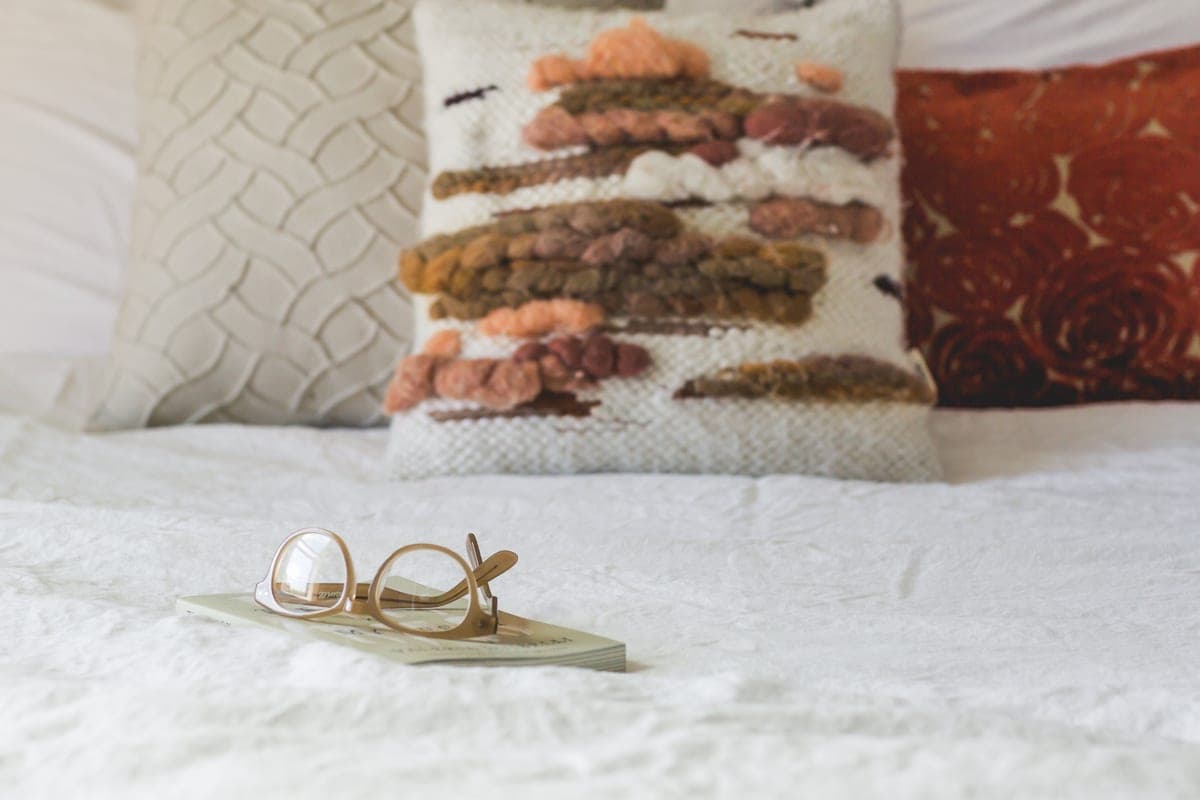
The short answer
Wool fibers are naturally crimped, so they compress and spring back rather than staying flat. They also carry lanolin, a waxy coating that makes the fiber mildly soil-resistant before anyone treats it. Those two properties explain the price, the lifespan and why a wool rug still looks right after a decade of furniture sitting on it.
Crimp recovery, which is the whole argument
Put a sofa leg on a synthetic rug for a year and you get a permanent dent. Put one on a wool rug and the pile largely recovers within days of the sofa moving. That is crimp: each fiber has a natural waviness that acts like a spring. It is why wool rugs survive rearranged furniture, and why a ten-year-old wool rug does not look like a ten-year-old polyester one.
Lanolin and soil
Wool fiber retains a small amount of natural waxy lanolin, which slightly repels water and makes dry soil sit on the surface rather than bonding into the fiber. In practice this means spills bead briefly before absorbing — long enough to blot — and that vacuuming removes proportionally more of the dirt than it does from a synthetic. It is not a stain treatment and it will not survive a red wine left to sit, but it is a real advantage.
Safavieh Hand-Tufted Wool Rug
Softness that lasts
Illustrative photo of this rug type — not manufacturer imagery. Current product photos are on the Amazon listing.
The mainstream hand-tufted wool rug: soft cut pile, a deep pattern catalog, and the crimp recovery that makes wool worth its price in a room with furniture in it. Sheds for the first few months, which is normal.
What it is
- Wool pile hand-tufted to a cotton backing
- Made in India across a large pattern catalog
- Cut pile, generally medium height
What it does well
- Wool springs back from furniture compression in a way no synthetic does
- Naturally flame-resistant and naturally soil-resistant thanks to the lanolin in the fiber
- With normal care it outlives every synthetic rug on this page several times over
Don't buy it if
- Sheds noticeably for the first few months — normal for a tufted wool rug, not a defect
- Hand-tufted rugs are glued, and the latex adhesive can break down after many years
- Costs several times what a comparable polypropylene rug costs
The long-horizon purchase in this category: expensive once rather than cheap repeatedly.
Safavieh Wool Flatweave Kilim Rug
Where a chair moves
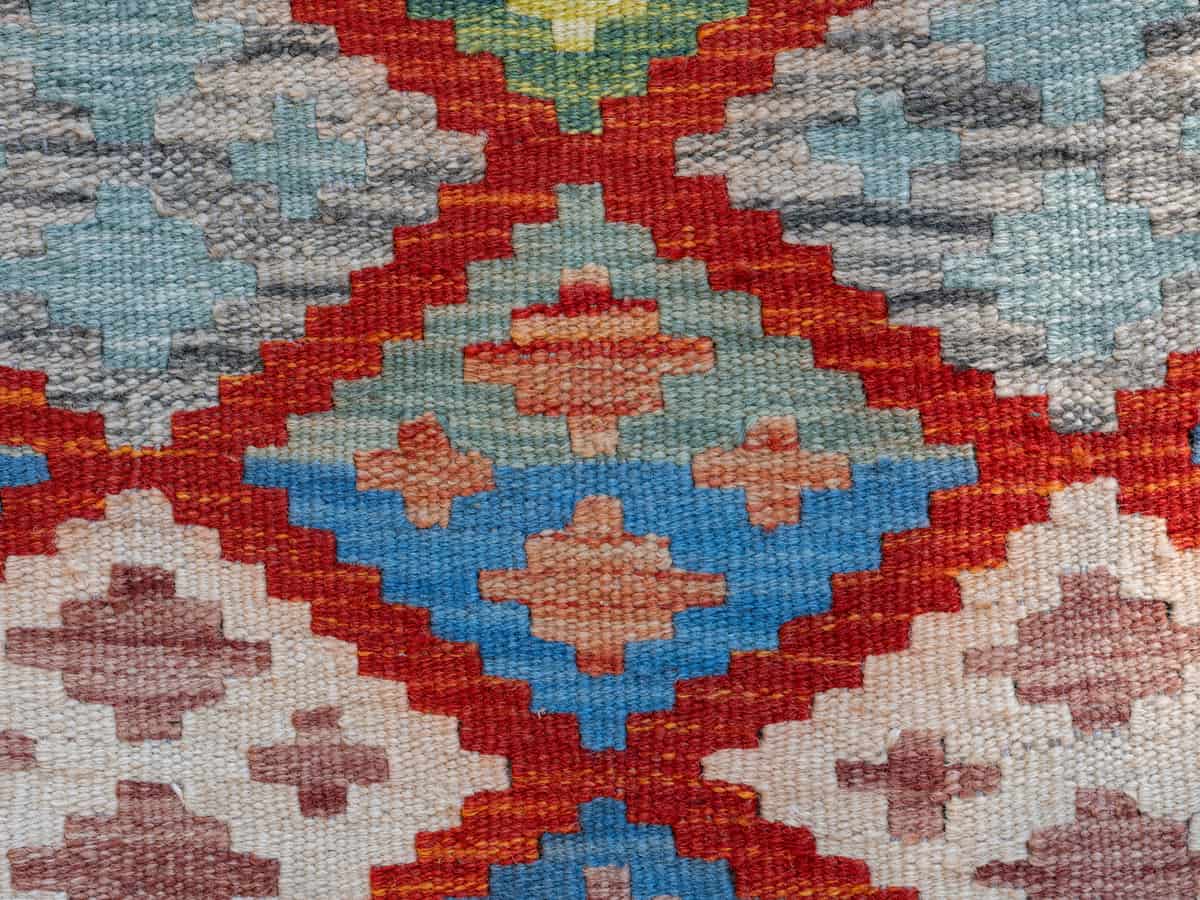
Illustrative photo of this rug type — not manufacturer imagery. Current product photos are on the Amazon listing.
Wool without the shedding and without the pile. The right wool for a dining room, a home office or anywhere a chair moves — and considerably cheaper than a tufted rug of the same size.
What it is
- Flatwoven — effectively no pile at all
- Wool fiber with a handwoven geometric pattern
- Reversible on many of the kilim patterns
What it does well
- Chairs slide over it instead of catching, which is exactly what a dining room needs
- No pile means nothing to crush, so furniture leaves no permanent dents
- Wool's soil resistance without wool's shedding
Don't buy it if
- Thin and firm underfoot — it will not feel luxurious
- Flatweaves need a good pad or they creep across the floor
- Spilled liquid goes straight through to the floor below
The correct rug shape for a dining room, in the correct fiber. Almost nobody buys this and regrets it.
Shedding is normal and it stops
A new hand-tufted wool rug sheds noticeably for the first few months. This is loose fiber left over from the tufting process working its way out, not the rug falling apart, and it tapers off substantially after about three months and largely stops within a year. Flatwoven wool barely sheds at all, because there are no cut fiber ends.
Construction matters as much as fiber
| Construction | Sheds | Lifespan | Notes |
|---|---|---|---|
| Hand-knotted | Minimal | Generations | Each knot tied individually; the most expensive |
| Flatwoven / kilim | Minimal | Decades | No pile to crush; ideal under chairs |
| Hand-tufted | Yes, initially | Many years | Glued to a backing; the adhesive is the weak point |
| Machine-woven wool | Little | Many years | Less character, lower price |
The one thing worth knowing about hand-tufted rugs specifically: the pile is punched into a backing and held with a latex adhesive. Over many years that adhesive can dry out and break down, at which point the rug sheds badly and cannot really be repaired. Hand-knotted and flatwoven wool have no adhesive and no such limit.
Where wool belongs and where it does not
- Yes: living rooms, bedrooms, dining rooms (flatweave), hallways, stairs, home offices (flatweave).
- Careful: homes with puppies or un-house-trained animals, because wool absorbs and is expensive to risk.
- No: bathrooms, kitchens near a sink, anywhere outdoors. Wool absorbs and dries slowly, and sustained damp is what damages it.
Cleaning wool: the one hard rule
Cool water only. Hot water causes felting — the microscopic scales on the fiber surface interlock and the pile mats permanently. This is the most common way a good wool rug is ruined, usually by a well-meaning steam cleaner. The full method is in how to clean a wool rug.
Questions people actually ask
Why do wool rugs shed?
Hand-tufted wool rugs shed loose fiber left from the tufting process. It tapers off after about three months and largely stops within a year. Flatwoven wool barely sheds at all.
Are wool rugs worth the money?
Over a decade, usually yes — crimp recovery and natural soil resistance mean it still looks right when a synthetic would be finished. Over three years in a rental, usually not.
Can you steam clean a wool rug?
Not safely. Hot water felts wool and mats the pile permanently. Cool water, minimal moisture, and dry it fast.
Is wool good with pets?
Good for durability, less good for hair because it grips it, and risky with an animal that has accidents because wool absorbs. It suits a settled adult animal.
Do wool rugs need a pad?
Yes, and it pays for itself. Most wool rug wear happens from underneath as grit grinds against the backing; a pad absorbs it.
Sources
Read next
- How to Clean a Wool RugThe cool-water method for wool, why heat felts it permanently, and what to do about set-in stains.
- Wool vs Polyester RugsWhere wool's premium is justified against polyester, and the specific rooms where polyester is the better buy.
- Jute vs WoolJute against wool on cost per year, comfort and cleanability — and which is genuinely the better value.
- The Best Rug Material for High TrafficThe two properties that decide high-traffic performance, the three fibers that have both, and why construction matters as much.
- The Best Rugs for a Living RoomLiving room rugs, starting with the sizing rule that decides everything, then the fibers that survive a traffic lane.
- Rug MaterialsWool, jute, sisal, polypropylene, cotton, viscose and the traditional weaves — compared on wear, feel, water and cost.