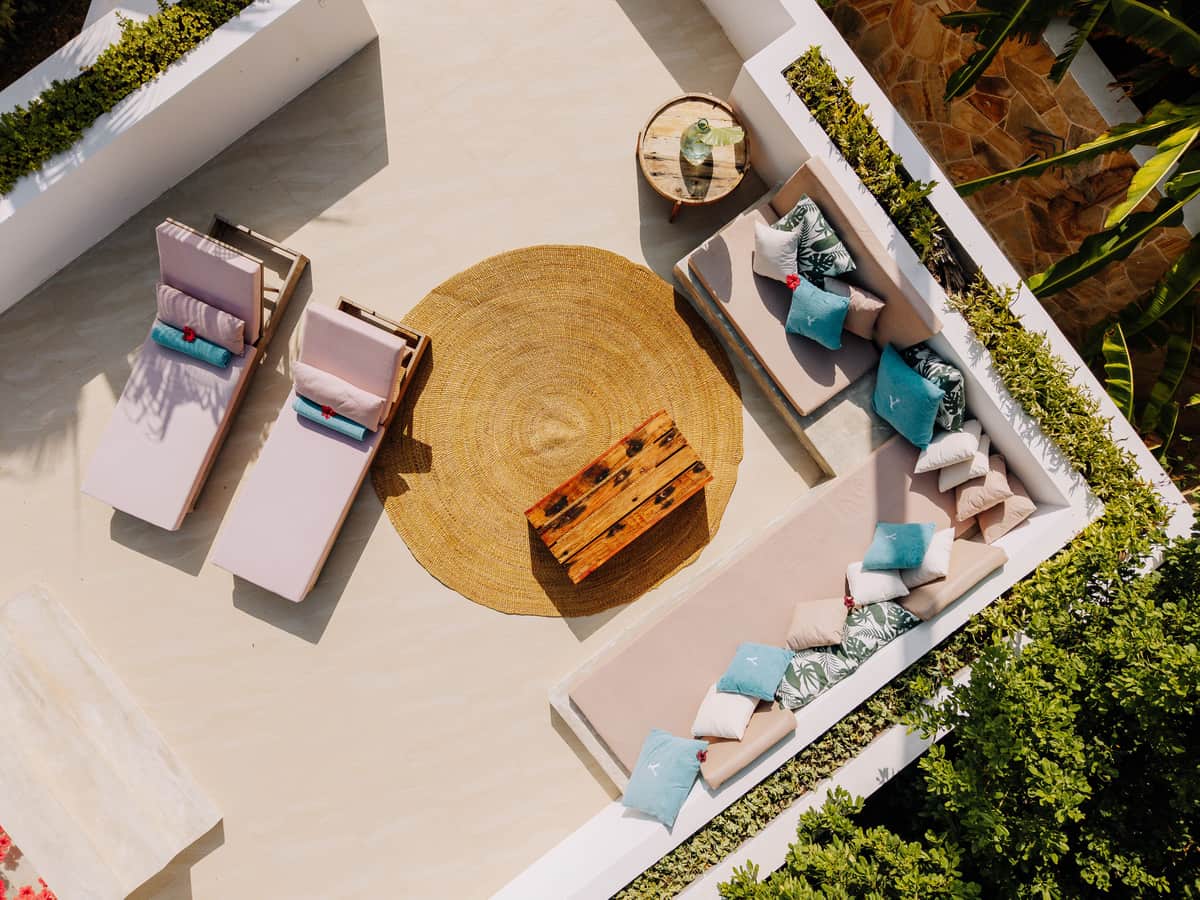
Best Outdoor Overall
The Best Outdoor Rugs (September 2026)
Outdoor rugs compared on fiber, drainage and reversibility — and what each one does to the surface underneath.
Which fibers survive a season outside, and the drainage question that decides whether your deck survives the rug.

Heads up: we earn a commission when you buy through links on this page, at no extra cost to you. It never changes which rug we put first — see how we choose and our affiliate disclosure.
Start here
Solution-dyed polypropylene at sizes that actually cover a patio, at a price that lets you treat it as a seasonal item rather than a heirloom. Not soft, and the edges curl for the first few weeks.
Illustrative photo of this rug type — not manufacturer imagery.
10 pages. Start wherever your question is.
Best Outdoor Overall
Outdoor rugs compared on fiber, drainage and reversibility — and what each one does to the surface underneath.
Best for Patios
Patio rugs sized to a furniture set, with the constructions that hold up on concrete and pavers.
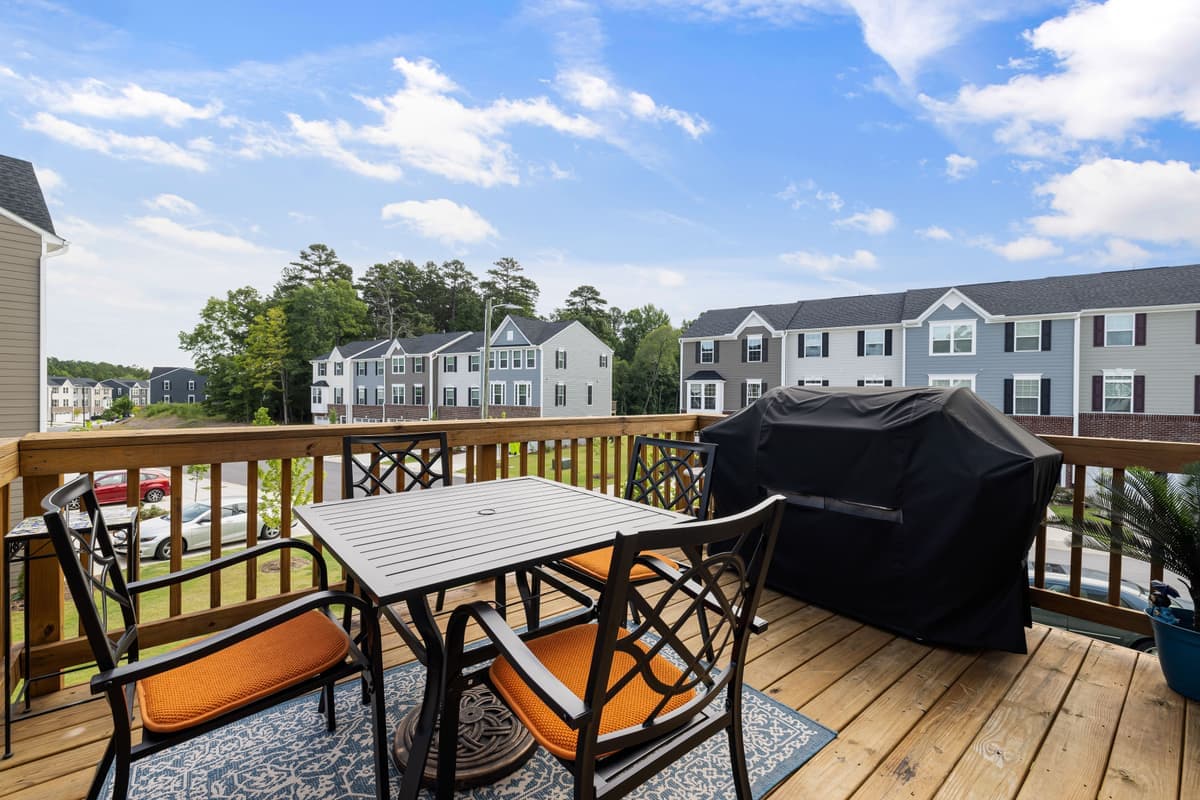
Best for Wood Decks
Deck rugs that let the boards dry — the constructions that drain, and the pad that makes the difference.
Fastest Draining
What 'waterproof' actually means on an outdoor rug listing, and the constructions that genuinely drain fastest.
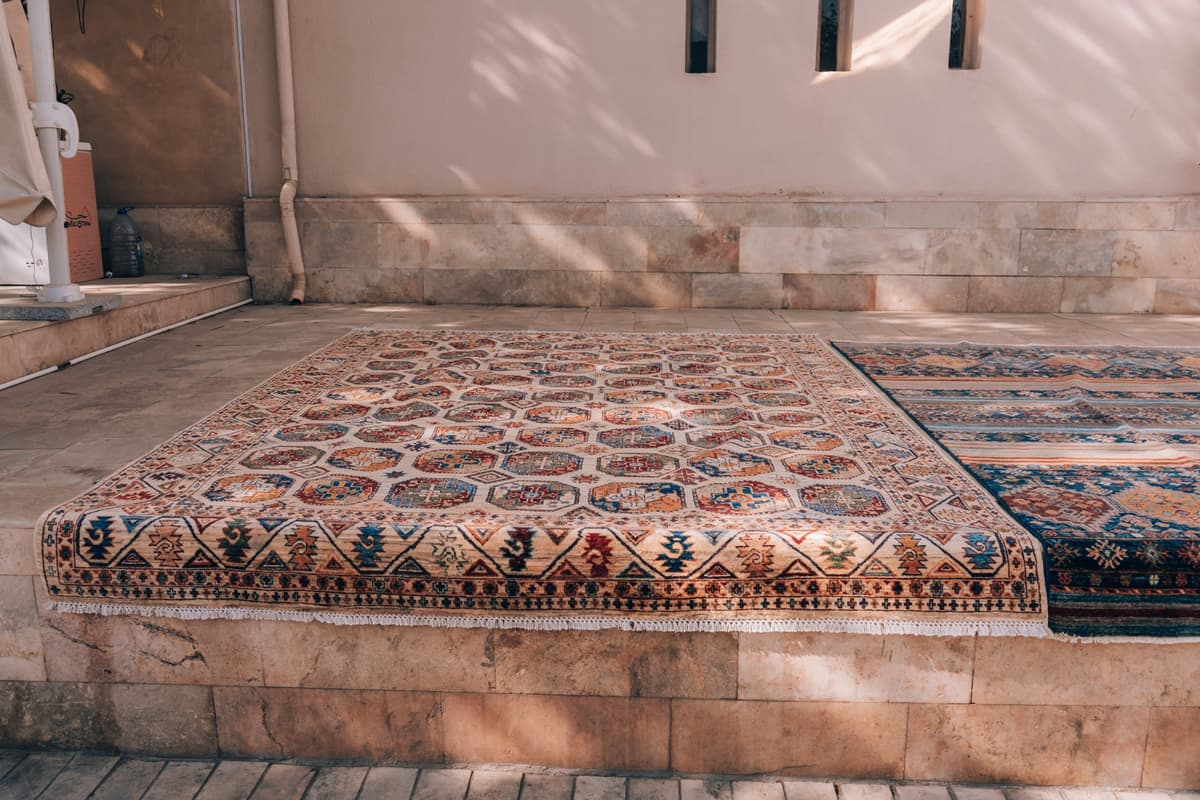
Best Outdoor Pad
Why outdoor pads work backwards from indoor ones, and the open-weave mesh that keeps a deck dry.
comparison
What genuinely separates indoor from outdoor rugs, and the rooms inside where an outdoor rug is the better choice.
guide
How outdoor rugs damage decks, which surfaces are genuinely at risk, and the three habits that prevent it.
guide
Why polypropylene itself cannot mold, what actually grows on an outdoor rug, and how to remove it for good.
guide
Whether an outdoor rug can stay out year-round, what winter actually does to it, and the storage routine that pays.
guide
Outdoor rug sizes mapped to real layouts, with the perimeter-clearance rule that indoor guides never mention.
Almost every outdoor rug sold today is polypropylene, and almost every outdoor rug problem is a water problem. Understanding those two facts gets you most of the way to buying the right one.
Polypropylene is hydrophobic — it does not absorb water into the fiber the way wool or cotton or jute does. It is also solution-dyed, meaning the pigment is mixed into the molten polymer before the fiber is extruded rather than applied to the surface afterward. Color runs all the way through, so UV fading is slow and a scuff does not expose a pale core. That combination is why the category standardized on it, and why the handful of alternatives are niche.
The real alternatives are woven recycled plastic straw (light, portable, not pleasant barefoot) and polyester (softer, fades faster). Natural fiber does not belong outdoors at all: a jute rug left on a damp patio is a mold problem waiting to happen. The fiber-by-fiber case is in polypropylene rugs.
An outdoor rug does not damage a deck by being heavy or abrasive. It damages a deck by holding moisture against it. A solid-backed rug on a wooden deck creates a permanently damp layer that never gets sun or airflow, and wood under those conditions grays, then softens, then rots. On composite decking the failure is cosmetic rather than structural, but a bleached rectangle in your deck boards is still a bleached rectangle.
Flatweaves dry fastest, hose clean in minutes, and roll up small for winter storage. They are also thin enough that you feel every gap in the decking. Low-pile outdoor rugs are more comfortable and hide dirt better, but they hold water longer and need more drying time after rain.
Reversible construction is genuinely worth paying a little for outdoors. It doubles the usable life of a rug that will fade unevenly wherever the sun falls, and it means a stain you cannot shift is a flip rather than a replacement.
Indoors you size a rug to the furniture. Outdoors you size it to the usable footprint — the area you want to feel like a room — and then check it against drainage. A rug that runs to the edge of a deck traps water at the boundary and stops the perimeter drying. Leave six inches to a foot of bare deck on every side. On a patio slab it matters less, but a rug that overhangs onto soil will wick moisture up into itself.
Standard outdoor sizes are the same as indoor ones, so outdoor rug sizes maps the common dimensions onto actual patio and deck layouts.
Polypropylene itself does not support mold — it is a plastic and there is nothing in it to eat. What grows is the organic material that collects on it: pollen, leaf litter, soil, food. That is why a rug that gets shaken out and hosed occasionally stays clean for years and an identical rug left undisturbed under a tree goes green in a season. Do outdoor rugs get moldy covers the removal side, and how to clean an outdoor rug is the routine.
For the ranked list, go to the best outdoor rugs. If the surface is decking specifically, outdoor rugs for a deck handles the drainage question head on. For a covered porch or a patio slab, outdoor rugs for a patio is the closer fit. And if you are wondering whether the rug can just stay out all year, can you leave outdoor rugs outside answers it directly.
It can survive, but it should not. Freeze-thaw cycles stiffen polypropylene fibers and make them brittle, and a rug that stays put for six months guarantees the surface beneath it never dries. Roll it and store it. See can you leave outdoor rugs outside.
On a deck, yes — an open-weave one that drains. On a patio slab it is optional and mostly about stopping the rug creeping. Never use a solid felt or closed-cell pad outdoors: it does exactly the moisture-trapping the rug is already accused of.
Usually only in the styling. Most indoor-outdoor rugs are the same polypropylene construction finished to look less utilitarian. The practical differences are covered in indoor vs outdoor rugs.
Slowly, if it is solution-dyed polypropylene — which most are. Surface-printed rugs fade fast and unevenly. Rotating the rug a couple of times a season evens out whatever fading does occur.
Yes, and that is the intended maintenance for nearly all of them. Hose it, scrub with mild soap if needed, then hang it over a railing so both faces dry. Drying it flat on the deck is how you end up with the moisture problem in the first place.