Rug Care
How to Clean an Area Rug
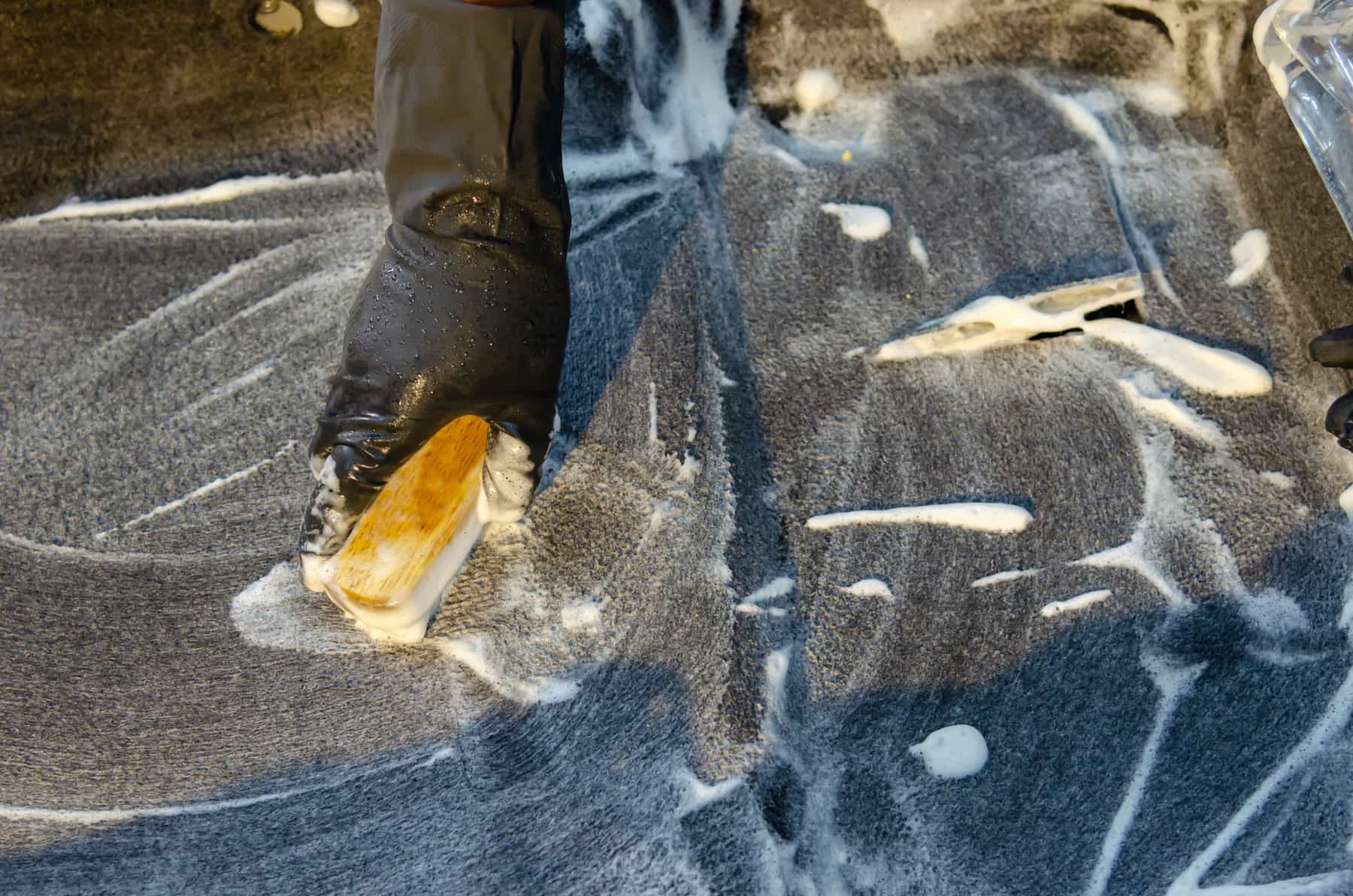
There is no generic method. Identify the fiber first — using the wrong one is how rugs get ruined.
The short answer
Identify the fiber before you do anything. Wool needs cool water and no heat. Jute and sisal need almost no water at all. Polypropylene tolerates whatever you throw at it. Using a method meant for a different fiber is the single most common way a rug gets permanently damaged.
How to identify your fiber
- Check the label first. Most rugs carry a fiber content label on the underside. This is the reliable answer and it takes ten seconds.
- Feel it. Wool is springy and warm and recovers when you squeeze it. Polypropylene is firm and slightly slick. Jute and sisal are unmistakably coarse and plant-like. Viscose is cool, silky and unusually lustrous.
- Look at the back. Hand-knotted shows the pattern clearly with slight irregularity. Tufted shows a fabric backing glued on. Machine-woven shows a regular grid.
- The burn test, only if you must. A few fibers from an inconspicuous edge: wool smells of burning hair and self-extinguishes; synthetics melt into a hard bead; plant fibers burn like paper. Do it over a sink, and only if nothing else has answered the question.
Three rules that apply to every fiber
Blot, never rub
Rubbing drives the spill deeper into the pile and abrades the fiber tips, which leaves a permanently dull patch even after the stain itself has gone.
Work from the outside in
Starting in the middle pushes the spill outward and turns a small stain into a large faint one.
Test anything you apply, and wait for it to dry
On a corner or the back. Color-fastness cannot be judged while the area is still wet.
Gorilla Grip Felt and Rubber Rug Pad
Preventing the wear cleaning cannot fix
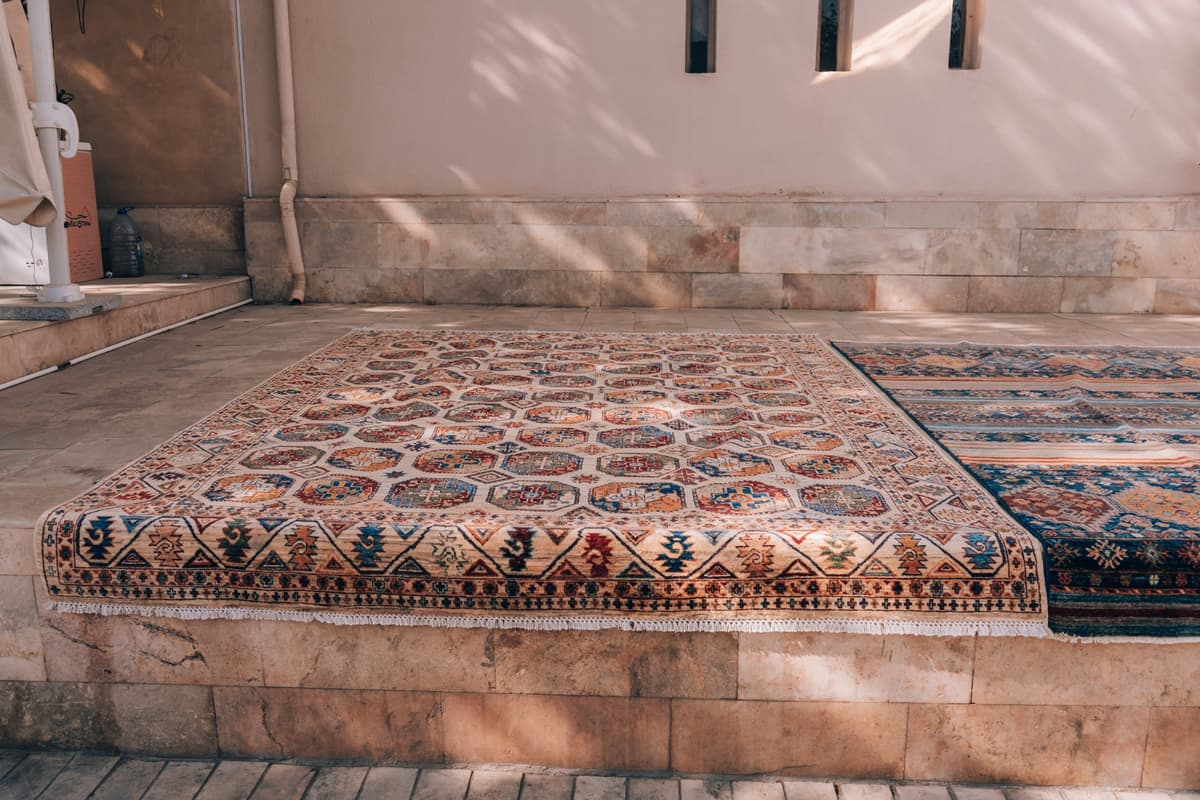
Illustrative photo of this rug type — not manufacturer imagery. Current product photos are on the Amazon listing.
Most rug degradation is grit grinding against the backing from underneath, which cleaning cannot undo. A pad prevents more damage than any cleaning routine repairs.
What it is
- Felt-over-rubber construction at a lower price point
- Multiple thicknesses
- Trimmable
What it does well
- Close to the premium pad's performance for meaningfully less money
- Thick enough to make a thin flatweave feel like a real rug
- Widely available in odd sizes
Don't buy it if
- The rubber layer is less dense than the premium option and compresses sooner
- Can leave a faint residue on some sealed floors in hot rooms
- The felt sheds a little when first cut
The value pad. Right under a synthetic rug, and the wrong economy under an expensive rug on an expensive floor.
Then go to your fiber
| Fiber | Water tolerance | Guide |
|---|---|---|
| Wool | Cool only, minimal, dry fast | How to clean a wool rug |
| Jute | As little as possible | How to clean a jute rug |
| Sisal | Almost none | How to clean a sisal rug |
| Polypropylene | Freely | How to clean a polypropylene rug |
| Outdoor synthetic | Hose it | How to clean an outdoor rug |
| Cotton | Usually washable, cold | See cotton rugs |
| Viscose | Essentially none | See viscose rugs |
Routine matters more than deep cleaning
Most rug wear is abrasive rather than chemical: grit works to the base of the pile and cuts fibers from below every time someone walks across. Regular vacuuming removes that grit and is worth more to a rug's lifespan than any amount of periodic deep cleaning. Vacuuming rugs covers which setting to use on which construction — the wrong one does real damage to loop pile, shag and natural fiber.
When to call a professional
For a hand-knotted wool rug, a viscose rug, a large set-in stain, or any odor problem that has reached the backing. A specialist can wash a rug off-site in a controlled way that is simply not possible on a living room floor, and for a valuable rug the cost is small against the replacement. Ask whether they wash off-site and what they do with wool specifically — the answer to the second question tells you a lot.
Questions people actually ask
How do I know what my rug is made of?
Check the label on the underside first. Failing that, feel the fiber — wool springs back, synthetics are slick, jute and sisal are coarse and plant-like.
Can I steam clean any rug?
No. Fine on polypropylene and usually cotton, risky on wool because of felting, and genuinely damaging on jute, sisal and viscose.
Should I rub or blot a spill?
Blot, always, working from the outside in. Rubbing drives the spill deeper and abrades the fiber tips, leaving a dull patch.
How often should a rug be deep cleaned?
Every 12 to 24 months for wool in a lived-in room. Synthetics rarely need it if they are vacuumed regularly and spot-cleaned promptly.
Is baking soda safe on rugs?
On synthetics generally yes, if you vacuum it out thoroughly. It is alkaline enough to dull wool with repeated use and hard to remove fully from a natural fiber weave.
Read next
- How to Clean a Wool RugThe cool-water method for wool, why heat felts it permanently, and what to do about set-in stains.
- Vacuuming RugsWhich setting for which construction, why beater bars help some rugs and wreck others, and how often to vacuum.
- Pet Stains and OdorsWhy old pet stains keep smelling, how enzyme cleaners work, and the one mistake that makes them permanent.
- How to Clean a Jute RugWhy jute cannot be wet-cleaned, what to do the moment something spills, and whether a musty rug can be saved.
- Rug MaterialsWool, jute, sisal, polypropylene, cotton, viscose and the traditional weaves — compared on wear, feel, water and cost.
- Rug CareCleaning method by fiber — wool, jute, sisal, polypropylene, outdoor — plus pet stains, vacuuming and off-season storage.