guide
What Size Rug for a King Bed?
The right rug size for a king bed, the arithmetic behind it, and when 8x10 is still workable.
What fits, where it goes, and what belongs underneath it. The two things people get wrong most often, in one place.
Heads up: we earn a commission when you buy through links on this page, at no extra cost to you. It never changes which rug we put first — see how we choose and our affiliate disclosure.
Start here
The pad question is the one people skip and then regret, and on hardwood the felt-and-natural-rubber construction is the one that protects the finish. Expensive relative to the rug, and the half-inch version can catch a door.
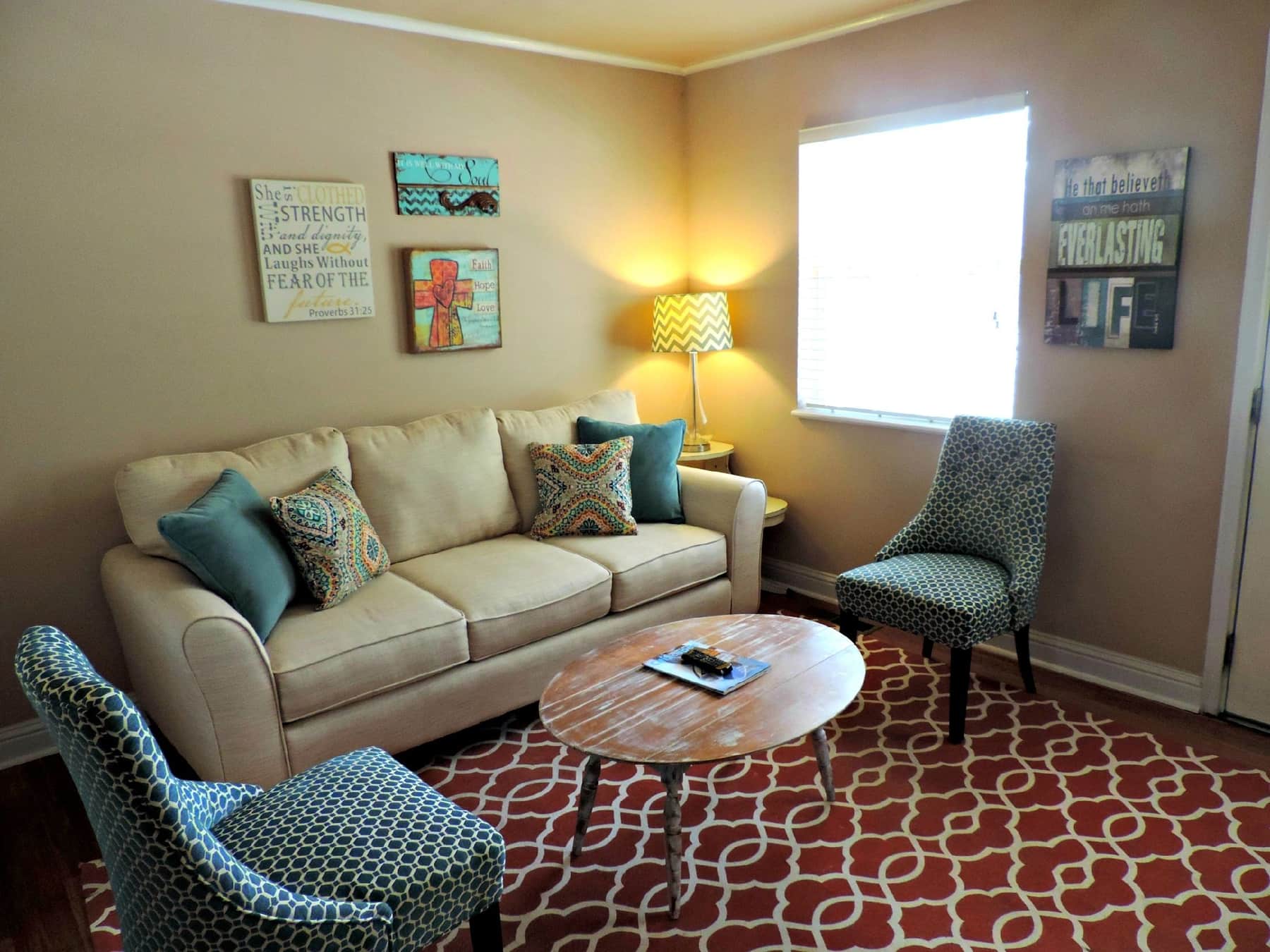
Illustrative photo of this rug type — not manufacturer imagery.
16 pages. Start wherever your question is.
guide
The right rug size for a king bed, the arithmetic behind it, and when 8x10 is still workable.
guide
Queen bed rug sizing with the measurements, plus when a 6x9 is genuinely enough.
guide
How to measure a living room rug properly — the front-legs-on rule and the three standard layouts.
guide
Sizing a rug for an L-shaped sectional, where symmetry rules break — and the three layouts that work.
Best 8x10
What an 8x10 genuinely fits and what it does not, with picks across fibers and budgets.
Best 9x12
What a 9x12 fits, why availability thins out at this size, and the practical realities of buying one.
Best 5x7
Where a 5x7 works, where it floats, and the one practical advantage it has over every larger size.
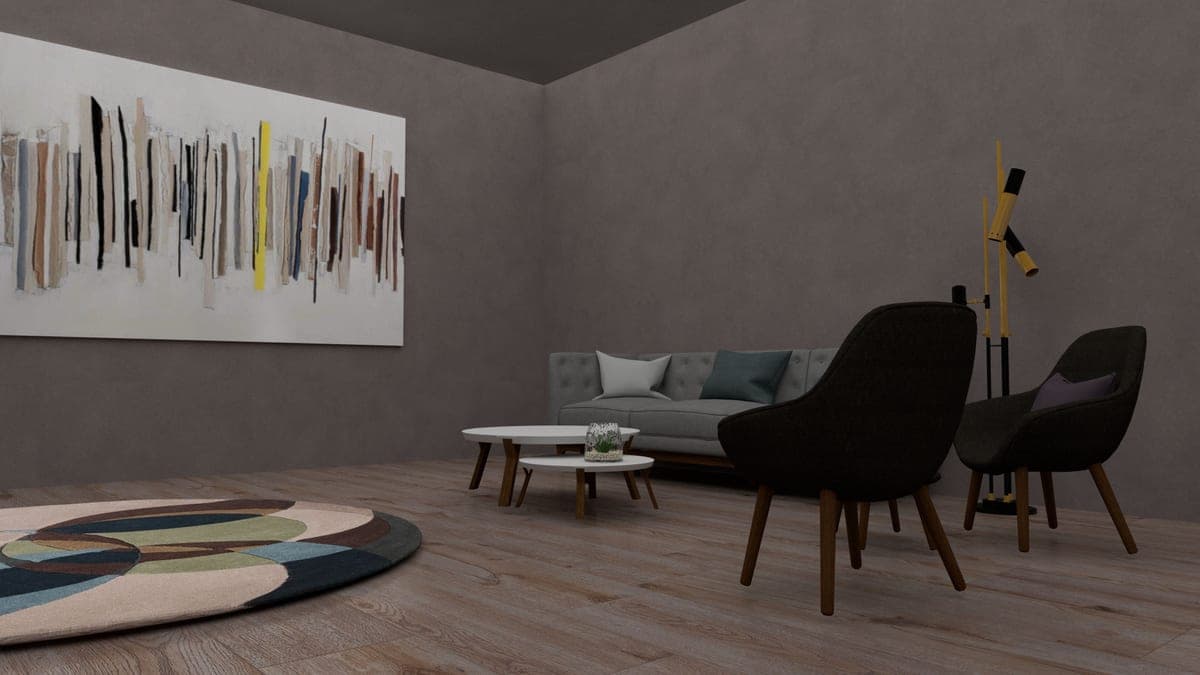
Best Round Rug
How to size a round rug to a round table, and the placements where a circle beats a rectangle.
Best Large Rug
Large rugs from 9x12 up — what each size covers, and the practical realities of buying at this scale.
guide
The three living room layouts, how to handle sectionals and open-plan, and the placement errors that look worst.
guide
Four bedroom rug layouts and how to choose between them, including the two-runner option.
guide
What a pad does, the four constructions, and how to match one to hardwood, vinyl, tile or carpet.
guide
Which pads are safe on hardwood, which damage the finish, and how to tell them apart before buying.
guide
Why some backings permanently discolor LVP, which pads are safe, and how to check before laying a rug.
Best Non-Slip Pad
Why rugs slide, which pad constructions genuinely hold, and the thin options for tight door clearances.
Two mistakes account for most rug regret. The first is buying a rug that is one size too small, which is by far the more common. The second is not buying a pad, or buying the wrong one for the floor. Both are fixable in advance and expensive to fix afterward.
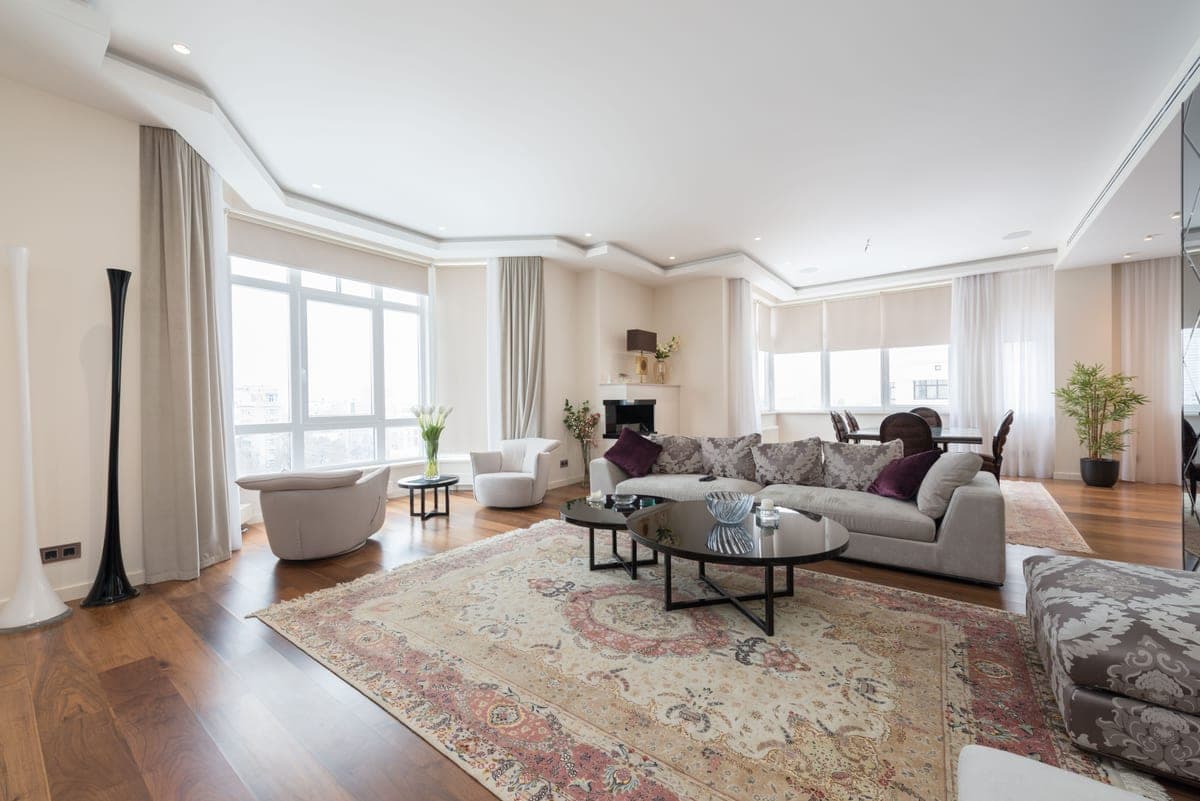
In a seating area, the front legs of every seat should sit on the rug. All legs on is better still. If the rug floats in the middle with all the furniture around it, the room reads as unfinished and the rug looks like a bath mat that got lost. When you are between two sizes, the larger one is almost always right.
Under a dining table, the rule is different and stricter: the rug must extend at least 24 inches past the table edge on every side, because that is roughly how far a chair travels when someone pushes back to stand. Fall short and every chair catches the edge, every time.
| Size | Typically fits | Common mistake |
|---|---|---|
| 5x7 | Small living rooms, under a queen bed's lower half, apartments | Using it in a full-size living room where it floats |
| 6x9 | Medium living rooms, small dining tables for four | Buying it for a six-seat dining table |
| 8x10 | Standard living rooms, king beds, four-to-six-seat dining | Assuming it covers an open-plan space |
| 9x12 | Large or open-plan living rooms, six-to-eight-seat dining, king beds with full clearance | Buying it for a room that cannot take the visual weight |
| Runners | Hallways, kitchen galleys, bedsides, stairs | Getting the width wrong, not the length |
| Round | Round tables, entry foyers, reading corners | Putting a round rug in a rectangular seating group |
The decision that comes up more than any other is 8x10 vs 9x12, and it is genuinely close in a lot of rooms. If your room is over about 12 by 15 feet, the answer is usually 9x12 regardless of what the 8x10 costs.
A king bed wants a 9x12 if you want the rug to read as a rug, with 8x10 workable if you pull the rug forward and leave the top third under the bed. A queen works on an 8x10 comfortably and a 6x9 at a push. What you are protecting in both cases is the same thing: your feet landing on rug rather than cold floor on both sides of the bed.
A pad does four things — it stops the rug moving, it stops the rug wearing from underneath, it adds cushioning, and it protects the floor finish. Which pad you need depends almost entirely on what is underneath, not on the rug.
| Floor | Pad construction | Why |
|---|---|---|
| Hardwood | Felt bonded to natural rubber | Natural rubber grips without reacting with the finish |
| Vinyl plank / LVP | Felt with a non-staining rubber, or felt only plus grippers | Some rubbers and plasticizers discolor vinyl permanently |
| Tile or stone | Felt and rubber, thicker for comfort | Nothing to damage; cushioning is the whole benefit |
| Over carpet | Dense felt only, no rubber | Rubber on carpet does nothing and can mark it |
Even a correctly sized rug can be positioned badly. Rug placement in a living room covers the sectional and L-shaped-sofa cases that break the normal rules, and rug placement in a bedroom covers the under-bed layouts. If slip is your main concern rather than cushioning, go straight to non-slip rug pads.
9x12 is the comfortable answer; 8x10 works if you pull it forward so only the top third sits under the bed. Either way you want at least 18 to 24 inches of rug showing on both sides and at the foot.
Measure the seating group and add two feet on every side. If that lands over roughly 10 by 13 feet, go 9x12. The full comparison is in 8x10 vs 9x12.
An 8x10 pad, trimmed by about an inch on each side — so roughly 7 foot 10 by 9 foot 10 finished. Buying a pad deliberately undersized leaves the rug edges unsupported and they curl.
For grip, no. For floor protection and cushioning, often still yes — and on vinyl plank a bonded rubber backing is exactly the thing that can stain the floor. See rug pad for vinyl plank.
Yes, but it is rare. Leave at least 8 to 18 inches of bare floor visible between the rug edge and the wall so the room still reads as a floor with a rug on it rather than wall-to-wall carpet.