Outdoor Rugs
Do Outdoor Rugs Damage Wood Decks?
Yes — but only through one mechanism, and that mechanism is entirely preventable.
The short answer
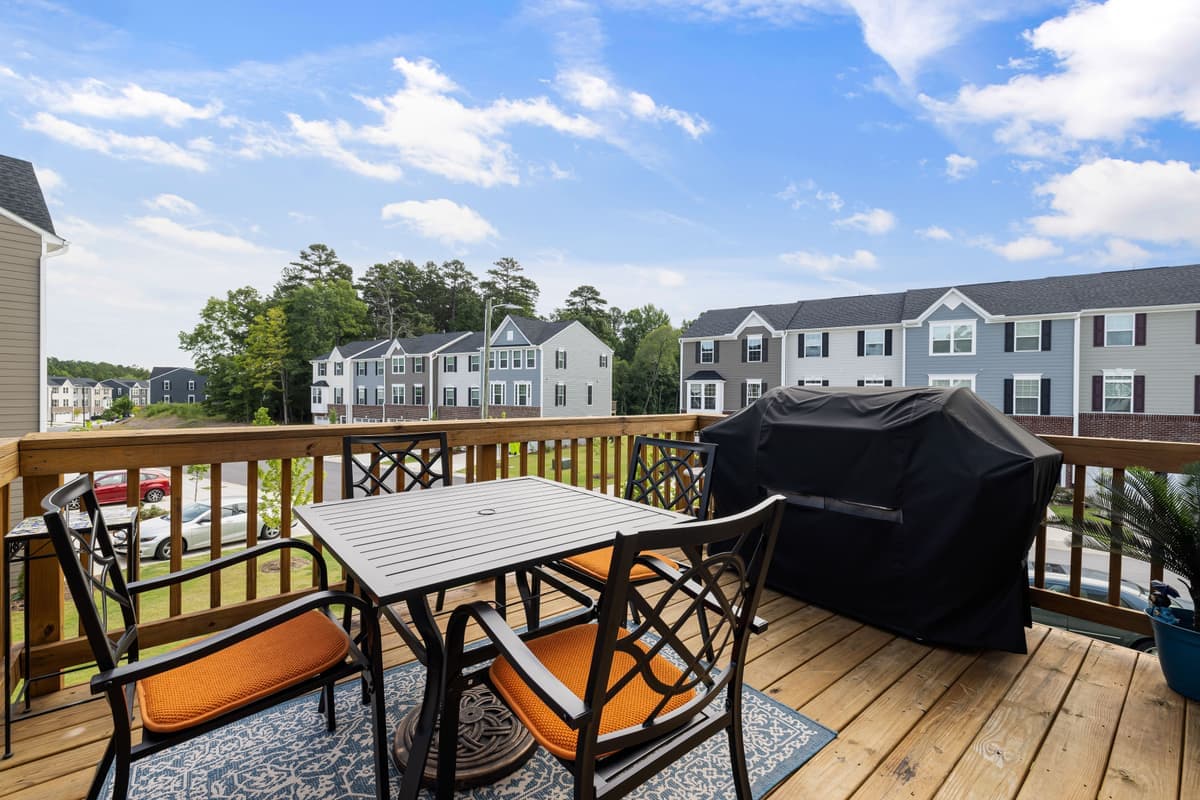
Yes, on wood, through one mechanism: trapped moisture. A rug that never moves keeps boards damp with no sun or airflow, and sustained damp softens wood and lets decay start. It is not abrasion and it is not a chemical reaction. Open-weave pad, edges kept clear, and lift the rug every few weeks — that is the entire fix.
The mechanism, in detail
Wood decay fungi need moisture in the wood above roughly 20 percent to become active. An exposed deck rises above that after rain and drops back within a day or two as sun and air do their work. Under a rug, the drop-back never happens: rain still gets in around the edges and through the weave, but nothing dries it out. The wood sits in the range where decay is possible for weeks at a time.
That is why the damage looks patchy and takes a season or more to appear, and why it is worst on older decks where the protective finish has already worn thin.
Risk by surface
| Surface | Risk | What happens |
|---|---|---|
| Older softwood deck, worn finish | High | Graying, softening, eventual decay |
| Well-sealed pressure-treated wood | Moderate | Discoloration, finish degradation over seasons |
| Hardwood decking | Moderate | Graying and surface staining |
| Composite decking | Low | Discoloration and surface film — cosmetic |
| Concrete or pavers | Very low | Damp patch, possible surface film |
nuLOOM Non-Slip Outdoor Rug Pad
Prevention
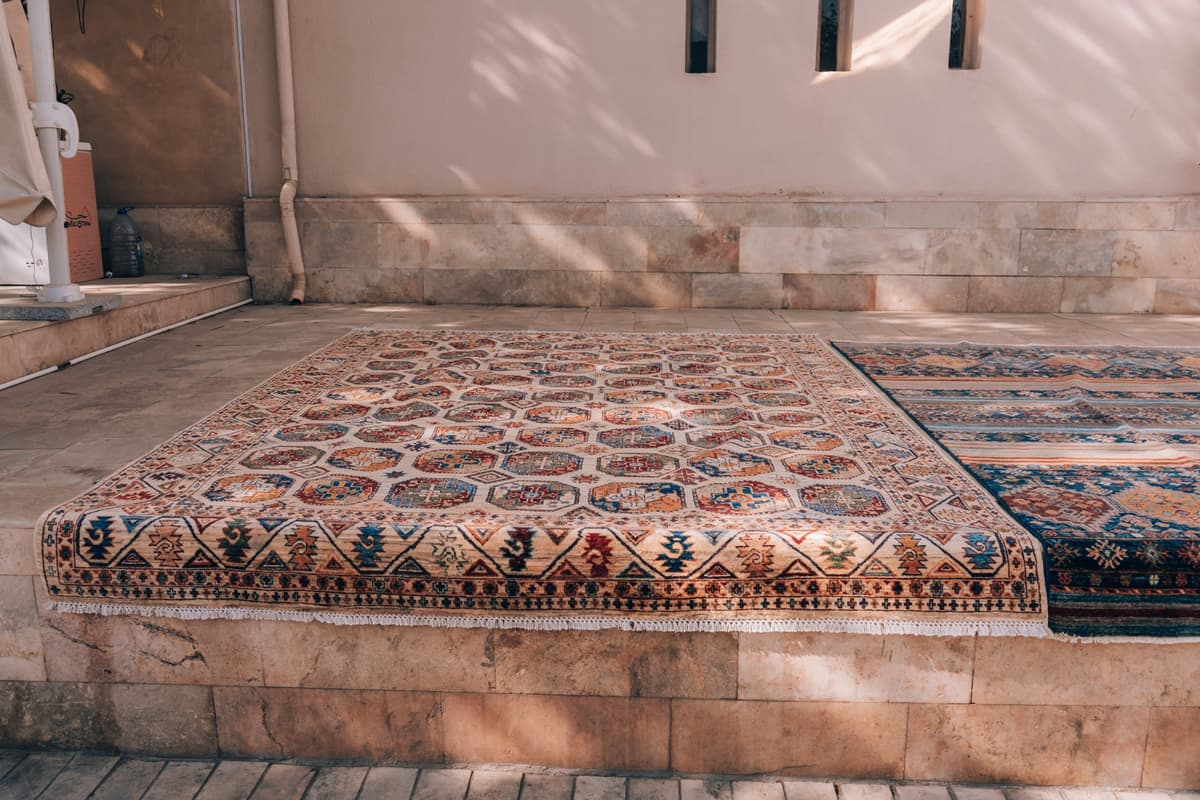
Illustrative photo of this rug type — not manufacturer imagery. Current product photos are on the Amazon listing.
The direct mitigation. Open mesh holds the rug fractionally off the boards and lets air move underneath, which is the difference between damp boards and dry ones.
What it is
- Open mesh rather than solid felt, so water passes through
- Designed for deck and patio use
- Trimmable
What it does well
- The open weave is the whole point outdoors: it lets a deck dry instead of trapping water against it
- Stops a lightweight outdoor rug creeping in wind
- Rinses clean along with the rug
Don't buy it if
- Provides almost no cushioning — this is a grip and airflow product
- The mesh can print a faint grid onto a soft deck stain over a long summer
- Needs lifting and rinsing periodically or grit collects in the weave
The answer to the question that ruins decks: an outdoor rug needs a pad that breathes, not one that seals.
Fab Habitat Flatweave Outdoor Rug
Easy to lift and dry

Illustrative photo of this rug type — not manufacturer imagery. Current product photos are on the Amazon listing.
A flatweave that drains and is light enough to lift and hang one-handed. On a deck, how easy the rug is to move matters more than almost anything else about it.
What it is
- Flatwoven from recycled polypropylene yarn
- Fully reversible — two usable faces
- Designed to be hosed down and hung to dry
What it does well
- Reversible construction effectively doubles the usable life
- Hoses clean in minutes and dries fast because there is no pile to hold water
- Rolls up small enough to store over winter without a dedicated space
Don't buy it if
- Very thin — you will feel every imperfection in the deck below it
- Flatweave slides more than a backed rug; it needs weighting or an outdoor pad
- Stripe patterns dominate the range if you want something plainer
The most practical outdoor rug here if your actual cleaning routine is a garden hose and ten minutes.
The three habits that prevent it
Use an open-weave pad
Mesh, never felt or rubber sheet. It lifts the rug fractionally and lets air move underneath. This is the single highest-value change. See outdoor rug pads.
Lift and hang the rug every few weeks
And always after several days of rain. Drape it over a railing for a day so both the boards and the rug's underside dry completely.
Keep the edges clear
Leave six inches to a foot of bare deck on every side. Running a rug to the edge traps water where end grain is most vulnerable and stops the perimeter drying.
What about marks that are not damage?
A lighter or darker rectangle when you lift a rug is usually not decay — it is uneven weathering. The covered wood has not faded or grayed at the same rate as the exposed wood around it. It evens out over a season once the rug is off, or after a clean and re-finish. Worth distinguishing from actual softening, which you can test by pressing a screwdriver into the board: sound wood resists, decayed wood gives.
If the concern is the rug's own condition rather than the deck's, do outdoor rugs get moldy covers what grows on the rug itself and how to deal with it.
Questions people actually ask
Will an outdoor rug ruin a wood deck?
It can if it is never moved, because trapped moisture prevents the boards drying. With an open-weave pad and periodic lifting, it is harmless.
Are outdoor rugs safe on composite decking?
Largely yes. The risk is discoloration and surface film rather than structural decay, and both clean off.
Do outdoor rugs ruin concrete?
No. You may get a damp patch or a surface film where the slab stays wet longer, but there is nothing to decay and it cleans off.
How often should I move an outdoor rug on a deck?
Every few weeks, and always after prolonged rain. Hanging it over a railing for a day dries both the rug and the boards.
Does a rubber-backed rug damage a deck faster?
Yes, considerably. A continuous rubber backing seals moisture against the boards with no path for it to escape. Solid backings belong indoors.
Read next
- Outdoor Rugs for a DeckDeck rugs that let the boards dry — the constructions that drain, and the pad that makes the difference.
- Outdoor Rug PadsWhy outdoor pads work backwards from indoor ones, and the open-weave mesh that keeps a deck dry.
- Do Outdoor Rugs Get Moldy?Why polypropylene itself cannot mold, what actually grows on an outdoor rug, and how to remove it for good.
- Can You Leave Outdoor Rugs Outside?Whether an outdoor rug can stay out year-round, what winter actually does to it, and the storage routine that pays.
- How to Clean an Outdoor RugThe hose-and-brush routine, why drying both faces matters most, and how to handle mildew.
- Outdoor RugsOutdoor rugs by fiber and backing, plus the drainage question that decides whether the rug quietly ruins the deck under it.