Rug Care
How to Clean an Outdoor Rug
The washing is the easy part. Drying it properly is what actually keeps it clean.

The short answer
Sweep both faces, hose it down, scrub with dish soap and a stiff brush, rinse, then hang it to dry with air reaching both sides. The drying is the part that matters: a rug put back down damp will be dirty again within weeks, because mildew grows on what is trapped in it, not on the fiber itself.
The routine
Lift the rug and sweep or shake both faces
Get the loose organic debris off before any water is involved. Hosing a rug full of leaf litter just drives the material deeper into the weave.
Hose it from one end to the other
Working in one direction pushes debris out of the weave rather than around inside it. A garden hose is enough — do not use a pressure washer.
Scrub with dish soap and a stiff brush
Polypropylene is chemically tough, so a brush that would ruin wool is entirely fine here. Dish soap handles both general soil and the oily film that collects outdoors.
Rinse thoroughly
Soap residue left in the weave attracts dirt faster than the original soil did.
Hang it to dry — both faces exposed
Over a railing, a fence or two chairs. Drying it flat on the deck is what causes the problem you just cleaned.
nuLOOM Non-Slip Outdoor Rug Pad
Stopping it coming back
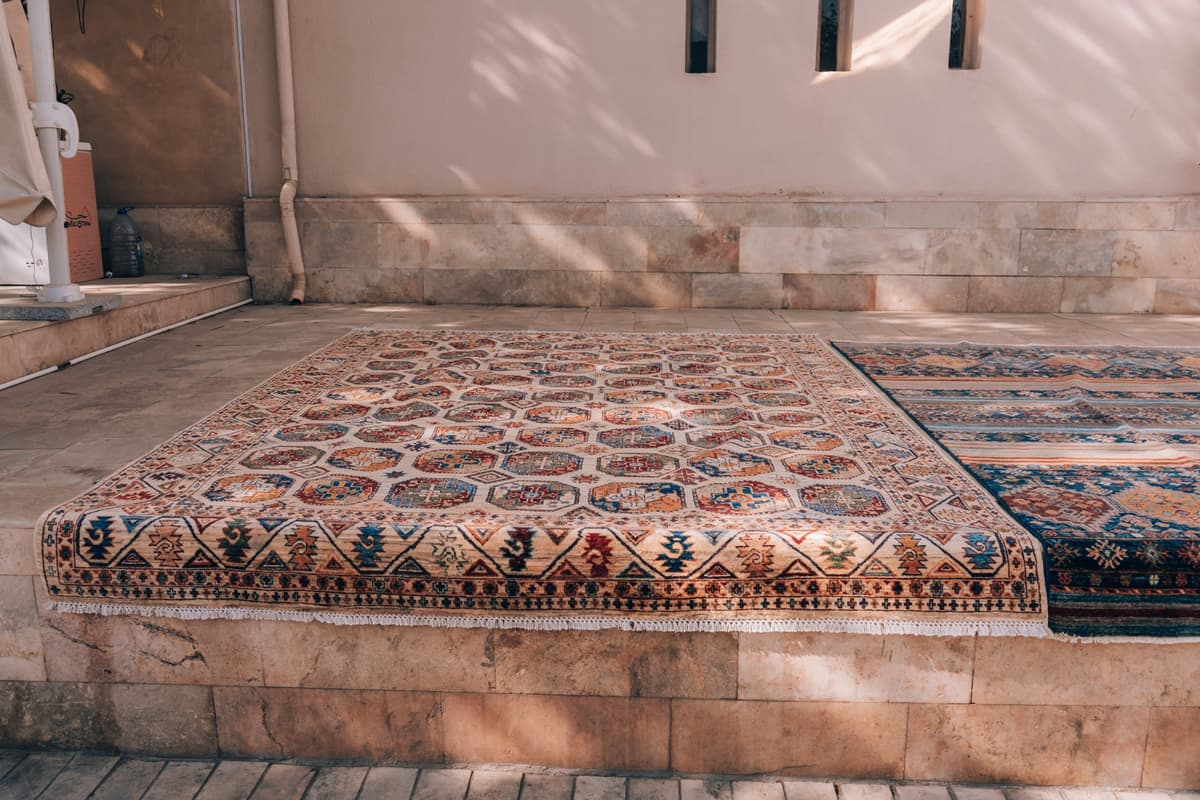
Illustrative photo of this rug type — not manufacturer imagery. Current product photos are on the Amazon listing.
Most outdoor rug mildew starts on the underside, where nothing dries. An open-weave pad is the one product that changes that — it is prevention rather than cleaning.
What it is
- Open mesh rather than solid felt, so water passes through
- Designed for deck and patio use
- Trimmable
What it does well
- The open weave is the whole point outdoors: it lets a deck dry instead of trapping water against it
- Stops a lightweight outdoor rug creeping in wind
- Rinses clean along with the rug
Don't buy it if
- Provides almost no cushioning — this is a grip and airflow product
- The mesh can print a faint grid onto a soft deck stain over a long summer
- Needs lifting and rinsing periodically or grit collects in the weave
The answer to the question that ruins decks: an outdoor rug needs a pad that breathes, not one that seals.
Fab Habitat Flatweave Outdoor Rug
If cleaning is a recurring chore
Illustrative photo of this rug type — not manufacturer imagery. Current product photos are on the Amazon listing.
Reversible and fast-draining. If cleaning your current outdoor rug is a recurring chore, the construction is usually why — a flatweave dries in hours where a pile rug takes a day.
What it is
- Flatwoven from recycled polypropylene yarn
- Fully reversible — two usable faces
- Designed to be hosed down and hung to dry
What it does well
- Reversible construction effectively doubles the usable life
- Hoses clean in minutes and dries fast because there is no pile to hold water
- Rolls up small enough to store over winter without a dedicated space
Don't buy it if
- Very thin — you will feel every imperfection in the deck below it
- Flatweave slides more than a backed rug; it needs weighting or an outdoor pad
- Stripe patterns dominate the range if you want something plainer
The most practical outdoor rug here if your actual cleaning routine is a garden hose and ten minutes.
Mildew
Polypropylene cannot mold — it is a plastic with nothing to feed on. What grows is the organic material caught in it: pollen, leaf litter, soil. So the treatment is removal plus drying, not a stronger chemical. For stubborn mildew staining, diluted oxygen bleach works and is safe on solution-dyed fiber; test a corner and rinse well. Avoid chlorine bleach, which can damage some backings and dyes.
Salt, sap and specific marks
- Winter salt residue leaves white marks that plain water does not lift. A dilute white vinegar solution and a stiff brush clears it.
- Tree sap responds to a little rubbing alcohol on a cloth, then wash the area normally.
- Grease from a barbecue needs dish soap specifically — it is a degreaser, which is exactly the right tool.
- Rust marks from furniture feet rarely come out. Put pads under metal furniture feet before it happens.
The maintenance that prevents most of this
Sweeping the rug weekly in autumn removes most of the material mildew would otherwise feed on. Lifting the rug every few weeks lets both the rug and the surface beneath dry, which also protects a wooden deck — see do outdoor rugs damage decks. And storing it clean and dry over winter does more for its appearance next spring than any amount of scrubbing in March: storing rugs covers how.
Questions people actually ask
Can I pressure-wash an outdoor rug?
No. Pressure separates the yarns and frays the edges. A garden hose and a stiff brush cleans just as well without the damage.
How do I get mildew off an outdoor rug?
Sweep off the debris, wash with dish soap, then treat stubborn staining with diluted oxygen bleach. Dry both faces completely afterward.
Why does my outdoor rug smell?
Mildew on organic material trapped in the weave, usually on the underside where it never dries. Clean both faces and dry it fully.
How do I dry an outdoor rug?
Hang it over a railing or fence so air reaches both faces. Drying it flat on the deck defeats the purpose.
How often should an outdoor rug be cleaned?
A weekly sweep, a full wash twice a season, and always before winter storage. Sweeping prevents far more than washing fixes.
Read next
- Do Outdoor Rugs Get Moldy?Why polypropylene itself cannot mold, what actually grows on an outdoor rug, and how to remove it for good.
- Do Outdoor Rugs Damage Wood Decks?How outdoor rugs damage decks, which surfaces are genuinely at risk, and the three habits that prevent it.
- Storing RugsHow to store a rug so it survives — rolled not folded, fully dry, off the ground, and never sealed in plastic.
- How to Clean a Polypropylene RugThe forgiving fiber: what you can do freely, the two real limits, and how to deal with oily soil.
- Outdoor Rug PadsWhy outdoor pads work backwards from indoor ones, and the open-weave mesh that keeps a deck dry.
- Rug CareCleaning method by fiber — wool, jute, sisal, polypropylene, outdoor — plus pet stains, vacuuming and off-season storage.