Outdoor Rugs
Do Outdoor Rugs Get Moldy?
The fiber cannot mold. What lands on it absolutely can — and that distinction tells you exactly how to fix it.

The short answer
Polypropylene itself cannot mold — it is a plastic and there is nothing in it for mold to eat. What grows is the organic material collecting on it: pollen, leaf litter, soil, food, pet hair. That is why the fix is removing the debris and letting the rug dry, not buying a more mold-resistant rug.
The distinction that solves the problem
Mold needs three things: moisture, warmth, and something organic to feed on. An outdoor polypropylene rug supplies the first two readily. It supplies the third only through what lands on it. Keep the organic material down and keep the rug drying, and the same rug that went green under a tree stays clean for years in the open.
This also explains why the underside is usually worse than the top. The face gets sun, wind and periodic sweeping. The underside gets neither, stays damp longest, and collects whatever filters through the weave.
Fab Habitat Flatweave Outdoor Rug
Prevention by drainage
Illustrative photo of this rug type — not manufacturer imagery. Current product photos are on the Amazon listing.
Reversible and fast-draining, which is the combination that prevents the problem rather than treating it. A rug that dries in hours does not give anything time to establish.
What it is
- Flatwoven from recycled polypropylene yarn
- Fully reversible — two usable faces
- Designed to be hosed down and hung to dry
What it does well
- Reversible construction effectively doubles the usable life
- Hoses clean in minutes and dries fast because there is no pile to hold water
- Rolls up small enough to store over winter without a dedicated space
Don't buy it if
- Very thin — you will feel every imperfection in the deck below it
- Flatweave slides more than a backed rug; it needs weighting or an outdoor pad
- Stripe patterns dominate the range if you want something plainer
The most practical outdoor rug here if your actual cleaning routine is a garden hose and ten minutes.
nuLOOM Non-Slip Outdoor Rug Pad
Fixing the underside problem
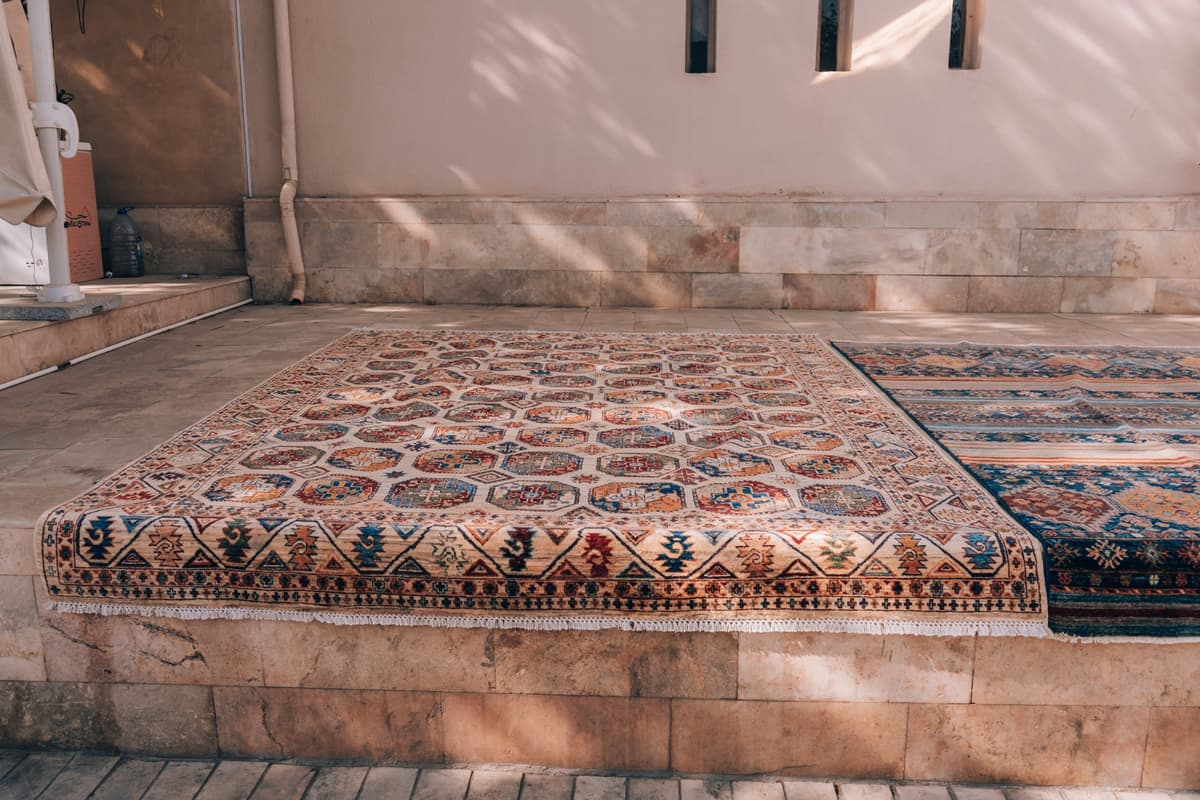
Illustrative photo of this rug type — not manufacturer imagery. Current product photos are on the Amazon listing.
Airflow underneath is where most outdoor rug mildew actually starts — on the dark, permanently damp underside rather than the sunlit face.
What it is
- Open mesh rather than solid felt, so water passes through
- Designed for deck and patio use
- Trimmable
What it does well
- The open weave is the whole point outdoors: it lets a deck dry instead of trapping water against it
- Stops a lightweight outdoor rug creeping in wind
- Rinses clean along with the rug
Don't buy it if
- Provides almost no cushioning — this is a grip and airflow product
- The mesh can print a faint grid onto a soft deck stain over a long summer
- Needs lifting and rinsing periodically or grit collects in the weave
The answer to the question that ruins decks: an outdoor rug needs a pad that breathes, not one that seals.
Removing what is already there
Lift the rug and sweep or shake both faces
Get the loose organic debris off first. Cleaning a rug that is still full of leaf litter just redistributes the food source.
Hose both sides thoroughly
Work from one end so you are pushing debris out of the weave rather than driving it further in.
Scrub affected areas with mild soap and a stiff brush
Dish soap and warm water handles most of it. Polypropylene is chemically tough, so a brush that would ruin a wool rug is fine here.
For stubborn mildew, use a diluted oxygen bleach solution
Oxygen bleach rather than chlorine — chlorine can damage some dyes and backings. Test on a corner and rinse thoroughly afterward.
Hang it to dry completely, both faces
This step is not optional. A rug put back down damp is a rug that will be green again in two weeks.
Stopping it coming back
- Move it out from under trees if you can. Leaf litter and sap are the biggest single contributors.
- Use an open-weave pad so the underside is not permanently sealed against a damp surface.
- Sweep it weekly in autumn. Ten seconds with a stiff broom removes most of the food supply.
- Lift and dry it after prolonged rain, which is the same habit that protects your deck.
- Store it dry over winter — storing rugs covers how.
When a rug is past saving
Persistent black staining that does not lift after a thorough clean is usually mildew that has grown into the yarn structure rather than sitting on it. At that point the color change is permanent even if the growth is killed. Outdoor rugs are cheap enough that replacing one at that stage is the sensible call — and the routine above will keep the replacement clean for years. The full maintenance method is in how to clean an outdoor rug.
Questions people actually ask
Can polypropylene rugs get moldy?
The fiber cannot support mold, but organic debris caught in the weave can. In practice, a dirty polypropylene rug can absolutely go green.
Why does my outdoor rug smell?
Almost always mildew on trapped organic material, usually on the underside where it never dries. Lift it, clean both faces and dry it fully.
Does bleach work on outdoor rug mildew?
Oxygen bleach diluted and tested on a corner, yes. Chlorine bleach can damage dyes and some backings, so it is the riskier choice.
Can I pressure-wash an outdoor rug?
Better not to. Pressure separates the yarns and frays edges. A hose and a stiff brush achieves the same result without the damage.
How do I stop mold under an outdoor rug?
An open-weave pad for airflow, and lifting the rug every few weeks so the underside and the surface below both dry out.
Read next
- How to Clean an Outdoor RugThe hose-and-brush routine, why drying both faces matters most, and how to handle mildew.
- Do Outdoor Rugs Damage Wood Decks?How outdoor rugs damage decks, which surfaces are genuinely at risk, and the three habits that prevent it.
- Waterproof Outdoor RugsWhat 'waterproof' actually means on an outdoor rug listing, and the constructions that genuinely drain fastest.
- Outdoor Rug PadsWhy outdoor pads work backwards from indoor ones, and the open-weave mesh that keeps a deck dry.
- Storing RugsHow to store a rug so it survives — rolled not folded, fully dry, off the ground, and never sealed in plastic.
- Outdoor RugsOutdoor rugs by fiber and backing, plus the drainage question that decides whether the rug quietly ruins the deck under it.