Rug Care
How to Clean a Viscose Rug
This is the one fiber where the honest answer starts with what not to do. Water is not a cleaning agent on viscose - it is the thing that ruins it.
The short answer
Use dry methods only. Vacuum with suction and no beater bar, blot spills immediately with a dry white cloth pressing straight down, and use dry solvent or dry foam powder for anything that remains. Never wet a viscose rug, never rub it, and never steam clean it. Water makes the fiber lose most of its strength and dries as a permanent ring.
Viscose is sold under a long list of flattering names - rayon, art silk, bamboo silk, banana silk, faux silk - and all of them describe the same material: regenerated cellulose, wood pulp chemically dissolved and extruded as a fiber. It has a genuine silk-like sheen and it is pleasant to touch, which is why it keeps appearing in rooms it has no business being in. It is also, by a clear margin, the most fragile fiber in common rug use.
The reason is specific and it explains everything else on this page. Cellulose fibers lose tensile strength when wet, and viscose loses more than any other - wet viscose can be less than half as strong as dry viscose. The fiber swells, the surface distorts, individual filaments break under the weight of a sponge, and when it dries the pile has a permanently roughened, matted, often yellowed patch. That is not a stain. It is physical damage to the fiber, and no cleaning removes it.
Routine care
Dry maintenance is the whole program, and done properly it works well - a viscose rug in a low-traffic room, vacuumed correctly and kept away from liquid, stays attractive for years.
Vacuum weekly, suction only
Turn the beater bar off, or use a suction-only head. A rotating brush shreds viscose filaments and produces the fuzzy, dull patches that make a rug look worn out in months. This is not optional on this fiber the way it is a recommendation on others.
Go in the direction of the pile
Viscose has a visible nap, and vacuuming against it lifts and abrades the fiber ends. Run the head with the pile, not across or against it. You will see the sheen stay even rather than developing a scrubbed look.
Shake small rugs outside instead
For anything up to about 3x5, taking it outside and shaking it removes more grit with less mechanical stress than vacuuming does. Do not beat it over a rail - that breaks filaments.
Rotate it twice a year
Viscose crushes and the crush is permanent, so an even distribution of foot traffic and sunlight matters more here than on a resilient fiber. Turn it 180 degrees every six months.
Keep it out of direct sun
Viscose yellows in UV faster than wool or synthetics, and the yellowing is irreversible. A rug in a bay window will discolor unevenly within a couple of years.
A spill, in the first sixty seconds
This is where viscose rugs are won or lost, and the instinct - fetch water and a cloth - is exactly wrong. What you do in the first minute determines whether you end up with a clean rug or a permanent mark.
- Blot, straight down, with a dry white cloth. Press, lift, move to a clean part of the cloth, press again. Do not rub, do not scrub, do not wipe sideways - lateral movement is what breaks the swollen filaments.
- Keep blotting far longer than feels necessary. The goal is to get the liquid out before it reaches the base of the pile. Every second of blotting now is worth more than any treatment later.
- Use a white cloth only. Colored cloths and paper towels with print transfer dye into a fiber that is already absorbing.
- Then dry the area fast. A fan aimed across the damp spot, not a hairdryer held close - heat sets distortion. Getting it dry quickly is what prevents the ring.
- Do not add water to dilute it. This is standard advice on wool and it is wrong here. Diluting a spill on viscose spreads the water damage over a larger area than the stain would have covered.
- Treat what remains with a dry method only. Dry solvent or dry foam powder, applied sparingly, worked in gently with a soft brush, left to dry, then vacuumed out.
Safavieh Hand-Tufted Wool Rug
The replacement that survives cleaning
No licensed photo of this exact rug yet — see it on the Amazon listing.
Named here because the most useful thing this page can tell a reader whose viscose rug has already failed is what to replace it with. Hand-tufted wool has the silky-adjacent softness people buy viscose for, and it tolerates the cleaning viscose cannot - it can be blotted, damp-sponged and professionally washed without the pile going gray and fuzzy.
What it is
- Wool pile hand-tufted to a cotton backing
- Made in India across a large pattern catalog
- Cut pile, generally medium height
What it does well
- Wool springs back from furniture compression in a way no synthetic does
- Naturally flame-resistant and naturally soil-resistant thanks to the lanolin in the fiber
- With normal care it outlives every synthetic rug on this page several times over
Don't buy it if
- Sheds noticeably for the first few months — normal for a tufted wool rug, not a defect
- Hand-tufted rugs are glued, and the latex adhesive can break down after many years
- Costs several times what a comparable polypropylene rug costs
The long-horizon purchase in this category: expensive once rather than cheap repeatedly.
iCustomRug Synthetic Sisal Rug
Rooms where spills happen
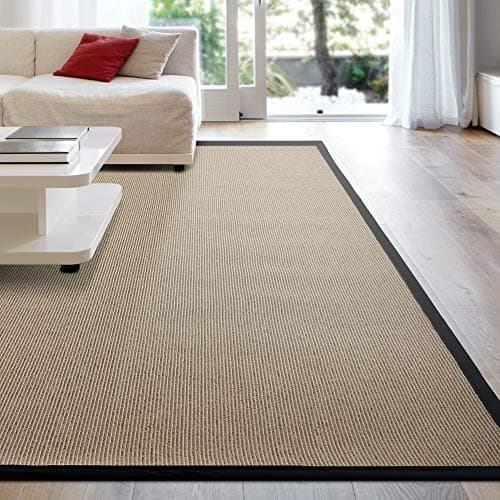
Product photo and price from Amazon, refreshed daily.
#ad We earn a commission · Price as of October 11, 2026
The other direction, for a room where the viscose rug failed because of where it was rather than what it was. Polypropylene in a ribbed weave can be cleaned wet, scrubbed and left damp without any of viscose's consequences - the right fiber for a hallway, a dining room or anywhere a spill is a matter of when.
What it is
- Listed as 100% machine-made polypropylene, not a natural fiber
- Low-profile ribbed pile that imitates the look of woven sisal
- Area rug and runner sizes, described as stain resistant and easy to clean
What it does well
- Takes water, which no real sisal does — this is the kitchen, basement and humid-climate answer
- Softer underfoot than the fiber it imitates, which is the usual complaint about sisal
- No humidity rippling, because polypropylene does not absorb moisture from the air
Don't buy it if
- It is not sisal, and close up it does not pretend convincingly
- Synthetic fiber flattens under furniture and does not spring back
- Can hold static and a slight sheen that natural fiber never has
Buy this instead of sisal if the room is damp, the floor gets wet, or a cat lives there — it solves all three.
Natural Area Rugs Wool-Sisal Blend Rug
Formal rooms, honest durability
No licensed photo of this exact rug yet — see it on the Amazon listing.
A wool and sisal blend with a bordered edge, for the reader who wanted viscose's texture and sheen in a formal room. It is not silky, but it takes light wet cleaning, it holds its appearance under traffic, and it will not develop the permanent water rings this page exists to warn about.
What it is
- Sold as a wool sisal rug — the blend, not pure sisal
- Handmade and bordered in the same way as this brand's pure sisal weaves
- Wool brings the crimp and recovery that sisal has none of
What it does well
- The only honest answer to 'I want sisal but I have to walk on it barefoot'
- Wool recovers from furniture compression where pure sisal just stays crushed
- Reads as a natural fiber rug across a room without the sandpaper feel
Don't buy it if
- Costs meaningfully more than the pure sisal in the same size
- The wool component can shed for the first few months
- Still not a wet-clean rug — the sisal in the blend sets that rule
The compromise worth paying for in a living room or a bedroom edge, where pure sisal is simply too harsh.
Pet accidents, which are the worst case
A pet accident on viscose is the hardest problem in this guide, because urine is a liquid that has to be flushed out to remove the odor and flushing is the thing viscose cannot take. There is no good answer. Blot as much as physically possible, dry the area fast with airflow, and accept that you are choosing between a water-damaged patch and a lingering smell.
Enzyme cleaners, which are the correct tool on most fibers, are water-based and so carry the same problem - and they are separately unsuitable near any wool content in a blend. Pet stains and odors covers the method that works on resilient fibers; the honest conclusion for viscose is that a rug which has taken a significant pet accident is usually finished, and a rug in a house with a puppy should not be viscose in the first place.
What a damaged patch looks like, and whether it is fixable
| What you see | What happened | Fixable |
|---|---|---|
| A ring or outline | Water wicked and dried | No |
| A fuzzy, matted patch | Wet fiber was rubbed | No |
| Dull gray path | Beater bar abrasion | No |
| Yellow discoloration | UV, or water plus heat | No |
| Crushed, flattened area | Furniture or traffic | Rarely, with steam held away |
| Surface dirt, no distortion | Normal soiling | Yes - dry methods |
The honest summary of that table is that almost nothing is fixable, which is the real argument against the fiber. Light crushing sometimes lifts with steam held well away from the surface and the pile brushed gently as it cools, but that is the only entry in the column that reads yes with a qualification.
Should you own a viscose rug at all
In a low-traffic, liquid-free, shaded room - a formal sitting room, a bedroom with no bedside glass of water, a study - viscose gives you a look that costs several times as much in silk, and dry care keeps it well. Anywhere else it is the wrong buy, and that includes dining rooms, hallways, kitchens, bathrooms, children's rooms and any home with pets.
Viscose rugs is the full assessment of the fiber before you buy, and the best rug material for a bedroom covers the softer alternatives that survive normal life. If you want the sheen without the fragility, wool is the answer, and how to clean a wool rug shows how much more forgiving it is.
Questions people actually ask
Can you clean a viscose rug with water?
No. Viscose loses more than half its strength when wet, so the fiber distorts and breaks, and the area dries as a permanent ring with a roughened matted surface. Use dry methods only.
How do you get a stain out of a viscose rug?
Blot straight down with a dry white cloth without rubbing, dry the area fast with a fan, then treat what remains with a dry solvent or dry foam powder and vacuum it out. Never add water to dilute the spill.
Can you steam clean a viscose rug?
Never. Steam is water plus heat, which is the fastest way to ruin viscose - the pile distorts, yellows and mats, and none of that is reversible.
Why did my viscose rug turn yellow?
Either UV exposure, which yellows viscose faster than wool or synthetics, or water combined with heat. Both are irreversible changes to the fiber rather than surface stains.
What are the brown marks on my viscose rug?
Water marks. Liquid wicks through the fiber and carries cellulose breakdown products to the edge of the wet area, which dries as a brown outline. It cannot be cleaned out.
Is viscose the same as rayon or art silk?
Yes - viscose, rayon, art silk, faux silk, bamboo silk and banana silk all describe regenerated cellulose fiber. The names differ, the material and its fragility do not.
Can a professional clean a viscose rug?
A specialist rug washer can do more than you can at home, but many will not guarantee a result and some decline viscose entirely. Anyone proposing hot water extraction on it should be avoided.
How do you fix a crushed viscose rug?
This is the one kind of viscose damage that sometimes responds: hold steam well away from the surface, never touching it, and brush the pile gently with a soft brush as it cools. Expect partial improvement at best.
Sources
Read next
- Viscose RugsWhy viscose looks extraordinary and behaves terribly — and what to buy instead if you want the look.
- How to Clean a Wool RugThe cool-water method for wool, why heat felts it permanently, and what to do about set-in stains.
- How to Clean an Area RugHow to identify your rug's fiber, the three rules that apply to all of them, and where to go next.
- Pet Stains and OdorsWhy old pet stains keep smelling, how enzyme cleaners work, and the one mistake that makes them permanent.
- The Best Rug Material for a BedroomWool first, then a polypropylene shag, then washable polyester. Why bedroom advice inverts the usual low-pile rule, and the two fibers to avoid.
- Rug CareCleaning method by fiber — wool, jute, sisal, polypropylene, outdoor — plus pet stains, vacuuming and off-season storage.