Rug Care
How to Get Creases Out of a Rug
Almost every new rug arrives folded or rolled and almost every one flattens on its own. The methods below just make it happen in days instead of months.

The short answer
Unroll it and leave it flat for 48 hours first - most creases go on their own. If any remain, reverse-roll the rug tightly the opposite way for a few hours, lay it back down, warm the crease with sunlight or a hairdryer on low from a distance, and weight it with books overnight. Never fold a rug to store it.
A crease is the rug's backing remembering a shape. Latex, woven cotton scrim and the stiffer synthetic backings all hold a bend after weeks in a warehouse or a shipping container, and the pile on top simply follows. That is why the fix works on the backing rather than on the surface, and why patience does most of the work.
The method, in order
Unroll it and wait two days
Lay the rug flat in the room where it will live, face up, and leave it. Warmth and the rug's own weight resolve the large majority of shipping creases inside 48 hours with no intervention at all. Do not start cutting, heating or wetting anything before this step - most of what people do to a new rug was unnecessary.
Reverse-roll what is left
Roll the rug tightly in the opposite direction to the way it arrived, pile facing outward, and leave it rolled for two to four hours. This is the single most effective step and it works on exactly the mechanism that caused the crease. Unroll it, lay it flat, and give it another few hours before judging the result.
Add warmth, carefully
Warmth relaxes a backing. Sunlight through a window on a warm day is the safest source and will do it on its own over an afternoon. A hairdryer on its lowest heat, held at least a foot away and kept moving, works faster - on the BACK of the rug, not the pile. Never let any part get hot to the touch, and never use a heat gun.
Weight it overnight
Put flat heavy objects along the crease - books, a board with weight on it, furniture if the crease is where furniture will sit. Spread the weight along the whole ridge rather than concentrating it in one spot. Leave it overnight, or for several nights on a stubborn ridge.
Put a pad under it
If the crease is at the edge or a corner, a pad is the fix rather than a nice extra. A pad holds the rug's footprint flat against the floor so the edge physically cannot lift, and a corner that has nothing holding it down will curl again whatever you do to it.
What to look for before you start
- Is it a crease or a ripple? A crease is a straight line from folding or rolling and comes out. A ripple is a wave across the field, usually caused by humidity in a natural fiber, and it comes back with the weather rather than resolving.
- Is it a crease or a curling corner? A curl at one corner is not a memory problem, it is a weight-and-grip problem, and heat will not help. Go straight to a pad.
- What is the backing? A latex-backed tufted rug is the most crease-prone and the most heat-sensitive. A flatweave with no backing creases least and recovers fastest. A rubber-backed runner can crack along a sharp fold, which is permanent.
- How was it shipped? A rolled rug has one gentle curve and comes right quickly. A folded rug - common with washable two-piece covers - has sharp creases that take longer and respond best to reverse-rolling plus warmth.
Gorilla Grip Felt and Rubber Rug Pad
Corners that keep lifting
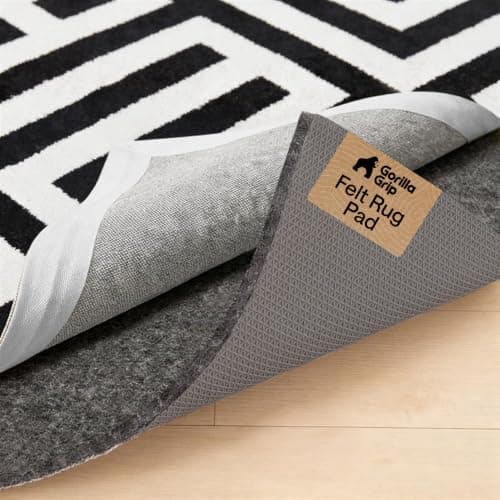
Product photo and price from Amazon, refreshed daily.
#ad We earn a commission · Price as of October 18, 2026
The most effective permanent fix for a rug that keeps lifting at the corners, which is the crease problem that does not resolve on its own. A felt-over-rubber pad holds the rug's whole footprint against the floor so the edges cannot creep up, and the felt layer gives a slightly soft base that lets a stubborn ridge settle out rather than bridging over a hard floor.
What it is
- Felt-over-rubber construction at a lower price point
- Multiple thicknesses
- Trimmable
What it does well
- Close to the premium pad's performance for meaningfully less money
- Thick enough to make a thin flatweave feel like a real rug
- Widely available in odd sizes
Don't buy it if
- The rubber layer is less dense than the premium option and compresses sooner
- Can leave a faint residue on some sealed floors in hot rooms
- The felt sheds a little when first cut
The value pad. Right under a synthetic rug, and the wrong economy under an expensive rug on an expensive floor.
RUGPADUSA Superior-Lock Rug Pad
Hardwood, where the wrong pad marks the floor
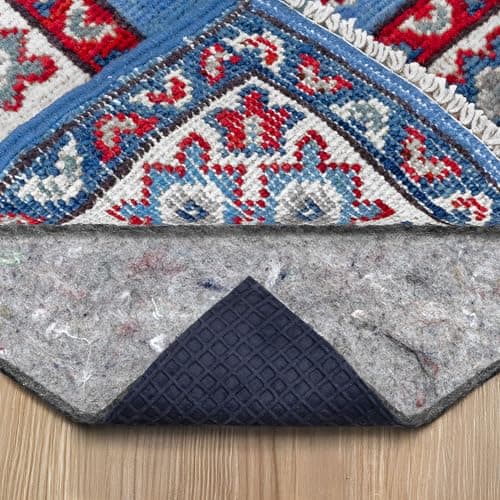
Product photo and price from Amazon, refreshed daily.
#ad We earn a commission · Price as of October 18, 2026
The version to buy on a hardwood floor, where the pad has to solve the crease without marking the finish. Heat-pressed felt bonded to natural rubber grips hard floors without the plasticizers in cheap PVC-backed pads, which are what discolor a finish over time. Thicker than a basic grip pad, so it does more to flatten a persistent ridge.
What it is
- Dense heat-pressed felt over a natural rubber gripping layer
- Available in quarter-inch and half-inch thicknesses
- Cuts to size with household scissors
What it does well
- Natural rubber rather than PVC or an adhesive-backed synthetic — this is the distinction that protects a hardwood finish
- The felt layer does real sound-dampening work in a room with hard floors
- Grips on glossy finishes where thinner pads slide
Don't buy it if
- Expensive relative to the rug it protects, which stops a lot of people buying one
- The half-inch version raises the rug enough to catch a door
- Heavy and awkward to handle at large sizes
The pad to buy if the floor under the rug is worth more than the rug, which on hardwood it almost always is.
Mohawk Home Felt Rug Pad
A rug laid over carpet
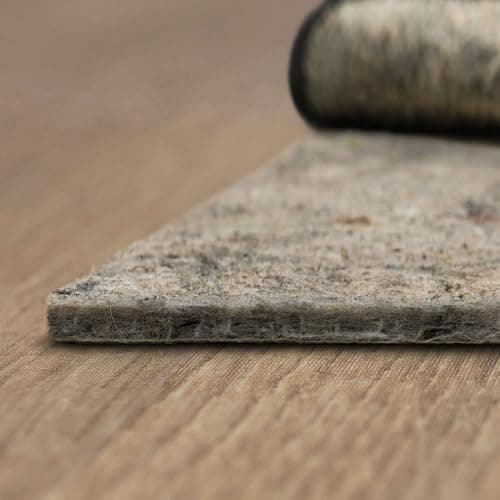
Product photo and price from Amazon, refreshed daily.
#ad We earn a commission · Price as of October 18, 2026
The pick when the rug is going over carpet, where creases behave differently - a rug on carpet has nothing firm to flatten against, so ridges persist for months. Dense recycled felt with no rubber layer gives the rug a firm, flat base to settle onto without the gripping layer that can bond to carpet fibers.
What it is
- All-felt construction with no rubber backing
- Dense enough to stop a rug rippling over carpet
- Large sizes available
What it does well
- Felt-only is the correct construction for a rug over carpet — rubber on carpet does nothing useful
- No rubber means no risk of a reaction with a vinyl or laminate finish
- Consistent density; it does not compress unevenly
Don't buy it if
- No grip layer at all, so on a bare hard floor it will slide
- Thicker than some door clearances allow
- Plain felt sheds fibers when cut
The one pad here that is specifically right for rug-over-carpet and specifically wrong for bare hardwood.
The two methods to avoid
Steaming or wetting the crease. It is widely recommended and it is the fastest way to damage a tufted rug. Water that reaches the latex layer softens the adhesive, can brown-stain up through the pile, and accelerates the backing's breakdown. On jute, sisal or viscose, water leaves a permanent mark on its own - how to clean a jute rug and how to clean a viscose rug both cover why.
Ironing it, even through a cloth. Direct contact heat on a synthetic pile melts fiber tips, which is invisible for about a day and then shows as a permanently shiny, flattened patch. Polypropylene has a low melting point and is the usual casualty. If you want heat, use indirect warmth on the back at a distance.
How long each type takes
| Rug type | Shipping crease | Sharp fold | Curling corner |
|---|---|---|---|
| Flatweave, no backing | A day | 2 to 3 days | Needs a pad |
| Wool pile, tufted | 2 to 3 days | 1 to 2 weeks | Needs a pad |
| Polypropylene pile | 2 to 4 days | 1 to 2 weeks | Needs a pad |
| Rubber-backed runner | A few days | May be permanent | Needs a pad |
| Jute or sisal | 2 to 5 days | 1 to 2 weeks | Needs a pad and weight |
| Washable two-piece cover | Hours | A few days | Re-seat on the pad |
Preventing the next one
Store rugs rolled, never folded, and roll them with the pile facing outward so the backing is on the inside of the curve and is stretched rather than compressed. Roll around a cardboard tube if you have one. A rug folded in a closet for a season develops creases that are far harder to remove than anything a shipping roll produces - storing rugs has the full method, including why it should never be stored damp.
And put a pad under the rug from the start. Most of the persistent edge problems people try to iron out are grip problems that a pad would have prevented, and the pad also stops the rug shifting against the floor, which is the main cause of long-term wear from underneath. Rug pads covers which type suits which floor.
The short version
Lay it flat and wait two days before doing anything. Reverse-roll what remains, add gentle indirect warmth to the back, weight it overnight, and put a pad underneath. Do not steam it, do not iron it, and do not fold it when it goes away. Felt vs rubber rug pads covers the pad choice, and the rug care hub has the rest.
Questions people actually ask
How long does it take for rug creases to come out?
Most shipping creases go within 48 hours of the rug lying flat. A sharp fold in a pile rug can take one to two weeks, and reverse-rolling plus gentle warmth shortens that considerably.
Can you iron a rug to remove creases?
No. Direct contact heat melts synthetic fiber tips and leaves a permanently shiny flattened patch. Use indirect warmth on the back of the rug instead - sunlight, or a hairdryer on low held a foot away and kept moving.
Does steaming get creases out of a rug?
It is not worth the risk on most rugs. Moisture that reaches a tufted rug's latex backing softens the adhesive and can cause browning, and water permanently marks jute, sisal and viscose.
How do you flatten a rug that keeps curling at the corners?
A curling corner is a grip problem rather than a crease, so heat and weight only help temporarily. Put a rug pad under the whole rug so the edges cannot lift, and weight the corner while it settles.
Should you roll or fold a rug for storage?
Always roll, with the pile facing outward so the backing is on the outside of the curve. Folding sets creases that are far harder to remove, and on a rubber-backed rug a sharp fold can crack the backing permanently.
Why is my washable rug cover wrinkled after washing?
That is fabric wrinkling rather than a crease, and it settles over a few days as the cover relaxes onto its pad. Tumble-drying on low, if the care label allows it, speeds it up considerably.
Sources
Read next
- Storing RugsHow to store a rug so it survives — rolled not folded, fully dry, off the ground, and never sealed in plastic.
- Rug PadsWhat a pad does, the four constructions, and how to match one to hardwood, vinyl, tile or carpet.
- Felt vs Rubber Rug PadsFelt for cushioning, rubber for grip, felt-and-rubber for both. Which to buy by floor type and rug size, and the pads that damage a finish.
- Non-Slip Rug PadsWhy rugs slide, which pad constructions genuinely hold, and the thin options for tight door clearances.
- Are Washable Rugs Thin?Yes - thinner than a conventional rug, for real engineering reasons. Which constructions feel thickest, and the pad that closes most of the gap.
- Rug CareCleaning method by fiber — wool, jute, sisal, polypropylene, outdoor — plus pet stains, vacuuming and off-season storage.