Rug Materials
The Best Rugs for Vinyl Plank Floors (The Backing Is the Whole Decision)
LVP does not scratch much and does not dent much. What it does is stain from underneath - and that is a backing problem with a permanent outcome.
Heads up: we earn a commission when you buy through links on this page, at no extra cost to you. It never changes which rug we put first — see how we choose and our affiliate disclosure.
Quick picks
The whole answer, before the detail. Tap any row to jump to that rug's full write-up further down the page.
| # | Rug | Best for | Construction | Price |
|---|---|---|---|---|
| 1 | 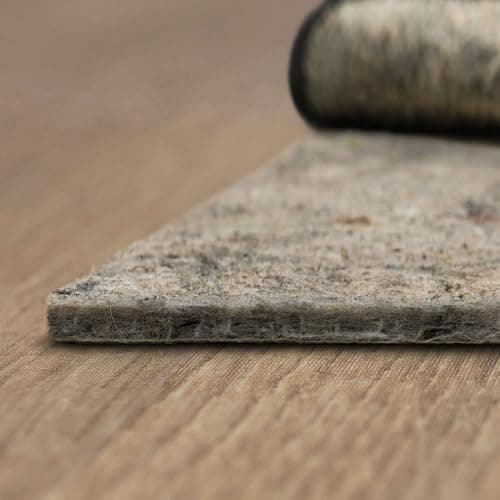 Mohawk Home Felt Rug PadThe safest thing you can put under a rug on LVP, and the first purchase to make: dense recycled felt with no rubber layer at all. No rubber means no plasticiser migration, which is the single failure mode that permanently discolours vinyl plank. It is dense enough to stop a rug rippling even over carpet, and it comes in large sizes. All-felt means grip comes from weight and friction rather than tack, so on a very slick plank floor a large rug still creeps a little - this is a protection pad, not a non-slip pad. | The safe pad to put under anything | Dense recycled felt, no rubber layer | $64.00$71.00View on Amazon #ad We earn a commission · Price as of November 24, 2026 |
| 2 | 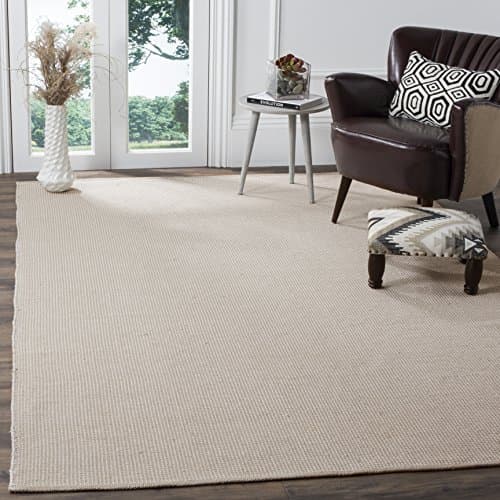 Safavieh Montauk Cotton Flatweave RugThe pick for the rug itself: handwoven 100 percent cotton flatweave with no applied backing at all, which removes the discolouration question entirely because there is no chemistry touching the floor. Ikat and tie-dye patterns in area, square and runner sizes. The maker recommends a separate rug pad, which on LVP is exactly what you want to control - buy the felt pad and you have specified both halves of the system yourself. Cotton crushes in a traffic lane and will need flipping. | A real rug with nothing on its back | Handwoven 100 percent cotton flatweave, no applied backing | $246.00View on Amazon #ad We earn a commission · Price as of November 24, 2026 |
| 3 | 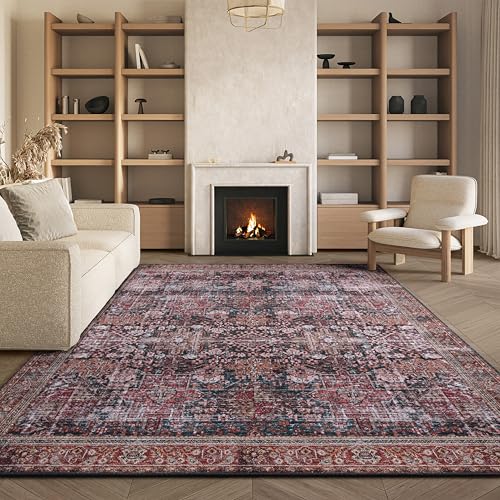 SAFAVIEH Tucson Washable RugThe best whole-room answer. Power-loomed polyester at a listed 1/8 inch with no rubber backing - the whole rug machine washes cold and dries flat, which is only possible because there is no bonded rubber layer to destroy in a drum. That same absence is what makes it safe on vinyl plank. Listed at 8 by 10 feet and roughly 13.5 pounds. At 1/8 inch it needs a felt pad underneath for any comfort at all, and the pad is doing the gripping. | An 8x10 that is safe on LVP | Power-loomed polyester, listed at a 1/8 inch pile, whole-rug machine washable | $79.88$98.99View on Amazon #ad We earn a commission · Price as of November 24, 2026 |
| 4 | 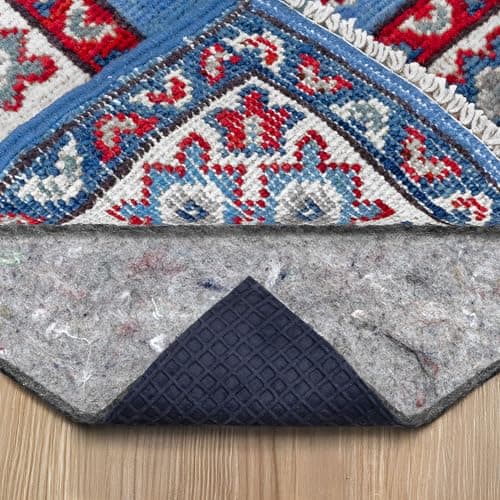 RUGPADUSA Superior-Lock Rug PadThe pick when a rug genuinely must not move and a felt-only pad is not holding. Dense heat-pressed felt bonded to a natural rubber gripping layer, in quarter-inch and half-inch thicknesses, trimmable with household scissors. Natural rubber is the one rubber chemistry that does not carry the plasticisers that migrate into vinyl - the problem backings are synthetic latex and recycled-rubber composites. Costs several times a plain felt pad, and natural rubber still wants an occasional lift-and-air on a sealed floor. | Grip without the migration risk | Heat-pressed felt bonded to natural rubber | $109.86$156.95View on Amazon #ad We earn a commission · Price as of November 24, 2026 |
| 5 | 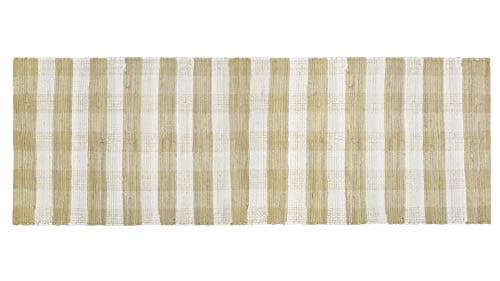 GLAMBURG Cotton Reversible Runner RugThe budget pick, and the simplest safe thing in a hallway: a handwoven cotton flatweave, fully reversible, with no backing of any kind, listed at 2 by 6 feet. Nothing bonded means nothing to leach. Reversible means both faces wear, which matters in the one place a runner always fails. Machine wash is on the care line. It has no grip whatsoever, so on plank it is a rug plus a felt pad or it is a slide - treat the pad as part of the price. | Hallways, cheaply and safely | Handwoven cotton flatweave, reversible, no backing | $20.86View on Amazon #ad We earn a commission · Price as of November 24, 2026 |
The verdict. On vinyl plank the decision is the backing, not the rug, so the first pick is a pad: the Mohawk Home all-felt pad is the safe thing to put under anything, because felt with no rubber layer cannot migrate anything into the floor. For the rug on top of it, the Safavieh Montauk cotton flatweave is the pick - handwoven cotton with no applied backing at all. The GLAMBURG cotton reversible runner is the budget pick for a hall. And the reason this page is ordered this way: LVP barely scratches and barely dents, but it discolours from underneath, and that discolouration is permanent and not covered by most warranties.
Mohawk Home Felt Rug Pad
The safe pad to put under anything
Product photo and price from Amazon, refreshed daily.
#ad We earn a commission · Price as of November 24, 2026
The safest thing you can put under a rug on LVP, and the first purchase to make: dense recycled felt with no rubber layer at all. No rubber means no plasticiser migration, which is the single failure mode that permanently discolours vinyl plank. It is dense enough to stop a rug rippling even over carpet, and it comes in large sizes. All-felt means grip comes from weight and friction rather than tack, so on a very slick plank floor a large rug still creeps a little - this is a protection pad, not a non-slip pad.
What it is
- All-felt construction with no rubber backing
- Dense enough to stop a rug rippling over carpet
- Large sizes available
What it does well
- Felt-only is the correct construction for a rug over carpet — rubber on carpet does nothing useful
- No rubber means no risk of a reaction with a vinyl or laminate finish
- Consistent density; it does not compress unevenly
Don't buy it if
- No grip layer at all, so on a bare hard floor it will slide
- Thicker than some door clearances allow
- Plain felt sheds fibers when cut
The one pad here that is specifically right for rug-over-carpet and specifically wrong for bare hardwood.
Safavieh Montauk Cotton Flatweave Rug
A real rug with nothing on its back
Product photo and price from Amazon, refreshed daily.
#ad We earn a commission · Price as of November 24, 2026
The pick for the rug itself: handwoven 100 percent cotton flatweave with no applied backing at all, which removes the discolouration question entirely because there is no chemistry touching the floor. Ikat and tie-dye patterns in area, square and runner sizes. The maker recommends a separate rug pad, which on LVP is exactly what you want to control - buy the felt pad and you have specified both halves of the system yourself. Cotton crushes in a traffic lane and will need flipping.
What it is
- 100 percent cotton, handwoven in India
- Flat weave with no backing applied - the maker recommends a separate rug pad
- Ikat and tie-dye patterns across area, square and runner sizes
What it does well
- Cotton is the one flatweave fiber a normal washing machine can handle at small and runner sizes
- No pile and no backing means it is genuinely thin - doors and dining chairs clear it
- Takes dye softly, so the patterns read as faded textile rather than printed graphic
Don't buy it if
- Cotton absorbs, so a spill soaks in instead of beading - the opposite of a synthetic flatweave
- No backing at all: without a pad it slides, and the maker says so on the listing
- Lighter colors show traffic lanes faster than wool or sisal in the same spot
The cotton flatweave to buy if you want a thin, soft-patterned rug you can actually launder at runner size.
SAFAVIEH Tucson Washable Rug
An 8x10 that is safe on LVP
Product photo and price from Amazon, refreshed daily.
#ad We earn a commission · Price as of November 24, 2026
The best whole-room answer. Power-loomed polyester at a listed 1/8 inch with no rubber backing - the whole rug machine washes cold and dries flat, which is only possible because there is no bonded rubber layer to destroy in a drum. That same absence is what makes it safe on vinyl plank. Listed at 8 by 10 feet and roughly 13.5 pounds. At 1/8 inch it needs a felt pad underneath for any comfort at all, and the pad is doing the gripping.
What it is
- Power-loomed polyester, stated on the listing
- Listed pile height of 1/8 inch - among the lowest profiles sold as an area rug
- The whole rug machine washes cold on gentle and dries flat; there is no separate cover
- Listed at 8 by 10 feet and roughly 13.5 pounds
What it does well
- A one-piece washable in a true 8 by 10, which very little else in this price bracket offers
- At 1/8 inch it lies flat under furniture and lets dining and desk chairs move across it
- Safavieh prints a weathered medallion rather than a flat solid, so traffic and crumbs disappear into the pattern
Don't buy it if
- 13.5 pounds of wet polyester is at the top of what a domestic washer should take - check the drum rating before you buy the 8x10
- A 1/8 inch pile gives almost no cushioning; this is a floor covering, not something soft to sit on
- Printed color sits on the surface, so a scuff that abrades the face shows pale underneath
The cheapest honest route to a washable rug that actually covers a living room, as long as your washer can take it.
RUGPADUSA Superior-Lock Rug Pad
Grip without the migration risk
Product photo and price from Amazon, refreshed daily.
#ad We earn a commission · Price as of November 24, 2026
The pick when a rug genuinely must not move and a felt-only pad is not holding. Dense heat-pressed felt bonded to a natural rubber gripping layer, in quarter-inch and half-inch thicknesses, trimmable with household scissors. Natural rubber is the one rubber chemistry that does not carry the plasticisers that migrate into vinyl - the problem backings are synthetic latex and recycled-rubber composites. Costs several times a plain felt pad, and natural rubber still wants an occasional lift-and-air on a sealed floor.
What it is
- Dense heat-pressed felt over a natural rubber gripping layer
- Available in quarter-inch and half-inch thicknesses
- Cuts to size with household scissors
What it does well
- Natural rubber rather than PVC or an adhesive-backed synthetic — this is the distinction that protects a hardwood finish
- The felt layer does real sound-dampening work in a room with hard floors
- Grips on glossy finishes where thinner pads slide
Don't buy it if
- Expensive relative to the rug it protects, which stops a lot of people buying one
- The half-inch version raises the rug enough to catch a door
- Heavy and awkward to handle at large sizes
The pad to buy if the floor under the rug is worth more than the rug, which on hardwood it almost always is.
GLAMBURG Cotton Reversible Runner Rug
Hallways, cheaply and safely
Product photo and price from Amazon, refreshed daily.
#ad We earn a commission · Price as of November 24, 2026
The budget pick, and the simplest safe thing in a hallway: a handwoven cotton flatweave, fully reversible, with no backing of any kind, listed at 2 by 6 feet. Nothing bonded means nothing to leach. Reversible means both faces wear, which matters in the one place a runner always fails. Machine wash is on the care line. It has no grip whatsoever, so on plank it is a rug plus a felt pad or it is a slide - treat the pad as part of the price.
What it is
- Handwoven cotton in a checked or plaid flatweave
- Fully reversible — the maker's own selling point is twice the wear
- Listed at 2 by 6 feet, the standard kitchen and hallway runner footprint
- Listing states vacuum, hand wash or machine wash
What it does well
- A cotton runner at runner size fits a domestic washing machine, which a cotton area rug does not
- Reversible with no backing at all, so both faces wear and both faces wash
- Thin enough to sit under a door and flat enough not to trip a foot in a hallway
Don't buy it if
- No backing means no grip. Without a pad it will travel across a hard floor within a week
- Cotton absorbs, so it is the wrong runner for the strip in front of a sink
- Handwoven cotton shrinks a little on its first hot wash — wash cold
The cotton rug most people should actually buy first: runner size, reversible, and small enough that washing it is a chore rather than a project.
What actually goes wrong between a rug and vinyl plank
Luxury vinyl plank is a PVC wear layer over a core. PVC is made flexible with plasticisers, and plasticisers are mobile - they move between materials in contact. Put a backing that contains its own plasticisers, oils or certain antioxidants against a vinyl surface and the two chemistries exchange over months. The visible result is a yellow-brown stain in the exact shape of the rug backing, usually noticed when the rug is moved for the first time a year later. It is a chemical change in the wear layer, not a dirt mark: it does not clean off, and it does not fade.
This is why almost every LVP manufacturer publishes a line about rug backings in their warranty documentation, and why the phrase to look for on a pad is not non-slip but non-staining. A pad can be excellent at gripping and still be the wrong purchase here.
| Backing | Safe on LVP? | Notes |
|---|---|---|
| Needle-punched felt, no rubber | Yes | The default safe choice. Grips by weight, not tack |
| Natural rubber (felt-and-rubber pad) | Generally yes | Natural rubber is not plasticised. Still worth airing occasionally |
| No backing at all (flatweave, chindi) | Yes | Nothing to migrate. Needs a pad for grip |
| Cotton backing (washable lines) | Yes | A textile against the floor; no chemistry involved |
| Synthetic latex | No | The most common cause of LVP yellowing. Avoid |
| Recycled or crumb rubber | No | Mixed feedstock, unpredictable oils. Avoid |
| PVC or vinyl mesh anti-slip | No | Vinyl against vinyl is the worst case for migration |
| Adhesive or tacky-film pads | No | Leaves residue and can lift the wear layer |
What LVP does not care about
It is worth knowing which worries to drop, because they lead people to the wrong rug. Vinyl plank has a tough wear layer, so a jute or sisal rug will not scratch it the way it can scratch a soft oiled hardwood - the abrasion risk that dominates the best rugs for hardwood floors is much smaller here. It is also dimensionally stable in normal humidity, so it does not need the breathing room a solid wood floor does.
What it is genuinely vulnerable to, besides staining, is heat and point loads. Direct sun through glass can cup a plank, and a heavy furniture leg standing on a thin pad will dent the core over time. Neither is a rug choice, but both change where the rug should go.
Choosing the pad, which is the real purchase
- Decide whether you need grip or protection. A 2x3 by a door needs grip. An 8x10 under a sofa is held in place by furniture and only needs protection and cushioning. Those are two different pads.
- Start with all-felt, 1/4 inch for low pile and 1/2 inch for a flatweave. It is the cheapest, safest option and it is enough for most rooms.
- Escalate to felt-and-natural-rubber only if the rug still moves. Say natural rubber explicitly when you buy, because felt-and-latex pads are far more common and look identical in a photo.
- Cut it an inch smaller than the rug on every side. A pad showing at the edge is a trip hazard and the rug edge curls over it.
- Lift the rug and pad twice a year. Five minutes, and it is how you find a problem at the point where it is still just dust.
Rug pad for vinyl plank is the long-form version of this decision, felt vs rubber rug pads covers the trade-off in general, and the best non-slip rug pads has the picks with their backings stated.
If the rug is already down and you are worried
Lift it. If there is a faint yellowing in the shape of the backing, that is migration beginning, and the only thing that stops it getting worse is removing the backing from the floor - the stain already present will not come out. Replace the pad with felt, clean the floor with the manufacturer's recommended cleaner, let it dry completely, and put the rug back on the new pad. If the discolouration is dark and mottled rather than uniformly yellow, it is more likely trapped moisture, in which case leave the floor uncovered for several days before anything goes back down.
And if the floor is a rental or newly installed, check the flooring manufacturer's own warranty wording before you buy a pad. Several void the warranty for specific backing types by name, which makes the decision for you.
Questions people actually ask
What rug backing is safe on vinyl plank flooring?
Needle-punched felt with no rubber layer is the default safe choice, and natural rubber bonded to felt is generally safe too. Avoid synthetic latex, recycled or crumb rubber, PVC mesh and any adhesive or tacky-film pad.
Why did my vinyl plank floor turn yellow under a rug?
Plasticiser migration. The backing and the PVC wear layer exchanged chemistry over months, which changes the colour of the vinyl itself. It is permanent, it does not clean off, and most flooring warranties exclude it.
Can jute or sisal rugs scratch LVP?
Far less than they can scratch a soft oiled hardwood, because the vinyl wear layer is tough. Grit tracked under the rug is still the main abrasive, which is an argument for a pad and a vacuuming habit rather than a different fibre.
Do I need a rug pad on vinyl plank at all?
For anything larger than a mat, yes - but for protection and cushioning as much as grip. A felt pad also lets the covered patch of floor breathe, which a solid rubber backing does not.
Are washable rugs safe on vinyl plank?
The one-piece washable constructions usually are, because a rug that survives a washing machine cannot have a bonded rubber backing. Check two-piece systems individually - the pad half is where the chemistry lives.
How often should I lift a rug on a vinyl floor?
Twice a year. It takes five minutes and it is the only way to catch either migration staining or trapped moisture while the problem is still reversible.
Sources
- Amazon - Mohawk Home felt rug pad listing (all-felt construction, no rubber layer)
- Amazon - RUGPADUSA Superior-Lock listing (heat-pressed felt bonded to natural rubber, thicknesses)
- Amazon - Safavieh Montauk cotton flatweave listing (100% cotton, no backing, pad recommended)
- Amazon - SAFAVIEH Tucson washable listing (1/8 in pile, whole-rug wash, 8x10 weight)
- Resilient Floor Covering Institute - care and maintenance of resilient flooring
Read next
- Rug Pad for Vinyl Plank FlooringWhy some backings permanently discolor LVP, which pads are safe, and how to check before laying a rug.
- Felt vs Rubber Rug PadsFelt for cushioning, rubber for grip, felt-and-rubber for both. Which to buy by floor type and rug size, and the pads that damage a finish.
- The Best Rugs for Hardwood FloorsRugs chosen for what touches the wood: safe backings, the latex and PVC problem, and the pad that matters more than the rug.
- Non-Slip Rug PadsWhy rugs slide, which pad constructions genuinely hold, and the thin options for tight door clearances.
- Rug MaterialsWool, jute, sisal, polypropylene, cotton, viscose and the traditional weaves — compared on wear, feel, water and cost.