Rug Materials
The Best Rugs for Hardwood Floors
On a hardwood floor the fiber is the second question. The first is what is bonded to the back of the rug, because that is the part sitting against your finish for the next ten years.
Heads up: we earn a commission when you buy through links on this page, at no extra cost to you. It never changes which rug we put first — see how we choose and our affiliate disclosure.
Quick picks
The whole answer, before the detail. Tap any row to jump to that rug's full write-up further down the page.
| # | Rug | Best for | Construction | Price |
|---|---|---|---|---|
| 1 | 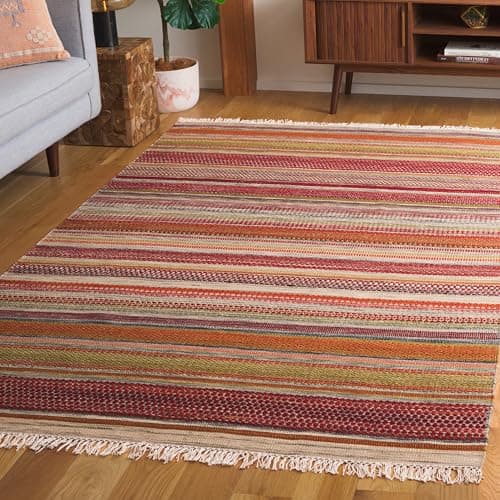 Safavieh Wool Flatweave Kilim RugThe safest thing you can put on a wood floor and still call a rug: flatwoven wool with no pile, no glue layer and nothing to trap moisture against the boards. It is thin and firm, and it will absolutely slide without a pad - but there is nothing on the underside that can react with a finish, which is the whole question on this page. | Under dining tables | Flatwoven wool, effectively no pile | $256.00$317.91View on Amazon #ad We earn a commission · Price as of October 11, 2026 |
| 2 | No image Safavieh Hand-Tufted Wool RugThe pick if you want a rug that feels like one. Wool on hardwood ages well in both directions: it recovers from furniture instead of holding dents, and the fiber breathes rather than sealing the boards. Hand-tufted rugs do have a latex adhesive inside them, which is exactly why this one belongs on a felt-and-rubber pad rather than straight on the finish. | Softness, over a pad | Hand-tufted wool pile on a cotton backing | |
| 3 | No image Natural Area Rugs Handmade Sisal RugHandmade sisal with a stitched fabric border and - the part that matters here - no latex layer on the back. Most power-loomed sisal is latex-backed, which is the thing to avoid on a floor you care about. This is the version that is just fiber, and it is the right rug for a hallway over wood. | Hallways over wood | Handmade 100 percent sisal with a stitched fabric border | |
| 4 | 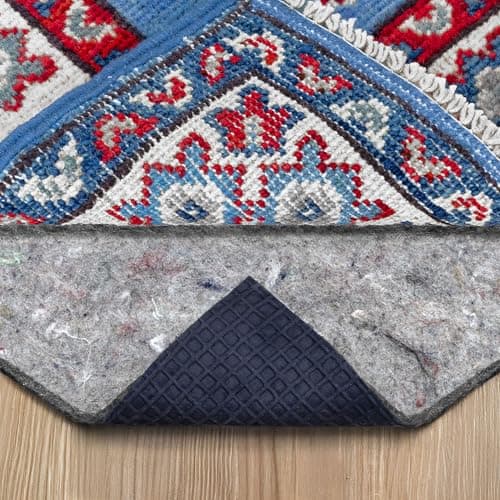 RUGPADUSA Superior-Lock Rug PadOn a hardwood floor the pad is not an accessory to the rug, it is the thing protecting the floor. Heat-pressed felt bonded to natural rubber gives grip without the plasticisers that cause problems, cushions the abrasion that grinds grit into a finish, and lets the boards breathe underneath. | The actual answer for hardwood | Heat-pressed felt bonded to natural rubber | $133.41$156.95View on Amazon #ad We earn a commission · Price as of October 11, 2026 |
The best rug for a hardwood floor is a wool or natural-fiber rug with nothing bonded to its back, laid on a felt-and-natural-rubber pad. What you are avoiding is simpler than what you are choosing: a solid latex or PVC backing sitting flat against a finished wood floor for years is the thing that discolors boards, and no amount of pile quality compensates for it.
That makes this a backing decision dressed up as a rug decision. Below: which backings are safe on a finish, which are not, what the pad actually does, and the four picks that get it right. If you only read one other page, make it rug pad for hardwood floors - the pad does more of this work than the rug does.
Safavieh Wool Flatweave Kilim Rug
Under dining tables
Product photo and price from Amazon, refreshed daily.
#ad We earn a commission · Price as of October 11, 2026
The safest thing you can put on a wood floor and still call a rug: flatwoven wool with no pile, no glue layer and nothing to trap moisture against the boards. It is thin and firm, and it will absolutely slide without a pad - but there is nothing on the underside that can react with a finish, which is the whole question on this page.
What it is
- Flatwoven — effectively no pile at all
- Wool fiber with a handwoven geometric pattern
- Reversible on many of the kilim patterns
What it does well
- Chairs slide over it instead of catching, which is exactly what a dining room needs
- No pile means nothing to crush, so furniture leaves no permanent dents
- Wool's soil resistance without wool's shedding
Don't buy it if
- Thin and firm underfoot — it will not feel luxurious
- Flatweaves need a good pad or they creep across the floor
- Spilled liquid goes straight through to the floor below
The correct rug shape for a dining room, in the correct fiber. Almost nobody buys this and regrets it.
Safavieh Hand-Tufted Wool Rug
Softness, over a pad
No licensed photo of this exact rug yet — see it on the Amazon listing.
The pick if you want a rug that feels like one. Wool on hardwood ages well in both directions: it recovers from furniture instead of holding dents, and the fiber breathes rather than sealing the boards. Hand-tufted rugs do have a latex adhesive inside them, which is exactly why this one belongs on a felt-and-rubber pad rather than straight on the finish.
What it is
- Wool pile hand-tufted to a cotton backing
- Made in India across a large pattern catalog
- Cut pile, generally medium height
What it does well
- Wool springs back from furniture compression in a way no synthetic does
- Naturally flame-resistant and naturally soil-resistant thanks to the lanolin in the fiber
- With normal care it outlives every synthetic rug on this page several times over
Don't buy it if
- Sheds noticeably for the first few months — normal for a tufted wool rug, not a defect
- Hand-tufted rugs are glued, and the latex adhesive can break down after many years
- Costs several times what a comparable polypropylene rug costs
The long-horizon purchase in this category: expensive once rather than cheap repeatedly.
Natural Area Rugs Handmade Sisal Rug
Hallways over wood
No licensed photo of this exact rug yet — see it on the Amazon listing.
Handmade sisal with a stitched fabric border and - the part that matters here - no latex layer on the back. Most power-loomed sisal is latex-backed, which is the thing to avoid on a floor you care about. This is the version that is just fiber, and it is the right rug for a hallway over wood.
What it is
- Listings state 100% natural fiber, handmade, in named weaves such as Pavillion, Sandstone, Karima and Deco
- Borders are sold as part of the design — black and fudge among them
- Runner lengths including 2 ft 6 in x 8 ft sit alongside the standard rectangles
What it does well
- Genuinely 100 percent sisal rather than a sisal-look weave, if that is what you came for
- The runner lengths are the real reason to look here — sisal in a hallway is this fiber at its best
- A stitched border takes most of the edge-fray risk out of a natural fiber rug
Don't buy it if
- Handmade means weave and tone vary between pieces more than a power-loomed rug does
- No latex layer on most of these, so it needs a pad to stay put
- Priced above the power-loomed sisal for the same square footage
The one to buy when you want undiluted sisal, a finished border, or a runner length the big brands do not stock.
RUGPADUSA Superior-Lock Rug Pad
The actual answer for hardwood
Product photo and price from Amazon, refreshed daily.
#ad We earn a commission · Price as of October 11, 2026
On a hardwood floor the pad is not an accessory to the rug, it is the thing protecting the floor. Heat-pressed felt bonded to natural rubber gives grip without the plasticisers that cause problems, cushions the abrasion that grinds grit into a finish, and lets the boards breathe underneath.
What it is
- Dense heat-pressed felt over a natural rubber gripping layer
- Available in quarter-inch and half-inch thicknesses
- Cuts to size with household scissors
What it does well
- Natural rubber rather than PVC or an adhesive-backed synthetic — this is the distinction that protects a hardwood finish
- The felt layer does real sound-dampening work in a room with hard floors
- Grips on glossy finishes where thinner pads slide
Don't buy it if
- Expensive relative to the rug it protects, which stops a lot of people buying one
- The half-inch version raises the rug enough to catch a door
- Heavy and awkward to handle at large sizes
The pad to buy if the floor under the rug is worth more than the rug, which on hardwood it almost always is.
How we chose these
We compared published fiber content and backing construction across current listings and selected for what contacts the floor, then for the usual rug qualities. We have not run a decade-long test on a finished floor and we do not claim to have - how we choose sets out the method and its limits.
No rug is on this list purely for looking good on wood. Everything with a solid synthetic backing was excluded regardless of how well it performs as a rug, because the whole point of the page is the floor underneath.
The backings, ranked by what they do to a finish
A rug back falls into one of four categories. Bare fiber - a flatweave, a handmade natural-fiber rug, a hand-knotted pile - has nothing on it at all, breathes freely and is the safest thing to put on wood. Cotton or canvas backing is stitched or woven cloth, also breathable and also fine. Those two are the ones to want.
Then there is latex or glue inside the rug, which is what every hand-tufted rug has: an adhesive layer sandwiched between the pile and a second backing cloth. That is not in direct contact with the floor, so it is a much smaller issue, and a pad removes it entirely. The category to avoid is a solid rubber, PVC or foam sheet bonded to the underside - the non-slip backing that cheap washable mats and bath rugs use.
| Backing | Breathes | Risk to a wood finish | Needs a pad |
|---|---|---|---|
| Bare fiber / flatweave | Yes | None | Yes, it slides |
| Cotton or canvas | Yes | None | Yes, it slides |
| Latex inside a tufted rug | Partly | Low, and a pad removes it | Yes |
| Latex sheet on the underside | No | Can mark over years | Pad it or avoid it |
| Solid PVC or foam | No | The real problem case | Avoid on wood |
The pad is the actual purchase
Buy the pad as carefully as the rug. The right one for hardwood is heat-pressed felt bonded to natural rubber: the felt cushions and absorbs the grit that would otherwise be ground into the finish by foot traffic, and the natural rubber grips without the additives that cause staining. It also holds the rug still, which matters because a rug sliding underfoot is a wear mechanism as well as a trip hazard.
What to avoid is the cheap open-weave sheet that looks like a plastic net, sold as a universal gripper. Those are usually PVC, they are the category most often associated with marked floors, and they are what people have under the rug when the floor goes patchy. Rug pads sets out which type suits which floor, and non-slip rug pads covers what actually stops movement.
Which fibers suit wood, and why
Wool is the best fit. It breathes, it handles the humidity swings a wood floor also experiences, it recovers from the furniture that would permanently dent a synthetic, and it lasts long enough to justify a good pad. Wool rugs covers the fiber, and the best wool rugs covers the constructions.
Sisal and jute are both fine on wood with one caveat: they are hygroscopic, so they take up moisture from the air and give it back. On a wood floor that is a feature rather than a problem as long as the rug can dry - which means a pad under it rather than the fiber laid flat against the boards. Avoid them in rooms where water gets spilled, because jute in particular stains permanently and the stain is on the rug, not the floor.
Polypropylene is not a problem fiber in itself, and polypropylene rugs are the right answer in plenty of rooms. The caution is that the cheap end of the category is where the solid rubber and PVC backings live. A woven polypropylene rug with no bonded underside is fine on wood; a printed mat with a grippy plastic back is the thing this page is warning about.
Three habits that matter more than the rug
- Lift the rug occasionally. Twice a year, roll it back and let the floor see air for a day. This is the single cheapest insurance against anything developing underneath, and it takes ten minutes.
- Vacuum under it, not just on it. Grit trapped between the rug and the floor is an abrasive, and foot traffic works it into the finish. Vacuuming rugs covers doing it without damaging the rug.
- Fix spills from above and below. A spill that soaks through a rug onto a wood floor needs the rug lifted and both surfaces dried - blotting the top and walking away leaves water trapped against the boards, which is the one way a rug genuinely damages a floor quickly.
What we would buy
If the floor is the thing you are protecting, the wool flatweave - it has nothing on its back at all, so there is no mechanism by which it can mark a finish, and chairs slide over it into the bargain. For a living room or bedroom where you want a rug that feels like one, the hand-tufted wool on a felt-and-rubber pad. For a hallway, the handmade sisal with no latex layer. And in every one of those cases the pad is not the optional line item - it is the part of this list doing the protecting.
Questions people actually ask
What kind of rug is safe for hardwood floors?
One with nothing solid bonded to the back: a wool flatweave, a handmade natural-fiber rug, or a tufted rug laid on a felt-and-natural-rubber pad. Avoid solid PVC, foam or rubber-sheet backings in long contact with a finish.
Can a rubber-backed rug damage a wood floor?
Over years, it can. A solid impermeable backing stops moisture passing through, and plasticisers in soft PVC and some rubbers can migrate into a floor finish, leaving a dulled patch the shape of the rug. A proper pad between them avoids it.
Do I need a rug pad on hardwood?
Yes, and it is the most important part of the purchase. It grips, it cushions the grit that would otherwise be ground into the finish, and it keeps an impermeable rug back off the boards.
Is wool or sisal better on hardwood?
Wool for comfort and longevity, sisal for a hallway that takes real traffic. Both breathe, which is what matters here. Choose sisal without a latex backing if the floor is one you care about.
Will a rug leave a mark on hardwood?
The rug itself usually will not. What leaves a mark is a sealed backing in long contact, trapped moisture, or sun fading the exposed floor around the rug while the covered part stays darker. Rotating and lifting the rug handles the last one.
Are jute rugs okay on hardwood?
Yes, with a pad so the fiber can dry rather than lying flat against the boards. Keep jute out of rooms where water gets spilled - the permanent damage there is to the rug, not the floor.
Sources
Read next
- Rug Pad for Hardwood FloorsWhich pads are safe on hardwood, which damage the finish, and how to tell them apart before buying.
- Rug PadsWhat a pad does, the four constructions, and how to match one to hardwood, vinyl, tile or carpet.
- The Best Wool Rugs (October 2026)Tufted, flatwoven and blended wool compared on pile, shedding and the room each one belongs in - with the honest cost of each.
- Non-Slip Rug PadsWhy rugs slide, which pad constructions genuinely hold, and the thin options for tight door clearances.
- Wool RugsWhat wool physically does that synthetics cannot — crimp recovery and lanolin — and what that buys you.
- Rug MaterialsWool, jute, sisal, polypropylene, cotton, viscose and the traditional weaves — compared on wear, feel, water and cost.