Rug Materials
Do Jute Rugs Smell?
There are two completely different jute smells. One is harmless and leaves on its own. The other means the rug is wet inside and is already failing.
The short answer
Yes, a new jute rug has a faint hay, grass or barnyard smell from how the fiber is processed. It is harmless and fades in two to four weeks with airflow. A sour or musty smell that appears later is not the fiber - it is moisture in the rug, and unlike the first smell it will not go away on its own.
Almost every complaint about jute smelling is actually one of these two things, and telling them apart is the whole of the problem. The first is a manufacturing smell on a new rug and needs patience. The second is a water problem on an established rug and needs action. They smell different, they arrive at different times, and the advice for one makes the other worse.
Smell one: the new-rug hay smell
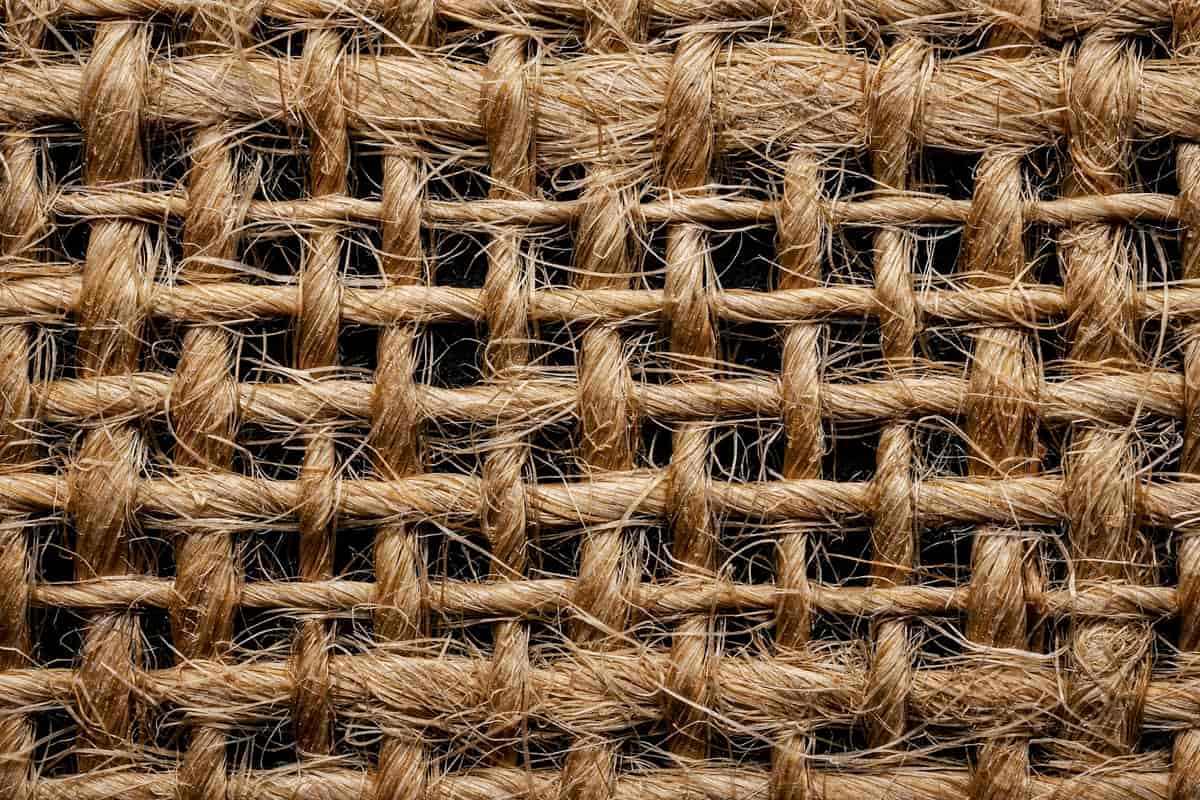
Jute fiber is separated from the plant stem by retting - the stems are soaked in water for days or weeks so bacteria break down the pectin holding the fiber bundles together. It is an ancient and entirely normal process, and it leaves an organic, slightly fermented, agricultural smell in the fiber. Add the jute backing, any natural latex in the construction, and weeks folded inside plastic packaging in a warm container, and a new jute rug arrives smelling distinctly of a barn.
This smell is not a defect, not a chemical, and not a sign the rug is damp. It is the fiber. It dissipates as the rug airs, and the only variable you control is airflow.
- Unroll it immediately and leave it unrolled. Most of the smell people report is concentrated by the packaging rather than created by it. A rug left rolled in a corner for a week smells far worse when you finally unroll it.
- Open the room up for a few days. Cross-ventilation does more than anything else on this list. Two windows beat one.
- Give it a day outside in dry shade if you can. Not direct sun, which bleaches jute unevenly, and not on grass, which is damp. A shaded deck or a driveway on a dry day is ideal.
- Baking soda, dry, overnight, then vacuum it off. This genuinely helps and it is the only additive worth using. Sprinkle it on, leave it eight hours, vacuum with the beater bar off.
- Wait two to four weeks before deciding. The curve is steep: most people stop noticing it in the second week and cannot find it by the fourth.
Smell two: the musty smell, which is moisture
A sour, cellar-like, unmistakably musty smell on a jute rug that has been down for months is mold or mildew growing in the fiber, and jute is an excellent food source for it. Jute is cellulose, it absorbs water readily, and it dries slowly from the inside - which is the exact combination mold needs. It does not take a flood. A damp basement, a bathroom, a conservatory with condensation, a plant pot that leaks slightly, a dog that comes in wet, or a rug laid on a concrete slab without a moisture barrier will all do it over a season.
The important part: this smell does not fade with airflow the way the retting smell does, and it is not something you can clean out of a jute rug. Shampooing it adds the one thing you must not add. The EPA's own guidance on mold in buildings is blunt about absorbent porous materials that have stayed wet - the recommendation is removal rather than remediation, because the growth is inside the material rather than on it.
| Retting smell | Musty smell | |
|---|---|---|
| When it appears | Day one, out of the packaging | Weeks or months in |
| Smells like | Hay, grass, barnyard | Cellar, sour, wet cardboard |
| Where it is strongest | The whole rug, evenly | One area, often a corner or the underside |
| Over time | Fades in 2-4 weeks | Gets worse |
| With airflow | Clears | Returns |
| The rug underneath | Dry | Cool, or damp to the back of the hand |
| What to do | Air it and wait | Find the moisture; likely replace the rug |
Safavieh Natural Fiber Jute Rug
A back that breathes
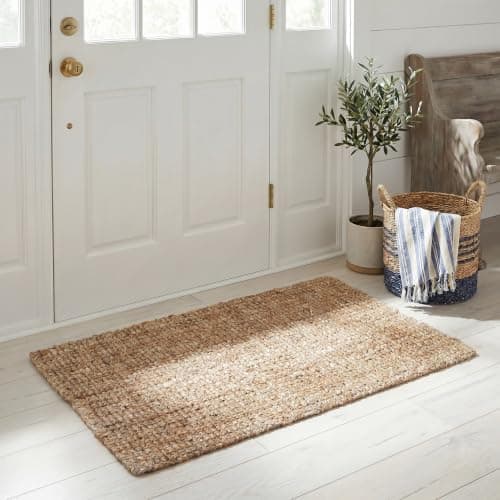
A handwoven jute on a cotton backing, which is the relevant detail for smell: a breathable cotton back lets the underside of the rug dry, and a jute rug that can dry is a jute rug that does not go musty. The initial hay smell is present and normal on this construction and clears within a few weeks.
What it is
- Handwoven jute with a cotton or canvas backing on most patterns
- Very wide size range including rounds and runners
- Undyed natural color plus bleached and overdyed options
What it does well
- The cheapest way into a genuine natural fiber rug rather than a jute-look print
- Texture hides crumbs and light traffic marks remarkably well
- Biodegradable at end of life, which almost nothing else in this list is
Don't buy it if
- It sheds heavily for roughly the first four to six weeks, then settles
- Jute and water do not get along — a wet spill left in it can leave a permanent brown ring
- Coarse underfoot. It is not a barefoot rug
The right rug for a dry, low-spill room where you want texture, and the wrong one anywhere near a kitchen sink.
Safavieh Braided Jute Round Rug
Flipping to air out
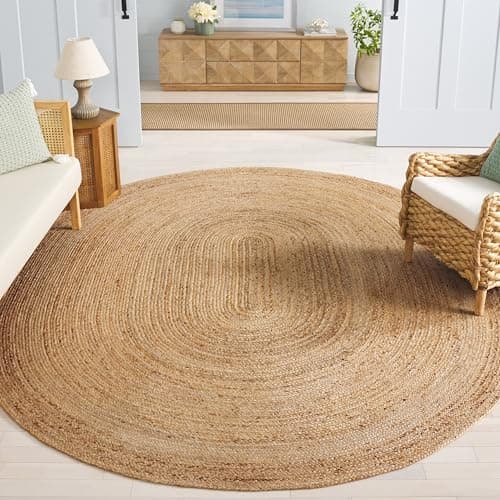
Reversible braided jute, and reversible matters here - you can lift and flip it, which is the single most effective thing you can do for a rug that has picked up a damp smell in one area. Nothing sealed against the floor means nothing holding moisture against it.
What it is
- Hand-braided rather than woven, which makes it reversible
- Round sizes from small accent up to room size
- Undyed natural jute
What it does well
- Reversible, so a worn face can simply be flipped
- Round jute is one of the few genuinely cheap round rug options at scale
- The braid hides dirt better than a flat weave
Don't buy it if
- Braided jute sheds more than woven jute, and for longer
- Braids can loosen at the edge if the rug is dragged rather than lifted
- The same water vulnerability as all jute
The best-value round rug here, as long as the room is dry and you will vacuum often for the first month.
iCustomRug Synthetic Sisal Rug
No plant smell at all
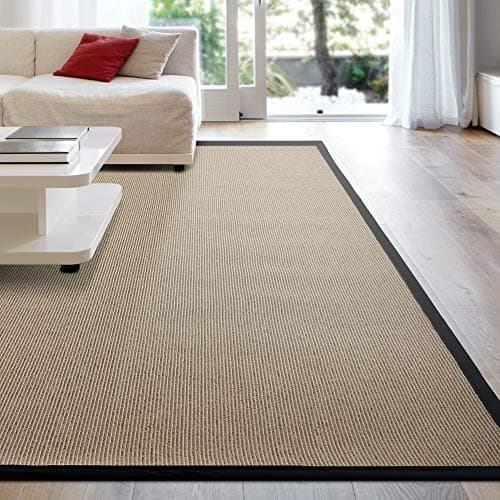
Product photo and price from Amazon, refreshed daily.
#ad We earn a commission · Price as of October 11, 2026
The answer if the smell is genuinely unacceptable rather than merely noticeable - a polypropylene rug in a ribbed natural-fiber-look weave. There is no plant matter in it, so there is no retting smell and no musty smell, ever, and it can go in a basement or a bathroom where no real jute belongs.
What it is
- Listed as 100% machine-made polypropylene, not a natural fiber
- Low-profile ribbed pile that imitates the look of woven sisal
- Area rug and runner sizes, described as stain resistant and easy to clean
What it does well
- Takes water, which no real sisal does — this is the kitchen, basement and humid-climate answer
- Softer underfoot than the fiber it imitates, which is the usual complaint about sisal
- No humidity rippling, because polypropylene does not absorb moisture from the air
Don't buy it if
- It is not sisal, and close up it does not pretend convincingly
- Synthetic fiber flattens under furniture and does not spring back
- Can hold static and a slight sheen that natural fiber never has
Buy this instead of sisal if the room is damp, the floor gets wet, or a cat lives there — it solves all three.
Keeping a jute rug from going musty
All of the prevention is about letting the underside dry. Use a breathable pad - an open-weave or felt pad rather than a solid rubber sheet, which seals moisture against the floor. Lift and air the rug a couple of times a year, especially if it sits on concrete or in a room that gets humid. Blot spills immediately and completely rather than letting them wick. And accept the fiber's limits: jute does not belong in a bathroom, a basement, a laundry room, an entryway in a wet climate, or outdoors, however much the look suits the space.
Storing rugs covers the related failure - a jute rug rolled up and put away slightly damp is the fastest way to ruin one, and it is where most mildewed jute actually comes from. For the fiber's wider constraints, jute rugs is the full picture and do jute rugs shed covers the other thing every new jute owner notices in week one.
The short version
A new jute rug smelling of hay is normal and temporary - unroll it, air the room, give it a month. A jute rug smelling musty is wet, and that is not a smell problem but a materials problem: find the moisture, and expect to replace the rug. If the room is one where that is a live risk, buy a synthetic that looks like natural fiber instead, which is the honest alternative rather than a compromise.
Questions people actually ask
Why does my new jute rug smell?
Jute fiber is separated from the plant by retting - soaking the stems so bacteria break them down - which leaves a hay or barnyard smell in the fiber. Packaging concentrates it. It fades in two to four weeks with airflow.
How long does the jute rug smell last?
Two to four weeks for the normal new-rug smell, and most people stop noticing it in the second week. Unrolling it straight away and ventilating the room are the two things that speed it up.
How do I get the smell out of a jute rug?
Airflow, plus dry baking soda left on overnight and vacuumed off with the beater bar switched off. A day outside in dry shade also works. Never wash or shampoo it - water stains jute permanently.
Does a musty jute rug mean mold?
Usually yes. A sour, cellar-like smell appearing weeks or months in means moisture and mildew inside the fiber. Unlike the new-rug smell it gets worse rather than fading, and it cannot be cleaned out of jute.
Can you put a jute rug in a basement?
No. Jute absorbs moisture and dries slowly, and a basement or a concrete slab without a moisture barrier will make it musty within a season. Use a polypropylene rug with a natural-fiber look instead.
Does a rug pad stop a jute rug smelling?
A breathable felt or open-weave pad helps, because it lets the underside dry. A solid rubber pad makes it worse by sealing moisture against the floor.
Do jute rugs smell when wet?
Yes, strongly and immediately, and that is a warning rather than a nuisance. A jute rug that has been soaked needs to be dried completely and fast, or the smell becomes permanent.
Sources
Read next
- Jute RugsJute's real behavior — heavy early shedding, permanent water staining, the smell — and where it genuinely belongs.
- Do Jute Rugs Shed?Yes, heavily, for four to six weeks. What is normal, how to speed it up, and the constructions that shed least.
- How to Clean a Jute RugWhy jute cannot be wet-cleaned, what to do the moment something spills, and whether a musty rug can be saved.
- Storing RugsHow to store a rug so it survives — rolled not folded, fully dry, off the ground, and never sealed in plastic.
- Jute vs SisalThe single trade-off that decides between the two natural fibers, mapped onto the rooms each belongs in.
- Rug MaterialsWool, jute, sisal, polypropylene, cotton, viscose and the traditional weaves — compared on wear, feel, water and cost.