Rug Materials
Do Jute Rugs Shed?
Yes, and more than the listing photos suggest. The good news is that it is finite and it has a known end date - here is what the first six weeks actually look like.
The short answer
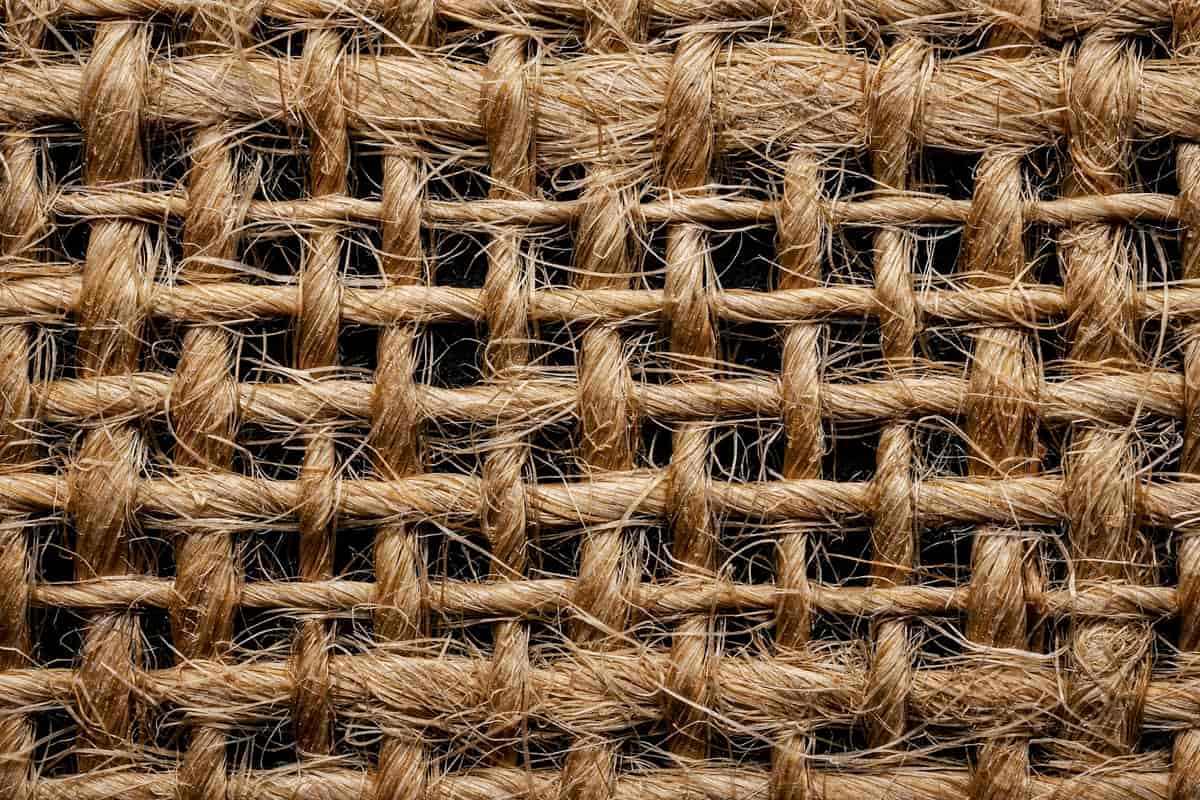
Yes - jute sheds more than any other common rug fiber. Expect noticeable loose fiber for four to six weeks, heaviest in the first ten days, then a steady decline to almost nothing. It is finite and it is normal. Long strands pulling from one spot, or shedding that has not reduced after two months, is a different thing and is a defect.
The reason is in the plant. Jute is a bast fiber - it comes from the stem of the plant, and the usable strands are short, soft and slightly hairy. Spinning short hairy fibers into yarn leaves a great many loose ends, and every one of those will eventually work its way out of the weave. Sisal, the fiber jute is most often compared against, comes from an agave leaf: the strands are long, stiff and smooth, which spins into a hard yarn with far fewer loose ends. That single botanical difference is the whole explanation for why sisal sheds about half as much and for half as long.
What six weeks of jute shedding actually looks like
People are not usually surprised that jute sheds. They are surprised by the volume in week one, and that is the point at which perfectly good rugs get returned. It is worth knowing the shape of the curve before you commit.
| Period | What you will see | What to do |
|---|---|---|
| Days 1-3 | Visible fiber on the floor around all four edges | Vacuum daily, suction only |
| Week 1 | A full canister of fluff per vacuum | Keep going - this is the peak |
| Weeks 2-3 | Clearly less, still obvious | Vacuum every other day |
| Weeks 4-6 | Occasional fiber, mostly at the edges | Normal weekly vacuuming |
| After 2 months | Almost nothing | If not, see below |
Two environmental factors change those numbers. A rug in a traffic lane sheds faster and finishes sooner, because footfall is what shakes the loose fiber out - a jute rug under a bed can still be shedding at three months simply because nothing has walked on it. And a jute rug on a hard floor looks like it is shedding far more than the same rug on carpet, because the fiber sits visibly on the boards instead of disappearing into a pile.
How to get it over with faster
- Turn the beater bar off. This is the single most important instruction on this page. A rotating brush does not remove loose jute fiber, it abrades the weave and creates more of it. Suction only, every time. Vacuuming rugs has the settings by machine type.
- Vacuum daily for the first week. Not because it will stop sooner, but because the fiber is already loose inside the weave and the only thing between it and your floor is how often you lift it out.
- Go in both directions. Jute is woven in a grid and the loose ends lie along the axis of the weave. Passing across the grain as well as along it gets considerably more out per pass.
- Do the edges by hand, gently. The perimeter has the cut ends and is where a vacuum head catches and pulls. Use the upholstery attachment parallel to the edge, never into it.
- Take it outside once, in week two, and shake it. For anything up to about 5x7 this removes more in five minutes than a week of vacuuming. Do not beat it - shake it.
- Do not put furniture back on it until week four. Loose fiber trapped under a sofa leg never comes out, and the weave compresses before it has finished settling.
Safavieh Natural Fiber Jute Rug
Standard jute, contained
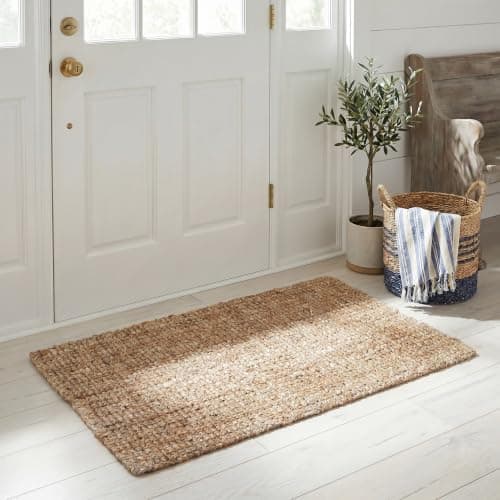
A handwoven jute over a cotton backing, and the cotton backing is the relevant detail: it holds the underside of the weave together so loose fiber works its way up and out rather than falling straight through onto the floor. Still a heavy shedder for the first month - this is jute - but a contained one.
What it is
- Handwoven jute with a cotton or canvas backing on most patterns
- Very wide size range including rounds and runners
- Undyed natural color plus bleached and overdyed options
What it does well
- The cheapest way into a genuine natural fiber rug rather than a jute-look print
- Texture hides crumbs and light traffic marks remarkably well
- Biodegradable at end of life, which almost nothing else in this list is
Don't buy it if
- It sheds heavily for roughly the first four to six weeks, then settles
- Jute and water do not get along — a wet spill left in it can leave a permanent brown ring
- Coarse underfoot. It is not a barefoot rug
The right rug for a dry, low-spill room where you want texture, and the wrong one anywhere near a kitchen sink.
Safavieh Braided Jute Round Rug
Less shedding from jute
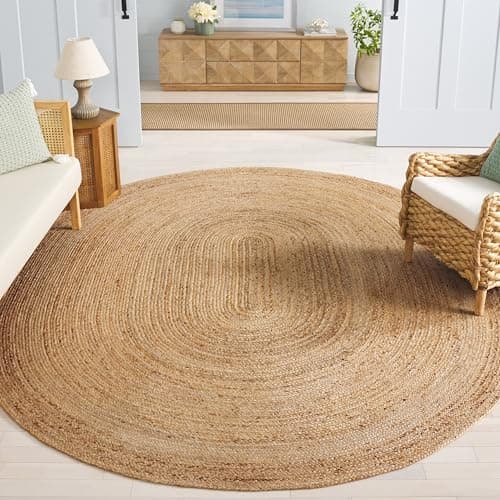
Braided construction sheds differently and generally less. The fiber is twisted into a rope before it is coiled, so there are fewer loose ends exposed per square foot than in a flat woven jute. It is reversible, which also means you can turn it and let the newly exposed side do its own settling on your terms.
What it is
- Hand-braided rather than woven, which makes it reversible
- Round sizes from small accent up to room size
- Undyed natural jute
What it does well
- Reversible, so a worn face can simply be flipped
- Round jute is one of the few genuinely cheap round rug options at scale
- The braid hides dirt better than a flat weave
Don't buy it if
- Braided jute sheds more than woven jute, and for longer
- Braids can loosen at the edge if the rug is dragged rather than lifted
- The same water vulnerability as all jute
The best-value round rug here, as long as the room is dry and you will vacuum often for the first month.
nuLOOM Natural Sisal Rug
Natural look, half the shedding
No licensed photo of this exact rug yet — see it on the Amazon listing.
The natural-fiber alternative if the shedding estimate on this page is a dealbreaker. Sisal is a long stiff leaf fiber rather than a short soft stem fiber, so it sheds roughly half as much and finishes in two to four weeks instead of four to six - same natural look, meaningfully less mess.
What it is
- Sisal is the hardest-wearing of the common natural rug fibers
- Tight flat weave with a backing to limit slip
- Natural and lightly dyed colorways
What it does well
- Substantially tougher than jute — it belongs in a hallway where jute does not
- The tight weave does not shed the way a braided jute does
- Holds its shape under furniture better than softer natural fibers
Don't buy it if
- Harsher than jute underfoot, and that is saying something
- Stains readily and cannot be wet-cleaned without risking the fiber
- Expands and contracts with humidity, so it can ripple in a damp season
Choose sisal over jute whenever feet, shoes or chair legs move across it daily.
Normal shedding versus a defect
Two different things get called shedding and only one is normal. Normal is loose fiber: short, fluffy, dusty, coming from the whole field of the rug, reducing week by week. A defect is the weave releasing - long strands, coming from one identifiable place, usually an edge or a spot where something caught, and not reducing at all over time. The second one leaves a visible gap or a fuzzy patch where the fiber came from. The first does not change the rug's surface at all.
If after two full months you are still collecting long strands from the same area, that is a returnable fault rather than the fiber behaving normally. It is uncommon, but it does happen on cheaply finished jute where the edge binding has not held.
Which jute constructions shed least
Braided sheds less than flat woven, because the fiber is twisted into rope before it is coiled and there are fewer exposed ends per square foot. A cotton or latex backing sheds less than an unbacked rug, because the underside of the weave is held together. A tighter, denser weave sheds less than a loose chunky one - and the chunky loose weaves are exactly the ones that photograph best, which is why the look people want is also the one that sheds hardest.
A jute-and-wool or jute-and-cotton blend sheds less than pure jute and feels softer, at the cost of some of the price advantage. If shedding is a genuine dealbreaker rather than a nuisance, the honest recommendation is to step sideways to sisal or to a synthetic, and jute versus sisal is the page that compares those properly.
What shedding does not tell you
It does not predict how long the rug will last. Jute's actual durability limits are water and traffic abrasion, not the settling period, and a jute rug that has finished shedding can still be a poor choice for a hallway. The best rug material for high traffic covers where jute belongs and where it does not, and jute rugs is the full fiber picture including the water problem, which is the one that actually ends jute rugs.
The short version: buy the jute if you want the look and the price, put it in a dry room, vacuum it properly with the brush off for six weeks, and do not judge it until week five. Almost nobody who waits that long is still bothered.
Questions people actually ask
How long do jute rugs shed for?
Four to six weeks, heaviest in the first ten days. After about two months a jute rug sheds almost nothing. A rug in a low-traffic spot takes longer, because footfall is what shakes the loose fiber out.
Do jute rugs shed more than sisal?
Yes, roughly twice as much and for twice as long. Jute is a short, soft stem fiber with many loose ends; sisal is a long, stiff leaf fiber that spins into a harder yarn.
How do I stop my jute rug from shedding?
You cannot stop it, only speed it up. Vacuum daily for the first week with the beater bar off, in both directions, and shake the rug outside once in week two. It finishes on its own.
Is it normal for a jute rug to shed a lot?
Yes, if the fiber is short, dusty and coming from the whole rug, and if it reduces week by week. Long strands from one spot that do not reduce over two months are a weave defect, not settling.
Do jute rugs shed forever?
No. A small amount of fiber at the edges continues indefinitely on any natural fiber rug, but the heavy shedding ends within about six weeks and does not come back.
Should I vacuum a new jute rug?
Yes, daily for the first week, with suction only and the rotating brush switched off. A beater bar abrades the weave and creates more loose fiber than it removes.
Which jute rug sheds the least?
A braided one with a backing, in a tight dense weave. The loose chunky weaves that photograph best are the heaviest shedders, and an unbacked rug sheds down onto the floor as well as up.
Sources
Read next
- Jute RugsJute's real behavior — heavy early shedding, permanent water staining, the smell — and where it genuinely belongs.
- Do Jute Rugs Smell?Yes - a faint hay or barnyard smell at first that fades in two to four weeks. A musty smell later is moisture, and that is a different problem.
- Do Sisal Rugs Shed?Yes, for roughly two to four weeks, then it stops. Why sisal sheds less than jute, what is normal, and when it signals a real problem.
- Jute vs SisalThe single trade-off that decides between the two natural fibers, mapped onto the rooms each belongs in.
- How to Clean a Jute RugWhy jute cannot be wet-cleaned, what to do the moment something spills, and whether a musty rug can be saved.
- Rug MaterialsWool, jute, sisal, polypropylene, cotton, viscose and the traditional weaves — compared on wear, feel, water and cost.