Rug Materials
Jute Rugs
Cheap, beautiful texture, biodegradable — and the single worst rug fiber you can put near water.
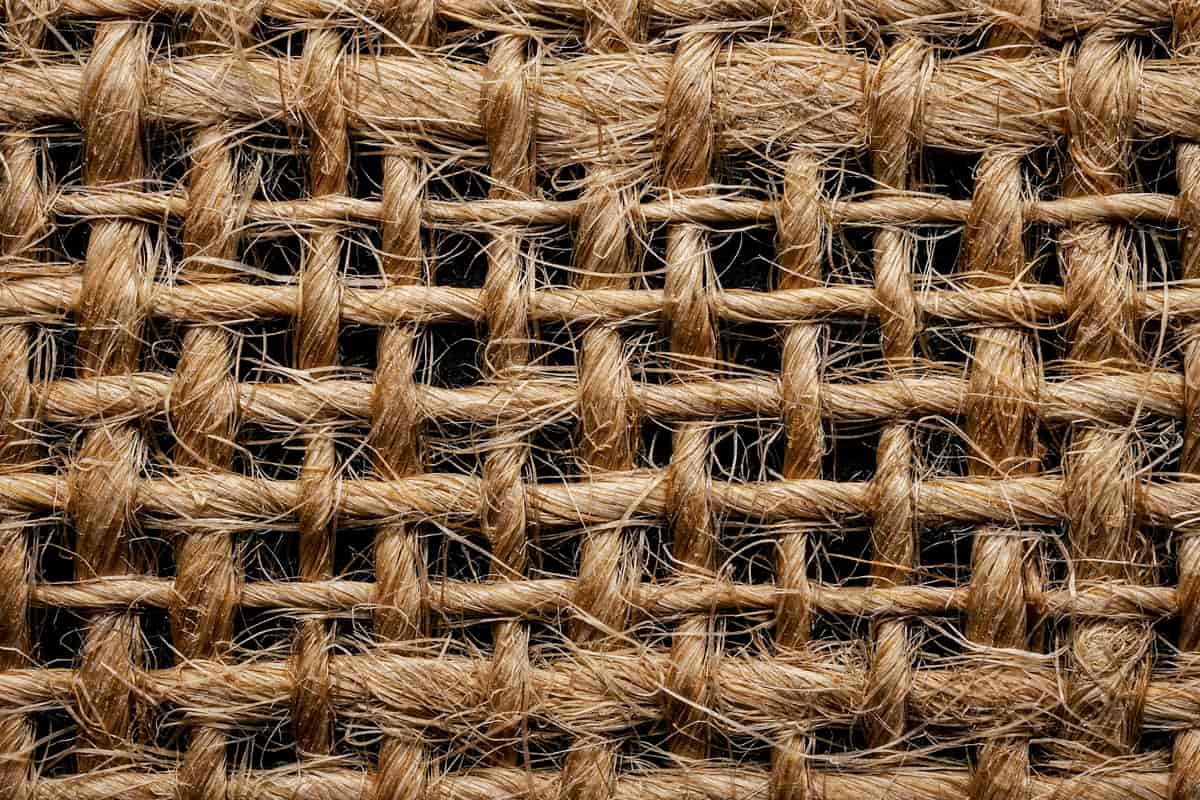
The short answer
Jute is a plant stem fiber: cheap, warm-toned, genuinely biodegradable, and badly behaved around water. It sheds heavily for the first four to six weeks then settles. A wet spill left in it dries as a permanent brown ring, because the fiber's own tannins move with the water. Keep it in dry rooms and it is excellent value.
The shedding, quantified honestly
A new jute rug will produce a visible amount of loose fiber every time you vacuum for roughly the first four to six weeks. Braided jute produces more and for longer than woven jute. It then drops off sharply and settles to very little. Owners consistently report this pattern, and it is a property of the fiber rather than a sign of a bad rug — but if you are not prepared for it, the first fortnight is alarming.
Water is the real constraint
Jute contains natural tannins. When water soaks in and then dries, it carries those tannins to the drying edge and deposits them there, leaving a brown ring around where the spill was. The stain is not dirt and it does not clean out — it is part of the fiber redistributed. This is why a single glass of water can permanently mark a jute rug.
Safavieh Natural Fiber Jute Rug
Natural texture on a budget
Illustrative photo of this rug type — not manufacturer imagery. Current product photos are on the Amazon listing.
The standard way into natural fiber: handwoven jute at a price no other real natural fiber matches. Expect heavy shedding for the first month or so, and keep it out of any room where water lands.
What it is
- Handwoven jute with a cotton or canvas backing on most patterns
- Very wide size range including rounds and runners
- Undyed natural color plus bleached and overdyed options
What it does well
- The cheapest way into a genuine natural fiber rug rather than a jute-look print
- Texture hides crumbs and light traffic marks remarkably well
- Biodegradable at end of life, which almost nothing else in this list is
Don't buy it if
- It sheds heavily for roughly the first four to six weeks, then settles
- Jute and water do not get along — a wet spill left in it can leave a permanent brown ring
- Coarse underfoot. It is not a barefoot rug
The right rug for a dry, low-spill room where you want texture, and the wrong one anywhere near a kitchen sink.
Safavieh Braided Jute Round Rug
Round rooms
Illustrative photo of this rug type — not manufacturer imagery. Current product photos are on the Amazon listing.
Reversible, which is unusual and genuinely useful — a worn face flips. Braided jute sheds more and for longer than woven, so budget for a month of vacuuming.
What it is
- Hand-braided rather than woven, which makes it reversible
- Round sizes from small accent up to room size
- Undyed natural jute
What it does well
- Reversible, so a worn face can simply be flipped
- Round jute is one of the few genuinely cheap round rug options at scale
- The braid hides dirt better than a flat weave
Don't buy it if
- Braided jute sheds more than woven jute, and for longer
- Braids can loosen at the edge if the rug is dragged rather than lifted
- The same water vulnerability as all jute
The best-value round rug here, as long as the room is dry and you will vacuum often for the first month.
The smell question
New jute has a faint natural vegetal smell, a bit like hay or hessian. It fades over a few weeks and is not a problem. A persistent musty smell is different: that means moisture has got into the fiber and not fully dried, and mildew is establishing. At that point airing it thoroughly in sunlight is the only real option, and if it does not clear, the rug is finished.
Where jute works
| Room | Verdict |
|---|---|
| Living room | Good — dry, moderate traffic, texture suits it |
| Bedroom | Good, though coarse underfoot bare |
| Dining room | No — spills are guaranteed |
| Kitchen | No — water and grease |
| Bathroom | No |
| Hallway | Poor — too soft; use sisal instead |
| Outdoors | No — mold within a season |
Jute versus the alternatives
The comparison people actually need is jute vs sisal: sisal is meaningfully tougher and jute is meaningfully softer, and that single trade-off decides it. If you are weighing natural fiber against wool generally, jute vs wool covers the cost-and-lifespan side.
What jute is genuinely best at
Texture at a price nothing else matches, and it is one of the few genuinely biodegradable rug options available. In a dry living room or bedroom, a jute rug brings a warmth and irregularity that a machine-woven synthetic cannot fake, for less money than almost any alternative. Bought for the right room, it is one of the best value purchases in this whole category.
Questions people actually ask
Do jute rugs shed a lot?
Heavily for roughly the first four to six weeks, then it settles substantially. Braided jute sheds more and for longer than woven jute.
Do jute rugs smell?
New jute has a faint hay-like smell that fades in weeks. A persistent musty smell means moisture has got in and mildew is establishing.
Can jute rugs get wet?
Avoid it. Water carries the fiber's natural tannins and dries as a permanent brown ring. Blot immediately and dry fast.
Are jute rugs soft?
Softer than sisal, coarse compared with wool. It is a texture rug rather than a comfort rug.
How long does a jute rug last?
Three to five years in a living room with moderate traffic. It is not a decades fiber, and it is priced accordingly.
Sources
Read next
- Jute vs SisalThe single trade-off that decides between the two natural fibers, mapped onto the rooms each belongs in.
- How to Clean a Jute RugWhy jute cannot be wet-cleaned, what to do the moment something spills, and whether a musty rug can be saved.
- Sisal RugsSisal's real strengths and its three real problems: humidity rippling, staining, and what cats do to it.
- Jute vs WoolJute against wool on cost per year, comfort and cleanability — and which is genuinely the better value.
- Storing RugsHow to store a rug so it survives — rolled not folded, fully dry, off the ground, and never sealed in plastic.
- Rug MaterialsWool, jute, sisal, polypropylene, cotton, viscose and the traditional weaves — compared on wear, feel, water and cost.