Rug Sizes & Pads
What Size Rug for a Twin Bed?
A twin is the one bed size where the usual rule - go bigger - is wrong. Against a wall, a twin only has one side that needs covering.
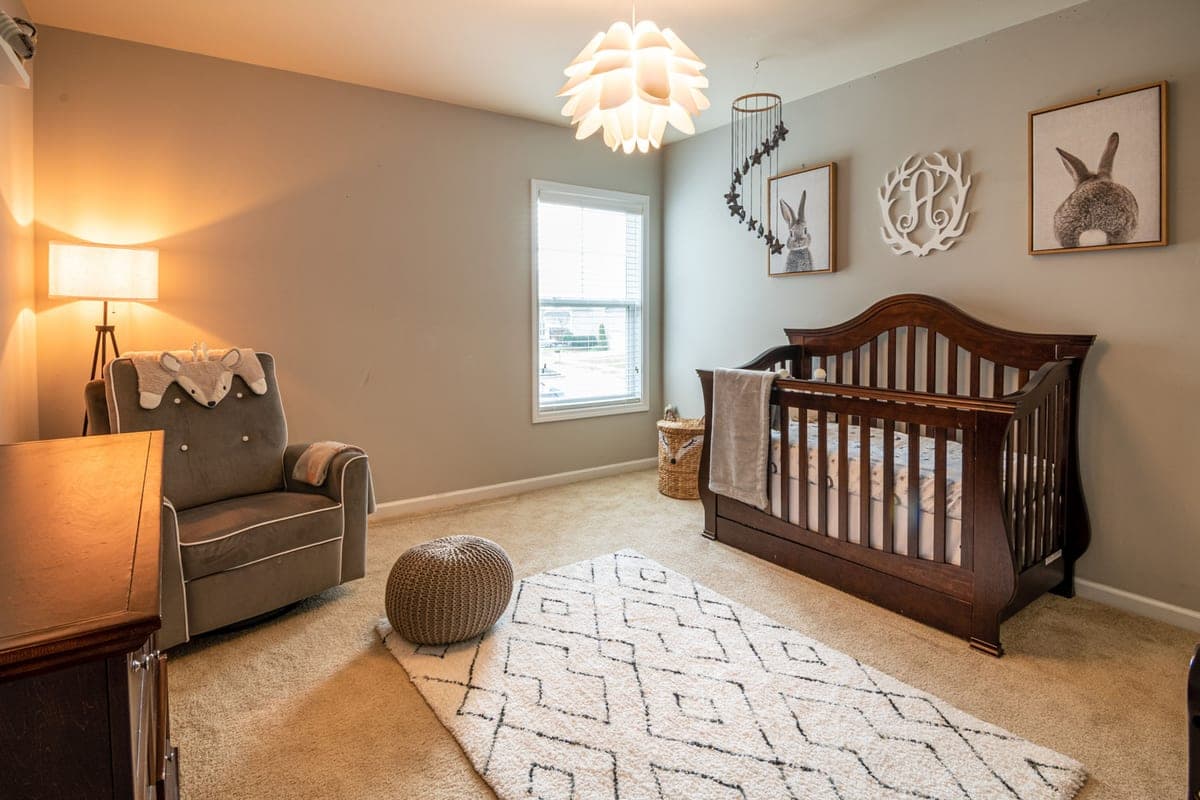
The short answer
A 5x7 placed beside the bed is the usual right answer for a twin, because a twin normally sits against a wall and only has one side you step onto. If the twin is freestanding in the middle of a room, an 8x10 underneath it works the same way it would for a larger bed. A single 2x6 runner on the open side is the budget version and is genuinely adequate.
A twin mattress is 38 by 75 inches - a twin XL is 38 by 80. That is narrow enough to change the whole geometry of a bedroom rug, and it is why the advice that works for a queen does not transfer. With a queen or a king, the bed sits out from a wall with floor on both sides and the question is how far the rug should extend past it. With a twin, the bed is usually pushed against a wall, there is floor on one side only, and half the usual rug is money spent under a mattress.
The two layouts, and the sizes for each
Work out which of these you have before looking at any sizes, because they lead to different answers.
| Layout | Rug size | Placement | Also works |
|---|---|---|---|
| Against a wall, long side | 5x7 | Beside the bed, not under it | 2x6 runner |
| Against a wall, headboard only | 8x10 | Under the bed, both sides clear | 5x7 at the foot |
| Freestanding in the room | 8x10 | Under the bed, 18in clear each side | 9x12 in a large room |
| Two twins side by side | 8x10 or 9x12 | Under both, centered on the gap | Two 2x6 runners |
| Bunk or loft bed | 5x7 | Beside the ladder side | 4x6 |
| Daybed against a wall | 5x7 or 6x9 | In front, like a sofa | 3x5 if the room is tight |
The against-the-wall case, in detail
This is the most common twin arrangement and the one where people overspend. The bed's long side is against a wall, so the only floor anyone's feet touch is the strip on the open side plus whatever is at the foot. A 5x7 laid alongside the bed - long edge a hand's width from the frame, starting level with the nightstand, running past the foot of the mattress - covers all of it. It does not need to go under the bed at all.
An 8x10 in that layout would put roughly 20 square feet of rug under a mattress nobody will ever see, in a room that is probably small to begin with. It also makes the room read smaller, because the rug runs under the furniture and out to the walls rather than defining open floor.
The freestanding case
If the twin sits out in the room - an only child in a large bedroom, a studio where the bed is the room divider, a guest room arranged symmetrically - then it behaves like any other bed and the standard rule applies: the rug goes under the bed, extending at least 18 inches past it on every side you walk on. For a twin that means an 8x10, which gives a comfortable margin on both sides and at the foot. Rug placement in a bedroom covers the geometry, and the same reasoning scales up through a full bed and a queen.
Two twins in one room
Shared children's rooms and guest rooms with two twins are the layout most often got wrong. Two separate small rugs, one per bed, visually chops a small room into pieces. One larger rug centered on the aisle between the beds - 8x10 in a standard room, 9x12 if the beds are well apart - reads as a single floor and is the better buy even though it is more rug. The alternative that works is two matching 2x6 runners, one along each bed's open side, which is cheap and deliberately symmetrical.
- Measure the floor, not the bed. With a twin the constraint is almost always the room, because twins live in small rooms.
- Decide against-the-wall or freestanding first. This single question determines the size more than any measurement does.
- Leave at least 18 inches of bare floor between the rug and the walls. Rug to the baseboards makes a small room look smaller and is the most common mistake in a child's bedroom.
- Check the door swing. Small rooms have doors that open onto the rug area, and a thick rug plus a pad will catch.
- Think three years ahead in a child's room. Buy washable and buy a size the room will still want when the twin becomes a desk or a full bed.
Well Woven Area Rug
The 5x7 answer
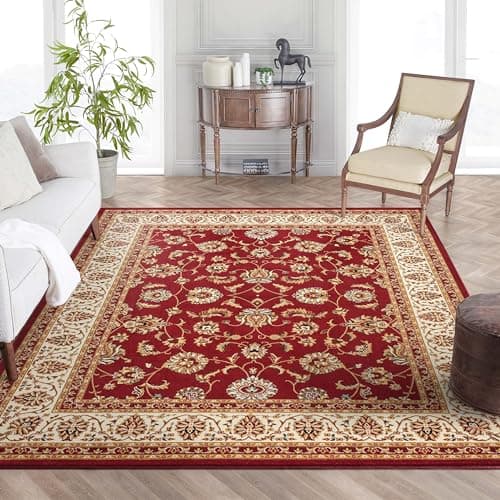
Product photo and price from Amazon, refreshed daily.
#ad We earn a commission · Price as of October 11, 2026
5x7 is the size this page keeps arriving at, and this is a straightforward machine-woven synthetic in it - medium pile, enough softness for a bedside landing, and priced for a room that may be a child's now and a guest room in three years. The size is the recommendation; this is a sound way to buy it.
What it is
- Strong coverage of the 5x7 and 5x8 sizes
- Medium pile with a defined pattern
- Jute-blend backing
What it does well
- 5x7 is the size most small living rooms actually need and it is often skipped
- Medium pile is a reasonable compromise between comfort and maintenance
- Patterns busy enough to hide a small room's concentrated traffic
Don't buy it if
- 5x7 is too small to get all the furniture legs on in most rooms — know that before buying
- Medium pile shows vacuum lines
- The backing can shed a little jute dust in the first weeks
The right size for an apartment, with the caveat that a 5x7 is a front-legs-on rug, not an all-legs-on one.
Lahome Washable Accent Rug
A child's room
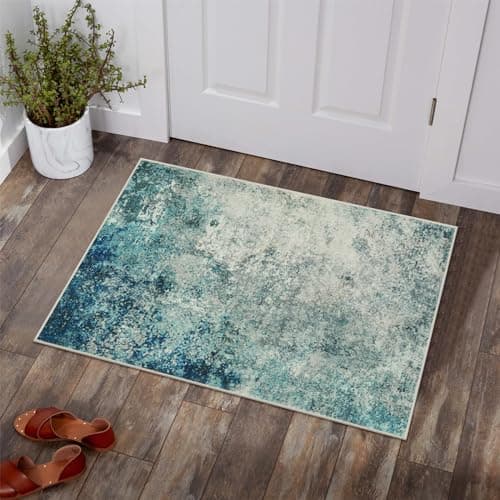
Product photo and price from Amazon, refreshed daily.
#ad We earn a commission · Price as of October 11, 2026
For a child's twin bedroom, where the rug's main qualification is that it can be washed. Ultra-thin, printed, genuinely machine washable, and cheap enough that a permanent spill is annoying rather than expensive. It is thin underfoot, which matters less on the smaller floor area a twin leaves.
What it is
- Listed at roughly 0.3 in thick — thin enough to sit under a door or a furniture leg
- Machine washable, and light enough to carry to the machine one-handed
- Widely stocked at 2x3 and 3x5
- Backing varies by variant: some are non-slip coated, the woven cotton versions have no backing at all
What it does well
- The thinness is the feature — no lip to catch a toe, no door that has to be lifted over it
- Cheap enough per rug that you can keep a second one in rotation while the first is in the wash
- Prints and colorways turn over quickly, so it does not look like the rug everyone else has
Don't buy it if
- There is nothing underfoot. Thin is comfortable to nobody
- The non-slip coating is a surface treatment and it gets less grippy with each wash
- Backing and construction differ between listings under the same brand — read the specific variant, not the brand
The right answer where a small rug gets dirty faster than it gets admired: a kitchen sink, a back door, a laundry floor.
Ottomanson Flatweave Runner
A twin against a wall
No licensed photo of this exact rug yet — see it on the Amazon listing.
The runner answer for a twin tight against a wall, where a 5x7 would mostly disappear under the bed. A single 2x6 on the open side covers the only floor anyone stands on, with a bonded rubber back so it stays put - and it costs a fraction of an area rug.
What it is
- Rubber backing bonded to the rug — no separate pad needed
- Cut-to-length runners in many lengths
- Very low profile, under a quarter inch
What it does well
- The backing means it stays put on tile and laminate without a pad
- Low enough that an interior door still clears it
- Available in awkward lengths standard sizing does not cover
Don't buy it if
- Rubber backings can discolor vinyl plank flooring over time — check the fiber before laying it on LVP
- Firm and thin; comfort is not part of the proposition
- The backing eventually hardens and cracks after several years
The most practical hallway runner in the set, with one real caveat about which floor you put it on.
What about over carpet
If the bedroom already has wall-to-wall carpet, the functional argument for a rug beside a twin disappears - the cold-floor problem is already solved. Buying one anyway is a reasonable decorative choice, especially in a rental, and the sizes above still apply. Go low pile and use a dense felt pad, which is the arrangement rug pad for carpet sets out.
The short version
Twin against a wall: a 5x7 beside the bed, or a 2x6 runner if the budget is tight. Twin freestanding: an 8x10 underneath with 18 inches clear on the sides you use. Two twins: one 8x10 centered on the aisle, not two small rugs. And in every case leave bare floor at the walls - a small room needs the margin more than it needs the coverage. For the shapes and sizes below 5x7, throw rugs covers the accent end of the range.
Questions people actually ask
What size rug goes under a twin bed?
An 8x10 if the twin is freestanding, which leaves about 18 inches clear on each side you walk on. If the twin is against a wall, do not put the rug under it at all - a 5x7 beside the bed covers the only floor you use.
Is a 5x7 rug big enough for a twin bed?
Yes, and it is usually the right size. Placed beside a twin that sits against a wall, a 5x7 covers the full landing strip and the foot of the bed without wasting rug under the mattress.
What size rug for a twin bed against the wall?
A 5x7 alongside the bed, long edge about a hand's width from the frame, starting level with the nightstand and running past the foot of the mattress. A single 2x6 runner is the cheaper version and works.
What size rug for two twin beds in one room?
One 8x10 centered on the aisle between them, or a 9x12 if the beds are well apart. Two separate small rugs chop up a small room visually and cost about the same.
What size rug for a twin XL bed?
The same as a standard twin. A twin XL is five inches longer, 38 by 80 inches, which does not change the rug size - only how far down the rug needs to reach at the foot.
Should a rug go under a bunk bed?
Better beside it than under it. Keep the rug edge away from the base of the ladder, which is a real trip point, and use a 5x7 or 4x6 to one side as a play and landing area.
Is 8x10 too big for a twin bed?
Usually, yes - if the bed is against a wall. Roughly 20 square feet of it sits under the mattress where it does nothing, in a room that is typically small. It is the right size only for a freestanding twin.
Sources
Read next
- What Size Rug for a Full Bed?A full bed is 54 by 75 inches. An 8x10 gives a proper border, a 6x9 is the tight minimum, and two runners cost far less than either.
- What Size Rug for a Queen Bed?Queen bed rug sizing with the measurements, plus when a 6x9 is genuinely enough.
- Rug Placement in a BedroomFour bedroom rug layouts and how to choose between them, including the two-runner option.
- The Best Rugs for a Nursery or Kids' RoomNursery and kids' room rugs chosen for floor play, washability and the snag and slip risks nobody mentions.
- The Best Runner Rugs for a BedroomBedside runners judged on how they feel barefoot and whether they stay put, plus the bed sizes where a pair beats one big rug.
- Rug Sizes & PadsSize charts by room and bed, the 8x10 vs 9x12 decision, placement rules, and the right pad for hardwood, vinyl or carpet.