Rug Materials
Rugs vs Mats
Not a size distinction, whatever the listings imply. A mat is built around a job and a rug is built around a floor.
Heads up: we earn a commission when you buy through links on this page, at no extra cost to you. It never changes which rug we put first — see how we choose and our affiliate disclosure.
Quick picks
The whole answer, before the detail. Tap any row to jump to that rug's full write-up further down the page.
| # | Rug | Best for | Construction | Price |
|---|---|---|---|---|
| 1 | 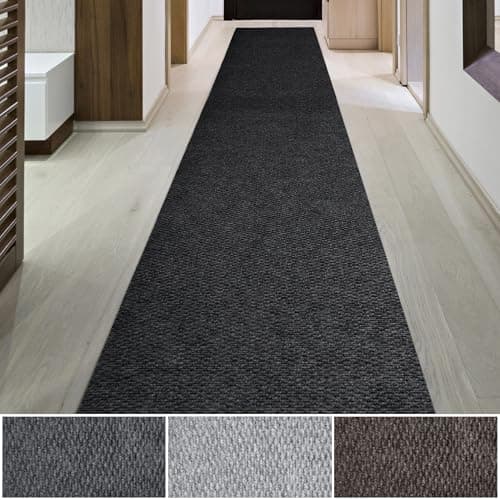 iCustomRug Entryway MatThe mat case made plainly: heavy synthetic pile on a rubber back, built to scrape grit off shoes and be hosed when it is full. No rug does this job and no rug should be asked to. | The mat job | Heavy-duty synthetic pile with a rubber back | $80.00View on Amazon #ad We earn a commission · Price as of October 11, 2026 |
| 2 | 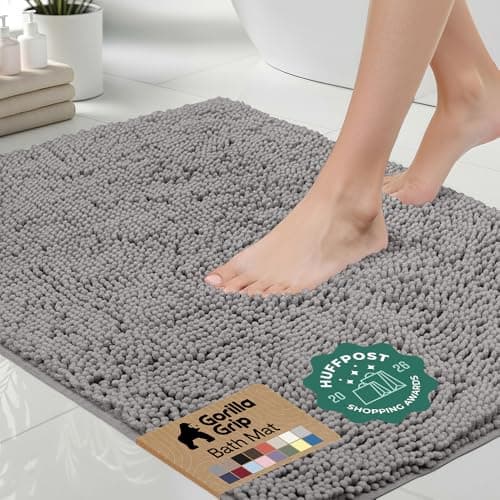 Gorilla Grip Chenille Bath RugA bath mat is a mat in every way that matters — bonded grip backing, absorbency, fast drying — even though the listings call it a rug. The naming is marketing; the construction is the thing to read. | Where the names blur | Chenille microfiber pile on a TPR rubber backing | $11.98$15.99View on Amazon #ad We earn a commission · Price as of October 11, 2026 |
| 3 | 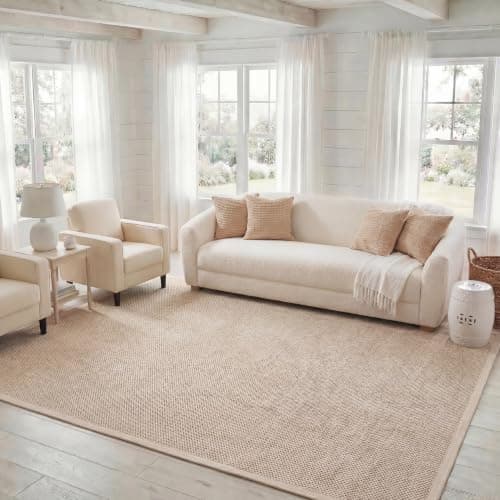 Safavieh Natural Fiber Sisal RugThe rug case for the floor just past the mat: hard-wearing enough for a hallway, large enough to cover the span a mat cannot, and bought as furniture rather than as a consumable. | The rug job | Power-loomed sisal with latex and a woven border | $372.57View on Amazon #ad We earn a commission · Price as of October 11, 2026 |
The short answer
A mat is defined by a job — scraping, absorbing, gripping or cushioning — and almost always has a bonded rubber backing and no need for a pad. A rug is defined by covering floor: larger, usually unbacked, and bought to last. Size is a symptom of that difference, not the difference itself.
The distinction nobody states
Retail listings use the two words almost interchangeably, which is why this question gets asked. A 2x3 piece of floor covering is sold as an accent rug by one brand and a mat by another, and the same product appears under both words on the same site. There is no standard dimension where one becomes the other.
The reliable test is what the thing is built around. A mat is engineered for a task and the construction follows from it: a coarse surface because it has to scrape, a thirsty pile because it has to absorb, a foam core because it has to cushion, a rubber back because it has to stay put while being walked on hard. A rug is engineered to cover an area and be pleasant underfoot, and its construction follows from that instead.
| Mat | Rug | |
|---|---|---|
| Bought for | A specific task | An area of floor |
| Typical size | Under about 3x5 | 3x5 and up |
| Backing | Bonded rubber or TPR, built in | Usually none — needs a separate pad |
| Needs a pad | No | Yes, on hard floors |
| Cleaning | Hosed, shaken or machine washed | Vacuumed, spot-cleaned, occasionally professional |
| Lifespan | A consumable — replaced on wear | Furniture — kept for years |
| Pattern choice | Narrow | Very wide |
| Edge | Molded or bound flush to the floor | Bound, fringed or serged |
iCustomRug Entryway Mat
The mat job
Product photo and price from Amazon, refreshed daily.
#ad We earn a commission · Price as of October 11, 2026
The mat case made plainly: heavy synthetic pile on a rubber back, built to scrape grit off shoes and be hosed when it is full. No rug does this job and no rug should be asked to.
What it is
- Dense synthetic pile built for scraping shoes
- Rubber backing
- Dark colorways
What it does well
- Dense enough to actually remove grit rather than just sit there looking like a mat
- Dark colors are the correct choice for the dirtiest square meter in the house
- The rubber back keeps it flat under a swinging door
Don't buy it if
- Needs a real beating to clean — a vacuum alone will not clear it
- Aesthetically it is a doormat and looks like one
- Not suitable outside an exposed door; it holds water
Buy the ugly effective one for the inside of the front door and a nicer rug one step further in.
Gorilla Grip Chenille Bath Rug
Where the names blur
Product photo and price from Amazon, refreshed daily.
#ad We earn a commission · Price as of October 11, 2026
A bath mat is a mat in every way that matters — bonded grip backing, absorbency, fast drying — even though the listings call it a rug. The naming is marketing; the construction is the thing to read.
What it is
- Thermoplastic rubber (TPR) backing rather than latex
- Thick chenille microfiber pile, close to an inch
- Machine washable, many size options
What it does well
- The TPR backing grips wet tile better than a latex-backed mat
- Chenille absorbs faster than a woven cotton mat of the same size
- Survives weekly washing without the backing flaking, which is where cheap mats fail
Don't buy it if
- Thick pile takes a long time to dry in a bathroom with poor ventilation
- The pile mats down if it is not shaken out between washes
- The rubber backing should not go in a hot dryer
The default bath mat: it grips, it absorbs, and it survives the wash cycle that kills its competitors.
Safavieh Natural Fiber Sisal Rug
The rug job
Product photo and price from Amazon, refreshed daily.
#ad We earn a commission · Price as of October 11, 2026
The rug case for the floor just past the mat: hard-wearing enough for a hallway, large enough to cover the span a mat cannot, and bought as furniture rather than as a consumable.
What it is
- Listings in this collection state sisal with latex fibers and a 3/8 inch pile
- Most designs carry a woven contrast border rather than a raw cut edge
- Sold in a long size ladder — small accents through 8x11 and 9x12
What it does well
- The easiest sisal to actually buy in the size you need, which is the whole problem with this fiber
- The border finishes the edge, so it does not fray the way a cut natural fiber edge can
- The latex component holds the weave together and limits creep on a hard floor
Don't buy it if
- The latex backing is why it should not be laid over radiant heat or left on a floor it can mark
- Colorways are natural, maize and marble tones — there is no real color range here
- It is still sisal: coarse barefoot, and it will not forgive a spill
The default sisal for most rooms, because the size ladder and the bordered edge remove the two things that usually derail a sisal purchase.
The jobs only a mat does
Three of them, and in each case substituting a rug makes the situation worse rather than merely different.
Scraping at a door
An entry mat has a deliberately coarse surface and a rubber back stiff enough to stay flat while a shoe drags across it. A rug in the same spot holds the grit in its pile instead of releasing it, and grit is abrasive — it is the mechanism by which hallway rugs wear out. The standard answer at a front door is two mats: a coarse one outside to take the worst off, an absorbent one inside to take the moisture. Then the rug starts. More on getting that right in entryway rugs.
Cushioning where you stand still
An anti-fatigue mat is a foam core in a wipe-clean skin, and it exists because standing still on a hard floor is what hurts, not walking on one. No rug delivers that: rug pile compresses and recovers, which is the opposite of what a foam core does. If you spend an hour at a sink or a counter, this is the one place a mat genuinely outperforms anything else — see kitchen rugs.
Gripping wet feet
A bath mat has a bonded TPR or rubber backing that holds on wet tile, a pile chosen to absorb and then dry quickly, and a size that fits the strip you actually stand on. A conventional rug in a bathroom stays damp, which is how bathroom rugs develop a smell and a mildew problem. Everything that matters here is covered in bathroom rugs.
The jobs only a rug does
The reverse is equally true, and it is where people more often get it wrong — because buying a mat is cheaper and feels like the cautious choice.
- Holding furniture together. A rug that reaches under the front legs of the seating makes a room read as one group. A mat in the middle of the same floor reads as something dropped there.
- Covering distance. A hallway needs a runner, not a mat, because the span is the point. One mat protects one step's worth of floor.
- Sound and warmth. Deadening a hard floor and taking the chill off it are functions of area and mass. A mat has neither.
- Protecting a floor under a table or a chair. The protected zone has to be larger than the furniture, which immediately puts you into rug sizes — see what size rug for a dining table.
Cost over time, which inverts the obvious
A mat is cheap to buy and is a consumable: an entry mat that is doing its job is full of grit and flattened within a couple of years, and replacing it is the normal outcome rather than a failure. A rug costs more up front and is expected to last years, which makes its cost per year the lower of the two in the spots where a rug is the right answer.
That inversion is why buying a mat for a rug's job is the expensive mistake and not the thrifty one. A 2x3 mat inside a door, replaced every eighteen months because it is taking traffic it was never sized for, costs more over a decade than one hard-wearing runner — and it never did the job in the first place. The same reasoning, applied to wall-to-wall carpet, is in rugs vs carpet.
What about the sizes in between
2x3, 2x4 and 3x5 are the genuinely ambiguous band, and they are where the labeling breaks down completely. A 3x5 by a bed is a rug doing a rug's job; a 3x5 inside a door with a rubber back is a mat. Nothing about the dimensions decides it. What decides it is whether you are covering floor or doing a task — and the construction will tell you which the maker had in mind. The small-size options are set out in throw rugs.
If a spot needs both — and a front door usually does — buy both. A mat at the threshold and a runner beyond it is a better outcome than one compromise item sized for neither job.
Questions people actually ask
What is the difference between a rug and a mat?
A mat is built for a task — scraping, absorbing, cushioning, gripping — and has a bonded backing. A rug is built to cover floor and usually needs a separate pad. Size follows from that, it does not define it.
At what size does a mat become a rug?
There is no standard. 2x3 to 3x5 is the ambiguous band and makers label it both ways. Read the backing and the construction instead of the word.
Can I use a mat instead of a rug at my front door?
Use both. A coarse mat at the threshold takes the grit off; a runner or rug beyond it covers the distance a single mat cannot.
Do mats need a rug pad?
No. A mat's rubber or TPR backing is its pad, and stacking it on another pad makes it slide rather than grip.
Is a bath mat a rug?
Functionally it is a mat — grip backing, absorbent pile, fast drying — however the listing is worded. A conventional rug in a bathroom stays damp and eventually smells.
Which lasts longer?
A rug, by a wide margin. Mats are consumables and a mat doing an entry job is usually finished within a couple of years.
Read next
- Rugs vs CarpetArea rugs against wall-to-wall carpet on cost, cleaning, allergies and flexibility — room by room.
- The Best Rugs for an EntrywayEntry rugs that actually scrape grit off shoes, why dark wins, and the two-mat system that protects the rest of the house.
- The Best Rugs for a BathroomBath rugs that grip wet tile, absorb fast and survive weekly washing — and the backing that decides all three.
- Throw RugsWhat a 2x3, 3x5 or 4x6 actually fits, which backing belongs on your floor, and the small rugs worth the money.
- Rug PadsWhat a pad does, the four constructions, and how to match one to hardwood, vinyl, tile or carpet.
- Rug MaterialsWool, jute, sisal, polypropylene, cotton, viscose and the traditional weaves — compared on wear, feel, water and cost.