Rug Materials
Turkish Rugs
A different knot, a geometric vocabulary, and the flatweave tradition that gave us the kilim.
The short answer
Turkish rugs use the symmetric knot — wrapped around two warps rather than one — which produces a robust pile and a distinctly geometric design vocabulary. Turkey is also the home of the kilim, a flatwoven rug with no pile at all, which is the tradition's most practical export.
The symmetric knot
Also called the Ghiordes knot. The yarn wraps fully around two adjacent warp threads, producing a firmly anchored, slightly coarser pile than the asymmetric Persian knot. It holds up extremely well under traffic. The trade is resolution: fine curvilinear detail is harder to achieve, which is part of why Turkish designs lean geometric while Persian ones lean floral.
Kilims: the flatweave tradition
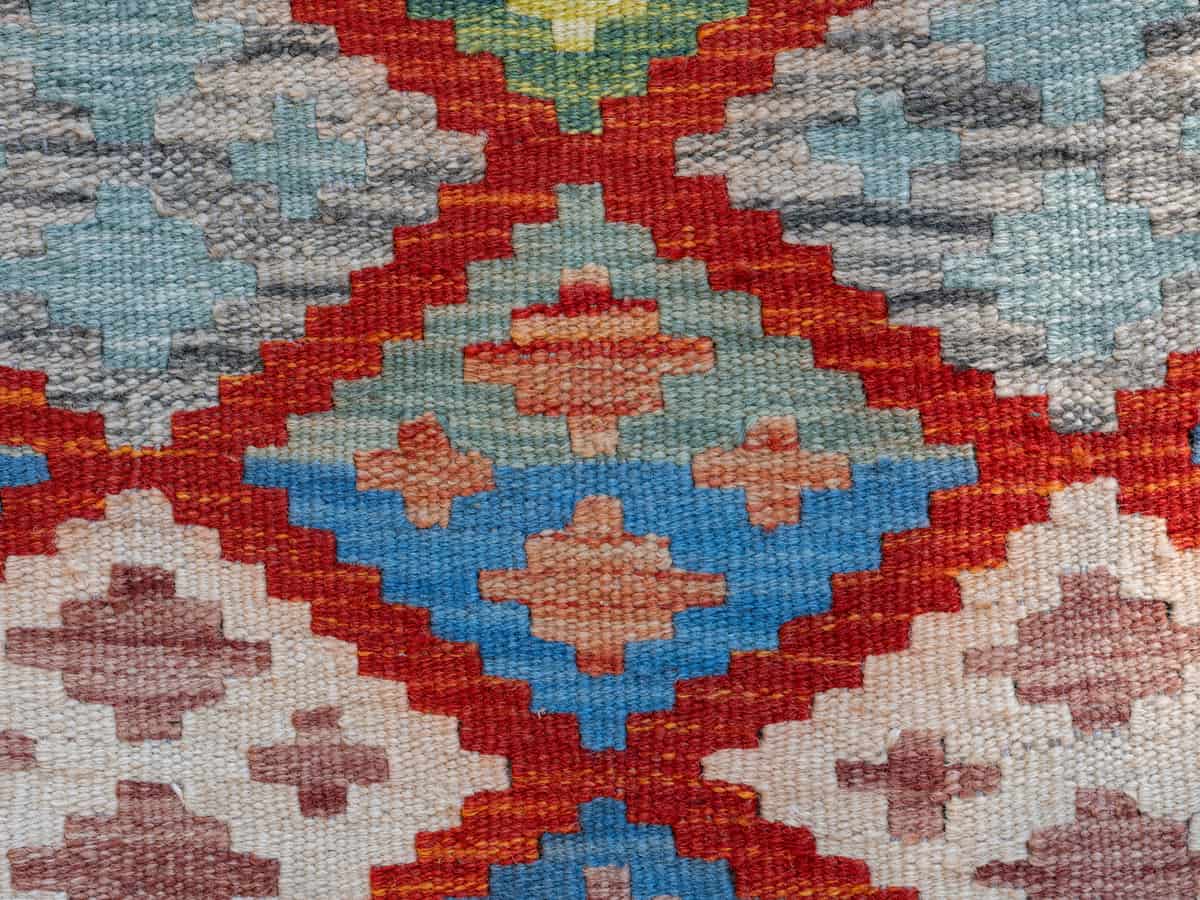
A kilim has no pile. It is woven flat, with the pattern formed by the weave structure itself, which makes it reversible in many cases and extremely thin. That sounds like a limitation and it is actually the reason kilims are so useful in modern homes: no pile means nothing to crush, so chairs slide, furniture leaves no dents, and the rug lies flat under a door.
This is why a wool kilim is our standard recommendation for dining rooms and home offices — the construction solves the exact problem those rooms pose.
Safavieh Wool Flatweave Kilim Rug
Under dining tables
Illustrative photo of this rug type — not manufacturer imagery. Current product photos are on the Amazon listing.
The kilim tradition in its practical modern form: flatwoven wool, geometric, reversible on many patterns, and the right construction for a dining room or an office.
What it is
- Flatwoven — effectively no pile at all
- Wool fiber with a handwoven geometric pattern
- Reversible on many of the kilim patterns
What it does well
- Chairs slide over it instead of catching, which is exactly what a dining room needs
- No pile means nothing to crush, so furniture leaves no permanent dents
- Wool's soil resistance without wool's shedding
Don't buy it if
- Thin and firm underfoot — it will not feel luxurious
- Flatweaves need a good pad or they creep across the floor
- Spilled liquid goes straight through to the floor below
The correct rug shape for a dining room, in the correct fiber. Almost nobody buys this and regrets it.
Unique Loom Sofia Traditional Rug
Budget and busy rooms
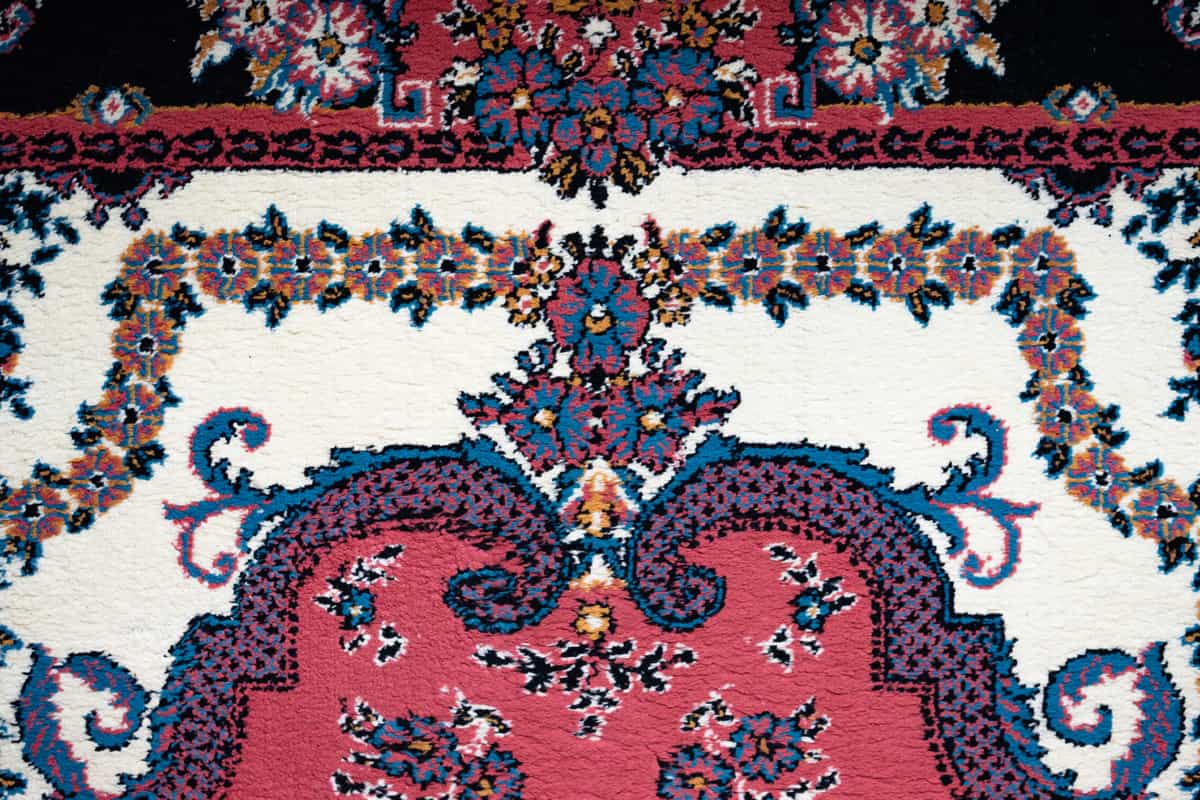
Illustrative photo of this rug type — not manufacturer imagery. Current product photos are on the Amazon listing.
For the traditional look in a synthetic at a much lower price. Dense pattern, solution-dyed, and it will survive a room a wool kilim might not.
What it is
- Machine-woven polypropylene with a jute-blend backing on most sizes
- Traditional Persian-style medallion and all-over patterns
- Very broad size range including runners and rounds
What it does well
- A convincing traditional look at a small fraction of the price of a wool equivalent
- Polypropylene is solution-dyed, so the busy pattern stays saturated for years
- Dense pattern is extraordinarily good at hiding traffic and pet hair
Don't buy it if
- Up close the synthetic sheen gives it away
- Pile crushes under heavy furniture and does not spring back the way wool does
- Not repairable in any meaningful sense — when it wears, it is finished
The honest answer for a busy room that wants a traditional pattern without an heirloom budget.
Overdyed vintage rugs, explained
You will see intensely saturated single-color rugs — deep teal, magenta, burnt orange — with a traditional pattern showing faintly through. These are genuine old Turkish rugs that have been chemically stripped of their original color and redyed in one strong tone. The underlying pattern survives as a ghost because different areas take the new dye differently.
Prayer rugs and the mihrab
Many traditional Turkish designs feature a mihrab — an asymmetric arch pointing to one end of the rug. These are prayer rugs, designed to be oriented. It is worth knowing both because it explains why the design is one-directional and because it is worth treating the object with a little awareness of what it is for.
Buying and caring
The same guidance as any wool rug applies: a good pad, annual rotation, suction vacuuming rather than a beater bar, and never hot water. Kilims specifically need a pad — with no pile and very little weight, a flatweave creeps across a hard floor otherwise. Rug pads covers what to use.
Questions people actually ask
What is a kilim?
A flatwoven rug with no pile, where the pattern is formed by the weave itself. Many are reversible, and they are thin enough for chairs to slide over.
What is the difference between Turkish and Persian knots?
The Turkish symmetric knot wraps two warps and makes a robust, more geometric pile. The Persian asymmetric knot wraps one and allows finer curvilinear detail.
What are overdyed rugs?
Genuine old rugs chemically stripped of their original color and redyed in one saturated tone, with the original pattern showing through faintly.
Are kilims good for dining rooms?
Very. No pile means chairs slide instead of catching and furniture leaves no permanent dents. They do need a pad to stop them creeping.
Do Turkish rugs need special care?
The same as any wool rug: cool water only, suction vacuuming, a pad underneath and annual rotation. Never steam clean them.
Read next
- Persian RugsWhat 'Persian' actually denotes, how to tell hand-knotted from machine-woven, and what you are paying for.
- Oriental RugsWhat the umbrella term covers, how the regional traditions differ, and what actually determines value.
- The Best Rugs for Under a Dining TableDining rugs sized so chairs never catch, in the constructions that survive dropped food.
- Rug PadsWhat a pad does, the four constructions, and how to match one to hardwood, vinyl, tile or carpet.
- Wool RugsWhat wool physically does that synthetics cannot — crimp recovery and lanolin — and what that buys you.
- Rug MaterialsWool, jute, sisal, polypropylene, cotton, viscose and the traditional weaves — compared on wear, feel, water and cost.