Rug Materials
Persian Rugs
A place and a technique, not a look. Knowing the difference is what stops you overpaying for a print.
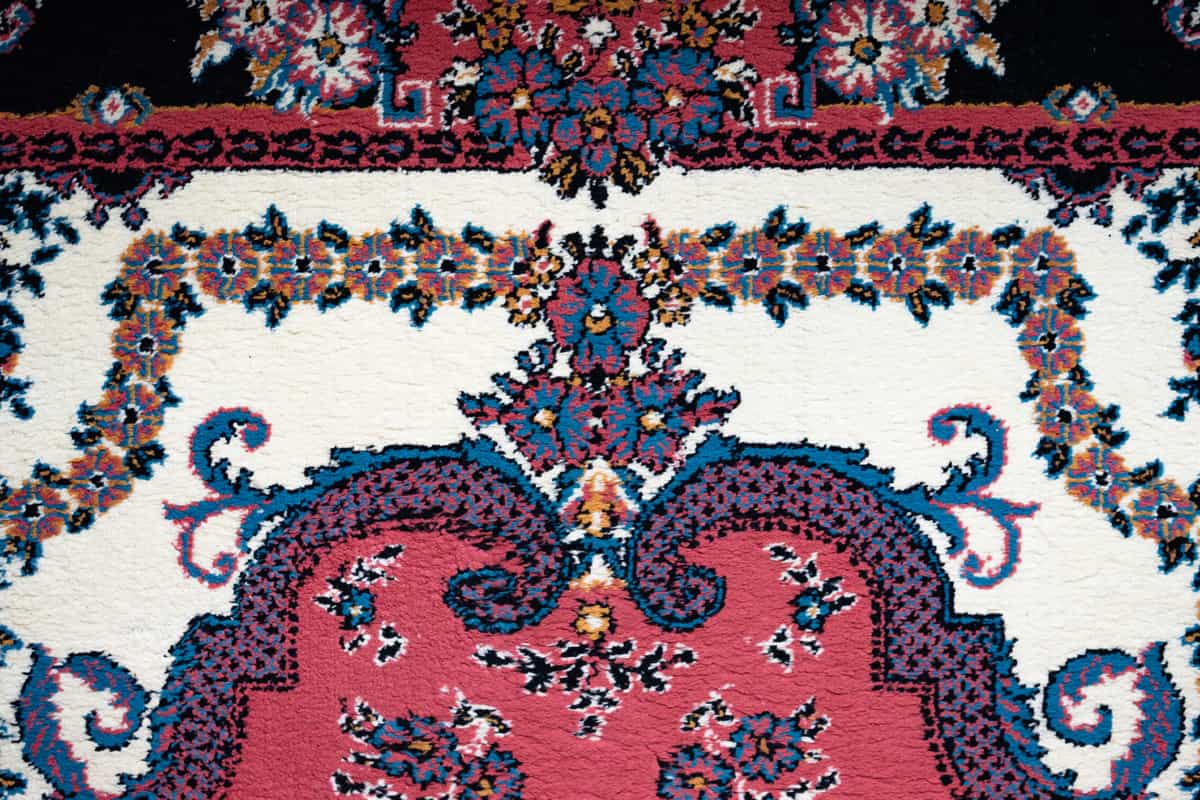
The short answer
A Persian rug is one made in Iran, traditionally hand-knotted in wool on a cotton foundation, named for the city or region whose pattern language it follows — Tabriz, Kashan, Heriz and so on. The word describes origin and technique. Most rugs sold as 'Persian style' are machine-woven synthetics wearing the pattern, which is a legitimate product at a completely different price.
Origin, pattern, technique
Persian weaving regions each developed distinct pattern languages — the medallion-and-corner layout, the all-over herati, the geometric Heriz — and those designs are now reproduced worldwide by every method available. So a rug can have a Persian design while having nothing to do with Persian making. Both exist, both are sold, and only one costs thousands.
How to tell what you are looking at
| Check | Hand-knotted | Machine-woven |
|---|---|---|
| Back of the rug | Pattern visible, slightly irregular knots | Pattern visible but perfectly regular, often with a grid backing |
| Fringe | Continuation of the foundation warp | Usually sewn or glued on separately |
| Pattern regularity | Small variations throughout | Exact repeats |
| Edges | Hand-wrapped selvedge | Machine overlocked |
| Weight | Heavy for its size | Lighter |
| Price | Hundreds to many thousands | Tens to low hundreds |
The fringe test is the quickest: on a genuine hand-knotted rug the fringe is the foundation warp emerging from the rug itself, so it cannot be removed without unravelling the structure. On a machine-woven rug it is usually a separate strip sewn on to imitate the look.
Unique Loom Sofia Traditional Rug
Persian look, synthetic budget
Illustrative photo of this rug type — not manufacturer imagery. Current product photos are on the Amazon listing.
An honest machine-woven reproduction of the Persian pattern language at a price that makes sense for a busy room. It is not a Persian rug and does not claim to be — it is a durable synthetic wearing the design.
What it is
- Machine-woven polypropylene with a jute-blend backing on most sizes
- Traditional Persian-style medallion and all-over patterns
- Very broad size range including runners and rounds
What it does well
- A convincing traditional look at a small fraction of the price of a wool equivalent
- Polypropylene is solution-dyed, so the busy pattern stays saturated for years
- Dense pattern is extraordinarily good at hiding traffic and pet hair
Don't buy it if
- Up close the synthetic sheen gives it away
- Pile crushes under heavy furniture and does not spring back the way wool does
- Not repairable in any meaningful sense — when it wears, it is finished
The honest answer for a busy room that wants a traditional pattern without an heirloom budget.
Safavieh Hand-Tufted Wool Rug
Wool, traditional patterns
Illustrative photo of this rug type — not manufacturer imagery. Current product photos are on the Amazon listing.
Wool in traditional patterns, which gets you the fiber quality that gives traditional rugs their depth and recovery without the hand-knotted price.
What it is
- Wool pile hand-tufted to a cotton backing
- Made in India across a large pattern catalog
- Cut pile, generally medium height
What it does well
- Wool springs back from furniture compression in a way no synthetic does
- Naturally flame-resistant and naturally soil-resistant thanks to the lanolin in the fiber
- With normal care it outlives every synthetic rug on this page several times over
Don't buy it if
- Sheds noticeably for the first few months — normal for a tufted wool rug, not a defect
- Hand-tufted rugs are glued, and the latex adhesive can break down after many years
- Costs several times what a comparable polypropylene rug costs
The long-horizon purchase in this category: expensive once rather than cheap repeatedly.
Revival Washable Rugs
Traditional and washable
Illustrative photo of this rug type — not manufacturer imagery. Current product photos are on the Amazon listing.
For the traditional look in a room that needs washability, this is the line whose vintage-style pattern work holds up best to close inspection.
What it is
- The washable line sits alongside the brand's hand-knotted catalog
- Patterns are drawn from traditional Persian and Turkish motifs
- Low pile with a soft hand for a printed rug
What it does well
- The pattern work reads far less like a printed rug than most of the category
- Muted, aged color palettes hide traffic better than crisp modern prints
- Sits in a brand that also sells the real hand-knotted article, and it shows in the design
Don't buy it if
- Priced well above the printed-polyester end of the category
- Narrower size range than Ruggable
- Vintage-look prints can look flat under strong direct light
Buy this when you want a traditional pattern and washability and are not willing to trade the look away to get it.
Why hand-knotted wool lasts so long
Each knot is tied individually around the foundation warps, so the pile is mechanically anchored rather than glued. There is no adhesive to fail, and a damaged area can be reknotted by a specialist. Combined with wool's crimp recovery, that is why genuine hand-knotted rugs are routinely repaired and passed on rather than replaced — and why the price is not simply a markup for provenance.
Living with a traditional rug
The dense, busy pattern that characterizes these designs is also the single best traffic-concealer available, which is why the look persists in high-traffic rooms. A wool hand-knotted rug wants a good pad, cool-water cleaning only (see how to clean a wool rug), and rotating once or twice a year so sun and traffic wear evenly.
The related traditions are worth knowing: oriental rugs is the broader umbrella term, and Turkish rugs use a different knot and a distinct design vocabulary.
Questions people actually ask
What makes a rug Persian?
Being made in Iran, traditionally hand-knotted in wool on a cotton foundation, following the pattern language of a specific weaving region.
How can I tell if a Persian rug is hand-knotted?
Check the fringe: on a hand-knotted rug it is the foundation warp emerging from the rug. Check the back for small irregularities in the knots.
Are Persian-style rugs worth buying?
As durable, good-looking synthetic rugs, yes. Just be clear you are buying the design rather than the object, and pay accordingly.
Why are hand-knotted rugs so expensive?
Each knot is tied by hand — a large rug represents many months of work — and the construction has no adhesive to fail, so it can be repaired indefinitely.
Do Persian rugs fade?
Natural dyes soften over decades, and that variation is generally valued rather than seen as damage. Rotating the rug keeps the change even.
Read next
- Oriental RugsWhat the umbrella term covers, how the regional traditions differ, and what actually determines value.
- Turkish RugsThe symmetric knot, the kilim flatweave tradition, and what overdyed vintage Turkish rugs actually are.
- Wool RugsWhat wool physically does that synthetics cannot — crimp recovery and lanolin — and what that buys you.
- How to Clean a Wool RugThe cool-water method for wool, why heat felts it permanently, and what to do about set-in stains.
- The Best Rug Material for High TrafficThe two properties that decide high-traffic performance, the three fibers that have both, and why construction matters as much.
- Rug MaterialsWool, jute, sisal, polypropylene, cotton, viscose and the traditional weaves — compared on wear, feel, water and cost.