Rug Materials
Oriental Rugs
A category covering several countries and centuries. Here is what separates the traditions, and what sets value.
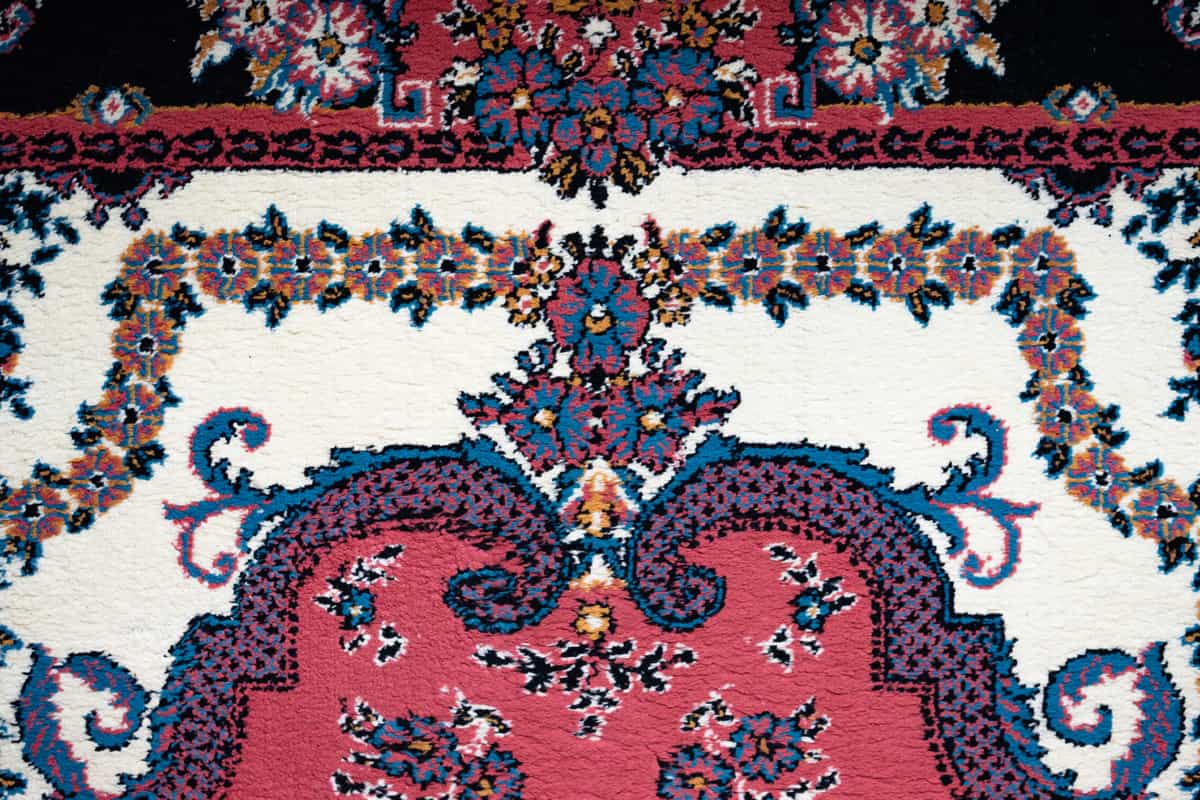
The short answer
Oriental rug is the umbrella term for hand-knotted rugs from the traditional weaving regions — Iran, Turkey, the Caucasus, Central Asia, India, China, Pakistan. Persian rugs are a subset. Value comes from knot density, fiber quality, whether dyes are natural, design, age and condition — in roughly that order.
The main traditions, briefly
| Tradition | Character | Knot |
|---|---|---|
| Persian (Iran) | Curvilinear, medallion and floral | Asymmetric (Persian) |
| Turkish (Anatolia) | Geometric, bold, prayer designs | Symmetric (Turkish) |
| Caucasian | Strongly geometric, high contrast | Symmetric |
| Turkmen / Bokhara | Repeating gul motifs, deep reds | Asymmetric |
| Indian | Often reproductions of Persian designs | Varies |
| Chinese | Open fields, sparse motifs, carved pile | Asymmetric |
The knot distinction is genuinely structural rather than trivia: the symmetric (Turkish) knot wraps around two warps and produces a robust, slightly less detailed pile; the asymmetric (Persian) knot wraps one and allows finer curvilinear detail. That is why Persian designs tend to flow and Turkish ones tend to be geometric — the technique shapes the vocabulary.
Safavieh Hand-Tufted Wool Rug
Softness that lasts
Illustrative photo of this rug type — not manufacturer imagery. Current product photos are on the Amazon listing.
Wool in traditional patterns at an accessible price — the practical route to the look and the fiber without hand-knotted economics.
What it is
- Wool pile hand-tufted to a cotton backing
- Made in India across a large pattern catalog
- Cut pile, generally medium height
What it does well
- Wool springs back from furniture compression in a way no synthetic does
- Naturally flame-resistant and naturally soil-resistant thanks to the lanolin in the fiber
- With normal care it outlives every synthetic rug on this page several times over
Don't buy it if
- Sheds noticeably for the first few months — normal for a tufted wool rug, not a defect
- Hand-tufted rugs are glued, and the latex adhesive can break down after many years
- Costs several times what a comparable polypropylene rug costs
The long-horizon purchase in this category: expensive once rather than cheap repeatedly.
Unique Loom Sofia Traditional Rug
Busy rooms
Illustrative photo of this rug type — not manufacturer imagery. Current product photos are on the Amazon listing.
The machine-woven version: durable, cheap, and extremely good at hiding traffic in a busy room. Not an oriental rug, and a perfectly sensible purchase.
What it is
- Machine-woven polypropylene with a jute-blend backing on most sizes
- Traditional Persian-style medallion and all-over patterns
- Very broad size range including runners and rounds
What it does well
- A convincing traditional look at a small fraction of the price of a wool equivalent
- Polypropylene is solution-dyed, so the busy pattern stays saturated for years
- Dense pattern is extraordinarily good at hiding traffic and pet hair
Don't buy it if
- Up close the synthetic sheen gives it away
- Pile crushes under heavy furniture and does not spring back the way wool does
- Not repairable in any meaningful sense — when it wears, it is finished
The honest answer for a busy room that wants a traditional pattern without an heirloom budget.
What actually determines value
- Knot density, measured in knots per square inch. Higher density means finer detail and far more labor. It is the single biggest driver of price.
- Fiber quality. Highland wool with a high lanolin content wears better and takes dye more richly than low-grade wool. Silk commands a premium and is far less practical underfoot.
- Dyes. Natural dyes age gracefully and are valued; early synthetic dyes can fade harshly. Modern good-quality synthetic dyes are stable and not a mark against a rug.
- Condition. Original pile height, intact selvedges and ends, no repiling. A rug with worn-down pile has lost most of its value even if the design is fine.
- Design and provenance. A recognized regional design executed well is worth more than an anonymous one.
Hand-knotted, hand-tufted, machine-woven
These three are frequently blurred in listings and they are very different products. Hand-knotted ties each knot individually and can be repaired indefinitely. Hand-tufted punches pile into a backing and glues it — it looks similar from above and has a finite life once the adhesive degrades. Machine-woven reproduces the design at speed in any fiber. Persian rugs covers how to tell them apart from the back and the fringe.
Living with one
Use a good pad, rotate it annually so sun and traffic even out, vacuum with suction rather than a beater bar, and never let anyone steam clean it — hot water felts wool permanently. The busy traditional pattern will hide an extraordinary amount of daily traffic, which is a large part of why these designs have stayed in use for centuries.
Questions people actually ask
What is the difference between oriental and Persian rugs?
Oriental is the umbrella term for hand-knotted rugs from the traditional weaving regions. Persian rugs — made in Iran — are one subset of it.
What makes an oriental rug valuable?
Knot density first, then fiber quality, natural dyes, condition, and design. Age alone does not create value.
Is a hand-tufted rug the same as hand-knotted?
No. Hand-tufted pile is punched into a backing and glued, which gives it a finite life. Hand-knotted pile is tied to the foundation and can be repaired indefinitely.
How do I clean an oriental rug?
Vacuum with suction only, blot spills with cool water, and use a specialist for deep cleaning. Never steam clean wool — hot water felts it permanently.
Are machine-woven oriental designs worth buying?
As practical rugs, absolutely — they are durable, cheap and excellent at hiding traffic. Just do not pay hand-knotted prices for one.
Read next
- Persian RugsWhat 'Persian' actually denotes, how to tell hand-knotted from machine-woven, and what you are paying for.
- Turkish RugsThe symmetric knot, the kilim flatweave tradition, and what overdyed vintage Turkish rugs actually are.
- Wool RugsWhat wool physically does that synthetics cannot — crimp recovery and lanolin — and what that buys you.
- How to Clean a Wool RugThe cool-water method for wool, why heat felts it permanently, and what to do about set-in stains.
- Braided RugsHow braided construction works, why most are reversible, and the shedding trade that comes with it.
- Rug MaterialsWool, jute, sisal, polypropylene, cotton, viscose and the traditional weaves — compared on wear, feel, water and cost.