Rug Sizes & Pads
Rug Placement in a Living Room
Once the size is right, position is what is left — and it is easier to get wrong than it sounds.
The short answer
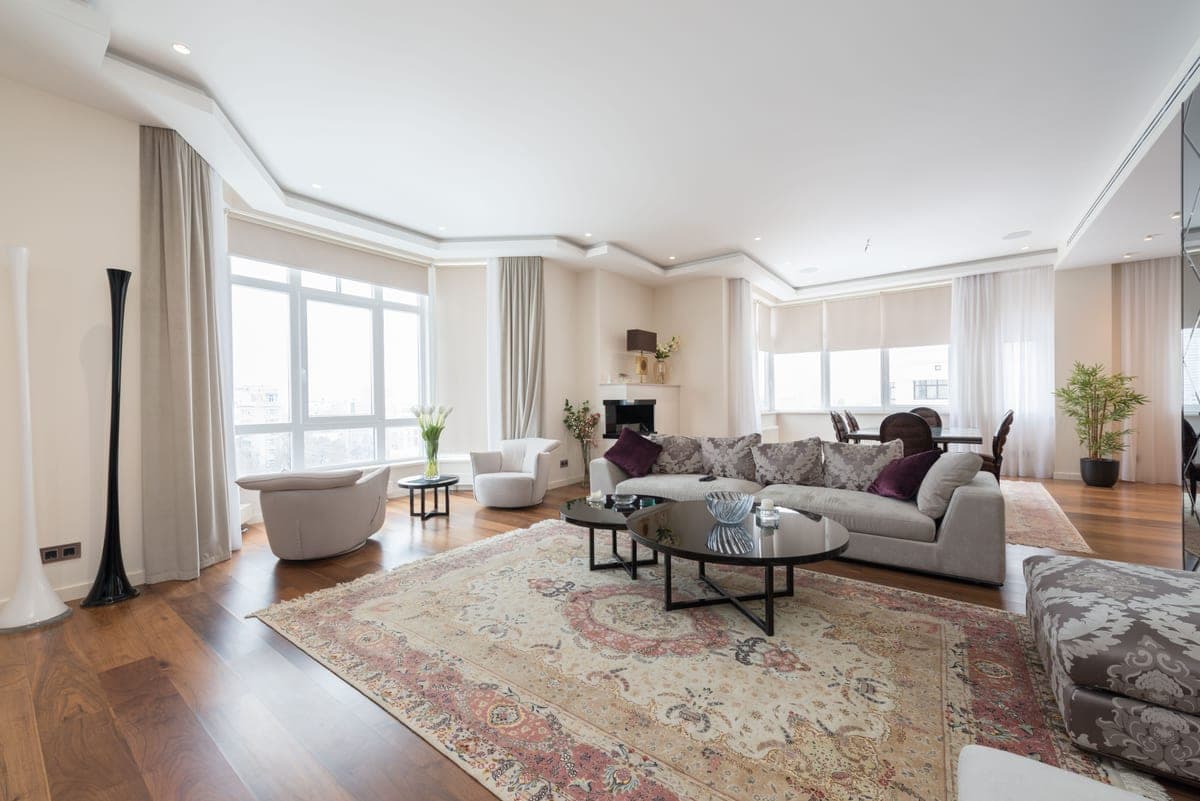
Use one of three layouts: all legs on, front legs on, or — in a small room only — floating with the rug touching the front legs. Center the rug on the seating group rather than the room, keep 8 to 18 inches of bare floor to the walls, and align the rug's long edge with the sofa.
The three layouts
| Layout | How it looks | When to use it |
|---|---|---|
| All legs on | Most considered; the rug anchors everything | Large rooms, 9x12 and up |
| Front legs on | Correct and normal; the workhorse | Standard rooms, 8x10 |
| Touching front legs | Acceptable in a small room | Small rooms where nothing bigger fits |
| Fully floating | Reads as a mistake | Avoid |
Gorilla Grip Felt and Rubber Rug Pad
Cushioning on a budget
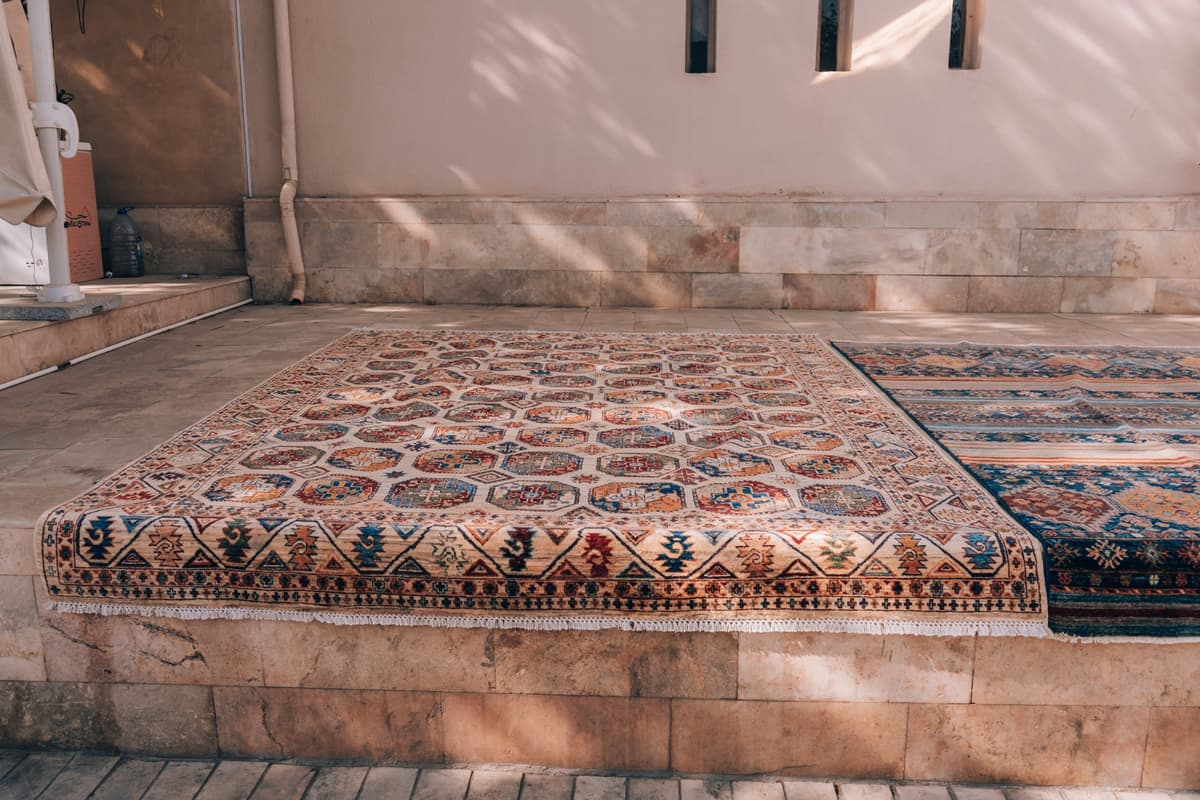
Illustrative photo of this rug type — not manufacturer imagery. Current product photos are on the Amazon listing.
Placement only holds if the rug stays where you put it. A pad trimmed an inch smaller than the rug on each side keeps the edges supported and stops the creep that ruins careful positioning.
What it is
- Felt-over-rubber construction at a lower price point
- Multiple thicknesses
- Trimmable
What it does well
- Close to the premium pad's performance for meaningfully less money
- Thick enough to make a thin flatweave feel like a real rug
- Widely available in odd sizes
Don't buy it if
- The rubber layer is less dense than the premium option and compresses sooner
- Can leave a faint residue on some sealed floors in hot rooms
- The felt sheds a little when first cut
The value pad. Right under a synthetic rug, and the wrong economy under an expensive rug on an expensive floor.
JONATHAN Y Modern Area Rug
If the real problem is size
Illustrative photo of this rug type — not manufacturer imagery. Current product photos are on the Amazon listing.
Most placement problems are really size problems in disguise. If the layouts below do not work in your room, the rug is probably a size too small.
What it is
- Machine-woven polypropylene in contemporary patterns
- Strong availability at 8x10, 9x12 and larger
- Low to medium pile
What it does well
- Genuinely available in the big sizes an open-plan room needs, which a lot of design-led brands are not
- Contemporary patterns rather than the traditional default
- Pile low enough for a room with dining chairs in it
Don't buy it if
- Large synthetic rugs arrive heavily creased and take weeks to flatten
- The pattern repeat is visible on the very large sizes
- Edges can fray if a vacuum beater bar catches them
A practical answer to the hardest sizing problem in the category: covering a large open room without spending four figures.
Center on the furniture, not the room
This is the most common placement error and it is invisible until you stand in the doorway. A rug centered on the room but offset under the seating group looks subtly wrong from the entrance, which is where people form their impression of the room. Center it on the seating group; if that leaves uneven margins to the walls, that is fine and nobody notices.
Sectionals and L-shapes
An L-shape has no symmetrical front, so front-legs-on needs the rug to extend past the chaise and not just under the long run. The alternative — filling the open area inside the L so the rug touches the front legs of both runs — is often the better-value layout and looks entirely deliberate. Rug size for a sectional covers the measurements.
Open-plan rooms
In open-plan, the rug is a boundary marker. Place it so its edges line up with something real — the end of a kitchen island, the line of a ceiling beam, the edge of a walkway — rather than floating in the middle of the space. Give the walkway around the seating zone at least 30 inches of clear floor so people are not stepping on and off the rug as they pass.
Doorways and walkways
- Do not end a rug in a doorway. An edge in a threshold is a trip point and it looks unresolved. Either extend past it or stop well short.
- Check door swing against rug plus pad. Most interior doors clear about half an inch.
- Keep 30 inches of clear walkway where people cross the room, so a rug edge is not in the path.
- Watch fireplace hearths. Leave the hearth clear — both for safety and because a rug butted against stone always looks cramped.
If none of the three layouts work in your room, the rug is almost certainly a size too small. What size rug for a living room has the measuring method.
Questions people actually ask
Should all furniture be on the living room rug?
It looks best, but front legs on is the standard and entirely correct. Fully floating — no legs on — is the layout to avoid.
Should the rug be centered in the room?
Center it on the seating group, not the room. Uneven margins to the walls go unnoticed; an offset rug under the sofa does not.
How much floor should show around a living room rug?
8 to 18 inches of bare floor between rug and wall. Less and it reads as fitted carpet that came up short.
Can a rug end in a doorway?
Better not. An edge in a threshold is a trip point and looks unresolved. Extend past the doorway or stop well short of it.
How do I place a rug with a sectional?
Extend past the chaise for a front-legs-on layout, or fill the open area inside the L so the rug touches the front legs of both runs.
Read next
- What Size Rug for a Living Room?How to measure a living room rug properly — the front-legs-on rule and the three standard layouts.
- Rug Size for a SectionalSizing a rug for an L-shaped sectional, where symmetry rules break — and the three layouts that work.
- Rug Placement in a BedroomFour bedroom rug layouts and how to choose between them, including the two-runner option.
- The Best Rugs for a Living RoomLiving room rugs, starting with the sizing rule that decides everything, then the fibers that survive a traffic lane.
- 8x10 vs 9x12The 8x10 versus 9x12 decision settled with measurements rather than instinct.
- Rug Sizes & PadsSize charts by room and bed, the 8x10 vs 9x12 decision, placement rules, and the right pad for hardwood, vinyl or carpet.