Rug Sizes & Pads
Rug Size for a Sectional
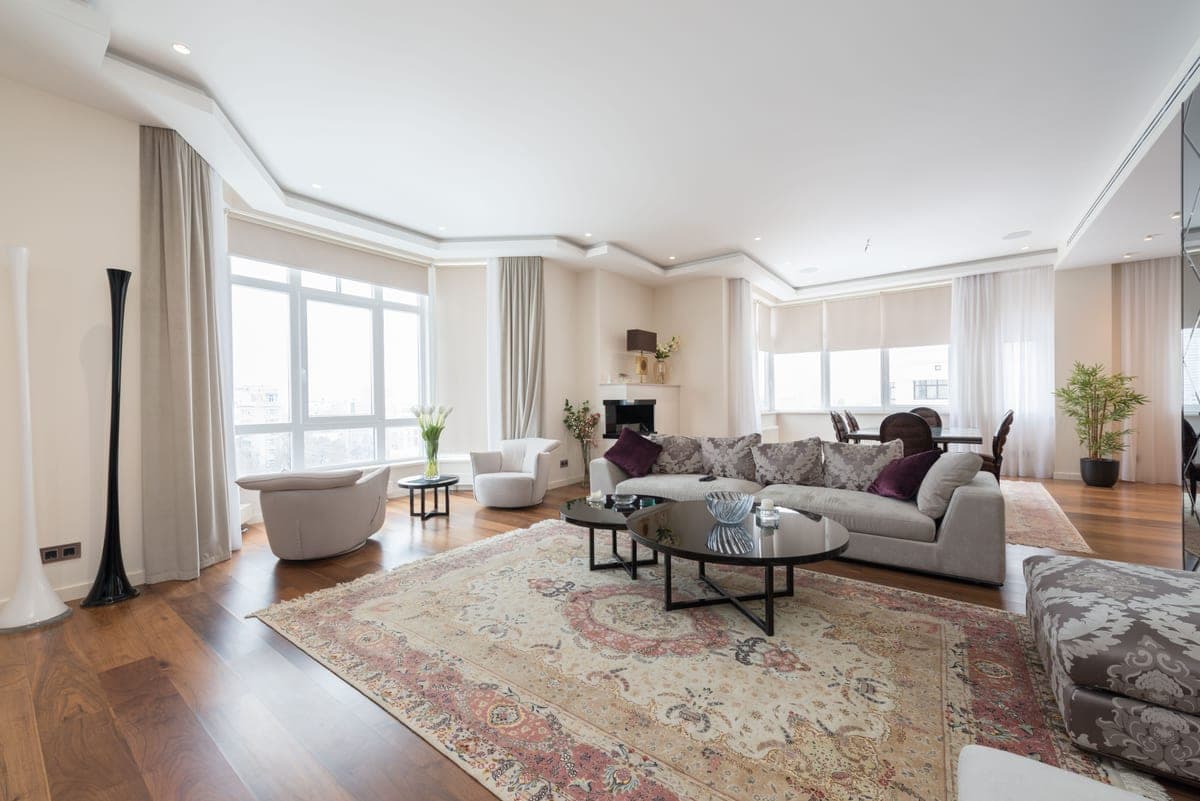
An L-shape has no symmetrical front, which is why the normal rug rules stop working here.
The short answer
Measure the full outer footprint of the L including the chaise, add about two feet on the open sides, and round up — which usually means 9x12 or larger. The key difference from a normal sofa is that the rug must extend past the chaise, not stop where the long side of the sofa ends.
Why sectionals break the normal rule
With a conventional sofa and two chairs, the seating faces inward and the rug sits in the middle of a roughly symmetrical arrangement. A sectional is asymmetric: one arm runs long, the chaise projects forward, and there is usually no facing furniture on at least one side.
The result is that a rug sized by eye almost always ends up too short in one direction — typically it reaches under the long side and stops level with the chaise, which looks like an error from every angle in the room.
JONATHAN Y Modern Area Rug
Open-plan living rooms
Illustrative photo of this rug type — not manufacturer imagery. Current product photos are on the Amazon listing.
Sectionals almost always need a 9x12 or larger, and that is exactly where a lot of ranges stop. Availability at the big sizes is the constraint here more than anything else.
What it is
- Machine-woven polypropylene in contemporary patterns
- Strong availability at 8x10, 9x12 and larger
- Low to medium pile
What it does well
- Genuinely available in the big sizes an open-plan room needs, which a lot of design-led brands are not
- Contemporary patterns rather than the traditional default
- Pile low enough for a room with dining chairs in it
Don't buy it if
- Large synthetic rugs arrive heavily creased and take weeks to flatten
- The pattern repeat is visible on the very large sizes
- Edges can fray if a vacuum beater bar catches them
A practical answer to the hardest sizing problem in the category: covering a large open room without spending four figures.
Safavieh Wool Flatweave Kilim Rug
Where the chaise foot sits
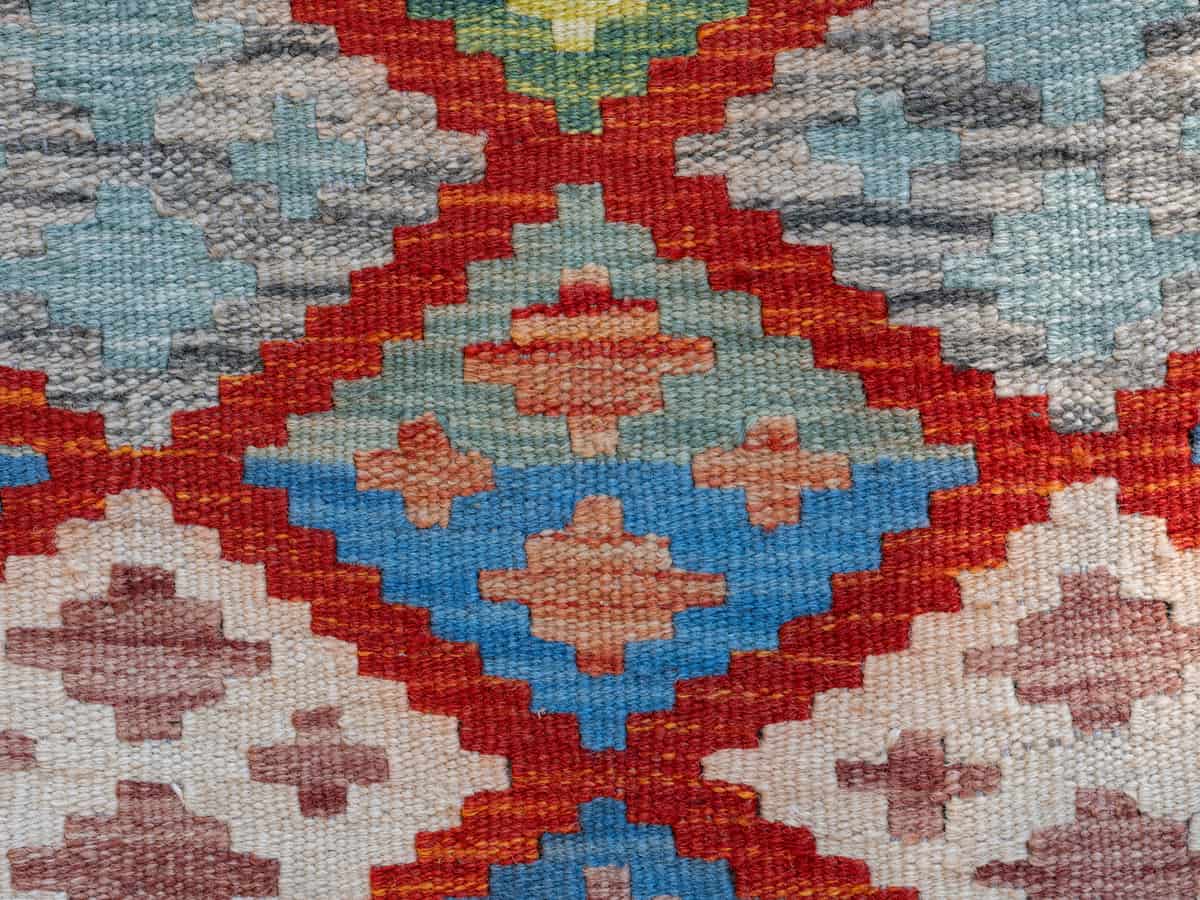
Illustrative photo of this rug type — not manufacturer imagery. Current product photos are on the Amazon listing.
A flatweave is easier to live with under a sectional, where a chaise foot sits in one place indefinitely and any pile would crush permanently beneath it.
What it is
- Flatwoven — effectively no pile at all
- Wool fiber with a handwoven geometric pattern
- Reversible on many of the kilim patterns
What it does well
- Chairs slide over it instead of catching, which is exactly what a dining room needs
- No pile means nothing to crush, so furniture leaves no permanent dents
- Wool's soil resistance without wool's shedding
Don't buy it if
- Thin and firm underfoot — it will not feel luxurious
- Flatweaves need a good pad or they creep across the floor
- Spilled liquid goes straight through to the floor below
The correct rug shape for a dining room, in the correct fiber. Almost nobody buys this and regrets it.
The three layouts that work
| Layout | How it sits | Size needed |
|---|---|---|
| All legs on | The whole sectional sits on the rug, plus coffee table | 10x14 or larger |
| Front legs on | Front legs of every section on the rug, back legs off | 9x12 |
| Inside the L only | Rug fills the open area inside the L, touching the front legs | 8x10 |
| Floating in the L | Rug sits clear of the furniture entirely | Usually looks wrong |
Inside the L is the layout people overlook and it is often the best value: the rug fills the open floor the sectional wraps around, touching the front legs of both runs. It uses less rug than front-legs-on and still reads as deliberate, because the sectional itself provides the boundary on two sides.
The chaise-foot problem
A sectional's chaise foot sits in exactly one spot for years, and unlike a chair it never moves. Any pile beneath it crushes permanently, and when the sectional does eventually move you are left with a visible flattened patch. A flatweave has nothing to crush; wool recovers; a synthetic pile does not. Worth factoring in if the rug is a long-term purchase.
If the room will not take a 9x12
Use the inside-the-L layout with an 8x10 rather than trying to make a smaller rug reach under the furniture. A rug that touches the front legs and fills the open floor looks intentional; one that disappears half under the sofa and stops short of the chaise does not. Rug placement in a living room covers the positioning in detail.
Questions people actually ask
What size rug for a sectional?
9x12 for a front-legs-on layout on most sectionals, 10x14 or larger for all legs on. Measure the full outer footprint including the chaise.
Should a rug go under the whole sectional?
It looks best that way, but it needs a lot of rug. Front legs on, or filling the open area inside the L, both work well.
Can I use an 8x10 with a sectional?
Yes, in the inside-the-L layout where the rug fills the open floor and touches the front legs. Trying to tuck it under the furniture will look short.
Does the rug need to extend past the chaise?
If you are going front-legs-on, yes. A rug that stops level with the chaise rather than extending past it is the most visible sectional sizing error.
Will the chaise foot damage the rug?
It will crush any pile permanently, since it never moves. A flatweave or wool avoids the problem; a synthetic pile will keep the mark.
Read next
- What Size Rug for a Living Room?How to measure a living room rug properly — the front-legs-on rule and the three standard layouts.
- Rug Placement in a Living RoomThe three living room layouts, how to handle sectionals and open-plan, and the placement errors that look worst.
- Large Area RugsLarge rugs from 9x12 up — what each size covers, and the practical realities of buying at this scale.
- The Best Rugs for a Living RoomLiving room rugs, starting with the sizing rule that decides everything, then the fibers that survive a traffic lane.
- 9x12 RugsWhat a 9x12 fits, why availability thins out at this size, and the practical realities of buying one.
- Rug Sizes & PadsSize charts by room and bed, the 8x10 vs 9x12 decision, placement rules, and the right pad for hardwood, vinyl or carpet.