Rugs by Room
The Best Rugs for a Living Room
Nearly every living room rug mistake is a sizing mistake. Fix that first, then worry about the rug.
Heads up: we earn a commission when you buy through links on this page, at no extra cost to you. It never changes which rug we put first — see how we choose and our affiliate disclosure.
Quick picks
The whole answer, before the detail. Tap any row to jump to that rug's full write-up further down the page.
| # | Rug | Best for | Construction | Price |
|---|---|---|---|---|
| 1 | JONATHAN Y Modern Area RugThe practical answer to the hardest living room problem — covering a large open-plan space without four figures. Genuinely stocked at 9x12 and up, which a lot of design-led brands are not. Arrives creased and needs a few weeks to settle. | Open-plan living rooms | Machine-woven polypropylene, low to medium pile | |
| 2 | 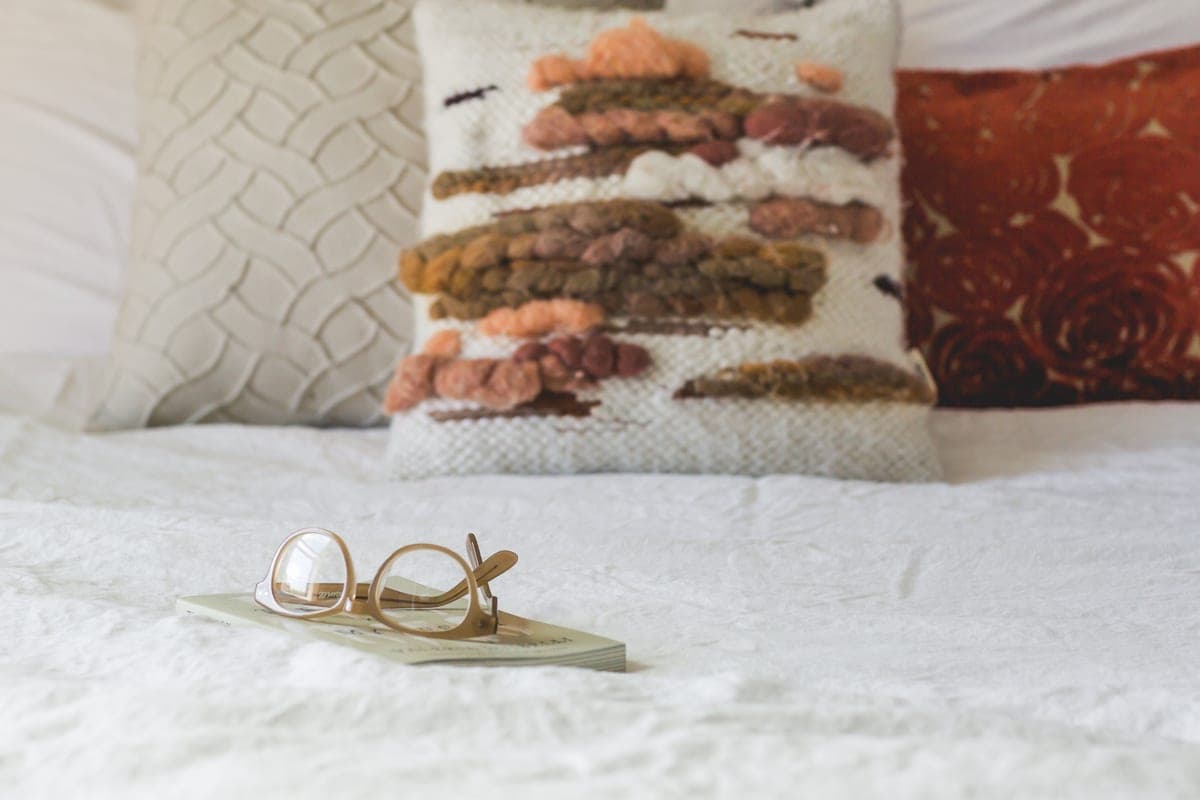 Safavieh Hand-Tufted Wool RugThe long-horizon choice. Wool recovers from furniture compression and resists soil naturally, so a living room rug that costs three times more can easily last five times longer. Expect shedding for the first few months. | Buying once | Hand-tufted wool pile on a cotton backing | |
| 3 | 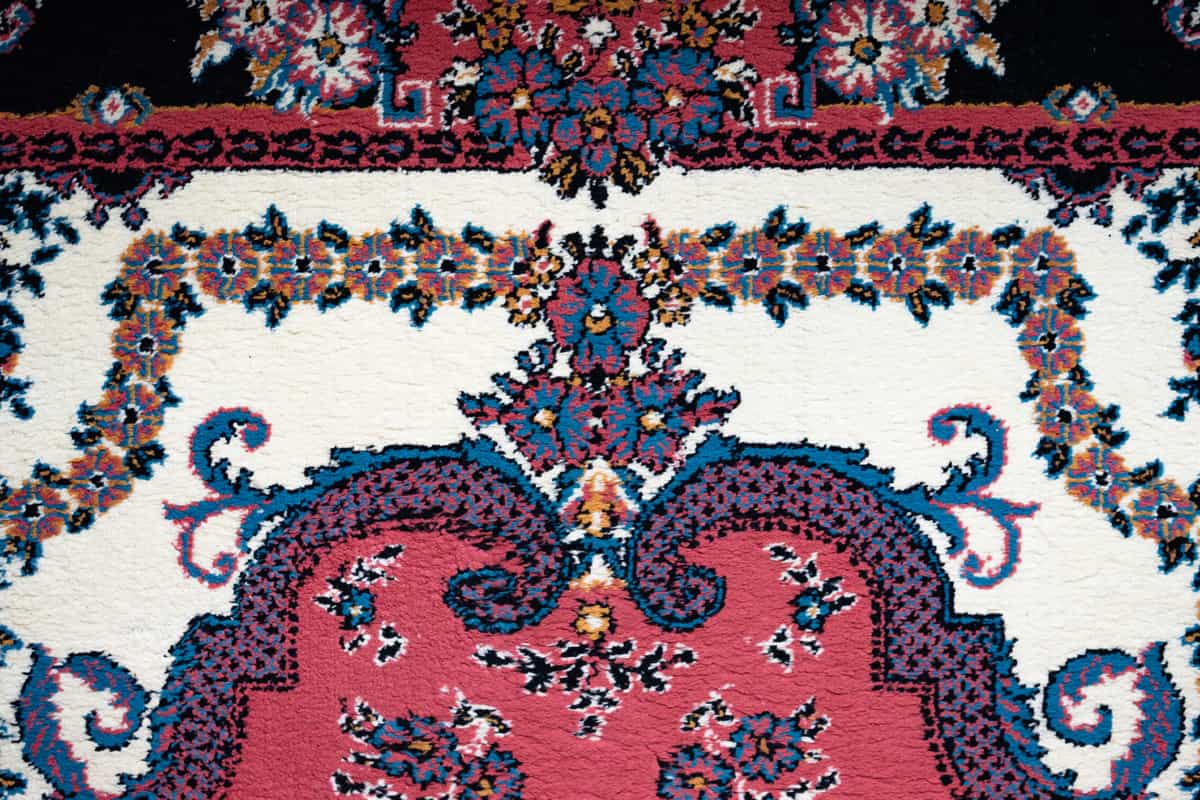 Unique Loom Sofia Traditional RugA dense traditional pattern is extraordinarily good at hiding the graying traffic lane between the door and the sofa, which is what actually ages a living room rug. Synthetic sheen up close is the trade. | Hiding traffic | Machine-woven polypropylene, traditional patterns | |
| 4 | Well Woven Area RugFor a genuinely small living room where 8x10 would swamp the space. Be clear-eyed that 5x7 is a front-legs-on rug in most rooms, not an all-legs-on one. | Small rooms and apartments | Machine-woven polypropylene, medium pile |
The short answer
Get the front legs of every seat onto the rug. In a standard living room that means 8x10; in an open-plan space it usually means 9x12. Then choose a mid-tone pattern in wool or a dense synthetic, because the traffic lane between the door and the sofa is what actually wears out first.
Size, because it outranks everything
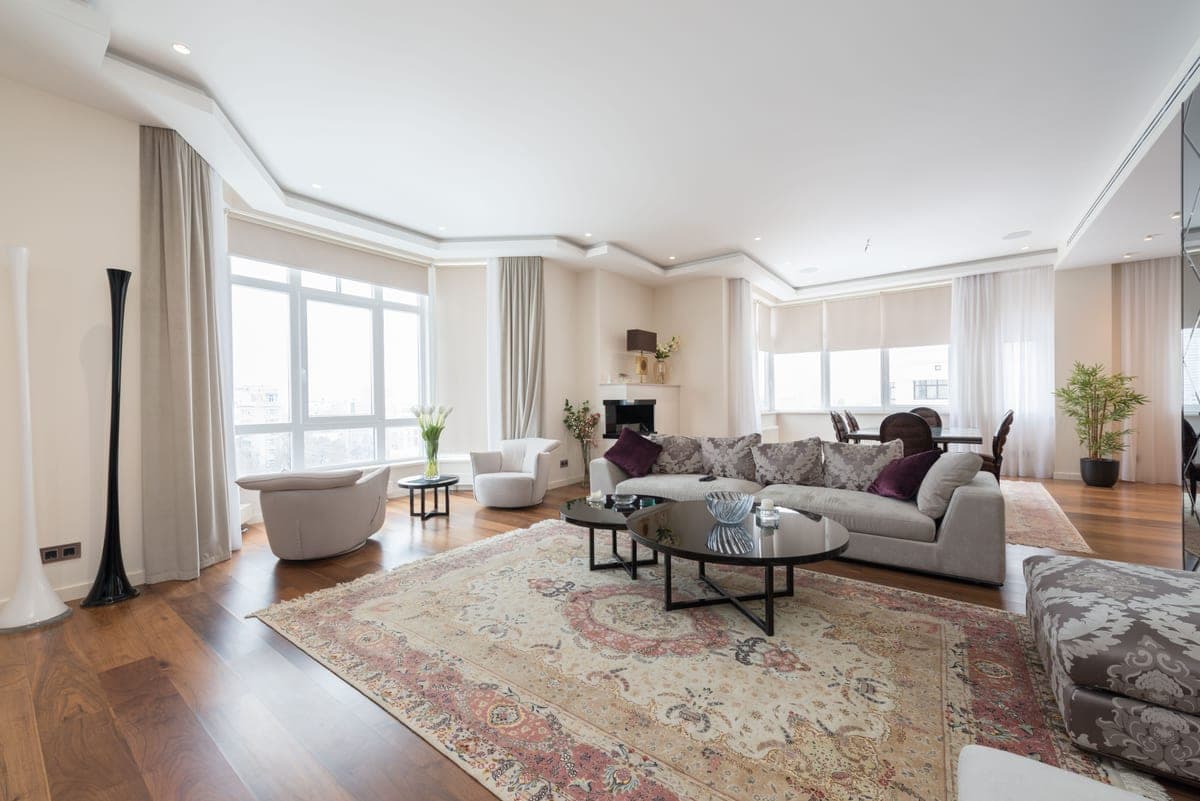
A too-small rug is the single most common living room mistake and it cannot be styled away. When the rug floats in the middle with furniture around it, the room reads as unfinished no matter how good the rug is. Front legs on is the minimum; all legs on is better. Between two sizes, take the larger.
The measurement walk-through is in what size rug for a living room, and if you have a sectional the normal rules bend — see rug size for a sectional.
JONATHAN Y Modern Area Rug
Open-plan living rooms
Illustrative photo of this rug type — not manufacturer imagery. Current product photos are on the Amazon listing.
The practical answer to the hardest living room problem — covering a large open-plan space without four figures. Genuinely stocked at 9x12 and up, which a lot of design-led brands are not. Arrives creased and needs a few weeks to settle.
What it is
- Machine-woven polypropylene in contemporary patterns
- Strong availability at 8x10, 9x12 and larger
- Low to medium pile
What it does well
- Genuinely available in the big sizes an open-plan room needs, which a lot of design-led brands are not
- Contemporary patterns rather than the traditional default
- Pile low enough for a room with dining chairs in it
Don't buy it if
- Large synthetic rugs arrive heavily creased and take weeks to flatten
- The pattern repeat is visible on the very large sizes
- Edges can fray if a vacuum beater bar catches them
A practical answer to the hardest sizing problem in the category: covering a large open room without spending four figures.
Safavieh Hand-Tufted Wool Rug
Buying once
Illustrative photo of this rug type — not manufacturer imagery. Current product photos are on the Amazon listing.
The long-horizon choice. Wool recovers from furniture compression and resists soil naturally, so a living room rug that costs three times more can easily last five times longer. Expect shedding for the first few months.
What it is
- Wool pile hand-tufted to a cotton backing
- Made in India across a large pattern catalog
- Cut pile, generally medium height
What it does well
- Wool springs back from furniture compression in a way no synthetic does
- Naturally flame-resistant and naturally soil-resistant thanks to the lanolin in the fiber
- With normal care it outlives every synthetic rug on this page several times over
Don't buy it if
- Sheds noticeably for the first few months — normal for a tufted wool rug, not a defect
- Hand-tufted rugs are glued, and the latex adhesive can break down after many years
- Costs several times what a comparable polypropylene rug costs
The long-horizon purchase in this category: expensive once rather than cheap repeatedly.
Unique Loom Sofia Traditional Rug
Hiding traffic
Illustrative photo of this rug type — not manufacturer imagery. Current product photos are on the Amazon listing.
A dense traditional pattern is extraordinarily good at hiding the graying traffic lane between the door and the sofa, which is what actually ages a living room rug. Synthetic sheen up close is the trade.
What it is
- Machine-woven polypropylene with a jute-blend backing on most sizes
- Traditional Persian-style medallion and all-over patterns
- Very broad size range including runners and rounds
What it does well
- A convincing traditional look at a small fraction of the price of a wool equivalent
- Polypropylene is solution-dyed, so the busy pattern stays saturated for years
- Dense pattern is extraordinarily good at hiding traffic and pet hair
Don't buy it if
- Up close the synthetic sheen gives it away
- Pile crushes under heavy furniture and does not spring back the way wool does
- Not repairable in any meaningful sense — when it wears, it is finished
The honest answer for a busy room that wants a traditional pattern without an heirloom budget.
Well Woven Area Rug
Small rooms and apartments
Illustrative photo of this rug type — not manufacturer imagery. Current product photos are on the Amazon listing.
For a genuinely small living room where 8x10 would swamp the space. Be clear-eyed that 5x7 is a front-legs-on rug in most rooms, not an all-legs-on one.
What it is
- Strong coverage of the 5x7 and 5x8 sizes
- Medium pile with a defined pattern
- Jute-blend backing
What it does well
- 5x7 is the size most small living rooms actually need and it is often skipped
- Medium pile is a reasonable compromise between comfort and maintenance
- Patterns busy enough to hide a small room's concentrated traffic
Don't buy it if
- 5x7 is too small to get all the furniture legs on in most rooms — know that before buying
- Medium pile shows vacuum lines
- The backing can shed a little jute dust in the first weeks
The right size for an apartment, with the caveat that a 5x7 is a front-legs-on rug, not an all-legs-on one.
The traffic lane is what ages the rug
Living rooms wear in a stripe: door to sofa, sofa to television. That lane grays and flattens years before the rest of the rug shows anything. Two things defend against it — pile density, because dense pile resists crushing, and pattern, because a busy mid-tone hides the graying entirely while a plain cream rug broadcasts it.
Pile height, by how the room is used
| How the room is used | Pile | Why |
|---|---|---|
| Adults, seated, low traffic | Medium to high | Comfort matters most; nothing is stressing it |
| Family room, kids on the floor | Medium, dense | Soft enough to sit on, dense enough to survive |
| Doubles as a dining space | Low or flatweave | Chairs need to slide, spills need to come out |
| Dogs or cats | Low, dense cut pile | Never loop — claws pull it into runs |
| Desk chair in the corner | Flatweave under the chair | Casters chew any pile |
A pad is not optional in a living room
Most living room rug wear happens from underneath, where grit that has worked down through the pile grinds against the backing every time someone crosses it. A pad absorbs that, adds cushioning and stops the rug creeping. On hardwood, the construction matters — see rug pad for hardwood.
If washability is a priority because the room doubles as where people eat, washable rugs for a living room covers what changes.
Questions people actually ask
What size rug for a living room?
8x10 for a standard room, 9x12 for open-plan. The test is whether the front legs of every seat sit on the rug.
Should all furniture legs be on the rug?
Ideally yes, and it always looks more considered. Front legs on is the workable minimum and what most rooms can afford.
What is the most durable living room rug?
Wool for longevity and recovery, dense low-pile polypropylene for value. Both beat polyester, which crushes and holds oily soil.
What color rug hides wear best?
A mid-tone with a busy pattern. Plain cream shows the traffic lane within months; plain dark shows every piece of lint.
Do I need a pad under a living room rug?
Yes. Most wear happens from underneath as grit grinds against the backing, and a pad prevents that as well as adding comfort.
Read next
- What Size Rug for a Living Room?How to measure a living room rug properly — the front-legs-on rule and the three standard layouts.
- Rug Placement in a Living RoomThe three living room layouts, how to handle sectionals and open-plan, and the placement errors that look worst.
- Rug Size for a SectionalSizing a rug for an L-shaped sectional, where symmetry rules break — and the three layouts that work.
- Washable Rugs for the Living RoomThe washable rugs that hold up at living-room scale, where size and pattern matter more than washability does.
- Wool RugsWhat wool physically does that synthetics cannot — crimp recovery and lanolin — and what that buys you.
- Rugs by RoomLiving room, bedroom, kitchen, bathroom, entryway, stairs and runners — the fiber, size and pile each room actually needs.