Rug Materials
Are Polypropylene Rugs Toxic?
The fiber is one of the least reactive plastics in common use. The questions worth asking are about what else is in the rug - the adhesive, the backing and the treatments.
The short answer
No. Polypropylene is a chemically inert thermoplastic - it does not absorb water, it is not treated with PFAS-type stain chemistry as a rule, and it is widely used in food packaging and medical textiles. The fair concerns about a polypropylene rug are the backing adhesive, any added finishes, and the new-rug smell, which is VOC off-gassing rather than the fiber itself.
This question gets asked a lot and answered badly, usually in one of two directions: either everything synthetic is poison, or nothing is a problem. Neither is useful if you are standing in a room deciding what to put on the floor. So here is the breakdown by component, because a rug is never just a fiber.
The fiber itself
Polypropylene is a polyolefin - a long chain of carbon and hydrogen, nothing else. It has no chlorine in it, unlike PVC, and no plasticisers are needed to make it workable at rug pile stiffness. That chemistry is why it is used for food containers, surgical mesh and the fabric in disposable masks: it is unreactive, it does not leach, and it does not hold water, which is also why mold cannot feed on the fiber.
Rug polypropylene is almost always solution-dyed, meaning pigment is mixed into the polymer before the fiber is extruded rather than applied to the surface afterwards. That is the reason these rugs are so colorfast, and it also means there is no surface dye to transfer onto hands, paws or a damp floor. Polypropylene rugs covers how that construction affects the rest of the rug's behavior.
What is actually worth asking about
Three things, in descending order of how much they matter.
- The backing. Most machine-woven polypropylene rugs are finished with a latex or synthetic rubber layer to lock the weave. That is where any adhesive chemistry in the rug lives, and on cheap rugs it is also the source of most of the smell. It is not in contact with anyone's skin, but it is the component to ask about rather than the fiber.
- Added finishes. The fiber does not need a stain treatment, because it repels water on its own - which is a genuine point in its favor if you are trying to avoid PFAS-type chemistry. But a specific rug may still carry a soil-release or antimicrobial finish, and the listing will not always say. If this matters to you, look for a rug that makes no stain-resistance claim at all; on polypropylene you lose nothing by doing so.
- Flame retardants. Polypropylene is combustible and some products carry flame-retardant treatment, particularly in contract or commercial lines. Residential area rugs generally do not, but it is a fair question to ask, and it is one area where wool has a real advantage - wool is naturally flame-resistant with nothing added.
iCustomRug Synthetic Sisal Rug
The simplest synthetic
Product photo and price from Amazon, refreshed daily.
#ad We earn a commission · Price as of October 11, 2026
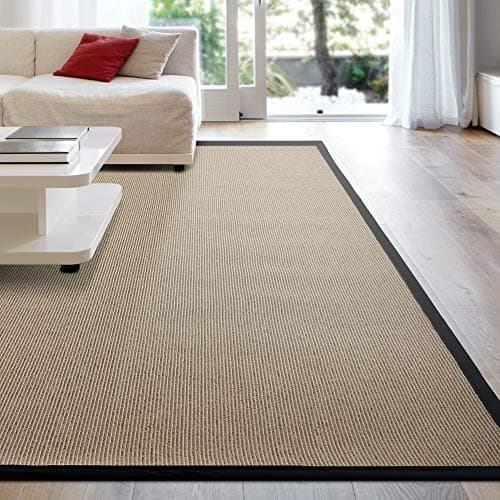
A polypropylene rug with very little else in it: a machine-made ribbed weave with no pile treatment to speak of and no plush face to hold dust. If the concern is total materials rather than the fiber, a plain flat synthetic weave is the simplest version of the category.
What it is
- Listed as 100% machine-made polypropylene, not a natural fiber
- Low-profile ribbed pile that imitates the look of woven sisal
- Area rug and runner sizes, described as stain resistant and easy to clean
What it does well
- Takes water, which no real sisal does — this is the kitchen, basement and humid-climate answer
- Softer underfoot than the fiber it imitates, which is the usual complaint about sisal
- No humidity rippling, because polypropylene does not absorb moisture from the air
Don't buy it if
- It is not sisal, and close up it does not pretend convincingly
- Synthetic fiber flattens under furniture and does not spring back
- Can hold static and a slight sheen that natural fiber never has
Buy this instead of sisal if the room is damp, the floor gets wet, or a cat lives there — it solves all three.
JONATHAN Y Modern Area Rug
The everyday choice
Product photo and price from Amazon, refreshed daily.
#ad We earn a commission · Price as of October 11, 2026
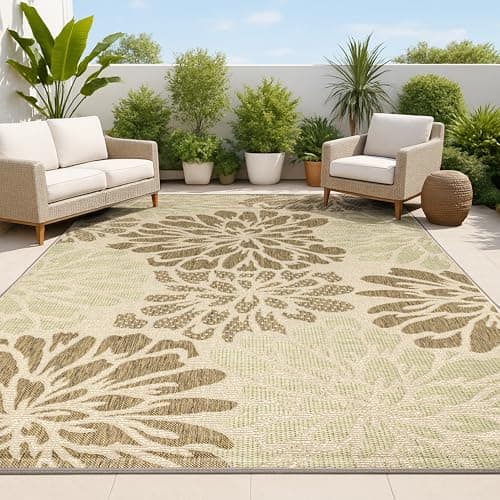
A mainstream machine-woven polypropylene rug, here as the realistic version of what most people are choosing between. Solution-dyed fiber, low to medium pile, no stain treatment needed because the fiber does not absorb water in the first place.
What it is
- Machine-woven polypropylene in contemporary patterns
- Strong availability at 8x10, 9x12 and larger
- Low to medium pile
What it does well
- Genuinely available in the big sizes an open-plan room needs, which a lot of design-led brands are not
- Contemporary patterns rather than the traditional default
- Pile low enough for a room with dining chairs in it
Don't buy it if
- Large synthetic rugs arrive heavily creased and take weeks to flatten
- The pattern repeat is visible on the very large sizes
- Edges can fray if a vacuum beater bar catches them
A practical answer to the hardest sizing problem in the category: covering a large open room without spending four figures.
Safavieh Hand-Tufted Wool Rug
If you would rather avoid synthetics
No licensed photo of this exact rug yet — see it on the Amazon listing.
The alternative if you would rather not have a synthetic at all. Wool is a protein fiber, naturally flame-resistant without added treatment, and it does not off-gas. It is also several times the price, and hand-tufted construction means there is a latex adhesive inside it - no rug is a blank slate.
What it is
- Wool pile hand-tufted to a cotton backing
- Made in India across a large pattern catalog
- Cut pile, generally medium height
What it does well
- Wool springs back from furniture compression in a way no synthetic does
- Naturally flame-resistant and naturally soil-resistant thanks to the lanolin in the fiber
- With normal care it outlives every synthetic rug on this page several times over
Don't buy it if
- Sheds noticeably for the first few months — normal for a tufted wool rug, not a defect
- Hand-tufted rugs are glued, and the latex adhesive can break down after many years
- Costs several times what a comparable polypropylene rug costs
The long-horizon purchase in this category: expensive once rather than cheap repeatedly.
Polypropylene against the alternatives, on this question alone
| Polypropylene | Wool | Jute or sisal | Polyester | |
|---|---|---|---|---|
| Fiber reactivity | Inert | Inert, natural protein | Inert, natural | Inert |
| Needs stain treatment | No | No, naturally soil-resistant | No | Often treated |
| Naturally flame-resistant | No | Yes | No | No |
| Off-gasses when new | Yes, from the backing | Minimal | Minimal, smells of hay | Yes, from the backing |
| Mold can grow on the fiber | No | Yes if left damp | Yes if left damp | No |
| Biodegradable | No | Yes | Yes | No |
The honest summary of that table: on the narrow question of fiber chemistry, polypropylene does well. On the broader question of what you want in your house for the next decade, wool wins on naturalness and flame resistance and loses on price, and the plant fibers win on biodegradability and lose on everything to do with water. Wool versus polyester covers the money side of that choice.
Children, crawling and pets
For a nursery or a floor a baby crawls on, the fiber is not the thing to worry about - the off-gassing period and the backing are. The practical approach is to buy the rug several weeks before you need it, air it out somewhere else, and only then put it down. If that is not possible, a washable one-piece rug with no bonded backing sidesteps the issue, and are washable rugs toxic covers what is and is not in those.
For pets, polypropylene is one of the better choices for an unrelated reason: it does not absorb liquid, so an accident does not soak into the fiber and the odor does not establish itself the way it does in wool. Pet stains and odors covers the cleanup, and the best rugs for pets and high traffic covers the fiber choice properly.
What to do with all of that
If the concern is the fiber, it is misplaced - buy the polypropylene rug. If the concern is total materials in the house, the thing to do is not avoid polypropylene but avoid the cheapest end of it, where the heavy adhesive backings and the strongest smells are, and air whatever you buy before it goes down. And if you would rather have no synthetic in the room at all, that is a reasonable preference, in which case the fiber to spend on is wool and the best wool rugs is the next page to read.
One last point worth making: a rug that gets replaced every six years because it was cheap has a bigger total footprint than one that lasts twenty. If the underlying question is about living with fewer synthetics, buying one good rug rather than three disposable ones does more than fiber choice alone.
Questions people actually ask
Are polypropylene rugs safe?
The fiber is considered safe and inert - it is the same polymer used in food containers and medical textiles. The components worth asking about are the backing adhesive and any added finishes, not the pile.
Why does my new polypropylene rug smell?
VOCs from the backing and manufacturing residues evaporating. Air the rug somewhere ventilated for several days to a couple of weeks. A smell still strong after a month is a defect, not a break-in period.
Do polypropylene rugs contain PFAS?
They generally do not need stain-resistance chemistry, because the fiber repels water on its own. A specific rug may still carry a soil-release finish, so if that matters, choose one that makes no stain-resistance claim at all.
Is polypropylene safe for a nursery?
The fiber is. Buy it several weeks early and air it elsewhere so the off-gassing happens outside the room, or choose a washable one-piece rug with no bonded backing instead.
Is polypropylene the same as PVC?
No. PVC contains chlorine and needs plasticisers to stay soft, which is where most of the concern about vinyl comes from. Polypropylene is a plain carbon-and-hydrogen polyolefin with neither.
Does polypropylene off-gas forever?
No. Emissions are highest when the rug is new and drop off sharply over the first weeks. The fiber itself is stable and does not continue releasing anything.
Sources
Read next
- Polypropylene RugsWhy solution-dyeing and water repellency make polypropylene the default budget and outdoor fiber — and its real limits.
- Are Washable Rugs Toxic?What washable rugs are actually made of, which components are worth asking about, and how to choose one for a nursery.
- Wool vs Polyester RugsWhere wool's premium is justified against polyester, and the specific rooms where polyester is the better buy.
- The Best Wool Rugs (October 2026)Tufted, flatwoven and blended wool compared on pile, shedding and the room each one belongs in - with the honest cost of each.
- How to Clean a Polypropylene RugThe forgiving fiber: what you can do freely, the two real limits, and how to deal with oily soil.
- Rug MaterialsWool, jute, sisal, polypropylene, cotton, viscose and the traditional weaves — compared on wear, feel, water and cost.