Rug Materials
The Best Braided Rugs
A construction, not a fiber. Which braid to buy depends almost entirely on what the room does to it.
Heads up: we earn a commission when you buy through links on this page, at no extra cost to you. It never changes which rug we put first — see how we choose and our affiliate disclosure.
Quick picks
The whole answer, before the detail. Tap any row to jump to that rug's full write-up further down the page.
| # | Rug | Best for | Construction | Price |
|---|---|---|---|---|
| 1 | 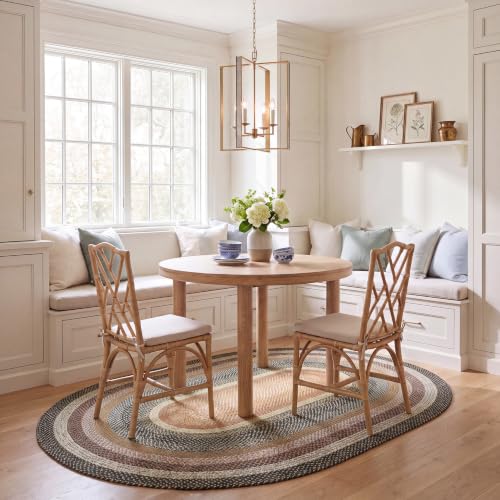 SAFAVIEH Braided Oval Rug 5x8The rug most people picture when they say braided: concentric bands of rust, cream, black, sage and tan in an oval. Doing it in polypropylene rather than wool is what makes it affordable and what makes it survive a kitchen. The sheen under direct light is the price, and an oval leaves floor in the corners by design. | The classic banded oval | Polypropylene braid in concentric oval bands, listed at a 1/4 inch pile | $131.50View on Amazon #ad We earn a commission · Price as of November 15, 2026 |
| 2 | 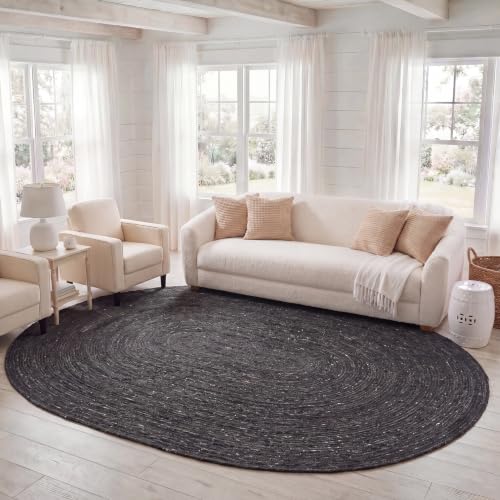 SAFAVIEH Braided Wool Oval RugBraided rugs were invented in wool, and the coiled cord on this one reads as craft in a way a synthetic braid never quite does. At 3/8 inch and 37.5 pounds it stays put and recovers from furniture dents. You pay roughly double the synthetic, and you accept several weeks of shedding. | Real wool braid | Hand-woven wool and cotton coiled cord, listed at a 3/8 inch pile, made in India | $254.70$283.00View on Amazon #ad We earn a commission · Price as of November 15, 2026 |
| 3 | 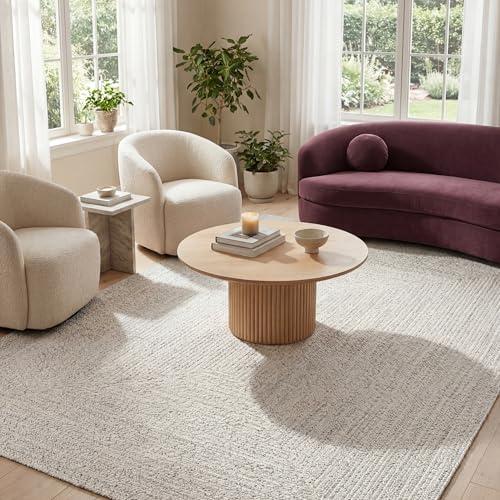 nuLOOM Wynn Braided Indoor/Outdoor RugThe braid rated to go outside. A solid colorway rather than the traditional bands, which makes it read as texture and sit quietly under existing decor - and it can be hosed off, which no wool braid can. At 8.6 pounds it needs weighting down on an exposed porch. | Porches and decks | Power-loomed solid braid rated for indoor and outdoor use | $116.99View on Amazon #ad We earn a commission · Price as of November 15, 2026 |
| 4 | 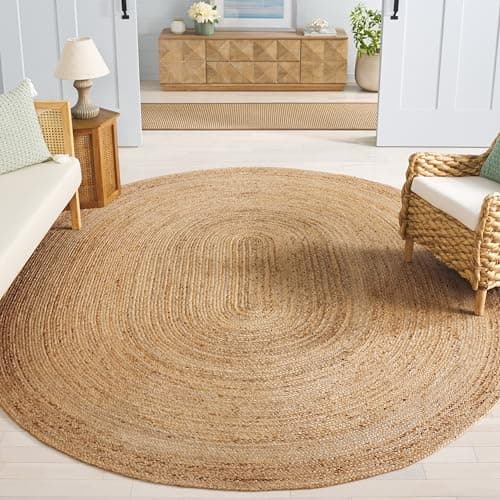 Safavieh Braided Jute Round RugThe natural-fiber braid, and the cheapest honest route to a round rug at any real size. Reversible, so a worn face flips. Braided jute sheds more and for longer than woven jute, and it carries every jute water vulnerability with it - keep it out of kitchens and bathrooms. | Round rooms and dry entries | Hand-braided jute, reversible | |
| 5 | 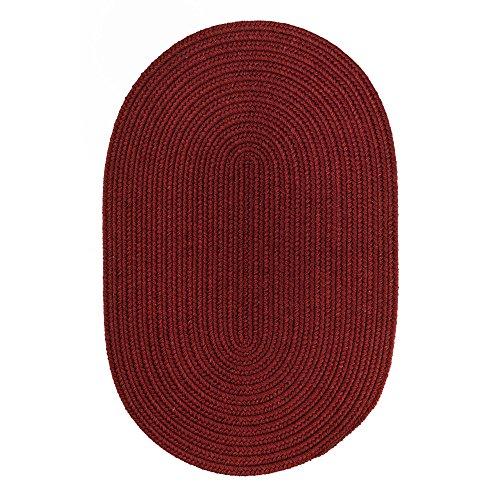 Super Area Rugs Pura Braided Wool RugThe budget pick, and the only way into genuine 100% wool braid without a three-figure spend: a small reversible oval, nearly half an inch thick, made in the USA. Accent sizes only, and the maker states dimensions can vary by two to three inches because it is hand-woven. | Wool at accent size | Hand-spun 100% wool braid, reversible, listed at nearly 1/2 inch thick | $90.78View on Amazon #ad We earn a commission · Price as of November 15, 2026 |
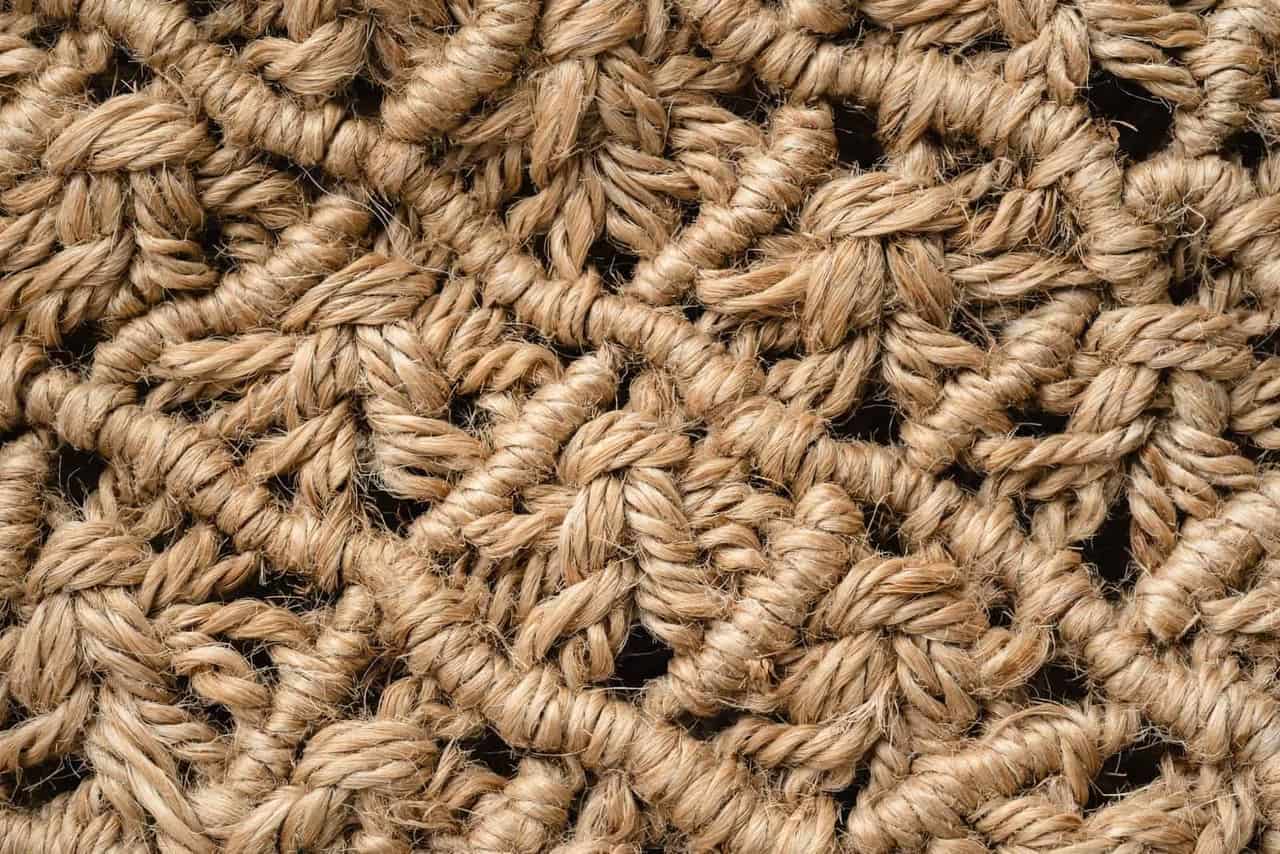
Braided is a construction, not a fiber. A long rope of plaited strands is coiled and stitched into shape, which is why braided rugs are usually oval or round and almost always reversible. That one fact decides everything else about them: there is no pile to crush, no front and back, no single direction of weakness - and a great many exposed strand ends, which is why they shed. The useful question is not whether to buy a braided rug but which fiber to buy it in, because the construction behaves completely differently in wool, in polypropylene and in jute.
SAFAVIEH Braided Oval Rug 5x8
The classic banded oval
Product photo and price from Amazon, refreshed daily.
#ad We earn a commission · Price as of November 15, 2026
The rug most people picture when they say braided: concentric bands of rust, cream, black, sage and tan in an oval. Doing it in polypropylene rather than wool is what makes it affordable and what makes it survive a kitchen. The sheen under direct light is the price, and an oval leaves floor in the corners by design.
What it is
- Polypropylene fibers, stated on the listing
- Listed pile height of 1/4 inch
- Concentric bands - a rust center ringed with cream, black, sage, gray and tan
- Listed as machine washable on a gentle cycle, laid flat or hung to dry
What it does well
- The multi-band colorway is the thing a braided rug does that nothing else does, and the synthetic version costs a fraction of wool
- Polypropylene does not absorb a spill, so this survives a kitchen or a porch that a wool braid would not
- Machine washable at room size, which is unusual for a braided construction
Don't buy it if
- Polypropylene braid has a plastic sheen under direct light that wool braid does not
- An oval does not fill a rectangular room; you will see floor in all four corners, by design
- The 5x8 is listed at 10 pounds, which is light - it will travel without a pad
The default braided rug: the traditional banded oval, in the fiber that lets you put it somewhere messy.
SAFAVIEH Braided Wool Oval Rug
Real wool braid
Product photo and price from Amazon, refreshed daily.
#ad We earn a commission · Price as of November 15, 2026
Braided rugs were invented in wool, and the coiled cord on this one reads as craft in a way a synthetic braid never quite does. At 3/8 inch and 37.5 pounds it stays put and recovers from furniture dents. You pay roughly double the synthetic, and you accept several weeks of shedding.
What it is
- Hand-woven from wool and cotton, stated on the listing
- Listed pile height of 3/8 inch - thicker underfoot than the synthetic braid
- Made in India
- Listed at 8 by 10 feet oval and 37.5 pounds
What it does well
- Wool is the fiber braided rugs were invented in, and the coiled cord shows it - the texture reads as craft rather than as print
- At 3/8 inch and 37.5 pounds it stays where you put it and feels like a real rug underfoot
- Wool springs back, so a sofa leg leaves a dent that recovers instead of a permanent crush mark
Don't buy it if
- Safavieh states light shedding for the first several weeks, which is normal for wool and still a nuisance
- Suction only, no beater bar, and spills get blotted rather than scrubbed - this is not a low-maintenance rug
- Costs roughly twice the synthetic braid for the same footprint
Worth the premium only if you want the texture and the recovery of real wool; otherwise the polypropylene braid does the same job for less.
nuLOOM Wynn Braided Indoor/Outdoor Rug
Porches and decks
Product photo and price from Amazon, refreshed daily.
#ad We earn a commission · Price as of November 15, 2026
The braid rated to go outside. A solid colorway rather than the traditional bands, which makes it read as texture and sit quietly under existing decor - and it can be hosed off, which no wool braid can. At 8.6 pounds it needs weighting down on an exposed porch.
What it is
- Rated by nuLOOM for indoor and outdoor placement
- Solid single-color braid rather than the traditional multi-band
- Listed as hose-washable outside and spot treated for mild stains
- Listed at 4 by 6 feet and 8.6 pounds
What it does well
- A solid braid reads as texture rather than as a pattern, so it sits under existing decor instead of competing with it
- Hosing a rug down is a far lower-effort clean than anything a wool braid allows
- Light enough to lift and shake out, which is what an outdoor rug actually needs
Don't buy it if
- A solid colorway loses the banded character most people want from a braided rug
- 8.6 pounds is light enough to lift in wind on an exposed porch without weights or a pad
- Hosing it is easy; getting it fully dry before it goes back down is not
The braided rug for a porch, a deck or a mudroom - bought for where it can live rather than for the braid itself.
Safavieh Braided Jute Round Rug
Round rooms and dry entries
The natural-fiber braid, and the cheapest honest route to a round rug at any real size. Reversible, so a worn face flips. Braided jute sheds more and for longer than woven jute, and it carries every jute water vulnerability with it - keep it out of kitchens and bathrooms.
What it is
- Hand-braided rather than woven, which makes it reversible
- Round sizes from small accent up to room size
- Undyed natural jute
What it does well
- Reversible, so a worn face can simply be flipped
- Round jute is one of the few genuinely cheap round rug options at scale
- The braid hides dirt better than a flat weave
Don't buy it if
- Braided jute sheds more than woven jute, and for longer
- Braids can loosen at the edge if the rug is dragged rather than lifted
- The same water vulnerability as all jute
The best-value round rug here, as long as the room is dry and you will vacuum often for the first month.
Super Area Rugs Pura Braided Wool Rug
Wool at accent size
Product photo and price from Amazon, refreshed daily.
#ad We earn a commission · Price as of November 15, 2026
The budget pick, and the only way into genuine 100% wool braid without a three-figure spend: a small reversible oval, nearly half an inch thick, made in the USA. Accent sizes only, and the maker states dimensions can vary by two to three inches because it is hand-woven.
What it is
- 100% hand-spun wool, stated on the listing
- Listed at nearly 1/2 inch thick - the deepest braid in this group
- Reversible, so both faces are usable
- Listed as made in the USA; the 2 by 4 foot oval is listed at 4 pounds
What it does well
- Genuine 100% wool at a price the big wool braids do not come close to, because the size is small
- Reversible construction doubles the usable life - flip it when the traffic lane dulls
- Nearly half an inch of wool is a real cushion in front of a sink or a bed
Don't buy it if
- Accent sizes only on this listing - it is a bedside or doorway rug, not a room rug
- The maker states dimensions can vary by 2 to 3 inches because it is hand-woven
- Wool in front of a sink is a fiber-and-water pairing you have to be willing to manage
The budget way into real wool braid: a small reversible oval that costs less than most synthetic room rugs.
How we chose these
We compared published fiber content, pile height, weight and care instructions on live listings, and we picked for coverage rather than for rank: one pick per fiber and per situation, because a wool braid and a polypropylene braid are not competing for the same room. Every pick states its downside. We have not physically tested these rugs and do not claim to have - how we choose sets out the method in full.
Pick the fiber first
| Fiber | Buy it for | Avoid it when |
|---|---|---|
| Wool | Texture, recovery from furniture, genuine longevity | You want low maintenance - suction only, blot never scrub |
| Polypropylene | Spills, kitchens, porches, price | You are looking closely in direct light; the sheen shows |
| Jute | Round shapes and natural color at low cost | The room has any water in it at all |
| Cotton (chindi and rag) | Washability at accent size | You need the rug to stay put; most have no backing |
Braided rugs covers how the construction itself works. If you are weighing it against a woven natural fiber instead, jute vs sisal is the comparison that matters.
Then pick the shape, because it is not free
Braided rugs are coiled, so oval and round are the native shapes and rectangles are the adaptation. That matters more than it sounds. An oval in a rectangular room leaves bare floor in all four corners - which can look deliberate under a round dining table or a bed, and looks like a mistake under a sofa and two chairs.
- Oval suits a bed, a round table, or a seating group arranged around a center point. It is the worst choice under a long sofa.
- Round belongs in an entry, under a round table, or in a square room with nothing against the walls. Round rugs covers the sizing.
- Rectangular braided exists and is the safe choice for a conventional living room, but you are buying a braided texture rather than a braided shape.
- Runner braids are common and excellent in a hallway - the construction has no pile to flatten under directional traffic.
The shedding, honestly
A braided rug sheds more than a woven one in the same fiber, and it sheds for longer. This is structural: the rope is made of cut strands and the ends are exposed on both faces by design. It is not a defect and it is not a sign of a cheap rug.
- Wool braid sheds visibly for roughly the first several weeks, tapering as loose finishing fiber is vacuumed away. Safavieh states this on the listing rather than hiding it.
- Jute braid sheds longest - expect fine dry fiber for a month or more, and expect to vacuum it more often in that period than you would like.
- Polypropylene braid barely sheds at all, because the strands are continuous filament rather than spun staple. If shedding is the deal-breaker, this is the fiber.
Vacuum with suction only for the first month, whatever the fiber. A beater bar pulls at the strand ends and turns normal shedding into damage - vacuuming rugs covers the settings.
The failure mode nobody mentions
A braided rug does not wear out in the field. It fails at the stitching that holds the coils together, almost always at an edge, and almost always because the rug was dragged rather than lifted. Once one coil separates, the rope unravels progressively along the seam.
The fix is trivial if you catch it early - a curved needle and strong thread, restitching the coil back to its neighbor - and effectively impossible once a foot of rope has come loose. So: lift braided rugs, never drag them, and look at the edge whenever you vacuum. This is the single biggest difference between a braided rug that lasts twenty years and one that lasts three.
What braided rugs cost, and why the spread is so wide
Braided rugs span a wider price range than almost any other construction, and the reason is entirely fiber and labor rather than quality. A power-loomed polypropylene braid is made by machine from continuous filament; a hand-woven wool braid is coiled and stitched by a person from spun yarn. Two rugs that look similar in a listing photograph can differ by a factor of three or more.
In practice the brackets sort cleanly. Synthetic braids sit at the low end and hold their price steadily across sizes. Jute braids sit just above them and are the cheapest genuine natural fiber at any real size. Wool braids sit well above both, and the premium grows with footprint because the labor does - which is why a small wool oval can cost less than a large synthetic one. Prices move, so we never print a number in prose: check the live figure on each pick above before you decide which bracket you are actually in.
Reversibility is the real feature
Most braided rugs have two identical faces, which means a stain or a worn traffic lane is solved by flipping the rug rather than replacing it. Nothing else in the rug market offers that. In practice it roughly doubles the useful life of a braid in a busy room, and it is the reason a wool braid can be worth its price in a hallway where a tufted wool rug would not be.
Two caveats. Rugs with a bonded or printed backing are not reversible, so check before you assume. And flip on a schedule rather than waiting for a problem - twice a year, same as rotating - so both faces age at the same rate.
Do braided rugs need a pad?
Yes, and for a reason specific to this construction. A braided rug is a rope under tension; on a hard floor it slides, and sliding is what stresses the coil stitching. A pad is therefore not only about safety and floor protection here - it is the cheapest thing you can do to stop the rug failing at its seams. An open-weave pad also lets the grit that lodges between the coils fall through rather than grinding there.
Non-slip rug pads covers the options, and felt vs rubber rug pads covers which type suits which floor. If the braid is going outdoors, an open-weave outdoor pad is the only correct answer - see outdoor rug pads.
Who should not buy a braided rug
- Anyone who wants a plush floor. Every braid here is between a quarter and a half inch, and the texture is firm rope rather than soft pile. The best shag rugs is the other direction entirely.
- A household with a cat that scratches. The braid is a rope, and a rope is an invitation. Rugs for cats explains which textures cats select.
- A room with a desk chair. Casters catch in the coil seams rather than rolling across them. A flatweave is the right call - see the best flatweave rugs.
- Anyone unwilling to vacuum weekly for the first month. The shedding is real, and the people who hate braided rugs are almost always people who were not told about it.
If the appeal is the natural, textured look rather than the braid specifically, the best jute rugs and the best wool rugs cover the woven alternatives at the same price points.
Questions people actually ask
Are braided rugs still in style?
The banded multi-color oval reads as traditional farmhouse and goes in and out of fashion. Solid-color braids in wool or polypropylene read as texture rather than as a style, and those have stayed current - which is why most makers now sell both.
Do braided rugs shed a lot?
More than woven rugs in the same fiber, because the strand ends are exposed by design. Jute sheds longest, wool for roughly the first several weeks, and polypropylene barely at all.
Are braided rugs reversible?
Most are, because both faces are identical - that is the main practical advantage of the construction. Any braid with a bonded or printed backing is not, so check the listing before assuming.
What is the best fiber for a braided rug?
Wool for texture and longevity, polypropylene for anywhere that gets wet or dirty, jute for round shapes and natural color on a budget. There is no single answer because the construction behaves differently in each.
Can braided rugs go outside?
Only the ones rated for it, which are polypropylene. Wool and jute braids outdoors will hold water in the coils and mildew from the inside, which you cannot reverse.
How do you clean a braided rug?
Vacuum with suction only, shake it out regularly because grit lodges between the coils, and blot spills rather than scrubbing - scrubbing works the coil stitching loose. Fiber-specific instructions differ, so check the listing.
Why is my braided rug coming apart at the edge?
The coil stitching has separated, almost always from dragging the rug rather than lifting it. Restitch it immediately with a curved needle and strong thread; once a long section unravels it cannot be repaired properly.
Sources
- Amazon - SAFAVIEH Braided Oval BRD308A listing (fiber, pile height, care)
- Amazon - SAFAVIEH Braided Wool Oval BRD901Z listing (fiber, origin, shedding note)
- Amazon - nuLOOM Wynn braided indoor/outdoor listing (rating, cleaning)
- Amazon - Super Area Rugs Pura braided wool listing (fiber, thickness, origin)
- Amazon - Safavieh braided jute round listing
- Carpet and Rug Institute - carpet and rug fiber characteristics
Read next
- Braided RugsHow braided construction works, why most are reversible, and the shedding trade that comes with it.
- The Best Wool Rugs (October 2026)Tufted, flatwoven and blended wool compared on pile, shedding and the room each one belongs in - with the honest cost of each.
- The Best Jute Rugs (October 2026)Woven and braided jute compared on shedding, backing and sizes - and the honest synthetic alternative for kitchens, baths and anywhere damp.
- Round RugsHow to size a round rug to a round table, and the placements where a circle beats a rectangle.
- Non-Slip Rug PadsWhy rugs slide, which pad constructions genuinely hold, and the thin options for tight door clearances.
- Rug MaterialsWool, jute, sisal, polypropylene, cotton, viscose and the traditional weaves — compared on wear, feel, water and cost.