Rug Materials
The Best Flatweave Rugs
No pile means nothing to crush, nothing to vacuum badly and nowhere for the fiber to hide. These are the flatweaves worth buying, and the fiber decides all of it.
Heads up: we earn a commission when you buy through links on this page, at no extra cost to you. It never changes which rug we put first — see how we choose and our affiliate disclosure.
Quick picks
The whole answer, before the detail. Tap any row to jump to that rug's full write-up further down the page.
| # | Rug | Best for | Construction | Price |
|---|---|---|---|---|
| 1 | 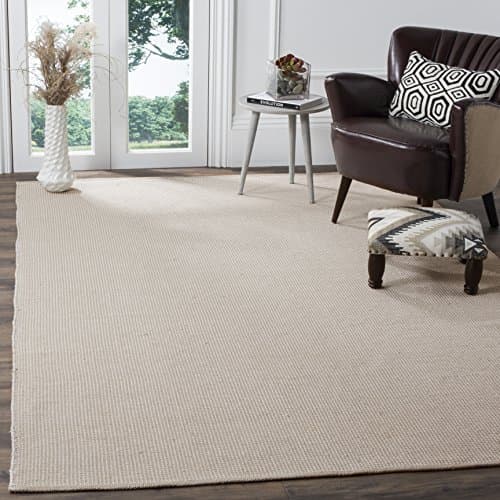 Safavieh Montauk Cotton Flatweave RugThe first pick, and the one most people searching for a flatweave actually want: handwoven cotton, soft-patterned, thin enough to disappear under a door, and the only fiber here a domestic washing machine can take - at runner and accent sizes, because a 9x12 in any fiber means a commercial drum or a professional clean. The ikat and tie-dye patterning reads as faded textile rather than printed graphic, which is the look flatweaves are bought for. It has no backing at all, so budget for a pad - and understand that cotton absorbs, which is the trade for everything above. | Cotton, and laundering it | Handwoven 100 percent cotton flatweave, no applied backing | $246.00View on Amazon #ad We earn a commission · Price as of October 12, 2026 |
| 2 | 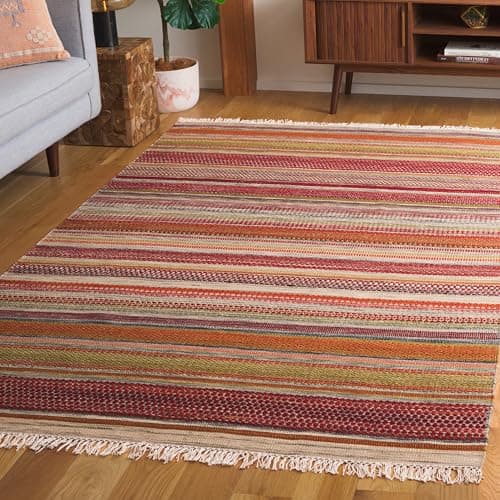 Safavieh Wool Flatweave Kilim RugThe best flatweave by any durability measure, and the right one under a dining table. Flatwoven wool has no pile to crush, so chair legs leave no permanent dent and chairs slide over it instead of catching, while wool's lanolin gives it soil resistance no cotton flatweave has. Many of the kilim patterns are reversible, which is a second usable face for free. It is thin and firm underfoot, and spills go straight through to the floor - both true of every flatweave on this page. | Dining rooms and durability | Flatwoven wool, effectively no pile | $256.00$317.91View on Amazon #ad We earn a commission · Price as of October 12, 2026 |
| 3 | No image Ottomanson Flatweave RunnerThe narrow-space answer, and the one place a flatweave is not merely acceptable but clearly correct. A flatwoven polypropylene runner with a bonded rubber back solves the two problems that end runners early: it has no pile to flatten into a traffic lane, and it does not creep, which is what a pad-less flatweave does in a hallway. Synthetic rather than natural, so it takes water and wipes clean, at the cost of looking synthetic up close. | Hallways and kitchens | Flatwoven polypropylene, bonded rubber backing | |
| 4 | 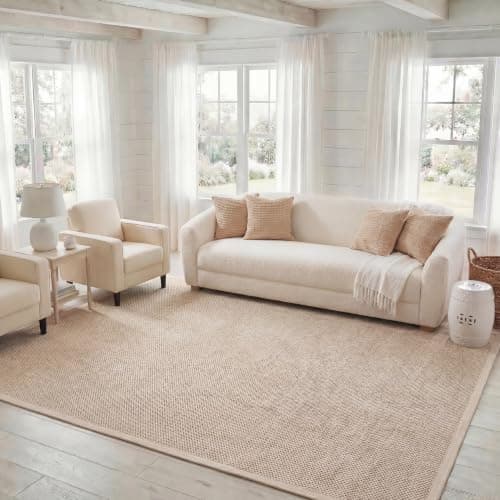 Safavieh Natural Fiber Sisal RugThe hardest-wearing flatweave here and the one to buy where traffic is the whole problem. Sisal is a stiff, dense natural fiber woven flat with a latex backing and a bound border, and it takes punishment that would flatten wool. The constraints are real and non-negotiable: it water-stains permanently, it ripples in humidity, and it is genuinely rough underfoot - buy it for a stair landing or a busy entry rather than anywhere people sit on the floor. | High-traffic rooms | Power-loomed sisal with latex and a woven border | $372.57View on Amazon #ad We earn a commission · Price as of October 12, 2026 |
| 5 | No image Fab Habitat Flatweave Outdoor RugThe flatweave for a porch, a sunroom or anywhere the rug will be hosed rather than vacuumed. Fully reversible recycled polypropylene with no pile and no backing, so it drains, dries in an hour or two and rolls up small for storage. It is the thinnest rug on this page by some margin, which means you feel every imperfection in the surface beneath it, and it needs weighting or a pad or it will travel. | Porches and wet rooms | Flatwoven recycled polypropylene, fully reversible |
The short answer
Buy cotton for a room you want to launder, wool for a dining room or anywhere it has to last, sisal where traffic is the problem, and polypropylene where water is. Flatweaves differ far more by fiber than by brand, and every one of them needs a pad.
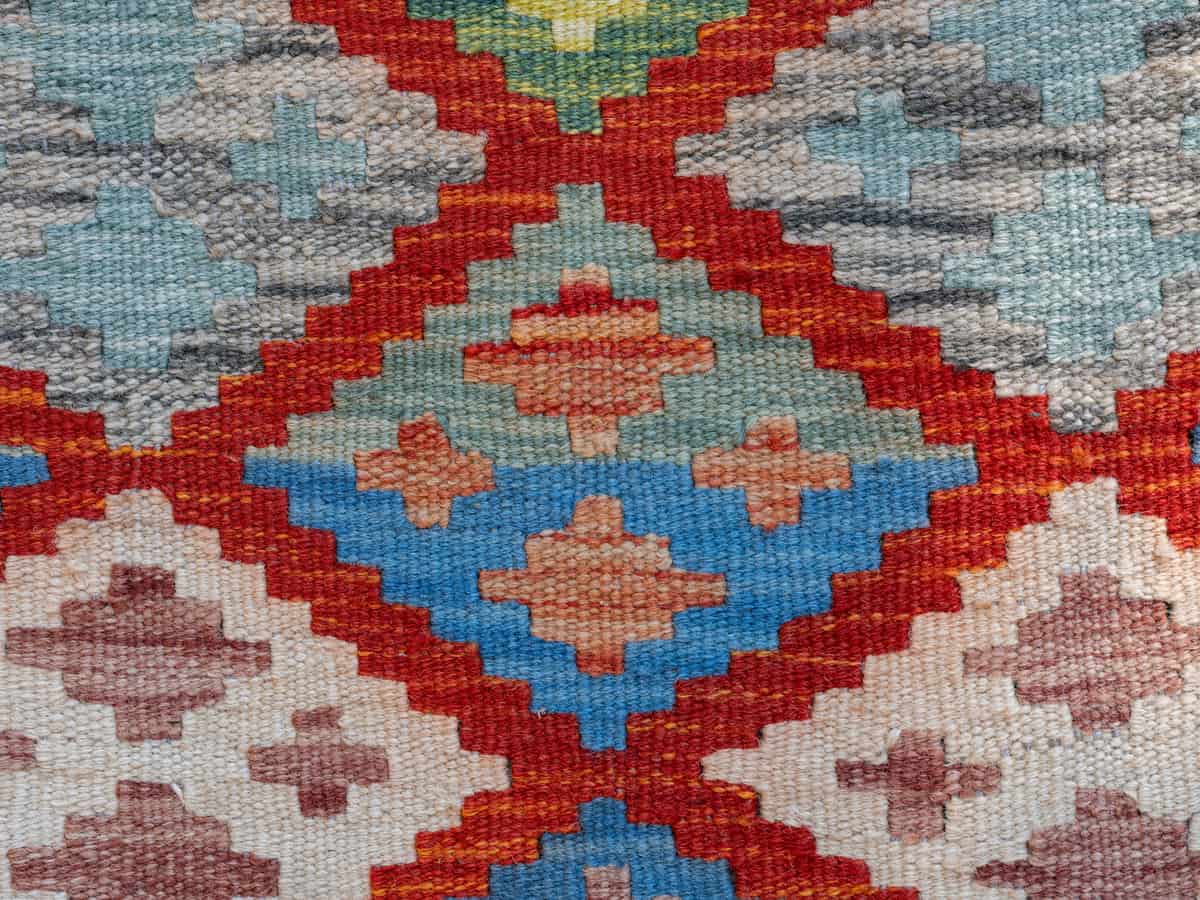
A flatweave is a construction, not a material, which is why a roundup of them crosses four fibers that behave nothing alike. What they share is the absence of pile: the yarn is woven flat, with the pattern formed by the weave itself rather than by tufts standing up from a backing. Everything good and everything frustrating about these rugs comes from that one fact.
What counts as a flatweave
Kilims, dhurries, most cotton rugs, most natural-fiber rugs and nearly every outdoor rug are flatweaves. The practical test is thickness: a flatweave is usually somewhere between a quarter and a half inch, so a door clears it, a chair rolls over it and a vacuum does not sink into it. A hand-tufted or power-loomed pile rug at the same price is three to four times thicker and behaves like a different product entirely.
The second shared property is that many flatweaves are reversible, because a weave with no backing has two usable faces. Not all are - a bonded rubber back or a latex coating ends it - but where reversibility exists it is the single most valuable feature in the category, and it is almost never priced for.
One more shared property worth knowing before you shop: a flatweave shows the quality of its own weave immediately. With no pile to disguise anything, loose or uneven warp threads, a border that wanders and a weave denser at one end than the other are all visible in the listing photographs. That is genuinely useful - it is the one rug construction you can assess reasonably well without touching it.
The five things we judged these on
- Fiber, before anything else. With no pile to even out the differences, the fiber's own behavior shows through completely - cotton absorbs, wool resists soil, sisal stains, polypropylene takes water. This decides more than every other criterion put together.
- Reversibility. Two usable faces doubles the life of a rug with no pile to wear, and it turns an unshiftable stain into a flip rather than a replacement.
- Backing. A bonded rubber back grips a hard floor on its own and makes a runner viable. No backing at all is the better construction for washing and for reversibility, but it means a pad is mandatory rather than advisable.
- Edge construction. A bound or stitched border is what stops a flatweave fraying at the one point every flatweave fails: the edge, where there is no pile to protect the weave.
- Cleanability. Washable in a machine, hosed outdoors, vacuum-only, or professional-only. This is a lifestyle question and it rules out more rugs for more people than price does.
We compared published fiber content, backing construction, border finishing and stated care requirements across current listings. We make no testing claims - how we choose sets out the method and its limits.
Safavieh Montauk Cotton Flatweave Rug
Cotton, and laundering it
Product photo and price from Amazon, refreshed daily.
#ad We earn a commission · Price as of October 12, 2026
The first pick, and the one most people searching for a flatweave actually want: handwoven cotton, soft-patterned, thin enough to disappear under a door, and the only fiber here a domestic washing machine can take - at runner and accent sizes, because a 9x12 in any fiber means a commercial drum or a professional clean. The ikat and tie-dye patterning reads as faded textile rather than printed graphic, which is the look flatweaves are bought for. It has no backing at all, so budget for a pad - and understand that cotton absorbs, which is the trade for everything above.
What it is
- 100 percent cotton, handwoven in India
- Flat weave with no backing applied - the maker recommends a separate rug pad
- Ikat and tie-dye patterns across area, square and runner sizes
What it does well
- Cotton is the one flatweave fiber a normal washing machine can handle at small and runner sizes
- No pile and no backing means it is genuinely thin - doors and dining chairs clear it
- Takes dye softly, so the patterns read as faded textile rather than printed graphic
Don't buy it if
- Cotton absorbs, so a spill soaks in instead of beading - the opposite of a synthetic flatweave
- No backing at all: without a pad it slides, and the maker says so on the listing
- Lighter colors show traffic lanes faster than wool or sisal in the same spot
The cotton flatweave to buy if you want a thin, soft-patterned rug you can actually launder at runner size.
Safavieh Wool Flatweave Kilim Rug
Dining rooms and durability
Product photo and price from Amazon, refreshed daily.
#ad We earn a commission · Price as of October 12, 2026
The best flatweave by any durability measure, and the right one under a dining table. Flatwoven wool has no pile to crush, so chair legs leave no permanent dent and chairs slide over it instead of catching, while wool's lanolin gives it soil resistance no cotton flatweave has. Many of the kilim patterns are reversible, which is a second usable face for free. It is thin and firm underfoot, and spills go straight through to the floor - both true of every flatweave on this page.
What it is
- Flatwoven — effectively no pile at all
- Wool fiber with a handwoven geometric pattern
- Reversible on many of the kilim patterns
What it does well
- Chairs slide over it instead of catching, which is exactly what a dining room needs
- No pile means nothing to crush, so furniture leaves no permanent dents
- Wool's soil resistance without wool's shedding
Don't buy it if
- Thin and firm underfoot — it will not feel luxurious
- Flatweaves need a good pad or they creep across the floor
- Spilled liquid goes straight through to the floor below
The correct rug shape for a dining room, in the correct fiber. Almost nobody buys this and regrets it.
Ottomanson Flatweave Runner
Hallways and kitchens
No licensed photo of this exact rug yet — see it on the Amazon listing.
The narrow-space answer, and the one place a flatweave is not merely acceptable but clearly correct. A flatwoven polypropylene runner with a bonded rubber back solves the two problems that end runners early: it has no pile to flatten into a traffic lane, and it does not creep, which is what a pad-less flatweave does in a hallway. Synthetic rather than natural, so it takes water and wipes clean, at the cost of looking synthetic up close.
What it is
- Rubber backing bonded to the rug — no separate pad needed
- Cut-to-length runners in many lengths
- Very low profile, under a quarter inch
What it does well
- The backing means it stays put on tile and laminate without a pad
- Low enough that an interior door still clears it
- Available in awkward lengths standard sizing does not cover
Don't buy it if
- Rubber backings can discolor vinyl plank flooring over time — check the fiber before laying it on LVP
- Firm and thin; comfort is not part of the proposition
- The backing eventually hardens and cracks after several years
The most practical hallway runner in the set, with one real caveat about which floor you put it on.
Safavieh Natural Fiber Sisal Rug
High-traffic rooms
Product photo and price from Amazon, refreshed daily.
#ad We earn a commission · Price as of October 12, 2026
The hardest-wearing flatweave here and the one to buy where traffic is the whole problem. Sisal is a stiff, dense natural fiber woven flat with a latex backing and a bound border, and it takes punishment that would flatten wool. The constraints are real and non-negotiable: it water-stains permanently, it ripples in humidity, and it is genuinely rough underfoot - buy it for a stair landing or a busy entry rather than anywhere people sit on the floor.
What it is
- Listings in this collection state sisal with latex fibers and a 3/8 inch pile
- Most designs carry a woven contrast border rather than a raw cut edge
- Sold in a long size ladder — small accents through 8x11 and 9x12
What it does well
- The easiest sisal to actually buy in the size you need, which is the whole problem with this fiber
- The border finishes the edge, so it does not fray the way a cut natural fiber edge can
- The latex component holds the weave together and limits creep on a hard floor
Don't buy it if
- The latex backing is why it should not be laid over radiant heat or left on a floor it can mark
- Colorways are natural, maize and marble tones — there is no real color range here
- It is still sisal: coarse barefoot, and it will not forgive a spill
The default sisal for most rooms, because the size ladder and the bordered edge remove the two things that usually derail a sisal purchase.
Fab Habitat Flatweave Outdoor Rug
Porches and wet rooms
No licensed photo of this exact rug yet — see it on the Amazon listing.
The flatweave for a porch, a sunroom or anywhere the rug will be hosed rather than vacuumed. Fully reversible recycled polypropylene with no pile and no backing, so it drains, dries in an hour or two and rolls up small for storage. It is the thinnest rug on this page by some margin, which means you feel every imperfection in the surface beneath it, and it needs weighting or a pad or it will travel.
What it is
- Flatwoven from recycled polypropylene yarn
- Fully reversible — two usable faces
- Designed to be hosed down and hung to dry
What it does well
- Reversible construction effectively doubles the usable life
- Hoses clean in minutes and dries fast because there is no pile to hold water
- Rolls up small enough to store over winter without a dedicated space
Don't buy it if
- Very thin — you will feel every imperfection in the deck below it
- Flatweave slides more than a backed rug; it needs weighting or an outdoor pad
- Stripe patterns dominate the range if you want something plainer
The most practical outdoor rug here if your actual cleaning routine is a garden hose and ten minutes.
Fiber by fiber, with no pile to hide behind
| Fiber | Durability | Water | Cleaning | Buy it for |
|---|---|---|---|---|
| Cotton | Low | Absorbs | Machine washable at small sizes | Nurseries, bedrooms, anywhere you launder |
| Wool | High | Resists, then absorbs | Vacuum; professional for a real spill | Dining rooms, living rooms, the long term |
| Sisal | Very high | Stains permanently | Vacuum and dry methods only | Entries, landings, heavy traffic |
| Polypropylene | Medium to high | Sheds it entirely | Hose, wipe, or machine at small sizes | Kitchens, porches, outdoors |
| Jute | Low to medium | Stains and mildews | Dry methods only | Low-traffic texture, never a wet room |
Two of those rows have fiber guides of their own worth reading before you commit: cotton rugs explains why the fiber washes well and wears badly, and sisal rugs is blunt about the water rule. Jute versus sisal sorts out the two natural flatweaves people most often confuse.
Where a flatweave is clearly the right answer
Under a dining table, first and most obviously. Chair legs catch on pile and crush it permanently; on a flatweave they slide, and nothing stays dented. What size rug for a dining table covers getting the dimensions right, which matters more in that room than anywhere else because a chair has to stay on the rug when it is pushed back.
Then anywhere a door or a cabinet has to clear the rug - entries, kitchens, closets, under a bathroom door. Then hallways and stairs landings, where pile develops a visible traffic lane and a flatweave simply does not have one to develop. And then any room with a wheeled chair, which is why a flatweave is usually the right call in a home office.
And layered over something else, which is the job flatweaves are quietly best at. A thin rug lies flat on top of a larger sisal or jute rug with no visible step at the edge, and that is the standard way to put pattern and color into a room without replacing the big rug underneath. A pile rug cannot do it: the combined thickness becomes a trip hazard at the border and the top rug will not stay where you put it.
Flatweave, dhurrie and kilim: what the words actually mean
The three get used as though they were interchangeable, and they are not quite. Flatweave is the construction - any rug woven flat, with no pile. Kilim describes a flatweave made in the slit-weave tradition of Turkey, Iran and the Caucasus, where blocks of color meet along vertical slits and produce the hard-edged geometric patterns people picture. Dhurrie is the South Asian equivalent, usually cotton or wool, usually simpler in pattern, and historically woven as a floor covering rather than as a decorative piece.
For buying purposes the distinction matters in one way. Kilim and dhurrie both describe a handwoven tradition, so a machine-woven rug sold as a kilim is a kilim pattern rather than a kilim. That is not a swindle - a power-loomed kilim-pattern flatweave can be a perfectly good rug - but it is a different product at a different price, and the listing price usually tells you which one you are looking at. Persian, oriental and Turkish rugs run into exactly the same distinction.
Where a flatweave is the wrong answer
Bedsides, nurseries where a baby is on the floor for hours, and any room whose main job is comfort. A flatweave over a hard floor transmits the hardness of the floor, and no pad fully fixes that - a thick pad helps, but a half-inch rug over a slab is still a rug over a slab. The best rug material for a bedroom argues the pile case for that room specifically.
Also anywhere liquid is likely to be spilled on a floor you care about. A flatweave passes a spill through to the floor in seconds because there is no pile to hold it and often no backing to slow it. On hardwood that is the whole decision - rugs for hardwood floors covers what to put down instead and what to put underneath.
The pad is not optional, and the reason is not comfort
A flatweave has almost no weight and, in several of the constructions here, no backing at all. Without a pad it will creep across a hard floor under ordinary foot traffic, and the corners will start to lift and curl - which is both the commonest complaint about this category and entirely preventable. A grip pad stops the movement; a felt-and-rubber pad stops the movement and adds the cushioning the rug does not have.
Two caveats on the pad itself. On a hard floor, get the pad right or it can mark the finish - rug pads for hardwood covers which backings are safe. Outdoors, a solid pad is actively harmful because it traps water against decking, so the pad has to be open mesh instead - outdoor rug pads covers that case. Felt versus rubber rug pads is the general comparison.
The ten-year arithmetic
Flatweaves divide sharply on cost per year, and the dividing line is the fiber rather than the price. A wool flatweave is one of the few rugs that genuinely improves with age - the fiber compacts slightly, the weave tightens, and a kilim that has spent fifteen years under a dining table is often better looking than it was new. A sisal flatweave wears steadily for a decade and then goes all at once, almost always at the border. A cotton flatweave is a three-to-five-year surface in a room with traffic and a much longer one in a bedroom.
Which produces a simple rule: buy wool for the room you are not going to redecorate, cotton for the room you are, and synthetic for the room where the rug's job is to be cleanable rather than admired. The one genuinely bad purchase in this category is a cotton flatweave in a hallway - it will be worn through in the traffic lane inside two years, and neither a pad nor a rotation schedule prevents it.
Living with one: the four things that change
- Vacuuming gets easier and more important. No pile means nothing to agitate, so suction alone does the job and a beater bar can damage the weave - use the bare-floor setting. Grit sits on the surface of a flatweave rather than disappearing into it, which is why it needs vacuuming more often and takes less time. Vacuuming rugs covers the settings.
- Spills are urgent. There is no pile to hold a spill at the surface while you find a cloth. Blot immediately, from the outside in, and know what is under the rug before you do.
- Flip it or rotate it twice a year. On a reversible flatweave, flipping evens the wear and resets the face. On a bound or backed one, rotating does the same for sun fading and traffic.
- Expect the edge to be the failure point. A flatweave wears out at the border, not in the field. A stitched or bound edge is worth paying for, and a fray caught early is a repair rather than a replacement.
What we would buy
For a room you want to be able to launder - a nursery, a bedroom, an accent spot - the cotton Montauk, with a pad. For a dining room or any room that has to last, the wool kilim, which is the best rug on this page by a clear margin and priced accordingly. For a hallway or a kitchen, the rubber-backed polypropylene runner, because grip matters more there than fiber romance. For an entry or a landing that takes real traffic, the sisal. And for a porch or anywhere the cleaning method is a hose, the reversible outdoor flatweave - the best fade-resistant outdoor rugs covers what sun does to that one over a few summers. If you would rather shop by fiber than by construction, the rug materials hub is the way in.
Questions people actually ask
What is a flatweave rug?
A rug woven flat, with the pattern formed by the weave rather than by tufts of pile standing up from a backing. Kilims, dhurries, cotton rugs, natural-fiber rugs and most outdoor rugs are flatweaves, and they typically run a quarter to a half inch thick.
Are flatweave rugs durable?
It depends entirely on the fiber, because there is no pile to even out the difference. Sisal and wool flatweaves are very durable; cotton flatweaves are not. In all of them the edge fails before the field does, so a bound border matters.
Which flatweave rug can go in a washing machine?
Cotton, at accent and runner sizes, and some small polypropylene flatweaves - how to choose a washable rug covers the machine-capacity question that decides it. Wool and sisal cannot - wool felts in a hot wash and sisal stains and ripples with water. Follow the care label over any general rule.
Do flatweave rugs need a rug pad?
Yes, and not mainly for comfort. A flatweave is light and often has no backing, so without a pad it creeps across hard floors and the corners curl. A grip pad stops that; a felt-and-rubber pad also adds cushioning.
Are flatweave rugs good under a dining table?
They are the correct construction for that room. Chair legs slide over a flatweave instead of catching, and there is no pile to dent permanently under the weight of a chair.
Are flatweave rugs reversible?
Many are, because a weave with no applied backing has two usable faces. A bonded rubber back or a latex coating ends it. Where reversibility exists it effectively doubles the rug's usable life and is rarely charged for.
Why does my flatweave rug feel so thin?
Because it is, and that is the construction rather than a defect - there is no pile. If you want softness, a thicker pad underneath is the fix that works; a different rug in the same category will not feel meaningfully different.
Sources
Read next
- Cotton RugsCotton's genuine washability and genuine fragility — and the rooms where that combination is exactly right.
- Sisal RugsSisal's real strengths and its three real problems: humidity rippling, staining, and what cats do to it.
- The Best Wool Rugs (October 2026)Tufted, flatwoven and blended wool compared on pile, shedding and the room each one belongs in - with the honest cost of each.
- What Size Rug for a Dining Table?The rug size for a dining table, worked out seat count by seat count from the 24-inch chair rule.
- Runner RugsRunners for hallways, kitchens, bedsides and stairs — widths, clearance rules and which backing suits which floor.
- Rug MaterialsWool, jute, sisal, polypropylene, cotton, viscose and the traditional weaves — compared on wear, feel, water and cost.