Rug Materials
Cotton vs Wool Rugs
This is not a quality comparison. It is a choice between a rug you can launder and a rug you can keep, and almost nobody needs both in the same room.
Heads up: we earn a commission when you buy through links on this page, at no extra cost to you. It never changes which rug we put first — see how we choose and our affiliate disclosure.
Quick picks
The whole answer, before the detail. Tap any row to jump to that rug's full write-up further down the page.
| # | Rug | Best for | Construction | Price |
|---|---|---|---|---|
| 1 | 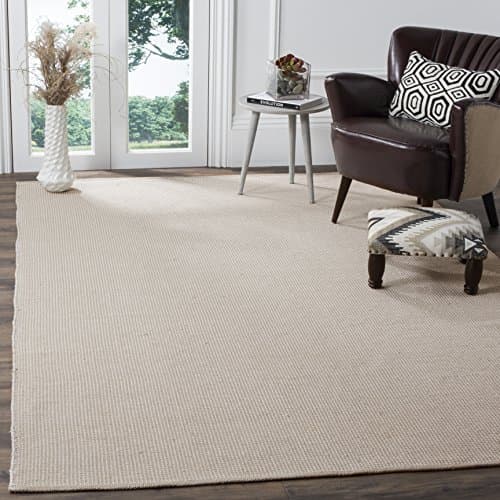 Safavieh Montauk Cotton Flatweave RugThe cotton case, made properly. Handwoven cotton flatweave with no applied backing, which is what makes it launderable at accent and runner sizes - a rug with a latex or rubber back cannot go in a machine at all. The patterning reads as faded textile rather than print. It absorbs anything spilled on it and it will wear visibly in a traffic lane, both of which are the fiber rather than the rug. | A rug you intend to wash | Handwoven 100 percent cotton flatweave, no applied backing | $246.00View on Amazon #ad We earn a commission · Price as of October 18, 2026 |
| 2 | No image Safavieh Hand-Tufted Wool RugThe wool case in pile form, and the version most people picture when they imagine a wool rug. Hand-tufted wool on a cotton backing gives real depth underfoot and the crimp recovery that stops a footpath forming where you walk. It is the most expensive option here and it is also the only one still worth owning in a decade - provided it never gets soaked, because the glued backing does not tolerate saturation. | Softness that survives a decade | Hand-tufted wool pile on a cotton backing | |
| 3 | 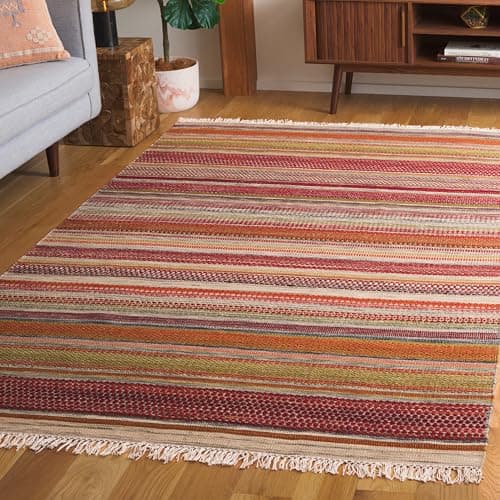 Safavieh Wool Flatweave Kilim RugWool without the pile, and the direct like-for-like against the cotton flatweave above. Same construction, different fiber: the wool version resists soil because of its lanolin, holds its shape better in humidity, and will still look right after the cotton one has worn through. It costs more and it cannot be laundered. This pair is the whole comparison in two rugs. | A flatweave that lasts | Flatwoven wool, effectively no pile | |
| 4 |  Lorena Canals Washable RugsThe exception that proves the rule, and worth knowing about before you accept the trade-off. A one-piece woven rug in cotton or certified wool, engineered specifically so the whole thing can be washed - which ordinary wool construction cannot survive. Sizes top out well below a living-room rug and the price sits above a plain cotton flatweave, but it is the one honest way to have both properties at once. | Washable, in a natural fiber | One-piece woven cotton or certified wool | $199.00View on Amazon #ad We earn a commission · Price as of October 18, 2026 |
The short answer
Buy cotton if the rug needs to be washed - a nursery, a kitchen, a bedside, anywhere small and messy. Buy wool if the rug needs to last - a living room, a dining room, a hallway. Cotton costs less and wears out in three to five years of real traffic; wool costs several times more and lasts twenty.
Both are natural fibers, both come in flatweave and pile, and both are sold in the same aisle at wildly different prices. The price gap is not a quality grade - it reflects two genuinely different materials that fail in different ways and suit different rooms. Pick by room and the decision makes itself.
The fiber difference, in one paragraph each
Cotton is a cellulose fiber: soft, absorbent, cheap, and structurally straight. It takes dye brilliantly, it is comfortable against skin, and it can be laundered. Because the fiber is straight rather than crimped, it does not spring back once it is compressed, so a cotton pile flattens permanently and a cotton flatweave thins in a traffic lane. And because it absorbs, a spill goes into the fiber immediately rather than beading on it.
Wool is a protein fiber with a natural crimp and a waxy lanolin coating. The crimp is why wool recovers from compression - the reason a wool rug does not develop a visible footpath. The lanolin is why liquids bead on the surface for a short window before soaking in, which turns many spills into a blotting job rather than a stain. Wool also holds and releases moisture from the air, which is why a wool rug feels warm and never feels clammy.
Side by side
| Cotton | Wool | |
|---|---|---|
| Typical lifespan in traffic | 3 to 5 years | 15 to 25 years |
| Relative cost | Low | High |
| Machine washable | Often, at small sizes | No - felts and shrinks |
| Spill behavior | Absorbs immediately | Beads briefly, then absorbs |
| Pile recovery | Poor - stays flat | Excellent - crimp springs back |
| Warmth underfoot | Moderate | High |
| Shedding | Low | Heavy for weeks, then light |
| Flame behavior | Burns readily | Self-extinguishing |
Two rows surprise people. Wool is naturally flame-resistant and self-extinguishing, which is why it is used in aircraft and hotel interiors - that is a real safety property, not a marketing line. And wool sheds far more than cotton at first, which reads as a defect on an expensive rug when it is normal and temporary.
Safavieh Montauk Cotton Flatweave Rug
A rug you intend to wash
Product photo and price from Amazon, refreshed daily.
#ad We earn a commission · Price as of October 18, 2026
The cotton case, made properly. Handwoven cotton flatweave with no applied backing, which is what makes it launderable at accent and runner sizes - a rug with a latex or rubber back cannot go in a machine at all. The patterning reads as faded textile rather than print. It absorbs anything spilled on it and it will wear visibly in a traffic lane, both of which are the fiber rather than the rug.
What it is
- 100 percent cotton, handwoven in India
- Flat weave with no backing applied - the maker recommends a separate rug pad
- Ikat and tie-dye patterns across area, square and runner sizes
What it does well
- Cotton is the one flatweave fiber a normal washing machine can handle at small and runner sizes
- No pile and no backing means it is genuinely thin - doors and dining chairs clear it
- Takes dye softly, so the patterns read as faded textile rather than printed graphic
Don't buy it if
- Cotton absorbs, so a spill soaks in instead of beading - the opposite of a synthetic flatweave
- No backing at all: without a pad it slides, and the maker says so on the listing
- Lighter colors show traffic lanes faster than wool or sisal in the same spot
The cotton flatweave to buy if you want a thin, soft-patterned rug you can actually launder at runner size.
Safavieh Hand-Tufted Wool Rug
Softness that survives a decade
No licensed photo of this exact rug yet — see it on the Amazon listing.
The wool case in pile form, and the version most people picture when they imagine a wool rug. Hand-tufted wool on a cotton backing gives real depth underfoot and the crimp recovery that stops a footpath forming where you walk. It is the most expensive option here and it is also the only one still worth owning in a decade - provided it never gets soaked, because the glued backing does not tolerate saturation.
What it is
- Wool pile hand-tufted to a cotton backing
- Made in India across a large pattern catalog
- Cut pile, generally medium height
What it does well
- Wool springs back from furniture compression in a way no synthetic does
- Naturally flame-resistant and naturally soil-resistant thanks to the lanolin in the fiber
- With normal care it outlives every synthetic rug on this page several times over
Don't buy it if
- Sheds noticeably for the first few months — normal for a tufted wool rug, not a defect
- Hand-tufted rugs are glued, and the latex adhesive can break down after many years
- Costs several times what a comparable polypropylene rug costs
The long-horizon purchase in this category: expensive once rather than cheap repeatedly.
Safavieh Wool Flatweave Kilim Rug
A flatweave that lasts
Wool without the pile, and the direct like-for-like against the cotton flatweave above. Same construction, different fiber: the wool version resists soil because of its lanolin, holds its shape better in humidity, and will still look right after the cotton one has worn through. It costs more and it cannot be laundered. This pair is the whole comparison in two rugs.
What it is
- Flatwoven — effectively no pile at all
- Wool fiber with a handwoven geometric pattern
- Reversible on many of the kilim patterns
What it does well
- Chairs slide over it instead of catching, which is exactly what a dining room needs
- No pile means nothing to crush, so furniture leaves no permanent dents
- Wool's soil resistance without wool's shedding
Don't buy it if
- Thin and firm underfoot — it will not feel luxurious
- Flatweaves need a good pad or they creep across the floor
- Spilled liquid goes straight through to the floor below
The correct rug shape for a dining room, in the correct fiber. Almost nobody buys this and regrets it.
Lorena Canals Washable Rugs
Washable, in a natural fiber
Product photo and price from Amazon, refreshed daily.
#ad We earn a commission · Price as of October 18, 2026
The exception that proves the rule, and worth knowing about before you accept the trade-off. A one-piece woven rug in cotton or certified wool, engineered specifically so the whole thing can be washed - which ordinary wool construction cannot survive. Sizes top out well below a living-room rug and the price sits above a plain cotton flatweave, but it is the one honest way to have both properties at once.
What it is
- A single woven piece, not a cover-and-pad system
- Cotton and wool lines, with the wool certified to the Responsible Wool Standard
- Washable in a home machine at smaller sizes; larger sizes need a commercial drum
What it does well
- Natural fiber rather than printed polyester, which matters if you are buying for a nursery
- Softer underfoot than any two-piece washable system
- One piece means no cover to re-seat after a wash
Don't buy it if
- Costs several times what a printed polyester washable rug costs
- Larger sizes exceed a domestic washer's drum capacity — check yours before buying
- Natural fiber takes far longer to dry than polyester
The washable rug for people who did not want a polyester rug in the first place, at a price that reflects exactly that.
Room by room, which fiber wins
| Room | Buy | Why |
|---|---|---|
| Nursery or kids' room | Cotton, or washable wool | It will need washing, repeatedly |
| Bedroom | Wool | Comfort underfoot, low traffic, long horizon |
| Living room | Wool | Traffic plus a twenty-year horizon |
| Dining room | Wool flatweave | Chairs crush pile; wool resists soil |
| Kitchen | Cotton | Treat it as a consumable and wash it |
| Hallway | Wool | Cotton wears through the traffic lane fastest here |
| Bathroom | Cotton | Absorbency is the job; washing is mandatory |
| Entryway | Neither | Use a synthetic - see the room guide |
That last row matters. The cotton-versus-wool question has a wrong answer in some rooms: an entry takes grit and water in quantities that ruin both fibers, and the best entryway rugs explains why a synthetic is the correct choice there instead.
The cost-per-year arithmetic
This is where the comparison usually resolves. A cotton rug in a busy living room is a three-to-five-year purchase; a comparable wool rug is a twenty-year one. If the wool rug costs four times as much, the annual cost is roughly the same - and you have bought one rug instead of five, which is five fewer deliveries, five fewer disposals and twenty years without the room changing underfoot.
The arithmetic flips completely in a room where the rug needs washing. There, the wool rug's longevity is irrelevant because it cannot be washed at all, and paying for durability you cannot use is simply paying more. In a nursery, cotton wins outright; in a hallway, wool wins outright; and the rooms in between are decided by how much mess you expect.
What about blends?
A cotton-wool blend generally inherits the cotton's limits rather than the wool's strengths, because the weak fiber in a blend is the one that fails first. The blends worth looking at are wool with a structural fiber rather than with cotton - a wool-sisal blend gives you sisal's toughness with some of wool's softness, which is a genuinely useful combination for a hallway or a stair landing.
Which to buy
If you can only answer one question, answer this one: will this rug need to be washed? If yes, buy cotton and plan to replace it - cotton rugs covers the fiber properly and how to clean a cotton rug covers the machine question. If no, buy wool and stop thinking about it for twenty years - wool rugs and the best wool rugs cover that side. If the honest answer is that you want both, the washable-wool constructions are the one real way to get them, and the best washable rugs is where that starts.
Questions people actually ask
Which is better, a cotton or wool rug?
Neither in general. Cotton is better where the rug must be washed and replaced; wool is better where it must last. In a living room or hallway wool wins outright; in a nursery or kitchen cotton does.
Can you machine wash a wool rug?
No. Agitation with heat and moisture makes wool's scales interlock permanently, which shrinks and hardens the rug irreversibly. Only rugs engineered specifically as washable wool can go in a machine.
How long does a cotton rug last?
Three to five years in a room with real traffic, and considerably longer in a bedroom or a low-use space. Cotton fiber is straight rather than crimped, so it flattens and thins where people walk and does not recover.
Are wool rugs worth the extra money?
In a room where the rug will stay for years, usually yes - the cost per year is often similar to cotton because wool lasts four or five times as long. In a room where the rug needs washing, no, because you cannot use the durability you paid for.
Do wool rugs shed more than cotton rugs?
Yes, noticeably, for the first few weeks to a few months. That is loose fiber working out of the pile and it stops. Cotton sheds very little from the start but wears out far sooner.
Which is softer, cotton or wool?
Cotton feels softer to the hand; wool feels warmer and more substantial underfoot and holds that feeling for years. A flattened cotton pile stops feeling soft well before a wool pile does.
Sources
Read next
- Cotton RugsCotton's genuine washability and genuine fragility — and the rooms where that combination is exactly right.
- Wool RugsWhat wool physically does that synthetics cannot — crimp recovery and lanolin — and what that buys you.
- The Best Wool Rugs (October 2026)Tufted, flatwoven and blended wool compared on pile, shedding and the room each one belongs in - with the honest cost of each.
- Jute vs WoolJute against wool on cost per year, comfort and cleanability — and which is genuinely the better value.
- How to Clean a Cotton RugMachine wash cold on gentle if it fits, hand wash if it does not. How to avoid shrinkage and dye bleed, and why drying flat matters most.
- Rug MaterialsWool, jute, sisal, polypropylene, cotton, viscose and the traditional weaves — compared on wear, feel, water and cost.