Rug Materials
Do Sisal Rugs Shed?
Sisal is the least sheddy natural fiber rug you can buy, and it still sheds at first. Here is how much, for how long, and when shedding means something is actually wrong.
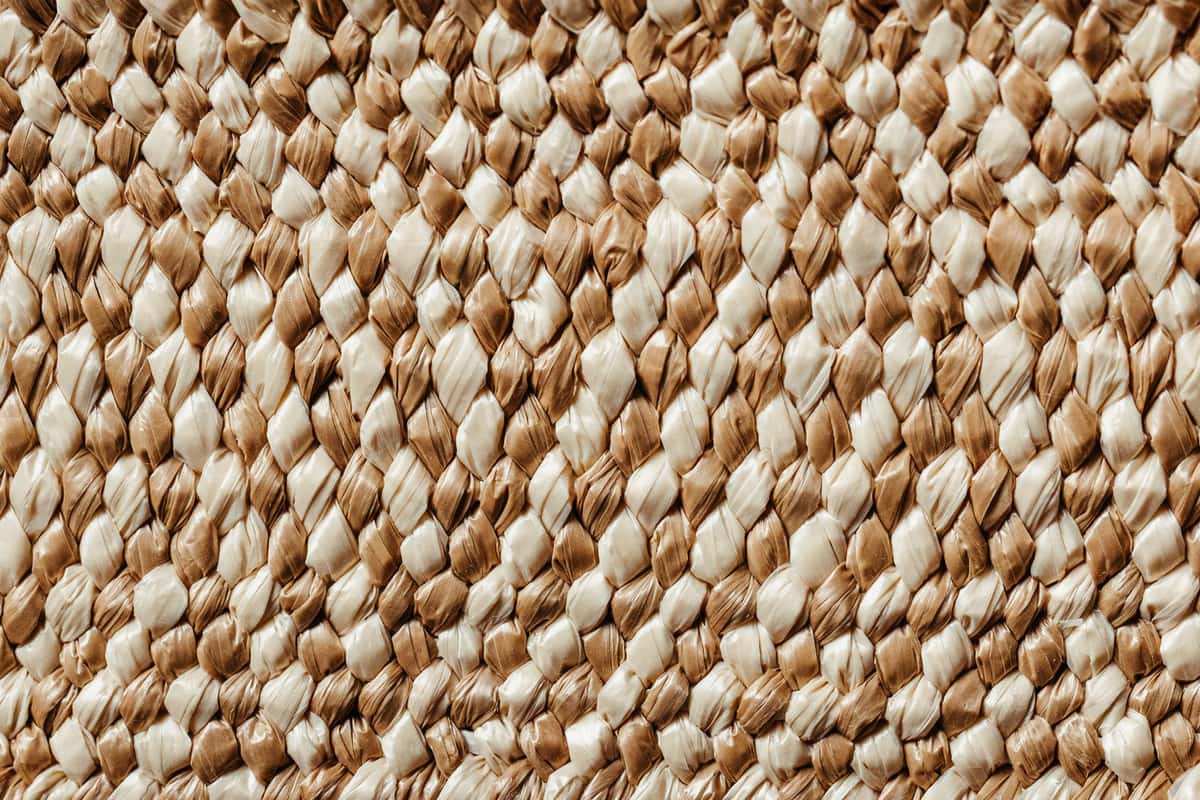
The short answer
Yes, but briefly. A new sisal rug releases loose fiber for roughly two to four weeks - noticeably in the first week, then dropping off fast. That is less shedding, and over a shorter period, than jute. After the first month a tight-woven sisal rug sheds almost nothing for the rest of its life.
Sisal is the best-behaved natural fiber on this point, and the reason is in the fiber itself. Sisal comes from the leaf of the agave plant, and the strands are long, stiff and strong, so they spin into a hard tight yarn with relatively few short ends to work loose. Jute is a stem fiber - softer, shorter, hairier - which is why jute sheds for four to six weeks and more heavily while it does.
What the shedding actually is
Two different things get called shedding, and only one of them is normal. The first is loose fiber: short pieces left over from spinning and weaving, sitting inside the weave until foot traffic and vacuuming shake them out. That is what the first few weeks are, it is finite, and every natural fiber rug does it.
The second is the weave releasing fiber - strands pulling out of the structure, usually at a cut edge or where something has caught. That is not normal and it does not stop on its own. The tell is simple: loose fiber is short, dusty and uniform, while a failing weave gives you long strands and a visible gap or fuzz where they came from.
| Normal shedding | Something is wrong | |
|---|---|---|
| Fiber length | Short, fluff-like | Long strands |
| Where it comes from | All over the field | One spot or an edge |
| Over time | Drops off in 2-4 weeks | Stays the same or worsens |
| The rug surface | Unchanged | Thinning, fuzzing or a gap |
| What to do | Keep vacuuming | Return it or stop the cause |
How to get through the first month faster
- Vacuum more often than you think, with the beater bar off. Suction lifts loose fiber out of the weave. A rotating brush beats it in and abrades the surface, which creates more loose fiber than it removes. Vacuuming rugs covers the settings.
- Vacuum in both directions. Sisal is woven in a tight grid, and loose fiber sits along the axis of the weave. Passing across it as well as along it gets considerably more out in the same time.
- Do the edges deliberately. The perimeter is where cut ends live and where a vacuum head is most likely to catch and pull. Go gently, and parallel to the edge rather than into it.
- Expect to empty the canister. The volume of fiber in the first week surprises people and is the single most common reason a perfectly good natural-fiber rug gets returned.
- Give it the full month before judging. Week one is not representative of week five, and almost nobody who waits is still bothered by it.
Safavieh Natural Fiber Sisal Rug
The least shedding
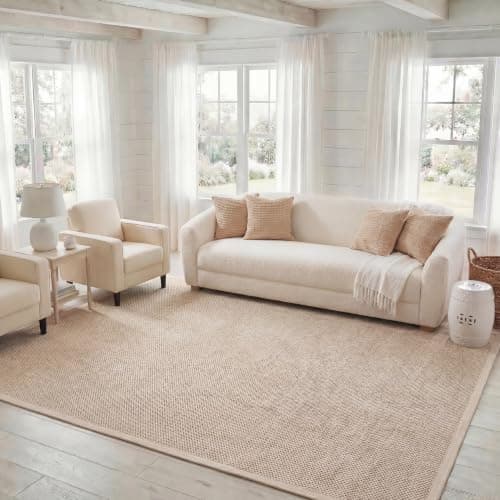
Product photo and price from Amazon, refreshed daily.
#ad We earn a commission · Price as of October 11, 2026
Power-loomed sisal finished with a latex layer, and the latex is directly relevant here: it locks the weave and the cut edges, which is why this construction sheds less and for less time than an unbacked rug. The trade-off is a latex layer against your floor.
What it is
- Listings in this collection state sisal with latex fibers and a 3/8 inch pile
- Most designs carry a woven contrast border rather than a raw cut edge
- Sold in a long size ladder — small accents through 8x11 and 9x12
What it does well
- The easiest sisal to actually buy in the size you need, which is the whole problem with this fiber
- The border finishes the edge, so it does not fray the way a cut natural fiber edge can
- The latex component holds the weave together and limits creep on a hard floor
Don't buy it if
- The latex backing is why it should not be laid over radiant heat or left on a floor it can mark
- Colorways are natural, maize and marble tones — there is no real color range here
- It is still sisal: coarse barefoot, and it will not forgive a spill
The default sisal for most rooms, because the size ladder and the bordered edge remove the two things that usually derail a sisal purchase.
Natural Area Rugs Handmade Sisal Rug
A finished edge
No licensed photo of this exact rug yet — see it on the Amazon listing.
Handmade 100 percent sisal with a stitched fabric border. The border is what stops the perimeter from unraveling where a vacuum catches it - which on natural fiber is the shedding that actually matters, because it is the rug coming apart rather than loose fiber coming out.
What it is
- Listings state 100% natural fiber, handmade, in named weaves such as Pavillion, Sandstone, Karima and Deco
- Borders are sold as part of the design — black and fudge among them
- Runner lengths including 2 ft 6 in x 8 ft sit alongside the standard rectangles
What it does well
- Genuinely 100 percent sisal rather than a sisal-look weave, if that is what you came for
- The runner lengths are the real reason to look here — sisal in a hallway is this fiber at its best
- A stitched border takes most of the edge-fray risk out of a natural fiber rug
Don't buy it if
- Handmade means weave and tone vary between pieces more than a power-loomed rug does
- No latex layer on most of these, so it needs a pad to stay put
- Priced above the power-loomed sisal for the same square footage
The one to buy when you want undiluted sisal, a finished border, or a runner length the big brands do not stock.
iCustomRug Synthetic Sisal Rug
No shedding at all
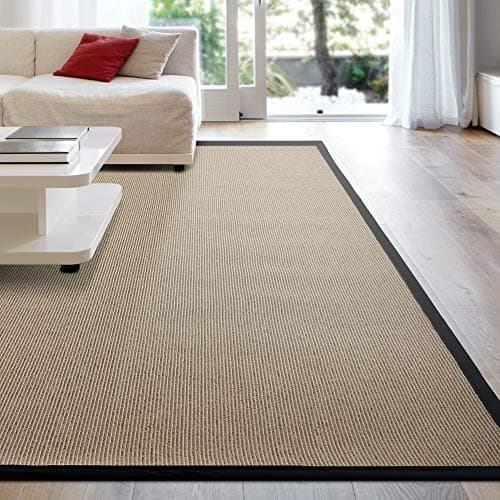
Product photo and price from Amazon, refreshed daily.
#ad We earn a commission · Price as of October 11, 2026
The zero-shed option, and honest about not being sisal: machine-made polypropylene in a ribbed weave that imitates woven sisal. Nothing sheds because there is no plant fiber in it. If shedding is the dealbreaker rather than a nuisance, this is the answer.
What it is
- Listed as 100% machine-made polypropylene, not a natural fiber
- Low-profile ribbed pile that imitates the look of woven sisal
- Area rug and runner sizes, described as stain resistant and easy to clean
What it does well
- Takes water, which no real sisal does — this is the kitchen, basement and humid-climate answer
- Softer underfoot than the fiber it imitates, which is the usual complaint about sisal
- No humidity rippling, because polypropylene does not absorb moisture from the air
Don't buy it if
- It is not sisal, and close up it does not pretend convincingly
- Synthetic fiber flattens under furniture and does not spring back
- Can hold static and a slight sheen that natural fiber never has
Buy this instead of sisal if the room is damp, the floor gets wet, or a cat lives there — it solves all three.
What shedding does and does not predict
It does not predict durability. Sisal is the toughest natural rug fiber in common use and a tight-woven sisal rug will outlast a jute one by years in the same hallway - the brief shedding at the start has nothing to do with that. The best rug material for high traffic is the page for that comparison.
What it does predict is the first month of ownership, and that is worth planning for. Do not put a new natural fiber rug down the day before guests arrive, and do not put one in a room you cannot easily vacuum. If the rug is going somewhere awkward - a landing, under a bed, a room with a lot of furniture on it - get the settling done before the furniture goes back on top.
Shedding versus the other sisal complaints
Shedding is the complaint people expect and the one that goes away. The two that do not go away are harshness underfoot and water sensitivity. Sisal is coarse by nature, and no weave makes it soft - are sisal rugs soft deals with that honestly, including the one construction that genuinely helps. And water stains sisal permanently, which is why how to clean a sisal rug is almost entirely about dry methods.
If you want the look with none of the three, the synthetic version is a legitimate choice rather than a compromise: it does not shed, it is softer, and it can be cleaned wet. The best sisal rugs includes it for exactly that reason, and jute versus sisal covers the natural-fiber trade the other way.
The short version
Buy the sisal. Vacuum it properly for a month without a beater bar, in both directions, including the edges. Expect a surprising amount of fiber in the first week and almost none by week five. If you are still collecting long strands from one spot after a month, that is a defect and worth a return - but that is rare, and it is a different thing from the settling every natural fiber rug does.
For the other side of that comparison - how much more a jute rug sheds and for how much longer - do jute rugs shed has the week-by-week picture.
Questions people actually ask
How long do sisal rugs shed for?
Roughly two to four weeks, heaviest in the first week. After the first month a tight-woven sisal rug sheds almost nothing for the rest of its life.
Do sisal rugs shed more than jute?
No, less, and for a shorter time. Sisal is a long stiff leaf fiber that spins into a hard yarn with fewer loose ends; jute is a shorter, softer stem fiber and sheds for four to six weeks.
How do I stop a sisal rug shedding?
You cannot stop it, only speed it up: vacuum frequently with the beater bar off, in both directions, and do the edges gently. It finishes on its own within about a month.
Is shedding a sign of a bad sisal rug?
Short dusty fiber from all over the rug is normal settling. Long strands coming from one spot or an edge, that do not reduce over weeks, mean the weave is failing - that is a defect.
Which sisal rug sheds the least?
A tight power-loomed weave with a latex backing, because the backing locks the fiber ends in place. A handmade unbacked sisal sheds a little more and settles a little slower.
Do sisal rugs shed on carpet?
The same amount, but it is harder to clear - loose fiber works into the carpet pile underneath rather than sitting on a hard floor. Lay a pad between them and vacuum both.
Sources
Read next
- Sisal RugsSisal's real strengths and its three real problems: humidity rippling, staining, and what cats do to it.
- Are Sisal Rugs Soft?No - sisal is coarse by nature and no weave softens it. What it feels like barefoot, the wool blend that fixes it, and where hardness does not matter.
- The Best Sisal Rugs (October 2026)Real sisal compared on fiber content, backing, border and sizes - and the synthetic to buy instead when the room is wrong for it.
- How to Clean a Sisal RugThe dry method for sisal, why water swells and stains it, and what to do about humidity rippling.
- Jute vs SisalThe single trade-off that decides between the two natural fibers, mapped onto the rooms each belongs in.
- Rug MaterialsWool, jute, sisal, polypropylene, cotton, viscose and the traditional weaves — compared on wear, feel, water and cost.