Rug Materials
Polypropylene vs Polyester Rugs
Both are plastic, both are cheap, and they fail in completely different ways. One is a floor you hose down; the other is a floor you keep indoors.
Heads up: we earn a commission when you buy through links on this page, at no extra cost to you. It never changes which rug we put first — see how we choose and our affiliate disclosure.
Quick picks
The whole answer, before the detail. Tap any row to jump to that rug's full write-up further down the page.
| # | Rug | Best for | Construction | Price |
|---|---|---|---|---|
| 1 | No image Fab Habitat Flatweave Outdoor RugPolypropylene doing the thing polypropylene is uniquely good at: a flatwoven recycled-PP rug that can be hosed down, left wet, and put back in sunlight without the color going. No polyester rug will survive that routine, which is the single clearest line between the two fibers. | Polypropylene, outdoors | Flatwoven recycled polypropylene, fully reversible | |
| 2 | 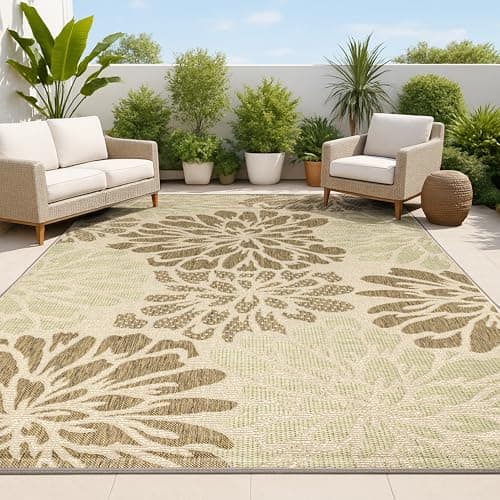 JONATHAN Y Modern Area RugThe indoor case for polypropylene: machine-woven, low to medium pile, and genuinely hard-wearing in a traffic lane. It will not feel as soft as a polyester rug of the same price and it will not hold a deep saturated color as well, which is the trade you are making for the durability. | Polypropylene, indoors | Machine-woven polypropylene, low to medium pile | $187.00View on Amazon #ad We earn a commission · Price as of October 11, 2026 |
| 3 | 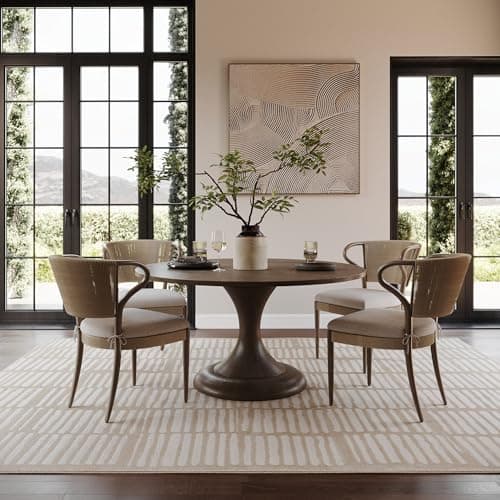 nuLOOM Washable Area RugPolyester playing to its strengths: a one-piece low-pile polyester that takes print and color well and goes in a washing machine. Polyester's oil problem is real, but a rug you can actually wash is the one honest answer to it - which is why most washable rugs are polyester rather than polypropylene. | Polyester, washable | One-piece low-pile polyester, machine washable | $284.54View on Amazon #ad We earn a commission · Price as of October 11, 2026 |
| 4 | 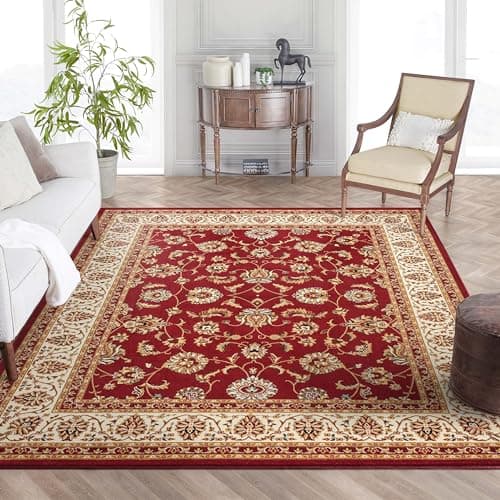 Well Woven Area RugA medium-pile machine-woven synthetic in the size and price bracket where most of these two fibers actually compete. Worth including because at this end of the market the fiber on the label matters less than the pile height and the density of the weave - and this is a reminder to check both before you decide on fiber alone. | Either fiber, small rooms | Machine-woven polypropylene, medium pile | $59.99$83.99View on Amazon #ad We earn a commission · Price as of October 11, 2026 |
The short answer
Buy polypropylene if the rug will ever get wet, sit in sunlight, or go outside - it does not absorb water and it barely fades. Buy polyester if the rug stays indoors and you want a softer feel and a richer color, and accept that oil-based stains are permanent in it. Polypropylene lasts longer; polyester looks and feels better.
These are the two fibers under most rugs sold under about two hundred dollars, and the labels rarely help - plenty of listings say nothing more useful than "100% synthetic". The difference between them is not quality. They are both plastics, both machine-made, both cheap, and either one can be a good rug or a bad one. The difference is chemistry, and it decides exactly two things: what happens when the rug gets wet, and what happens when it gets stained.
The one difference that matters: water
Polypropylene is hydrophobic in a way that goes all the way through the fiber. It does not absorb water, so a spill sits on the surface and can be blotted off, and a soaked rug dries from the inside out rather than holding moisture in the core. It is also solution-dyed in most rug applications, meaning the color is mixed into the plastic before the fiber is extruded rather than applied to the outside. A solution-dyed fiber cannot really fade, because there is no surface layer of dye to bleach out - which is why it is the default fiber for outdoor rugs and why hosing one down is a normal maintenance step rather than a risk.
Polyester absorbs a little water and is usually dyed rather than solution-dyed. It is still far more water-tolerant than any natural fiber, and a polyester rug is genuinely washable in a way a wool one is not - but it is not an outdoor fiber. Left in direct sun through a summer it fades noticeably, and left wet it stays wet longer than polypropylene does.
The one difference that matters almost as much: oil
Polyester is oleophilic - it attracts and bonds with oil. That is the fiber's real weakness and it is not fixable by cleaning technique. A water-based stain comes out of polyester easily, often with water alone. An oil-based one - cooking oil, butter, salad dressing, a greasy shoe print, body oils where people sit - binds to the fiber and stays, and over a few years an untreated polyester rug in a high-traffic lane develops a dull gray-looking path that is not dirt sitting on top but oil inside the fiber.
Polypropylene is far less oil-loving, which is one reason it holds up better in a kitchen or an entryway. It has its own weakness instead, and it is a serious one: it has a low melting point. A dragged chair leg, a dropped cigarette, a hot pan set down, or the friction of a vacuum beater bar on one spot can melt or glaze the fiber, and a melted spot is permanent in a way no stain is.
| Polypropylene | Polyester | |
|---|---|---|
| Water absorption | Essentially none | Low but real |
| Fade resistance | Excellent (usually solution-dyed) | Moderate |
| Outdoor use | Yes - the standard outdoor fiber | No |
| Softness | Coarser, slightly waxy feel | Softer, more wool-like |
| Color depth | Good | Better - takes rich color |
| Water-based stains | Blot off the surface | Usually come out |
| Oil-based stains | Resists reasonably well | Bonds permanently |
| Heat | Melts and glazes easily | More heat tolerant |
| Machine washable versions | Uncommon | Common |
| Typical price | Lower | Similar or slightly higher |
Which to buy, by room
- Patio, deck, porch, anywhere outdoors - polypropylene, with no real argument. The best outdoor rugs is almost entirely this fiber for the reasons above.
- Kitchen - polypropylene for the grease resistance, or a washable polyester if you will genuinely wash it. The best rugs for a kitchen splits along exactly this line.
- Entryway and hallway - polypropylene. Grit, wet shoes and directional traffic all favor it.
- Living room - either. Polyester if comfort and color matter more, polypropylene if there are dogs or a traffic lane through the middle.
- Bedroom - polyester, or a polypropylene shag. This is the room where softness outranks durability, and the oil problem barely applies.
- Dining room - polypropylene, flatwoven. Food is mostly oil, and the chairs are the heat-and-friction risk polypropylene dislikes, so keep the pile low.
- Anywhere you want to machine wash it - polyester, because that is what washable rugs are mostly made of.
Fab Habitat Flatweave Outdoor Rug
Polypropylene, outdoors
No licensed photo of this exact rug yet — see it on the Amazon listing.
Polypropylene doing the thing polypropylene is uniquely good at: a flatwoven recycled-PP rug that can be hosed down, left wet, and put back in sunlight without the color going. No polyester rug will survive that routine, which is the single clearest line between the two fibers.
What it is
- Flatwoven from recycled polypropylene yarn
- Fully reversible — two usable faces
- Designed to be hosed down and hung to dry
What it does well
- Reversible construction effectively doubles the usable life
- Hoses clean in minutes and dries fast because there is no pile to hold water
- Rolls up small enough to store over winter without a dedicated space
Don't buy it if
- Very thin — you will feel every imperfection in the deck below it
- Flatweave slides more than a backed rug; it needs weighting or an outdoor pad
- Stripe patterns dominate the range if you want something plainer
The most practical outdoor rug here if your actual cleaning routine is a garden hose and ten minutes.
JONATHAN Y Modern Area Rug
Polypropylene, indoors
Product photo and price from Amazon, refreshed daily.
#ad We earn a commission · Price as of October 11, 2026
The indoor case for polypropylene: machine-woven, low to medium pile, and genuinely hard-wearing in a traffic lane. It will not feel as soft as a polyester rug of the same price and it will not hold a deep saturated color as well, which is the trade you are making for the durability.
What it is
- Machine-woven polypropylene in contemporary patterns
- Strong availability at 8x10, 9x12 and larger
- Low to medium pile
What it does well
- Genuinely available in the big sizes an open-plan room needs, which a lot of design-led brands are not
- Contemporary patterns rather than the traditional default
- Pile low enough for a room with dining chairs in it
Don't buy it if
- Large synthetic rugs arrive heavily creased and take weeks to flatten
- The pattern repeat is visible on the very large sizes
- Edges can fray if a vacuum beater bar catches them
A practical answer to the hardest sizing problem in the category: covering a large open room without spending four figures.
nuLOOM Washable Area Rug
Polyester, washable
Product photo and price from Amazon, refreshed daily.
#ad We earn a commission · Price as of October 11, 2026
Polyester playing to its strengths: a one-piece low-pile polyester that takes print and color well and goes in a washing machine. Polyester's oil problem is real, but a rug you can actually wash is the one honest answer to it - which is why most washable rugs are polyester rather than polypropylene.
What it is
- One-piece construction, no separate pad included
- Low pile sized to fit a domestic washer
- Wide size range including runners and rounds
What it does well
- The cheapest honest route into a washable rug
- One piece, so there is no cover to shift out of alignment
- Sizes go down to accent and runner dimensions the two-piece systems often skip
Don't buy it if
- No pad included, and it genuinely needs one — it will slide on a hard floor without
- Thin, with very little cushioning
- Color range is more limited than the premium brands
The value pick: it does the one job the category exists for and does not pretend to do anything else.
Well Woven Area Rug
Either fiber, small rooms
Product photo and price from Amazon, refreshed daily.
#ad We earn a commission · Price as of October 11, 2026
A medium-pile machine-woven synthetic in the size and price bracket where most of these two fibers actually compete. Worth including because at this end of the market the fiber on the label matters less than the pile height and the density of the weave - and this is a reminder to check both before you decide on fiber alone.
What it is
- Strong coverage of the 5x7 and 5x8 sizes
- Medium pile with a defined pattern
- Jute-blend backing
What it does well
- 5x7 is the size most small living rooms actually need and it is often skipped
- Medium pile is a reasonable compromise between comfort and maintenance
- Patterns busy enough to hide a small room's concentrated traffic
Don't buy it if
- 5x7 is too small to get all the furniture legs on in most rooms — know that before buying
- Medium pile shows vacuum lines
- The backing can shed a little jute dust in the first weeks
The right size for an apartment, with the caveat that a 5x7 is a front-legs-on rug, not an all-legs-on one.
How to tell which one you are looking at
The listing often will not say, so use the proxies. If a rug is sold as suitable for outdoor use, it is polypropylene or a close relative. If it is sold as machine washable, it is almost certainly polyester. If it is described as solution-dyed or UV-stable, that is polypropylene language. If it is described as soft, plush or silky at a low price, that is polyester. And if a flatwoven rug has a slightly plasticky, slick hand feel, that is polypropylene - polyester at the same price feels more like brushed fabric.
One more practical tell: weight. Polypropylene is less dense than polyester, so for the same size and pile a PP rug is usually the lighter of the two. That is useful if you are going to be lifting it to clean under it.
The honest summary
If you only remember one line: polypropylene for water and sun, polyester for feel and color. Where both would work, buy on pile height and weave density instead, because at this price those predict how long a rug looks new better than the fiber name does. If you are weighing a synthetic against a natural fiber rather than against the other synthetic, wool versus polyester and the best rug material for high traffic are the pages for that comparison.
Questions people actually ask
Is polypropylene or polyester better for a rug?
Polypropylene lasts longer and handles water and sunlight, so it wins outdoors, in kitchens and in entryways. Polyester feels softer and holds richer color, so it wins in bedrooms and living rooms - as long as nothing oily is spilled on it.
Which is softer, polypropylene or polyester?
Polyester, clearly. Polypropylene has a slightly coarse, faintly waxy hand feel; polyester is closer to wool and takes a plush pile better at the same price.
Do polyester rugs stain easily?
Only with oil. Polyester is oleophilic, so cooking oil, grease and body oils bond with the fiber permanently. Water-based spills usually come out of polyester with water alone.
Can you use a polyester rug outside?
No. It fades in direct sunlight and holds moisture longer than polypropylene. Outdoor rugs are polypropylene for both reasons.
Why do polypropylene rugs not fade?
Most are solution-dyed - the color is mixed into the plastic before the fiber is made, rather than applied to the surface. There is no outer dye layer for sun to bleach out.
Which synthetic rug is best for dogs?
Polypropylene, for the water resistance and because it resists the oils in paw prints better. If you want machine washability instead, a low-pile polyester washable rug is the better trade.
Does polypropylene melt?
Yes, and it is the fiber's real weakness. A dragged chair leg, a hot pan or a vacuum beater bar held on one spot can glaze or melt the pile, and that damage is permanent.
Sources
Read next
- Polypropylene RugsWhy solution-dyeing and water repellency make polypropylene the default budget and outdoor fiber — and its real limits.
- Wool vs Polyester RugsWhere wool's premium is justified against polyester, and the specific rooms where polyester is the better buy.
- Are Polypropylene Rugs Toxic?Polypropylene fiber is inert and not classed as toxic. The real questions are the backing, the finishes and the new-rug smell - each one answered.
- The Best Rug Material for High TrafficThe two properties that decide high-traffic performance, the three fibers that have both, and why construction matters as much.
- The Best Outdoor Rugs (September 2026)Outdoor rugs compared on fiber, drainage and reversibility — and what each one does to the surface underneath.
- Rug MaterialsWool, jute, sisal, polypropylene, cotton, viscose and the traditional weaves — compared on wear, feel, water and cost.