Rugs by Room
The Best Rugs for a Basement
Every basement rug failure is the same failure. Concrete gives off moisture, the rug traps it, and the fiber you chose decides what happens next.
Heads up: we earn a commission when you buy through links on this page, at no extra cost to you. It never changes which rug we put first — see how we choose and our affiliate disclosure.
Quick picks
The whole answer, before the detail. Tap any row to jump to that rug's full write-up further down the page.
| # | Rug | Best for | Construction | Price |
|---|---|---|---|---|
| 1 | 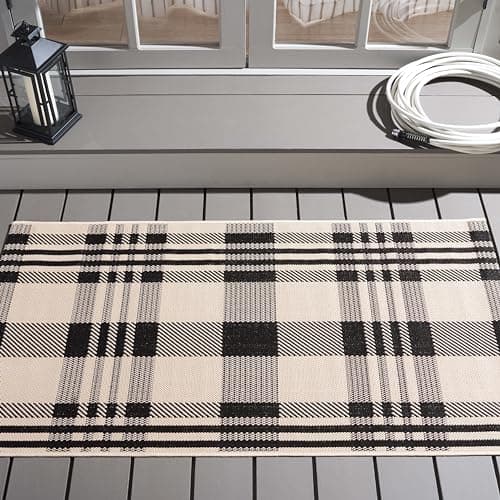 Safavieh Courtyard Indoor/Outdoor RugThe pick, because an indoor-outdoor rug is exactly what a basement needs and almost nobody buys one for indoors. Power-loomed polypropylene at roughly a quarter-inch pile with no backing: nothing in it absorbs water, the short pile dries fast, and the absence of a backing means air can get to the concrete underneath instead of being sealed against it. It comes in patterns that read as a real living-room rug, which is the part that makes it usable in a finished basement. | A finished basement that should not look like one | Power-loomed polypropylene, roughly a quarter-inch pile, no backing | $19.78$25.43View on Amazon #ad We earn a commission · Price as of October 18, 2026 |
| 2 | 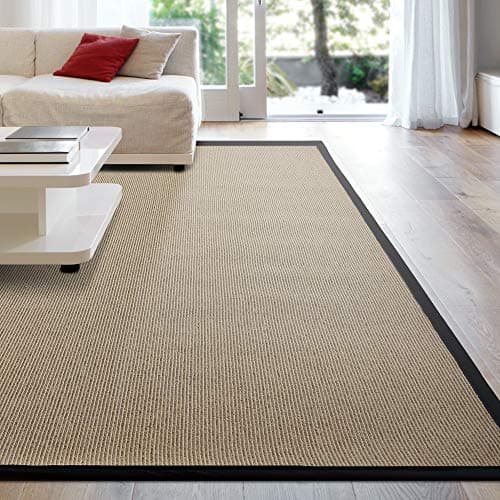 iCustomRug Synthetic Sisal RugThe natural-fiber look for a room where no natural fiber can survive. A ribbed polypropylene weave that reads as sisal from a few feet away, with none of sisal's behavior around water - real sisal in a basement stains, ripples and eventually mildews, and this does not. Firmer and more regular in texture than the real thing, which is the honest tell and the trade most people accept. | Sisal texture without the sisal problem | Machine-made polypropylene in a ribbed sisal-look weave | $129.00View on Amazon #ad We earn a commission · Price as of October 18, 2026 |
| 3 | 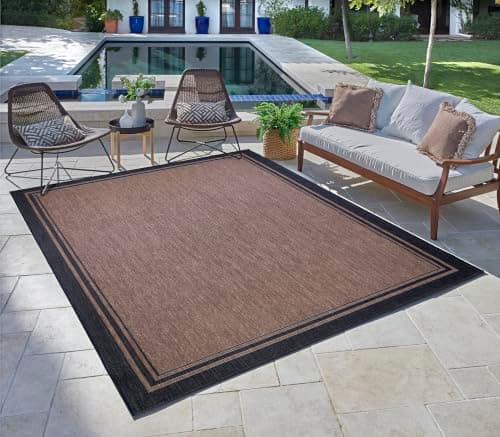 Gertmenian Outdoor Patio RugThe large-area answer. Flatwoven polypropylene, reversible on some patterns, and priced so that covering a big basement floor is actually affordable - which matters because basements are often the largest open space in a house. Reversibility is worth more here than anywhere: if one face picks up a damp mark or a stain, you flip it rather than replace it. | Covering a big floor cheaply | Flatwoven polypropylene, reversible on some patterns | $200.48View on Amazon #ad We earn a commission · Price as of October 18, 2026 |
| 4 | No image nuLOOM Washable Area RugThe pick if the basement is a playroom or a laundry zone rather than a den. A one-piece low-pile polyester rug that goes in a washing machine is the only construction here that lets you deal with a spill or a musty smell completely rather than surface-cleaning around it. Keep to a size your machine can take, which in practice means 5x7 or smaller. | A basement playroom or laundry area | One-piece low-pile polyester, machine washable |
The short answer
Buy a synthetic, low-pile, indoor-outdoor rug with no absorbent backing - the Safavieh Courtyard is the pick. Concrete releases moisture continuously, so wool, jute, sisal and anything with a felt or foam core will go musty. Use a breathable open-mesh pad, never a solid rubber one.
A basement is not a difficult room because of traffic or wear. It is difficult because of one physical fact: a concrete slab sits against ground that is almost always damper than the air inside, and it passes that moisture upward through the slab as vapor. A sealed slab slows it. Nothing stops it. Put something absorbent on top and the moisture has somewhere to go.
The test that tells you what you are dealing with
Tape a two-foot square of clear plastic sheet to the bare slab on all four edges and leave it for forty-eight hours. Condensation underneath, or a visibly darkened patch of concrete, means the slab is passing meaningful moisture. This is a standard flooring-trade check and it takes two days and almost nothing in materials, and it is worth doing before you spend anything on a rug.
If the test comes back wet, the answer is not a better rug - it is a moisture barrier under whatever flooring goes down, and that is a different project. If it comes back dry, you still have a humid room, and the rug rules below still apply.
What we judged these on
- Whether the fiber absorbs water. This disqualified more rugs than everything else combined. Polypropylene and polyester do not absorb; wool, cotton, jute and sisal all do.
- What the backing is made of. A felt or foam core will stay damp long after the face fiber has dried, and it is the part that actually goes musty. A thin or absent backing is better here even though it is worse in most other rooms.
- Pile height. Short pile dries in hours. Deep pile holds humidity against the floor for days and is the wrong call in any basement.
- Whether it can be cleaned aggressively. Solution-dyed polypropylene tolerates diluted bleach without losing color, which is a genuinely useful property in a room where mildew is the risk.
- Whether it can be lifted. A rug that can be rolled, taken outside and dried is a rug that survives a damp spell. One too heavy to move is one that will not get aired.
We compared published fiber content, backing construction and stated care requirements across current listings. We make no testing claims - how we choose sets out the method and its limits.
Safavieh Courtyard Indoor/Outdoor Rug
A finished basement that should not look like one
Product photo and price from Amazon, refreshed daily.
#ad We earn a commission · Price as of October 18, 2026
The pick, because an indoor-outdoor rug is exactly what a basement needs and almost nobody buys one for indoors. Power-loomed polypropylene at roughly a quarter-inch pile with no backing: nothing in it absorbs water, the short pile dries fast, and the absence of a backing means air can get to the concrete underneath instead of being sealed against it. It comes in patterns that read as a real living-room rug, which is the part that makes it usable in a finished basement.
What it is
- 100 percent polypropylene, power loomed in Turkey
- Pile around a quarter of an inch, with no applied backing
- Rated for indoor or outdoor use and listed as cleanable with a garden hose
What it does well
- A far deeper pattern catalog than the stripe-and-solid outdoor norm - borders, geometrics and traditional medallions
- Polypropylene absorbs no water, so nothing in the rug can feed mildew
- The quarter-inch pile hoses clean and dries far faster than any cut-pile rug
Don't buy it if
- Fade resistant is not fade proof - a quarter-inch pigmented pile in unshaded afternoon sun will still lighten over a few summers
- No backing at all, so it slides and creeps without an outdoor pad
- A quarter-inch pile is firm underfoot; comfort is not what this line is for
The outdoor rug for people who want a pattern rather than a stripe, bought with clear eyes about what a south-facing summer does to any synthetic.
iCustomRug Synthetic Sisal Rug
Sisal texture without the sisal problem
Product photo and price from Amazon, refreshed daily.
#ad We earn a commission · Price as of October 18, 2026
The natural-fiber look for a room where no natural fiber can survive. A ribbed polypropylene weave that reads as sisal from a few feet away, with none of sisal's behavior around water - real sisal in a basement stains, ripples and eventually mildews, and this does not. Firmer and more regular in texture than the real thing, which is the honest tell and the trade most people accept.
What it is
- Listed as 100% machine-made polypropylene, not a natural fiber
- Low-profile ribbed pile that imitates the look of woven sisal
- Area rug and runner sizes, described as stain resistant and easy to clean
What it does well
- Takes water, which no real sisal does — this is the kitchen, basement and humid-climate answer
- Softer underfoot than the fiber it imitates, which is the usual complaint about sisal
- No humidity rippling, because polypropylene does not absorb moisture from the air
Don't buy it if
- It is not sisal, and close up it does not pretend convincingly
- Synthetic fiber flattens under furniture and does not spring back
- Can hold static and a slight sheen that natural fiber never has
Buy this instead of sisal if the room is damp, the floor gets wet, or a cat lives there — it solves all three.
Gertmenian Outdoor Patio Rug
Covering a big floor cheaply
Product photo and price from Amazon, refreshed daily.
#ad We earn a commission · Price as of October 18, 2026
The large-area answer. Flatwoven polypropylene, reversible on some patterns, and priced so that covering a big basement floor is actually affordable - which matters because basements are often the largest open space in a house. Reversibility is worth more here than anywhere: if one face picks up a damp mark or a stain, you flip it rather than replace it.
What it is
- Polypropylene throughout, including the backing on most patterns
- Wide pattern range beyond the usual neutral weave
- Large sizes stay unusually affordable
What it does well
- One of the few lines where a genuinely large outdoor rug does not cost more than the furniture on it
- Solution-dyed polypropylene means color runs through the fiber, so fading is slow
- Safe against composite decking, and it takes the scuffing patio furniture inflicts
Don't buy it if
- Flatwoven polypropylene is not soft — this is not a barefoot lounging surface
- Edges can curl for the first few weeks out of the box
- The pattern printing is decent rather than premium
The sensible default for a full-size patio: it covers the area, survives weather, and does not cost enough to make you precious about it.
nuLOOM Washable Area Rug
A basement playroom or laundry area
No licensed photo of this exact rug yet — see it on the Amazon listing.
The pick if the basement is a playroom or a laundry zone rather than a den. A one-piece low-pile polyester rug that goes in a washing machine is the only construction here that lets you deal with a spill or a musty smell completely rather than surface-cleaning around it. Keep to a size your machine can take, which in practice means 5x7 or smaller.
What it is
- One-piece construction, no separate pad included
- Low pile sized to fit a domestic washer
- Wide size range including runners and rounds
What it does well
- The cheapest honest route into a washable rug
- One piece, so there is no cover to shift out of alignment
- Sizes go down to accent and runner dimensions the two-piece systems often skip
Don't buy it if
- No pad included, and it genuinely needs one — it will slide on a hard floor without
- Thin, with very little cushioning
- Color range is more limited than the premium brands
The value pick: it does the one job the category exists for and does not pretend to do anything else.
The four, on what matters down there
| Pick | Fiber | Pile | Can be hosed | Buy it for |
|---|---|---|---|---|
| Safavieh Courtyard | Polypropylene | ~1/4 inch | Yes | A finished basement living space |
| iCustomRug Synthetic Sisal | Polypropylene | Flat, ribbed | Yes | Natural-fiber looks in a damp room |
| Gertmenian Outdoor | Polypropylene | Flatwoven | Yes | Large floors on a budget |
| nuLOOM Washable | Polyester | Low | Machine washable | Playrooms and laundry zones |
The three fibers to keep out of a basement
Jute. It is cellulose, it absorbs readily, and it dries slowly from the inside - which is precisely the combination mold needs. A jute rug on a slab without a moisture barrier can go musty within a single season, and that smell does not clean out. Do jute rugs smell explains why, and why airing it will not help.
Sisal. Tougher than jute and no better around water. It stains permanently from any wetting, and in humidity it ripples - the fibers take up moisture, swell and the rug stops lying flat. Sisal rugs is blunt about the water rule.
Wool, and anything with a felt pad bonded to it. Wool itself handles humidity better than people expect, but it absorbs a real spill and holds it against the backing, and a basement rarely has the airflow to dry it. The felt-core rug pads that are the right answer on hardwood are the wrong answer here for the same reason - they are a sponge sitting on a slab.
Keeping it dry, which matters more than the rug
- Run a dehumidifier and keep the room below about fifty percent relative humidity. This does more for the rug than any purchase decision on this page.
- Lift and air the rug twice a year, and immediately after any plumbing event, however small.
- Do not put a rug over a floor drain or within a few feet of a sump. Obvious, routinely ignored.
- Deal with a spill the same day. On a slab there is nowhere for water to go but sideways and up into the rug.
- Check the underside, not the top. A basement rug goes bad from below. Lift a corner every few months and put the back of your hand on the slab and on the rug's underside.
If the basement floods, even slightly
A synthetic rug with no absorbent backing can usually be rinsed, stood on edge and dried completely, and that is one of the main reasons to buy one. Anything with a felt or foam core that has been soaked should be thrown away - the EPA's guidance on mold in buildings is direct about absorbent porous materials that have stayed wet, and the recommendation is removal rather than cleaning, because growth is inside the material rather than on it.
What we would buy
For a finished basement used as a living room, the Safavieh Courtyard in the largest size that fits - 9x12 rugs covers that size's reach. For the natural-fiber look, the iCustomRug synthetic sisal. For a big unfinished floor on a budget, the Gertmenian. For a playroom, the washable nuLOOM. And if you want the fiber reasoning in full before deciding, the best polypropylene rugs covers why this one fiber keeps winning rooms like this, while the best indoor-outdoor rugs covers the category these picks come from.
Questions people actually ask
What kind of rug is best for a basement?
A low-pile synthetic indoor-outdoor rug with no absorbent backing. Polypropylene and polyester do not take up water, dry quickly and tolerate aggressive cleaning, which is what a concrete floor and a humid room require.
Can you put an area rug on a concrete basement floor?
Yes, provided the slab is not passing significant moisture and the rug is synthetic. Tape a square of plastic sheet to the bare slab for forty-eight hours first - condensation underneath means you need a moisture barrier, not a rug.
Do you need a rug pad on a basement floor?
Use an open-mesh pad that drains and breathes, or none at all. A solid rubber or felt pad traps moisture between the slab and the rug, which is the most common cause of a musty basement rug.
Will a rug get moldy in a basement?
An absorbent one will - jute, sisal, cotton and anything with a felt or foam core. A synthetic rug with a thin or absent backing is far less likely to, and can be rinsed and dried if it ever gets wet.
Are wool rugs okay in a basement?
Not usually. Wool handles ambient humidity reasonably well but absorbs a real spill and holds it against its backing, and most basements lack the airflow to dry it out before the smell sets in.
How do you stop a basement rug from smelling musty?
Keep the room under about fifty percent relative humidity with a dehumidifier, use a breathable pad or none, and lift and air the rug twice a year. A smell that has already set into an absorbent rug usually cannot be cleaned out.
Sources
Read next
- The Best Polypropylene RugsFive polypropylene rugs worth owning, what solution-dyed means for fading, and the one room where the fiber is genuinely wrong.
- The Best Indoor-Outdoor RugsRugs rated for both sides of the door, compared on weave, drainage and whether they still look right indoors.
- Outdoor Rug PadsWhy outdoor pads work backwards from indoor ones, and the open-weave mesh that keeps a deck dry.
- Polypropylene RugsWhy solution-dyeing and water repellency make polypropylene the default budget and outdoor fiber — and its real limits.
- Storing RugsHow to store a rug so it survives — rolled not folded, fully dry, off the ground, and never sealed in plastic.
- Rugs by RoomLiving room, bedroom, kitchen, bathroom, entryway, stairs and runners — the fiber, size and pile each room actually needs.