Rug Materials
The Best Polypropylene Rugs
The most-sold rug fiber in America, and the one buyers apologize for. It does three things better than wool - and one thing much worse.
Heads up: we earn a commission when you buy through links on this page, at no extra cost to you. It never changes which rug we put first — see how we choose and our affiliate disclosure.
Quick picks
The whole answer, before the detail. Tap any row to jump to that rug's full write-up further down the page.
| # | Rug | Best for | Construction | Price |
|---|---|---|---|---|
| 1 | 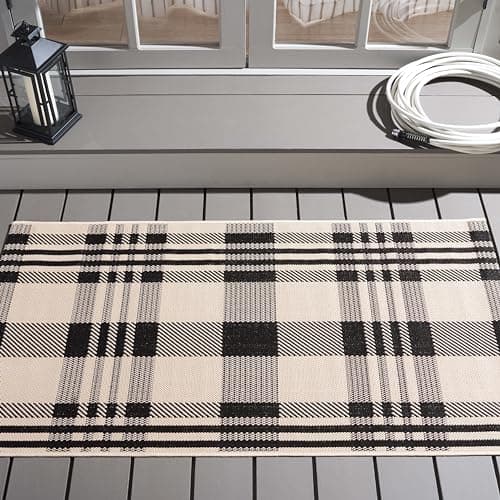 Safavieh Courtyard Indoor/Outdoor RugThe pick, and the clearest demonstration of what this fiber is for. Power-loomed polypropylene at roughly a quarter-inch pile with no backing, in patterns that read as a real rug rather than as outdoor matting. It takes a hose, it takes sun, and it takes a household that spills - and because the pile is short there is nowhere for a spill to hide. The absence of a backing means a pad is mandatory on any hard floor. | A real pattern that takes water | Power-loomed polypropylene, roughly a quarter-inch pile, no backing | $19.78$25.43View on Amazon #ad We earn a commission · Price as of October 18, 2026 |
| 2 | No image Unique Loom Sofia Traditional RugThe traditional-pattern answer, and the pick for anyone who wants the Persian look at a tenth of the price. Machine-woven polypropylene in classic medallion and border layouts, which is the single most popular rug style and the one wool charges the most for. Up close it does not read as a hand-knotted rug and it should not be bought expecting to - but at normal viewing distance in a living room it does the job completely. | Persian patterns on a budget | Machine-woven polypropylene, traditional patterns | |
| 3 | 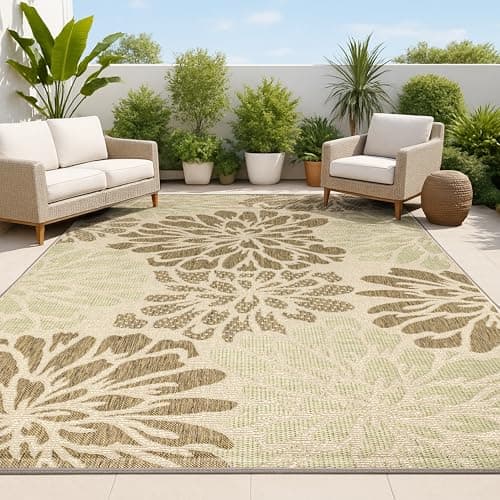 JONATHAN Y Modern Area RugThe large-room pick. Machine-woven polypropylene at low to medium pile in contemporary patterns, sized for open-plan living rooms where the rug has to be big enough to carry furniture on it. Polypropylene is the only fiber where a genuinely large rug is affordable, and the math matters: an 8x10 wool rug costs several times what this does at the same size. | Open-plan living rooms | Machine-woven polypropylene, low to medium pile | $178.72View on Amazon #ad We earn a commission · Price as of October 18, 2026 |
| 4 | 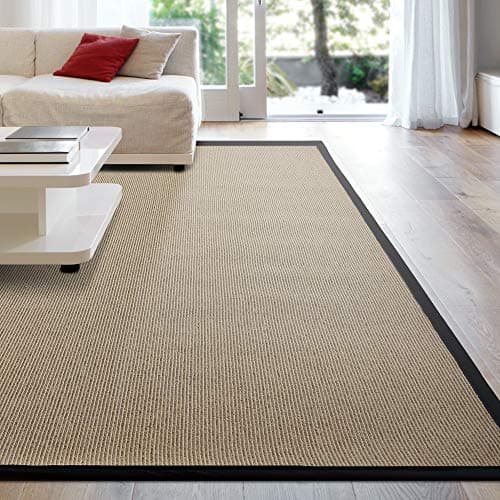 iCustomRug Synthetic Sisal RugThe natural-fiber look without the natural-fiber rules. A ribbed polypropylene weave that reads as sisal from a few feet away, with none of sisal's water problem - it can go in a basement, a bathroom or a damp entry where real sisal would stain and ripple. The texture is firmer and more regular than real sisal, which is the tell, and the trade people most often accept happily. | Sisal looks in a damp room | Machine-made polypropylene in a ribbed sisal-look weave | $129.00View on Amazon #ad We earn a commission · Price as of October 18, 2026 |
| 5 | No image Ottomanson Flatweave RunnerThe narrow-space pick, and the construction that solves a runner's two failure modes. Flatwoven polypropylene with a bonded rubber backing: no pile to flatten into a traffic lane, and a back that grips so the runner does not creep down a hallway. Synthetic looking up close, and that is the whole trade - this is a rug bought for what it does rather than for how it looks. | Hallways and kitchens | Flatwoven polypropylene, bonded rubber backing |
The short answer
Buy the Safavieh Courtyard for an all-purpose polypropylene rug that takes water and sun, Unique Loom Sofia for traditional patterns on a budget, and the Ottomanson flatwoven runner for a hallway. Polypropylene resists stains, water and fading better than any natural fiber. It is wrong in one place: a bedroom, where it feels like what it costs.
Polypropylene - also sold as olefin - is the fiber underneath most rugs sold in the United States under about two hundred dollars, and most outdoor rugs at any price. It is a plastic, extruded as a yarn, and people treat that as something to be embarrassed about. It is worth being precise instead, because the fiber is genuinely excellent at three jobs and genuinely poor at one.
What solution-dyed means, and why it is the spec to look for
Most fibers are dyed after they are made: color is applied to the outside of the yarn, which is why sun and bleach can strip it. Polypropylene cannot absorb dye that way at all, so the pigment is mixed into the molten plastic before the yarn is extruded. The color is therefore the same all the way through the strand, like a carrot rather than a radish.
Two consequences follow, and both are the reason to buy this fiber. The rug fades far more slowly in sunlight, because there is no surface layer of dye to lose - fade-resistant outdoor rugs covers how slowly. And it can be cleaned with diluted bleach without losing color, which no wool rug and no cotton rug can survive. That single property is why polypropylene is the right fiber for a basement, a mudroom or a pet zone.
What we judged these on
- Pile height and density. Polypropylene does not recover from crushing the way wool does, so a short dense pile wears far better than a long loose one. Everything on this page is low or medium pile for that reason.
- Backing. A bonded rubber back makes a runner viable on a hard floor. No backing at all is better for washing and for airflow but makes a pad mandatory.
- Pattern honesty. A machine-woven rug imitating a hand-knotted one can look good or can look printed. We favored weaves where the pattern is in the structure rather than stamped onto the surface.
- Size range. The strongest argument for this fiber is that it makes a large rug affordable, so a line that stops at 5x7 wastes its own advantage.
- Water behavior. Polypropylene does not absorb, which is why it can be hosed. A rug with a foam or felt core defeats that, so we looked at the whole construction, not just the face fiber.
We compared published fiber content, pile height, backing construction and stated care requirements across current listings. We make no testing claims - how we choose sets out the method and its limits.
Safavieh Courtyard Indoor/Outdoor Rug
A real pattern that takes water
Product photo and price from Amazon, refreshed daily.
#ad We earn a commission · Price as of October 18, 2026
The pick, and the clearest demonstration of what this fiber is for. Power-loomed polypropylene at roughly a quarter-inch pile with no backing, in patterns that read as a real rug rather than as outdoor matting. It takes a hose, it takes sun, and it takes a household that spills - and because the pile is short there is nowhere for a spill to hide. The absence of a backing means a pad is mandatory on any hard floor.
What it is
- 100 percent polypropylene, power loomed in Turkey
- Pile around a quarter of an inch, with no applied backing
- Rated for indoor or outdoor use and listed as cleanable with a garden hose
What it does well
- A far deeper pattern catalog than the stripe-and-solid outdoor norm - borders, geometrics and traditional medallions
- Polypropylene absorbs no water, so nothing in the rug can feed mildew
- The quarter-inch pile hoses clean and dries far faster than any cut-pile rug
Don't buy it if
- Fade resistant is not fade proof - a quarter-inch pigmented pile in unshaded afternoon sun will still lighten over a few summers
- No backing at all, so it slides and creeps without an outdoor pad
- A quarter-inch pile is firm underfoot; comfort is not what this line is for
The outdoor rug for people who want a pattern rather than a stripe, bought with clear eyes about what a south-facing summer does to any synthetic.
Unique Loom Sofia Traditional Rug
Persian patterns on a budget
No licensed photo of this exact rug yet — see it on the Amazon listing.
The traditional-pattern answer, and the pick for anyone who wants the Persian look at a tenth of the price. Machine-woven polypropylene in classic medallion and border layouts, which is the single most popular rug style and the one wool charges the most for. Up close it does not read as a hand-knotted rug and it should not be bought expecting to - but at normal viewing distance in a living room it does the job completely.
What it is
- Machine-woven polypropylene with a jute-blend backing on most sizes
- Traditional Persian-style medallion and all-over patterns
- Very broad size range including runners and rounds
What it does well
- A convincing traditional look at a small fraction of the price of a wool equivalent
- Polypropylene is solution-dyed, so the busy pattern stays saturated for years
- Dense pattern is extraordinarily good at hiding traffic and pet hair
Don't buy it if
- Up close the synthetic sheen gives it away
- Pile crushes under heavy furniture and does not spring back the way wool does
- Not repairable in any meaningful sense — when it wears, it is finished
The honest answer for a busy room that wants a traditional pattern without an heirloom budget.
JONATHAN Y Modern Area Rug
Open-plan living rooms
Product photo and price from Amazon, refreshed daily.
#ad We earn a commission · Price as of October 18, 2026
The large-room pick. Machine-woven polypropylene at low to medium pile in contemporary patterns, sized for open-plan living rooms where the rug has to be big enough to carry furniture on it. Polypropylene is the only fiber where a genuinely large rug is affordable, and the math matters: an 8x10 wool rug costs several times what this does at the same size.
What it is
- Machine-woven polypropylene in contemporary patterns
- Strong availability at 8x10, 9x12 and larger
- Low to medium pile
What it does well
- Genuinely available in the big sizes an open-plan room needs, which a lot of design-led brands are not
- Contemporary patterns rather than the traditional default
- Pile low enough for a room with dining chairs in it
Don't buy it if
- Large synthetic rugs arrive heavily creased and take weeks to flatten
- The pattern repeat is visible on the very large sizes
- Edges can fray if a vacuum beater bar catches them
A practical answer to the hardest sizing problem in the category: covering a large open room without spending four figures.
iCustomRug Synthetic Sisal Rug
Sisal looks in a damp room
Product photo and price from Amazon, refreshed daily.
#ad We earn a commission · Price as of October 18, 2026
The natural-fiber look without the natural-fiber rules. A ribbed polypropylene weave that reads as sisal from a few feet away, with none of sisal's water problem - it can go in a basement, a bathroom or a damp entry where real sisal would stain and ripple. The texture is firmer and more regular than real sisal, which is the tell, and the trade people most often accept happily.
What it is
- Listed as 100% machine-made polypropylene, not a natural fiber
- Low-profile ribbed pile that imitates the look of woven sisal
- Area rug and runner sizes, described as stain resistant and easy to clean
What it does well
- Takes water, which no real sisal does — this is the kitchen, basement and humid-climate answer
- Softer underfoot than the fiber it imitates, which is the usual complaint about sisal
- No humidity rippling, because polypropylene does not absorb moisture from the air
Don't buy it if
- It is not sisal, and close up it does not pretend convincingly
- Synthetic fiber flattens under furniture and does not spring back
- Can hold static and a slight sheen that natural fiber never has
Buy this instead of sisal if the room is damp, the floor gets wet, or a cat lives there — it solves all three.
Ottomanson Flatweave Runner
Hallways and kitchens
No licensed photo of this exact rug yet — see it on the Amazon listing.
The narrow-space pick, and the construction that solves a runner's two failure modes. Flatwoven polypropylene with a bonded rubber backing: no pile to flatten into a traffic lane, and a back that grips so the runner does not creep down a hallway. Synthetic looking up close, and that is the whole trade - this is a rug bought for what it does rather than for how it looks.
What it is
- Rubber backing bonded to the rug — no separate pad needed
- Cut-to-length runners in many lengths
- Very low profile, under a quarter inch
What it does well
- The backing means it stays put on tile and laminate without a pad
- Low enough that an interior door still clears it
- Available in awkward lengths standard sizing does not cover
Don't buy it if
- Rubber backings can discolor vinyl plank flooring over time — check the fiber before laying it on LVP
- Firm and thin; comfort is not part of the proposition
- The backing eventually hardens and cracks after several years
The most practical hallway runner in the set, with one real caveat about which floor you put it on.
The five, side by side
| Pick | Construction | Backing | Buy it for |
|---|---|---|---|
| Safavieh Courtyard | Power-loomed, ~1/4 inch pile | None - needs a pad | Patterns that take water and sun |
| Unique Loom Sofia | Machine-woven, traditional patterns | Standard | Persian look, synthetic budget |
| JONATHAN Y Modern | Machine-woven, low to medium pile | Standard | Large open-plan rooms |
| iCustomRug Synthetic Sisal | Ribbed sisal-look weave | Standard | Damp rooms and basements |
| Ottomanson Runner | Flatwoven | Bonded rubber | Hallways and kitchens |
Where polypropylene beats wool outright
Anywhere water is involved. A kitchen, a mudroom, a basement, a covered porch, a bathroom, a pet feeding area. Wool absorbs water and holds it against its own backing; polypropylene does not absorb at all, so it dries in hours and does not develop the smell that a repeatedly damp natural fiber does.
Anywhere sunlight is involved, for the solution-dyeing reason above. And anywhere the rug needs to be large and cheap at the same time - a 9x12 is simply not an affordable purchase in wool for most households, and 9x12 rugs covers what that size is actually for.
Where it loses, and the honest version of why
Underfoot in a bedroom. Polypropylene has a slightly slick, firm hand that is noticeable in bare feet, and it does not have wool's warmth. This is the one place where the price difference is doing visible work, and it is the reason the best rug material for a bedroom does not recommend it.
In lifespan, over a long horizon. A well-made wool rug in a living room is a twenty-year object; a polypropylene rug in the same room is a five-to-ten-year one. The arithmetic can still favor the synthetic - buying three cheap rugs over twenty years may cost less than one good one, and you get to change the look twice - but the comparison should be made honestly. Wool versus polyester rugs and polypropylene versus polyester work through the related trade-offs.
Is it safe to have in the house?
Polypropylene itself is chemically inert - the same polymer used in food containers and medical equipment - and it does not off-gas meaningfully once aired. The questions people are actually asking are about the adhesives and backings used in some constructions, not about the face fiber. Are polypropylene rugs toxic answers that properly, including what the testing programs do and do not cover.
What we would buy
For a general-purpose rug that takes a household, the Safavieh Courtyard. For a living room that wants a traditional look, the Unique Loom Sofia. For a big open-plan space, the JONATHAN Y. For a basement or any damp room, the iCustomRug synthetic sisal - and the best rugs for a basement explains why no natural fiber belongs down there. For a hallway, the Ottomanson runner. If you want the fiber's full picture first, polypropylene rugs is the guide, and the rug materials hub is the way into the rest.
Questions people actually ask
Are polypropylene rugs good quality?
They are good at specific things: resisting stains, water, sun and bleach, and being affordable in large sizes. They are not as durable over twenty years as wool and they feel firmer underfoot. Judge them on the job rather than on the fiber's reputation.
What does solution-dyed polypropylene mean?
The pigment is mixed into the molten plastic before the yarn is extruded, so the color runs all the way through the strand rather than sitting on the surface. That is why these rugs fade slowly and can tolerate diluted bleach.
Can polypropylene rugs be used indoors?
Yes, and most of them are. The fiber is the same one used in indoor budget rugs and outdoor rugs alike; the difference between an indoor and an outdoor model is usually the backing and the UV package, not the face yarn.
Do polypropylene rugs shed?
Far less than wool or jute. A continuous-filament polypropylene yarn has no short loose fibers to release, so shedding is minimal from the first day. Loose fuzz on a new one is usually cut ends from manufacturing and stops quickly.
Are polypropylene rugs soft?
Not especially. The hand is firm and slightly slick compared with wool, and that is the most noticeable thing about the fiber in bare feet. A longer pile helps; it does not close the gap.
Can you put a polypropylene rug in a bathroom?
Yes - the fiber does not absorb water and dries fast, which is exactly what a bathroom needs. Make sure the backing is also water-tolerant, because a felt or foam core will stay damp even when the face fiber is dry.
Sources
- Amazon - Safavieh Courtyard indoor/outdoor rug listing
- Amazon - iCustomRug synthetic sisal rug listing
- Amazon - JONATHAN Y modern area rug listing
- Unique Loom - machine-woven rug construction
- Ottomanson - flatwoven runner construction and backing
- Carpet and Rug Institute - Green Label Plus indoor air quality testing
Read next
- Polypropylene RugsWhy solution-dyeing and water repellency make polypropylene the default budget and outdoor fiber — and its real limits.
- Are Polypropylene Rugs Toxic?Polypropylene fiber is inert and not classed as toxic. The real questions are the backing, the finishes and the new-rug smell - each one answered.
- Polypropylene vs Polyester RugsThe two cheap synthetics compared on water, fading, softness and stain behavior - plus which one to buy per room.
- The Best Rugs for a BasementSynthetic only, low pile, and nothing that holds water. The four rugs worth putting on a basement floor and the three fibers that rot down there.
- How to Clean a Polypropylene RugThe forgiving fiber: what you can do freely, the two real limits, and how to deal with oily soil.
- Rug MaterialsWool, jute, sisal, polypropylene, cotton, viscose and the traditional weaves — compared on wear, feel, water and cost.