Rugs by Room
The Best Rugs for a Mudroom
This is the one room where the rug's job is to get filthy on purpose - so buy for scraping, draining and washing, in that order.
Heads up: we earn a commission when you buy through links on this page, at no extra cost to you. It never changes which rug we put first — see how we choose and our affiliate disclosure.
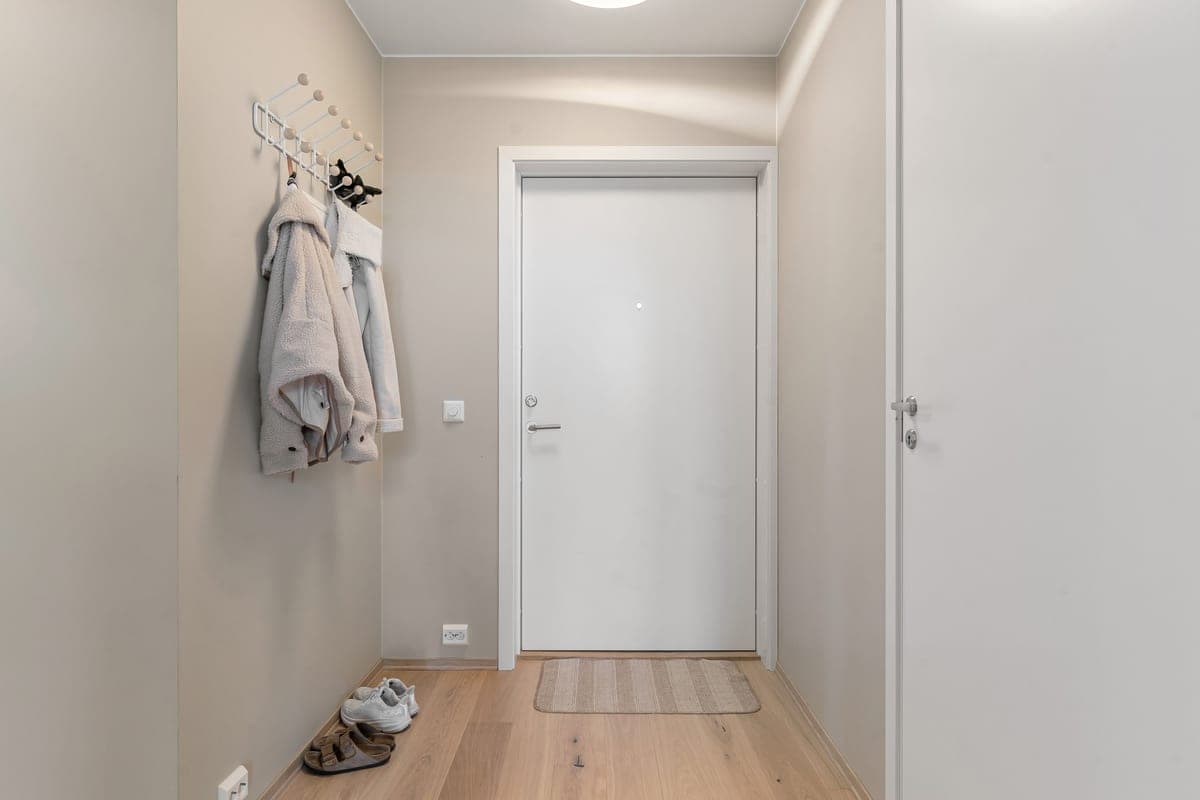
Quick picks
The whole answer, before the detail. Tap any row to jump to that rug's full write-up further down the page.
| # | Rug | Best for | Construction | Price |
|---|---|---|---|---|
| 1 | 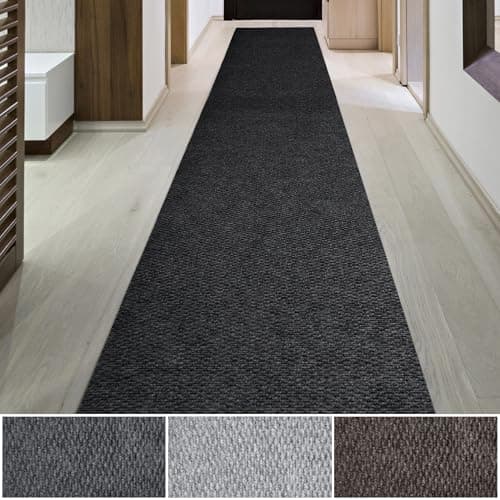 iCustomRug Entryway MatThe best first line in a mudroom, and the only pick here designed to scrape rather than absorb. A dense synthetic pile built for shoes on a rubber back, in dark colourways - which matters more than it sounds, because a mudroom mat is going to look dirty and a dark one looks dirty on purpose. Dense pile is what takes grit off a sole before it travels further into the house. It does not absorb much water, so it needs something behind it, and it is not a machine-wash item. | Scraping grit off boots | Heavy-duty synthetic pile with a rubber back | $80.00View on Amazon #ad We earn a commission · Price as of November 24, 2026 |
| 2 | 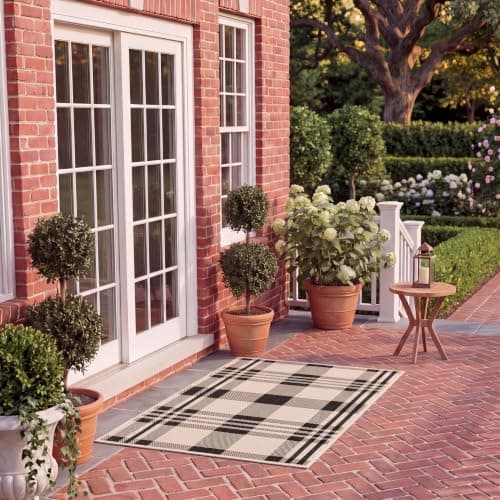 Safavieh Courtyard Indoor/Outdoor RugThe budget pick, and the most sensible rug in a mudroom for the money: 100 percent polypropylene power-loomed in Turkey, pile around a quarter of an inch, no applied backing, and a listing that says it cleans with a garden hose. In a room that takes road salt, that hose line is the whole argument - salt crystallises in a pile and abrades it, and the only real fix is rinsing rather than vacuuming. No backing means it dries from both faces, and also means it needs a pad on a sealed concrete or tiled floor. | Road salt and hosing off | Power-loomed polypropylene, roughly a quarter-inch pile, no backing | $19.78View on Amazon #ad We earn a commission · Price as of November 24, 2026 |
| 3 | 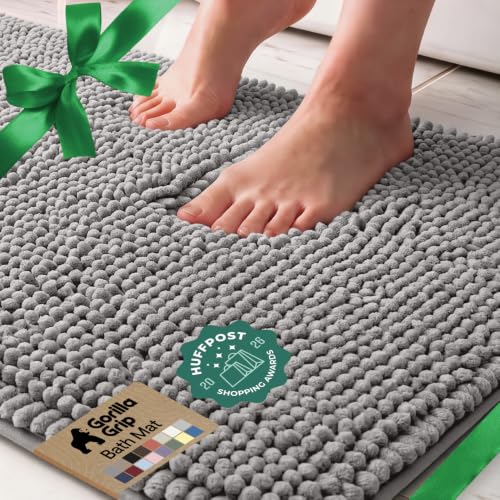 Gorilla Grip Chenille Bath RugThe second rug, placed behind the scraper, and the one that actually keeps the floor dry. Chenille microfibre pile close to an inch deep on a thermoplastic rubber backing - TPR stays flexible through repeated wetting and washing where latex goes brittle, and it grips wet tile and sealed concrete better than anything else here. The deep microfibre pile is what pulls water off a boot sole. It holds that water, so it has to be hung to dry rather than left down, and in a busy household it is a weekly wash. | Taking the water off | Chenille microfiber pile on a TPR rubber backing | $11.38$15.99View on Amazon #ad We earn a commission · Price as of November 24, 2026 |
| 4 | 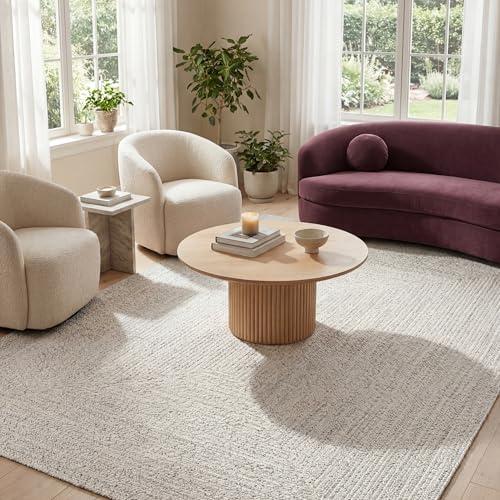 nuLOOM Wynn Braided Indoor/Outdoor RugThe pick if the mudroom is also a room people stand in - the one with the coat hooks and the bench. A power-loomed solid braid rated by nuLOOM for indoor and outdoor use, hose-washable outside and spot treated for mild stains, listed at 4 by 6 feet and 8.6 pounds. A braid is open, so grit falls through to the floor rather than grinding in the pile, and it looks like a rug rather than a doormat. Grit falling through means sweeping underneath it, and at 8.6 pounds it moves if a door catches it. | A mudroom that should look furnished | Power-loomed solid braid rated for indoor and outdoor use | $115.49View on Amazon #ad We earn a commission · Price as of November 24, 2026 |
| 5 | 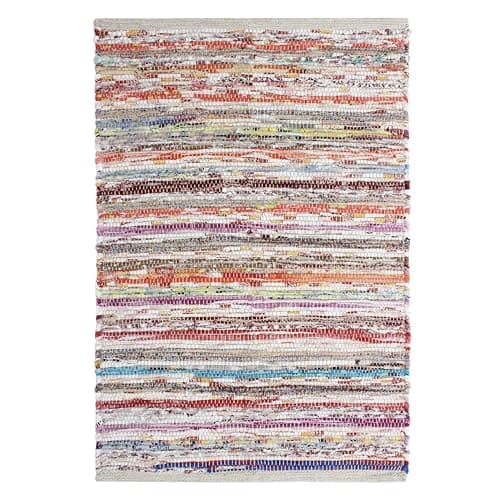 COTTON CRAFT Chindi Rag RugThe useful oddity: handwoven from strips of recycled cotton, listed by the maker as all-natural 100 percent cotton, reversible because there is no backing at all, commonly listed at 20 by 32 inches. In a mudroom it earns its place as the cheap sacrificial layer under a coat hook or beside a boot tray, where you accept it will be ruined and replaced rather than restored. The maker's care line is spot clean or vacuum with a liner underneath, cotton absorbs everything, and it has no grip - so this is a third rug, not a main one. | The cheap sacrificial layer | Handwoven recycled cotton chindi, fully reversible | $9.99View on Amazon #ad We earn a commission · Price as of November 24, 2026 |
The verdict. A mudroom wants two rugs, not one, and the iCustomRug entryway mat is the first of them - a dense synthetic pile on a rubber back whose only job is to take grit off a sole before it travels. Behind it, the Gorilla Grip chenille takes the water off, on a thermoplastic rubber backing that keeps gripping after fifty washes. If you only buy one thing, the Safavieh Courtyard is the budget pick and the right single answer, because road salt needs rinsing rather than vacuuming and its listing says you can hose it. What makes this room different from an entryway: an entryway is about appearance under light soiling, and a mudroom is about function under heavy soiling.
iCustomRug Entryway Mat
Scraping grit off boots
Product photo and price from Amazon, refreshed daily.
#ad We earn a commission · Price as of November 24, 2026
The best first line in a mudroom, and the only pick here designed to scrape rather than absorb. A dense synthetic pile built for shoes on a rubber back, in dark colourways - which matters more than it sounds, because a mudroom mat is going to look dirty and a dark one looks dirty on purpose. Dense pile is what takes grit off a sole before it travels further into the house. It does not absorb much water, so it needs something behind it, and it is not a machine-wash item.
What it is
- Dense synthetic pile built for scraping shoes
- Rubber backing
- Dark colorways
What it does well
- Dense enough to actually remove grit rather than just sit there looking like a mat
- Dark colors are the correct choice for the dirtiest square meter in the house
- The rubber back keeps it flat under a swinging door
Don't buy it if
- Needs a real beating to clean — a vacuum alone will not clear it
- Aesthetically it is a doormat and looks like one
- Not suitable outside an exposed door; it holds water
Buy the ugly effective one for the inside of the front door and a nicer rug one step further in.
Safavieh Courtyard Indoor/Outdoor Rug
Road salt and hosing off
Product photo and price from Amazon, refreshed daily.
#ad We earn a commission · Price as of November 24, 2026
The budget pick, and the most sensible rug in a mudroom for the money: 100 percent polypropylene power-loomed in Turkey, pile around a quarter of an inch, no applied backing, and a listing that says it cleans with a garden hose. In a room that takes road salt, that hose line is the whole argument - salt crystallises in a pile and abrades it, and the only real fix is rinsing rather than vacuuming. No backing means it dries from both faces, and also means it needs a pad on a sealed concrete or tiled floor.
What it is
- 100 percent polypropylene, power loomed in Turkey
- Pile around a quarter of an inch, with no applied backing
- Rated for indoor or outdoor use and listed as cleanable with a garden hose
What it does well
- A far deeper pattern catalog than the stripe-and-solid outdoor norm - borders, geometrics and traditional medallions
- Polypropylene absorbs no water, so nothing in the rug can feed mildew
- The quarter-inch pile hoses clean and dries far faster than any cut-pile rug
Don't buy it if
- Fade resistant is not fade proof - a quarter-inch pigmented pile in unshaded afternoon sun will still lighten over a few summers
- No backing at all, so it slides and creeps without an outdoor pad
- A quarter-inch pile is firm underfoot; comfort is not what this line is for
The outdoor rug for people who want a pattern rather than a stripe, bought with clear eyes about what a south-facing summer does to any synthetic.
Gorilla Grip Chenille Bath Rug
Taking the water off
Product photo and price from Amazon, refreshed daily.
#ad We earn a commission · Price as of November 24, 2026
The second rug, placed behind the scraper, and the one that actually keeps the floor dry. Chenille microfibre pile close to an inch deep on a thermoplastic rubber backing - TPR stays flexible through repeated wetting and washing where latex goes brittle, and it grips wet tile and sealed concrete better than anything else here. The deep microfibre pile is what pulls water off a boot sole. It holds that water, so it has to be hung to dry rather than left down, and in a busy household it is a weekly wash.
What it is
- Thermoplastic rubber (TPR) backing rather than latex
- Thick chenille microfiber pile, close to an inch
- Machine washable, many size options
What it does well
- The TPR backing grips wet tile better than a latex-backed mat
- Chenille absorbs faster than a woven cotton mat of the same size
- Survives weekly washing without the backing flaking, which is where cheap mats fail
Don't buy it if
- Thick pile takes a long time to dry in a bathroom with poor ventilation
- The pile mats down if it is not shaken out between washes
- The rubber backing should not go in a hot dryer
The default bath mat: it grips, it absorbs, and it survives the wash cycle that kills its competitors.
nuLOOM Wynn Braided Indoor/Outdoor Rug
A mudroom that should look furnished
Product photo and price from Amazon, refreshed daily.
#ad We earn a commission · Price as of November 24, 2026
The pick if the mudroom is also a room people stand in - the one with the coat hooks and the bench. A power-loomed solid braid rated by nuLOOM for indoor and outdoor use, hose-washable outside and spot treated for mild stains, listed at 4 by 6 feet and 8.6 pounds. A braid is open, so grit falls through to the floor rather than grinding in the pile, and it looks like a rug rather than a doormat. Grit falling through means sweeping underneath it, and at 8.6 pounds it moves if a door catches it.
What it is
- Rated by nuLOOM for indoor and outdoor placement
- Solid single-color braid rather than the traditional multi-band
- Listed as hose-washable outside and spot treated for mild stains
- Listed at 4 by 6 feet and 8.6 pounds
What it does well
- A solid braid reads as texture rather than as a pattern, so it sits under existing decor instead of competing with it
- Hosing a rug down is a far lower-effort clean than anything a wool braid allows
- Light enough to lift and shake out, which is what an outdoor rug actually needs
Don't buy it if
- A solid colorway loses the banded character most people want from a braided rug
- 8.6 pounds is light enough to lift in wind on an exposed porch without weights or a pad
- Hosing it is easy; getting it fully dry before it goes back down is not
The braided rug for a porch, a deck or a mudroom - bought for where it can live rather than for the braid itself.
COTTON CRAFT Chindi Rag Rug
The cheap sacrificial layer
Product photo and price from Amazon, refreshed daily.
#ad We earn a commission · Price as of November 24, 2026
The useful oddity: handwoven from strips of recycled cotton, listed by the maker as all-natural 100 percent cotton, reversible because there is no backing at all, commonly listed at 20 by 32 inches. In a mudroom it earns its place as the cheap sacrificial layer under a coat hook or beside a boot tray, where you accept it will be ruined and replaced rather than restored. The maker's care line is spot clean or vacuum with a liner underneath, cotton absorbs everything, and it has no grip - so this is a third rug, not a main one.
What it is
- Woven from strips of recycled cotton fabric — the maker lists it as all-natural 100% cotton
- Reversible, because there is no backing of any kind
- Sold in accent sizes; the common listing is 20 by 32 inches
- Maker's care line is spot clean or vacuum, with a liner recommended underneath
What it does well
- Genuinely 100% cotton at a price nothing else in the fiber comes close to
- Reversible, so a mark on one face is a flip rather than a replacement
- Every piece is woven from different fabric strips, so no two are the same
Don't buy it if
- Accent sizes only. This is a doorway or a sink mat, never a living room rug
- The maker says spot clean, not machine wash — treat any washing claim you read elsewhere with suspicion
- Recycled dyes can transfer to a floor or a carpet underneath, which is why the liner is in the instructions
The cheapest honest way to put real cotton on a floor, as long as you accept it is an accent rug and nothing larger.
What a mudroom rug is actually fighting
Four things, and they need different answers. Grit - sand and road aggregate - is abrasive, and the damage it does is mechanical: it works into a pile and cuts the fibre every time someone steps on it. Water is a floor problem rather than a rug problem, because what rots a subfloor or lifts a vinyl plank is water that sat under a rug for a week. Road salt is chemical and seasonal: it crystallises as it dries, the crystals abrade like glass, and it draws moisture back out of the air so a salted rug never quite dries. And organic matter - mud, leaf litter, whatever the dog brought in - is what produces the smell.
| Problem | What solves it | What does not |
|---|---|---|
| Grit | A dense scraping pile, or an open braid that lets it fall through | A thin flat face - the grit sits on top and travels |
| Water | Deep absorbent microfibre, hung to dry | Polypropylene - it sheds water onto the floor instead |
| Road salt | Rinsing with a hose; polypropylene tolerates it | Vacuuming. Salt crystals need dissolving, not lifting |
| Mud and organic matter | Machine washing, weekly in winter | Spot cleaning - the smell is in the backing, not the face |
| Slipping on a wet floor | A thermoplastic or natural rubber backing | A felt pad, which slides on wet tile and concrete |
No single rug does all five columns well, which is why the answer here is a sequence rather than a purchase. The best rugs for an entryway covers the front-door version of the same problem, where appearance carries more weight.
The three-zone layout that actually works
- Outside the door: a coir or rubber scraper. Not covered on this page because it is not a rug, but it does more than any indoor rug can. Most of the grit should never cross the threshold.
- Immediately inside: the scraping mat. Dense pile, rubber back, dark colour, about three to four feet long so both feet land on it before the next step. This is the iCustomRug slot.
- Behind it: the absorbing rug. Deep microfibre or chenille, gripping back, washed weekly in winter. This is the Gorilla Grip slot, and it is the one that keeps the hallway floor dry.
- Under the bench and hooks: the standing rug, optional. A braid or an indoor-outdoor flatweave, because this is where people stand on one leg to pull a boot off and where a rug that slides is a genuine hazard.
- Beside the boot tray: the sacrificial square. Cheap, replaceable, and expected to be ruined. The chindi slot.
What never belongs in a mudroom
- Jute, sisal and seagrass. All three absorb water and watermark permanently, and in a room with road salt they disintegrate within a season. The best jute rugs is clear about where not to put one, and this is the room it means.
- Wool, at least in winter. Wool holds a great deal of water and takes days to dry, and damp wool in a cold room is how a moth problem starts. It is also the one fibre road salt genuinely damages.
- Anything with a latex backing, on sealed concrete. Latex can leave a residue on sealed and polished concrete, which is a common mudroom floor. Thermoplastic or natural rubber instead.
- A rug you would be upset to ruin. This is the honest filter. A mudroom rug has a two-to-four-year life if it is doing its job properly, and buying something you will try to protect means it will not do the job.
- A pale rug of any construction. Not a durability point, a behavioural one: a pale mudroom rug gets looked at rather than used, and people step around it.
Sizing, and the door-clearance trap
Mudrooms are small and their doors nearly always open inward over the rug. Measure the clearance under the door before anything else: interior doors are typically hung with a quarter to half an inch of gap, and a one-inch chenille rug will not pass under that. The usual solution is to place the deep absorbing rug clear of the door swing and keep a low-profile mat in the swing itself.
For length, the useful rule is that both feet should land on each rug in sequence - which means about three feet minimum per zone, not the two-foot mats usually sold for the purpose. A single two-foot mat gets one footfall, and one footfall removes very little grit. Rug pile height covers the clearance measurement, and runner rugs is worth a look if the mudroom is a narrow pass-through rather than a room.
The winter routine
Shake the scraping mat outside, twice a week
Grit is the thing that destroys it, and shaking removes far more than a vacuum does. Thirty seconds, outside the door it sits behind.
Wash the absorbing rug weekly in winter
Cold, gentle, no fabric softener - softener coats microfibre and stops it absorbing, which is the one property you bought it for.
Rinse salt, do not vacuum it
Salt crystals have to be dissolved. On polypropylene, take the rug outside and hose it. On anything else, sponge with cool water and blot, and accept you will do it again next week.
Lift everything once a week and dry the floor
This is the step that protects the floor rather than the rug, and on wood or vinyl it is the one that actually matters. Thirty seconds with a towel.
Replace rather than restore, on schedule
A mudroom scraper is consumable. When the pile has gone shiny and flat it has stopped scraping, and no cleaning brings that back - at which point it is a doormat pretending to be one.
How to clean a polypropylene rug has the method for the synthetic picks, and pet stains and odours is the page to have bookmarked if the mudroom is also where the dog comes in.
Questions people actually ask
What kind of rug is best for a mudroom?
Two of them in sequence: a dense scraping mat with a rubber back immediately inside the door, then a deep absorbent microfibre rug behind it to take the water. If you only buy one, a hose-washable polypropylene flatweave is the most sensible single choice.
Should a mudroom rug be washable?
In a household with children or a dog, yes - the smell in a mudroom comes from organic matter in the backing, and spot cleaning does not reach it. Weekly washing in winter is the realistic cadence.
Can you use a jute rug in a mudroom?
No. Jute absorbs water, watermarks permanently with clean water and disintegrates when it meets road salt. The same applies to sisal and seagrass, however right they look in the room.
How do I get road salt out of a mudroom rug?
Dissolve it rather than lifting it. Hose a polypropylene rug outside; on other fibres, sponge with cool water and blot. Vacuuming leaves the crystals behind, and they abrade the pile every time someone walks on it.
How long should a mudroom rug last?
Two to four years if it is doing its job. A mudroom scraper is a consumable: once the pile has gone flat and shiny it has stopped scraping, and cleaning does not restore that.
Is it safe to layer rugs in a mudroom?
Edge to edge, yes. Overlapping, no - a thin rug lying on a thicker pile has nothing to grip and slides under a wet boot, which is the most common way people fall in this room.
Sources
- Amazon - iCustomRug entryway mat listing (dense synthetic pile, rubber back, dark colourways)
- Amazon - Safavieh Courtyard indoor/outdoor listing (100% polypropylene, hose cleanable, no backing)
- Amazon - Gorilla Grip chenille bath rug listing (TPR backing, pile depth, machine washable)
- Amazon - nuLOOM Wynn braided indoor/outdoor listing (indoor-outdoor rating, hose washable, weight)
Read next
- The Best Rugs for an EntrywayEntry rugs that actually scrape grit off shoes, why dark wins, and the two-mat system that protects the rest of the house.
- The Best Rugs for Pets and High TrafficRugs that survive dogs, cats and constant footfall — the fibers, the pile, and the one construction to avoid.
- The Best Polypropylene RugsFive polypropylene rugs worth owning, what solution-dyed means for fading, and the one room where the fiber is genuinely wrong.
- How to Layer RugsBig flat neutral underneath, smaller patterned rug on top, at least eight inches of the base showing all round. Plus the fiber pairs that work.
- Rugs by RoomLiving room, bedroom, kitchen, bathroom, entryway, stairs and runners — the fiber, size and pile each room actually needs.