Rug Sizes & Pads
How to Layer Rugs
A cheap way to make a room look considered, and the fastest way to make it look like you ran out of floor. The difference is three rules.
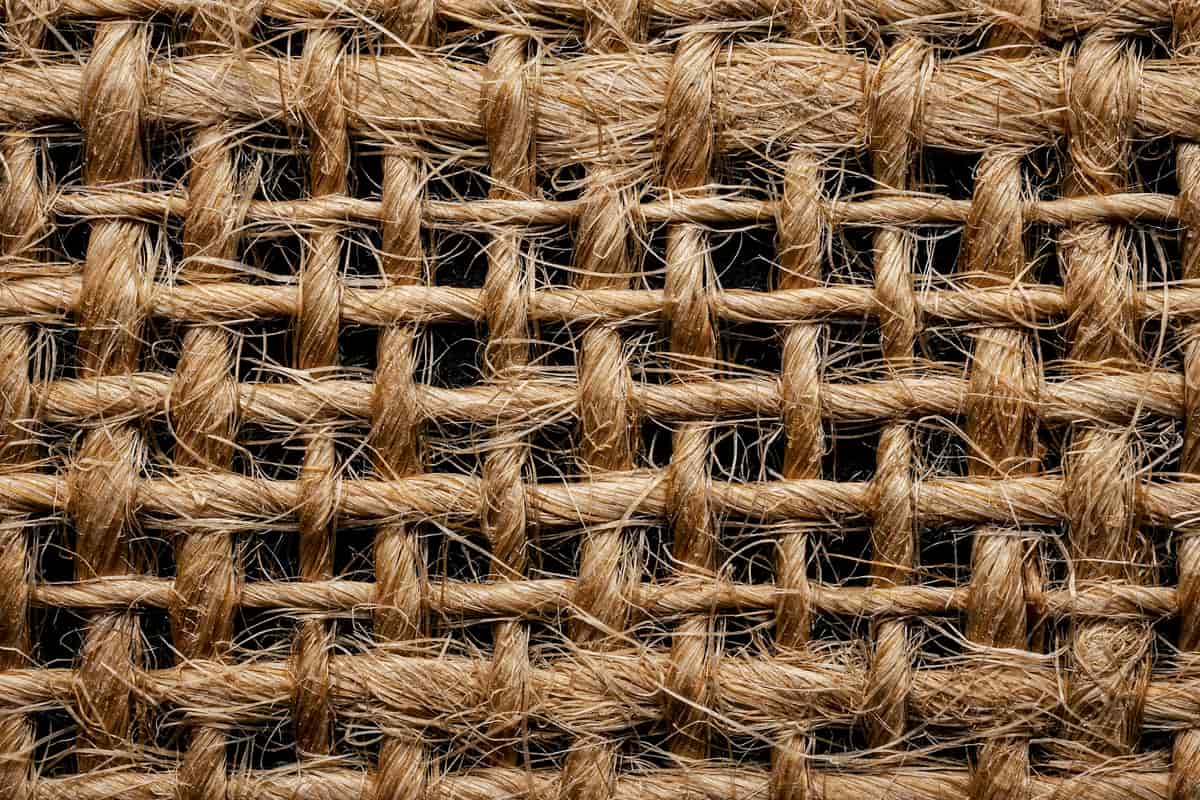
The short answer
Put a large, flat, neutral rug down first - jute or sisal - and a smaller, patterned, equally flat rug on top of it, leaving at least eight inches of the base showing on every side. The top rug must be thin: a pile rug over a base rug creates a visible step and a trip hazard.
Layering solves three real problems at once. It makes a small rug you already own work in a room that needs a bigger one. It puts pattern into a room without committing to a large patterned rug. And it covers more floor for less money, because the base layer is the cheap part per square foot and the expensive rug only has to be small.
The three rules
- The base rug is big, flat and quiet. It should be the size the room actually needs - usually an 8x10 or 9x12 - with no pattern competing for attention. Natural fiber is the default because it reads as texture rather than as a design.
- The top rug is smaller, flatter and louder. Smaller by enough that at least eight inches of base shows all round; flat so there is no step at the edge; patterned, because the pattern is the whole reason for doing this.
- They must not be the same scale. Two rugs within a size of each other look like a mistake. The ratio people find most convincing is roughly two thirds - a 5x7 on top of an 8x10, or a 6x9 on top of a 9x12.
Break rule three and the arrangement looks accidental. Break rule two and someone catches a toe on the edge. Rule one is the most forgiving of the three, which is why a plain base is the safe starting point.
What to look for in each layer
| Base layer | Top layer | |
|---|---|---|
| Size | Full room size - 8x10 or 9x12 | Roughly two thirds of the base |
| Pile | Flat, under 1/4 inch | Flat - this is not negotiable |
| Pattern | None, or texture only | The reason you are layering |
| Fiber | Jute, sisal, seagrass, flat synthetic | Wool, cotton, flatwoven synthetic |
| Cost per square foot | Low - it is most of the area | Higher - it is the visible one |
| Needs a pad | Yes | Usually no - it grips the base |
Safavieh Natural Fiber Jute Rug
The base layer, almost always
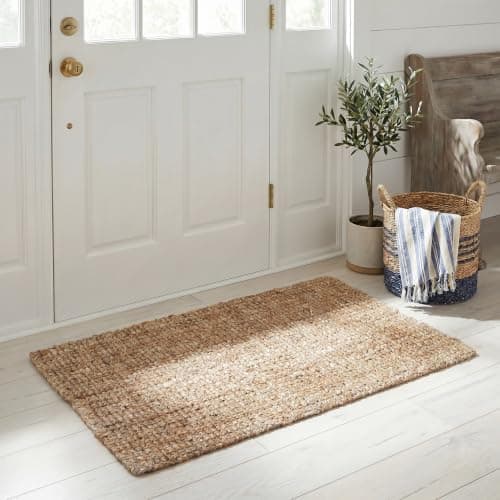
The base layer, and the one most layered rooms are built on. Handwoven jute is large, flat, cheap per square foot and visually quiet, which is exactly the brief for a bottom rug - it reads as texture rather than as a competing pattern. Buy it a size or two bigger than you would if it were the only rug. It sheds heavily for a month and must not get wet, so keep this combination out of dining rooms.
What it is
- Handwoven jute with a cotton or canvas backing on most patterns
- Very wide size range including rounds and runners
- Undyed natural color plus bleached and overdyed options
What it does well
- The cheapest way into a genuine natural fiber rug rather than a jute-look print
- Texture hides crumbs and light traffic marks remarkably well
- Biodegradable at end of life, which almost nothing else in this list is
Don't buy it if
- It sheds heavily for roughly the first four to six weeks, then settles
- Jute and water do not get along — a wet spill left in it can leave a permanent brown ring
- Coarse underfoot. It is not a barefoot rug
The right rug for a dry, low-spill room where you want texture, and the wrong one anywhere near a kitchen sink.
Safavieh Natural Fiber Sisal Rug
A base layer in a busier room
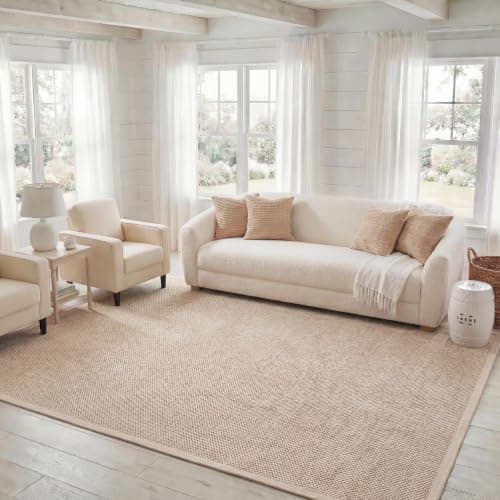
Product photo and price from Amazon, refreshed daily.
#ad We earn a commission · Price as of October 18, 2026
The tougher base. Power-loomed sisal with a woven border is flatter and harder-wearing than jute, which matters when a base rug is going somewhere with real traffic - a sitting room that people walk through rather than a bedroom. The bound border is worth having here because the edge of a base rug is the part that shows and the part that frays. Same water rule as jute: it stains permanently.
What it is
- Listings in this collection state sisal with latex fibers and a 3/8 inch pile
- Most designs carry a woven contrast border rather than a raw cut edge
- Sold in a long size ladder — small accents through 8x11 and 9x12
What it does well
- The easiest sisal to actually buy in the size you need, which is the whole problem with this fiber
- The border finishes the edge, so it does not fray the way a cut natural fiber edge can
- The latex component holds the weave together and limits creep on a hard floor
Don't buy it if
- The latex backing is why it should not be laid over radiant heat or left on a floor it can mark
- Colorways are natural, maize and marble tones — there is no real color range here
- It is still sisal: coarse barefoot, and it will not forgive a spill
The default sisal for most rooms, because the size ladder and the bordered edge remove the two things that usually derail a sisal purchase.
Safavieh Wool Flatweave Kilim Rug
The top layer
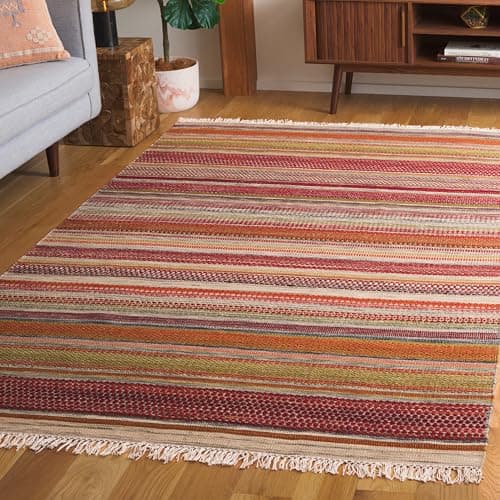
The top layer, and the construction that makes layering work at all. A flatwoven wool kilim is thin enough that the step up from the base rug is barely perceptible, patterned enough to be the reason you are layering, and durable enough to take the traffic that lands on the top rug rather than the bottom one. A pile rug on top of a base rug is the main thing that makes a layered arrangement look wrong and trip people up.
What it is
- Flatwoven — effectively no pile at all
- Wool fiber with a handwoven geometric pattern
- Reversible on many of the kilim patterns
What it does well
- Chairs slide over it instead of catching, which is exactly what a dining room needs
- No pile means nothing to crush, so furniture leaves no permanent dents
- Wool's soil resistance without wool's shedding
Don't buy it if
- Thin and firm underfoot — it will not feel luxurious
- Flatweaves need a good pad or they creep across the floor
- Spilled liquid goes straight through to the floor below
The correct rug shape for a dining room, in the correct fiber. Almost nobody buys this and regrets it.
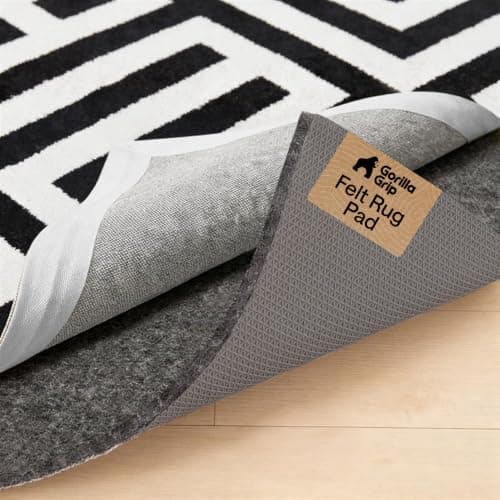
Gorilla Grip Felt and Rubber Rug Pad
Keeping the base rug still
Product photo and price from Amazon, refreshed daily.
#ad We earn a commission · Price as of October 18, 2026
Under the base rug, where almost everyone forgets it. A layered arrangement has more weight and more edges than a single rug, and if the bottom rug moves the whole thing shifts and the alignment is gone. A felt-over-rubber pad stops the base moving and adds cushioning that neither a jute nor a sisal base provides on its own - and the top rug then grips the base's texture by itself.
What it is
- Felt-over-rubber construction at a lower price point
- Multiple thicknesses
- Trimmable
What it does well
- Close to the premium pad's performance for meaningfully less money
- Thick enough to make a thin flatweave feel like a real rug
- Widely available in odd sizes
Don't buy it if
- The rubber layer is less dense than the premium option and compresses sooner
- Can leave a faint residue on some sealed floors in hot rooms
- The felt sheds a little when first cut
The value pad. Right under a synthetic rug, and the wrong economy under an expensive rug on an expensive floor.
The fiber pairs that work
Jute base, wool kilim on top. The standard combination and the one almost every layered room you have seen is built on. The jute supplies warm texture and the kilim supplies color and pattern, and the two fibers look deliberately unlike each other rather than like a failed match.
Sisal base, cotton flatweave on top. The lighter, more casual version, and the one to use in a bedroom - the cotton top layer can be laundered at accent sizes, which the kilim cannot. How to clean a cotton rug covers the machine question.
Flat synthetic base, anything on top. The version for a room where the natural fibers are wrong - a basement, a kitchen-diner, a porch. A flatwoven polypropylene base takes water and cleaning that jute cannot, and the best polypropylene rugs covers the options.
A hide or a round rug on top. Both work and both follow the same rule: flat, smaller, and offset rather than centered. A round rug layered over a rectangular base is one of the few arrangements where going deliberately off-center looks better than aligning.
Where to layer, and where not to
- Living room, under the seating group. The best case. Furniture holds both layers down and nobody walks across the edge.
- Bedroom, under and around the bed. Also good - the bed weights the base rug and foot traffic is limited to the sides.
- Under a coffee table. Works, and the table hides the central area so the top rug can be quite small.
- Dining room. Avoid. Chairs catch on the top rug's edge every time they are pushed back, and spills reach two rugs instead of one.
- Hallways and entries. Avoid. All traffic, all edge, and the fastest route to a curled corner.
- Stairs. Never.
Keeping it aligned
A layered arrangement drifts if nothing holds it. Put a pad under the base rug - a felt-and-rubber pad stops it moving on a hard floor, and felt vs rubber rug pads covers which is right for which surface. The top rug usually needs nothing, because a flat rug on a textured natural fiber base grips well on its own. If it does slide, double-sided rug tape at the corners is the standard fix; a second pad adds height and defeats the point.
Decide early whether the two rugs are parallel or deliberately angled. Parallel reads as formal and is easier to keep looking right; angled reads as casual and needs the offset to be large enough to look chosen - a few degrees looks like it slipped.
The short version
Big, flat, neutral underneath. Smaller, flat, patterned on top. Eight inches of base showing all round, a pad under the base, and never across a walking route. If the room only needs one rug and the budget allows it, one correctly sized rug is still the better answer - what size rug for a living room covers getting that right, and large area rugs covers the sizes above 9x12.
Questions people actually ask
How do you layer rugs properly?
Put a large, flat, neutral rug down first - usually jute or sisal at full room size - and a smaller, flat, patterned rug on top, leaving at least eight inches of the base showing on every side.
What size should the top rug be when layering?
Roughly two thirds of the base rug. A 5x7 over an 8x10, or a 6x9 over a 9x12. Two rugs close in size look like a mistake rather than a decision.
Can you layer a thick rug over a thin one?
Not well. A pile rug on a base rug creates a visible step at the edge, catches feet and chair legs, and looks unintentional. Both layers should be flat, with the top one as thin as possible.
Do you need a rug pad when layering rugs?
Under the base rug, yes - it stops the whole arrangement drifting. The top rug usually grips the base's texture on its own; if it slides, use double-sided rug tape at the corners rather than a second pad.
What rugs look good layered together?
A jute or sisal base with a patterned wool kilim on top is the standard pairing. Sisal with a cotton flatweave is the lighter version, and a flat synthetic base works in rooms where natural fiber cannot go.
Is layering rugs a trip hazard?
It can be. A raised edge is a fall risk, which is why both layers should be flat, the base should be held with a pad, and you should never layer in a hallway, on a walking route, or near stairs.
Sources
Read next
- The Best Flatweave RugsFlatweave rugs across cotton, wool, sisal and polypropylene, judged on what each fiber does when there is no pile to hide behind.
- Rug PadsWhat a pad does, the four constructions, and how to match one to hardwood, vinyl, tile or carpet.
- Jute RugsJute's real behavior — heavy early shedding, permanent water staining, the smell — and where it genuinely belongs.
- What Size Rug for a Living Room?How to measure a living room rug properly — the front-legs-on rule and the three standard layouts.
- Rug Pile HeightWhat low, medium and high pile mean in inches, which rooms each suits, and the door-clearance and desk-chair rules that catch people out.
- Rug Sizes & PadsSize charts by room and bed, the 8x10 vs 9x12 decision, placement rules, and the right pad for hardwood, vinyl or carpet.