Rug Materials
Are Sisal Rugs Soft?
No. Sisal is the hardest natural rug fiber in common use, and that is the fiber rather than the weave. There is exactly one construction that fixes it.
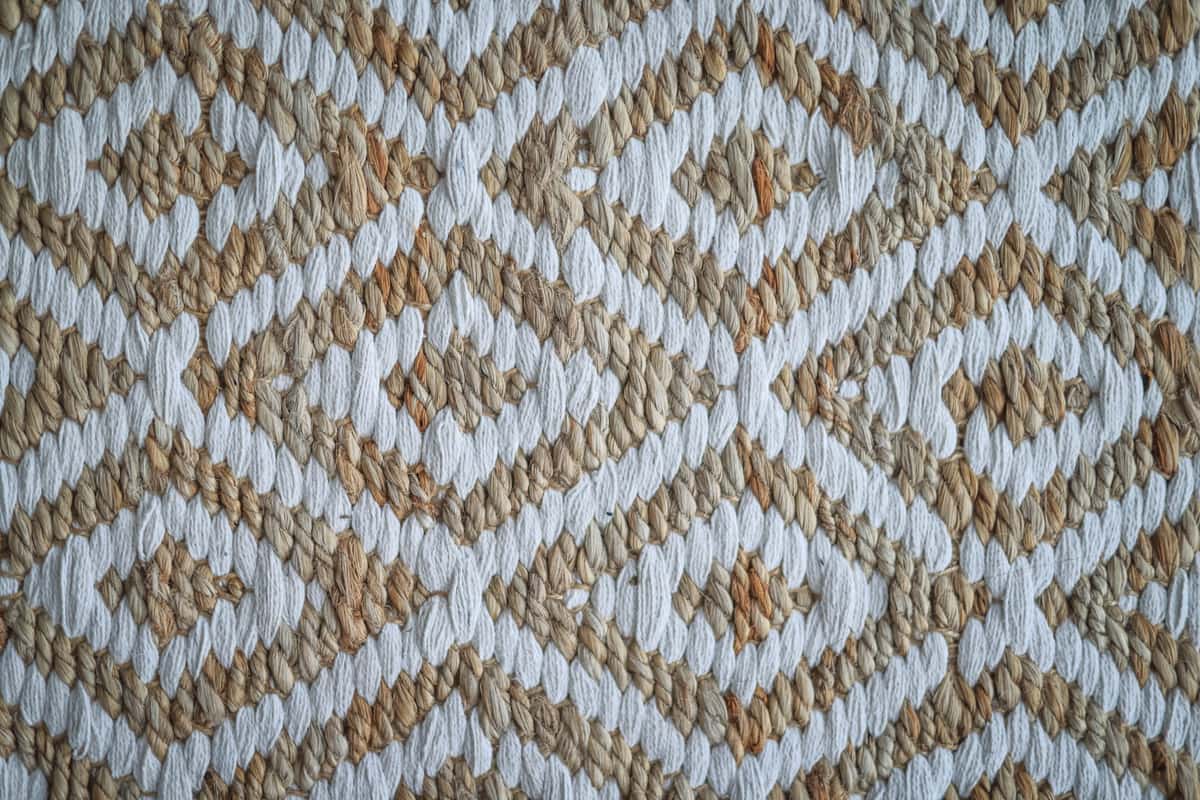
The short answer
No. Sisal is spun from agave leaf fiber, which is stiff and strong by nature, and no weave or finish makes it soft - a tighter weave just makes it harder. Underfoot it feels like a firm doormat: textured, slightly abrasive, with no give. The only natural-fiber fix is a wool-sisal blend.
This is worth being blunt about because the product photography does not communicate it at all. A natural sisal rug in a styled living-room shot looks soft, warm and inviting; the same rug under a bare foot is closer to coir matting than to anything you would sit down on. People order it, unroll it, and are surprised - and the surprise is entirely avoidable.
What it actually feels like
Firm and grabby. The surface is a tight grid of hard yarn, so a bare foot feels the texture of the weave rather than sinking into anything, and there is no cushioning at all - the rug is thin and the floor is right there underneath it. Walking on it in socks or shoes is completely unremarkable. Standing on it barefoot for ten minutes while you cook or brush your teeth is where people notice.
Two specific sensations come up repeatedly. Sitting or kneeling on sisal is uncomfortable - the texture that is fine under a shoe is scratchy against a shin or a palm, which matters in a nursery or anywhere children play on the floor. And dragging a foot across it catches slightly, which is why socks pick at it.
| Underfoot | Sitting on it | Cushioning | Sock-friendly | |
|---|---|---|---|---|
| Sisal | Hard, abrasive | Uncomfortable | None | No, it catches |
| Jute | Coarse but softer | Tolerable | Very little | Better |
| Wool-sisal blend | Textured with give | Fine | Some | Yes |
| Sisal-look polypropylene | Smooth, slight sheen | Fine | Little | Yes |
| Wool cut pile | Soft and deep | Comfortable | Plenty | Yes |
Why no weave fixes it
Softness in a rug comes from one of two places: a fiber with natural crimp that compresses and springs back, or enough pile height that your weight is spread across a lot of flexing yarn. Sisal has neither. The fiber is a straight stiff strand with no crimp to compress, and sisal rugs are flatwoven by necessity because the fiber will not hold a cut pile.
That is also why a loose weave does not help. Loosening the structure makes the rug less durable and more prone to catching without making it meaningfully softer, because the hardness is in the yarn rather than in how tightly it is packed. Nothing in the manufacturing process changes the raw material. Sisal rugs covers the fiber properties in full.
Natural Area Rugs Wool-Sisal Blend Rug
Natural texture you can stand on
No licensed photo of this exact rug yet — see it on the Amazon listing.
The only honest answer to this question that is still a natural fiber rug. Blending wool into the weave brings back the crimp and the spring that sisal has none of, and the stitched border finishes the edge. It costs more, it sheds for a few months, and it still cannot be wet-cleaned.
What it is
- Sold as a wool sisal rug — the blend, not pure sisal
- Handmade and bordered in the same way as this brand's pure sisal weaves
- Wool brings the crimp and recovery that sisal has none of
What it does well
- The only honest answer to 'I want sisal but I have to walk on it barefoot'
- Wool recovers from furniture compression where pure sisal just stays crushed
- Reads as a natural fiber rug across a room without the sandpaper feel
Don't buy it if
- Costs meaningfully more than the pure sisal in the same size
- The wool component can shed for the first few months
- Still not a wet-clean rug — the sisal in the blend sets that rule
The compromise worth paying for in a living room or a bedroom edge, where pure sisal is simply too harsh.
iCustomRug Synthetic Sisal Rug
The look without the harshness
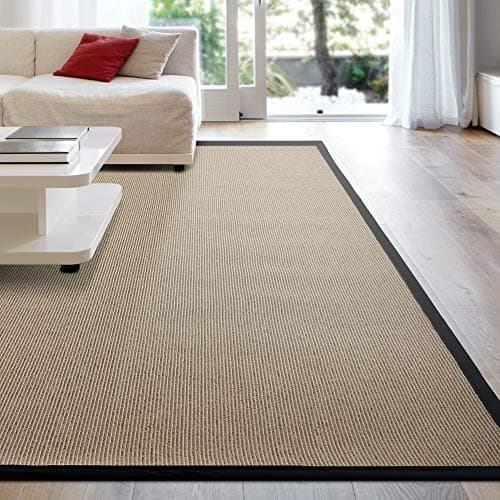
Product photo and price from Amazon, refreshed daily.
#ad We earn a commission · Price as of October 11, 2026
The sisal look at a sisal price with none of sisal's hardness: machine-made polypropylene in a ribbed weave that reads as woven natural fiber from standing height. It is the softest of the three here, and it can be cleaned with water, which real sisal cannot.
What it is
- Listed as 100% machine-made polypropylene, not a natural fiber
- Low-profile ribbed pile that imitates the look of woven sisal
- Area rug and runner sizes, described as stain resistant and easy to clean
What it does well
- Takes water, which no real sisal does — this is the kitchen, basement and humid-climate answer
- Softer underfoot than the fiber it imitates, which is the usual complaint about sisal
- No humidity rippling, because polypropylene does not absorb moisture from the air
Don't buy it if
- It is not sisal, and close up it does not pretend convincingly
- Synthetic fiber flattens under furniture and does not spring back
- Can hold static and a slight sheen that natural fiber never has
Buy this instead of sisal if the room is damp, the floor gets wet, or a cat lives there — it solves all three.
Safavieh Hand-Tufted Wool Rug
If soft is the actual requirement
No licensed photo of this exact rug yet — see it on the Amazon listing.
If the real requirement is a soft rug and the sisal was only ever an aesthetic preference, this is where to go instead. A wool cut pile is the softest thing on this site and it recovers from furniture - the two things a sisal rug will never do.
What it is
- Wool pile hand-tufted to a cotton backing
- Made in India across a large pattern catalog
- Cut pile, generally medium height
What it does well
- Wool springs back from furniture compression in a way no synthetic does
- Naturally flame-resistant and naturally soil-resistant thanks to the lanolin in the fiber
- With normal care it outlives every synthetic rug on this page several times over
Don't buy it if
- Sheds noticeably for the first few months — normal for a tufted wool rug, not a defect
- Hand-tufted rugs are glued, and the latex adhesive can break down after many years
- Costs several times what a comparable polypropylene rug costs
The long-horizon purchase in this category: expensive once rather than cheap repeatedly.
The wool-sisal blend, which is the real answer
Weaving wool in alongside the sisal is the one construction that changes the feel rather than disguising it. The wool brings crimp, recovery and warmth into the same weave, so you keep the flat natural texture and the visible fiber while gaining enough give that bare feet and knees are fine on it. It is a genuine solution rather than a marketing one.
What it costs you: money, since wool is several times the price of sisal; a few months of shedding, since wool sheds and sisal barely does; and none of sisal's water sensitivity goes away - a wool-sisal blend still cannot be wet-cleaned, and now there is protein fiber in it too. The best sisal rugs sets out where the blend sits against straight sisal.
Where the hardness genuinely does not matter
Most of the places sisal belongs. A hallway, a landing, a stair-top, an entry, a home office under a desk chair, a dining room, a living room where nobody sits on the floor - in all of those the rug is walked over in shoes or socks and the hardness is invisible. It is also the reason sisal lasts: the same stiffness that makes it unpleasant barefoot is what makes it refuse to crush. The best rug material for high traffic makes that case properly.
The places to avoid it: beside a bed, in a nursery or kids' room, in any room where people sit on the floor, and under a dining table if small children eat there. Rugs for a nursery or kids' room covers what to use instead.
Does sisal soften with use?
Marginally, and not enough to change a decision. Traffic polishes the surface slightly over a year or two, which takes a little of the scratchiness off the very top of the weave. The yarn underneath is exactly as stiff as it was. If you dislike it in month one, you will dislike it in year three.
What people sometimes mean by this question is whether it will stop snagging socks, and the answer there is yes, a bit. The cut fiber ends that catch at first settle during the same few weeks it is shedding, and the surface is slightly less grabby afterwards.
The short version
Buy sisal for a hallway, a landing, an office or a dining room, and it will outlast everything else you could put there. Do not buy it for a bedside, a nursery or a floor people sit on - that is not a weave you can shop your way out of. If you want the natural look where bare feet land, the wool-sisal blend is the one that works and costs more; if you want the look cheaply and softly, buy the polypropylene version and do not pretend it is sisal.
Questions people actually ask
Are sisal rugs soft to walk on?
Not really. In shoes or socks it is unremarkable; barefoot it is firm, textured and slightly abrasive with no cushioning at all. It is the fiber, not the weave.
Which natural fiber rug is softest?
Wool, by a wide margin. Among the plant fibers, jute is softer than sisal but still coarse. A wool-sisal blend is the way to keep the flat natural look and gain real give.
Does a sisal rug soften over time?
Barely. Traffic polishes the very top of the weave slightly, and the cut ends that snag socks settle in the first weeks. The yarn stays exactly as stiff as it was.
Will a rug pad make a sisal rug softer?
It adds a few millimetres of give, which helps when standing on it, but it does not change the surface texture - which is the part people object to. Buy the pad for grip, not for comfort.
Is sisal okay in a bedroom?
Only away from the bed. As a large rug under furniture it is fine; as the thing your feet land on when you get up it is the wrong choice. A wool pile or a washable rug suits that spot far better.
Can children play on a sisal rug?
It is a poor surface for it. The texture that is fine underfoot is scratchy against knees and palms, and sisal cannot be wet-cleaned after the spills that come with a kids' room.
Sources
Read next
- Sisal RugsSisal's real strengths and its three real problems: humidity rippling, staining, and what cats do to it.
- Do Sisal Rugs Shed?Yes, for roughly two to four weeks, then it stops. Why sisal sheds less than jute, what is normal, and when it signals a real problem.
- The Best Sisal Rugs (October 2026)Real sisal compared on fiber content, backing, border and sizes - and the synthetic to buy instead when the room is wrong for it.
- Jute vs SisalThe single trade-off that decides between the two natural fibers, mapped onto the rooms each belongs in.
- The Best Wool Rugs (October 2026)Tufted, flatwoven and blended wool compared on pile, shedding and the room each one belongs in - with the honest cost of each.
- Rug MaterialsWool, jute, sisal, polypropylene, cotton, viscose and the traditional weaves — compared on wear, feel, water and cost.