Rug Materials
The Best Sisal Rugs (October 2026)
Half the rugs sold as sisal are not sisal. Here is how to tell, which ones are worth buying, and when to buy something else entirely.
Heads up: we earn a commission when you buy through links on this page, at no extra cost to you. It never changes which rug we put first — see how we choose and our affiliate disclosure.
Quick picks
The whole answer, before the detail. Tap any row to jump to that rug's full write-up further down the page.
| # | Rug | Best for | Construction | Price |
|---|---|---|---|---|
| 1 | 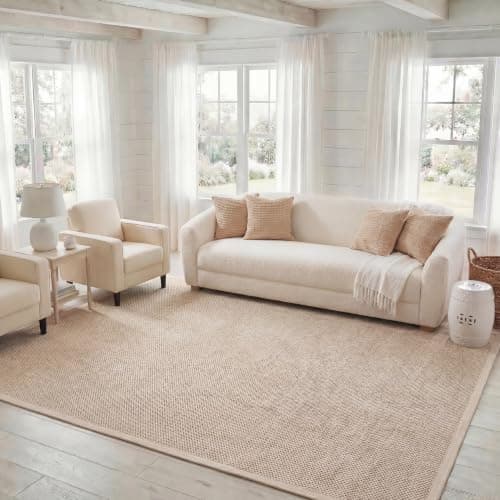 Safavieh Natural Fiber Sisal RugThe sisal most people should buy, for an unglamorous reason: it exists in the size you need. Listings in this collection state sisal with latex fibers and a 3/8 inch pile, and the bordered edge finishes the rug properly. The latex is the trade-off - it is what you are agreeing to when you put this on a floor. | The widest size range | Power-loomed sisal with latex and a woven border | $372.57View on Amazon #ad We earn a commission · Price as of October 11, 2026 |
| 2 | No image Natural Area Rugs Handmade Sisal RugThe one to buy when the label matters. These list as 100 percent natural fiber, handmade, with a stitched border sold as part of the design, and the runner lengths go where the power-loomed brands do not. You pay for that, and the weave varies piece to piece because it is handmade. | Undiluted sisal and runners | Handmade 100 percent sisal with a stitched fabric border | |
| 3 | No image nuLOOM Natural Sisal RugThe simplest version of the fiber: tight flat weave, a backing to limit slip, natural and lightly dyed colorways. If you want sisal in a hallway and nothing else about the rug matters, this is the shortest route to it. | A plain sisal, cheaply | Woven sisal with a latex or cotton backing | |
| 4 | No image Natural Area Rugs Wool-Sisal Blend RugThe answer to the complaint everyone has about sisal, which is that it hurts. Blending wool in brings back the crimp and the recovery that sisal has none of. It costs more, it sheds for a few months, and it is still not a rug you can wet-clean. | If bare feet land on it | Handmade wool and sisal blend with a fabric border | |
| 5 | 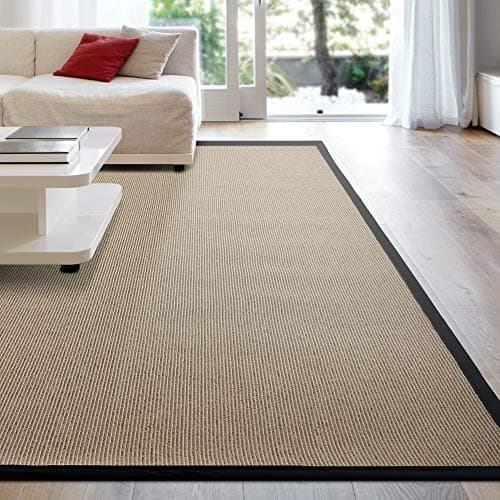 iCustomRug Synthetic Sisal RugNot sisal, and included because for a lot of rooms it is the right call. Listed as 100 percent machine-made polypropylene with a low-profile ribbed pile that imitates woven sisal. It takes water, it does not ripple with humidity, and a cat is far less interested in it. | Damp rooms and cat households | Machine-made polypropylene in a ribbed sisal-look weave | $129.00View on Amazon #ad We earn a commission · Price as of October 11, 2026 |
| 6 | 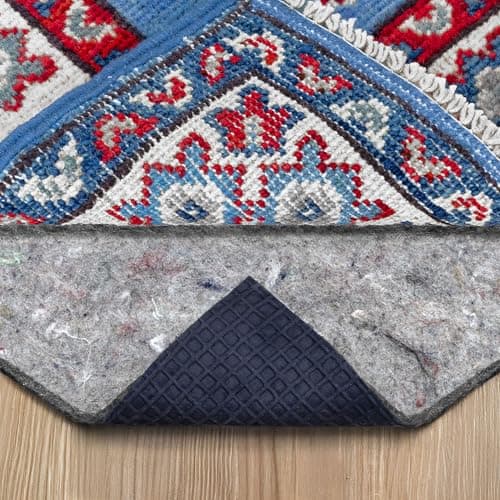 RUGPADUSA Superior-Lock Rug PadMost sisal rugs are stiff, light and flat, which is a combination that slides. A grip pad stops the creep and takes some of the hardness out of the surface. On a handmade sisal with no latex layer this is not optional. | Under any of the above | Heat-pressed felt bonded to natural rubber | $133.41$156.95View on Amazon #ad We earn a commission · Price as of October 11, 2026 |
Sisal is the toughest natural rug fiber in common use, and it is also the one most often sold under a name that is not quite true. A large share of the rugs returned by a search for sisal are jute, a jute-sisal blend, or polypropylene woven to look like sisal. None of those are bad rugs. They are just different rugs, with different rules about water, different lifespans and different prices, and the product name will not always tell you which one you are looking at.
So this page is organized around the thing that actually decides the purchase: what the rug is made of, what is on the back of it, and whether the room you are putting it in is one where real sisal survives. Sisal rugs covers the fiber itself in depth; this page is about which ones to buy.
Safavieh Natural Fiber Sisal Rug
The widest size range
Product photo and price from Amazon, refreshed daily.
#ad We earn a commission · Price as of October 11, 2026
The sisal most people should buy, for an unglamorous reason: it exists in the size you need. Listings in this collection state sisal with latex fibers and a 3/8 inch pile, and the bordered edge finishes the rug properly. The latex is the trade-off - it is what you are agreeing to when you put this on a floor.
What it is
- Listings in this collection state sisal with latex fibers and a 3/8 inch pile
- Most designs carry a woven contrast border rather than a raw cut edge
- Sold in a long size ladder — small accents through 8x11 and 9x12
What it does well
- The easiest sisal to actually buy in the size you need, which is the whole problem with this fiber
- The border finishes the edge, so it does not fray the way a cut natural fiber edge can
- The latex component holds the weave together and limits creep on a hard floor
Don't buy it if
- The latex backing is why it should not be laid over radiant heat or left on a floor it can mark
- Colorways are natural, maize and marble tones — there is no real color range here
- It is still sisal: coarse barefoot, and it will not forgive a spill
The default sisal for most rooms, because the size ladder and the bordered edge remove the two things that usually derail a sisal purchase.
Natural Area Rugs Handmade Sisal Rug
Undiluted sisal and runners
No licensed photo of this exact rug yet — see it on the Amazon listing.
The one to buy when the label matters. These list as 100 percent natural fiber, handmade, with a stitched border sold as part of the design, and the runner lengths go where the power-loomed brands do not. You pay for that, and the weave varies piece to piece because it is handmade.
What it is
- Listings state 100% natural fiber, handmade, in named weaves such as Pavillion, Sandstone, Karima and Deco
- Borders are sold as part of the design — black and fudge among them
- Runner lengths including 2 ft 6 in x 8 ft sit alongside the standard rectangles
What it does well
- Genuinely 100 percent sisal rather than a sisal-look weave, if that is what you came for
- The runner lengths are the real reason to look here — sisal in a hallway is this fiber at its best
- A stitched border takes most of the edge-fray risk out of a natural fiber rug
Don't buy it if
- Handmade means weave and tone vary between pieces more than a power-loomed rug does
- No latex layer on most of these, so it needs a pad to stay put
- Priced above the power-loomed sisal for the same square footage
The one to buy when you want undiluted sisal, a finished border, or a runner length the big brands do not stock.
nuLOOM Natural Sisal Rug
A plain sisal, cheaply
No licensed photo of this exact rug yet — see it on the Amazon listing.
The simplest version of the fiber: tight flat weave, a backing to limit slip, natural and lightly dyed colorways. If you want sisal in a hallway and nothing else about the rug matters, this is the shortest route to it.
What it is
- Sisal is the hardest-wearing of the common natural rug fibers
- Tight flat weave with a backing to limit slip
- Natural and lightly dyed colorways
What it does well
- Substantially tougher than jute — it belongs in a hallway where jute does not
- The tight weave does not shed the way a braided jute does
- Holds its shape under furniture better than softer natural fibers
Don't buy it if
- Harsher than jute underfoot, and that is saying something
- Stains readily and cannot be wet-cleaned without risking the fiber
- Expands and contracts with humidity, so it can ripple in a damp season
Choose sisal over jute whenever feet, shoes or chair legs move across it daily.
Natural Area Rugs Wool-Sisal Blend Rug
If bare feet land on it
No licensed photo of this exact rug yet — see it on the Amazon listing.
The answer to the complaint everyone has about sisal, which is that it hurts. Blending wool in brings back the crimp and the recovery that sisal has none of. It costs more, it sheds for a few months, and it is still not a rug you can wet-clean.
What it is
- Sold as a wool sisal rug — the blend, not pure sisal
- Handmade and bordered in the same way as this brand's pure sisal weaves
- Wool brings the crimp and recovery that sisal has none of
What it does well
- The only honest answer to 'I want sisal but I have to walk on it barefoot'
- Wool recovers from furniture compression where pure sisal just stays crushed
- Reads as a natural fiber rug across a room without the sandpaper feel
Don't buy it if
- Costs meaningfully more than the pure sisal in the same size
- The wool component can shed for the first few months
- Still not a wet-clean rug — the sisal in the blend sets that rule
The compromise worth paying for in a living room or a bedroom edge, where pure sisal is simply too harsh.
iCustomRug Synthetic Sisal Rug
Damp rooms and cat households
Product photo and price from Amazon, refreshed daily.
#ad We earn a commission · Price as of October 11, 2026
Not sisal, and included because for a lot of rooms it is the right call. Listed as 100 percent machine-made polypropylene with a low-profile ribbed pile that imitates woven sisal. It takes water, it does not ripple with humidity, and a cat is far less interested in it.
What it is
- Listed as 100% machine-made polypropylene, not a natural fiber
- Low-profile ribbed pile that imitates the look of woven sisal
- Area rug and runner sizes, described as stain resistant and easy to clean
What it does well
- Takes water, which no real sisal does — this is the kitchen, basement and humid-climate answer
- Softer underfoot than the fiber it imitates, which is the usual complaint about sisal
- No humidity rippling, because polypropylene does not absorb moisture from the air
Don't buy it if
- It is not sisal, and close up it does not pretend convincingly
- Synthetic fiber flattens under furniture and does not spring back
- Can hold static and a slight sheen that natural fiber never has
Buy this instead of sisal if the room is damp, the floor gets wet, or a cat lives there — it solves all three.
RUGPADUSA Superior-Lock Rug Pad
Under any of the above
Product photo and price from Amazon, refreshed daily.
#ad We earn a commission · Price as of October 11, 2026
Most sisal rugs are stiff, light and flat, which is a combination that slides. A grip pad stops the creep and takes some of the hardness out of the surface. On a handmade sisal with no latex layer this is not optional.
What it is
- Dense heat-pressed felt over a natural rubber gripping layer
- Available in quarter-inch and half-inch thicknesses
- Cuts to size with household scissors
What it does well
- Natural rubber rather than PVC or an adhesive-backed synthetic — this is the distinction that protects a hardwood finish
- The felt layer does real sound-dampening work in a room with hard floors
- Grips on glossy finishes where thinner pads slide
Don't buy it if
- Expensive relative to the rug it protects, which stops a lot of people buying one
- The half-inch version raises the rug enough to catch a door
- Heavy and awkward to handle at large sizes
The pad to buy if the floor under the rug is worth more than the rug, which on hardwood it almost always is.
How we chose these
We compared published fiber content, construction, backing and stated size ranges across current listings, and we weighted the things that make a sisal rug succeed or fail in a real room rather than the things that photograph well. We have not walked on these rugs for a year and we do not claim to have. How we choose sets out the method and, more usefully, its limits.
Two rules applied throughout. First, a rug only appears here as sisal if the listing says sisal - not natural fiber, not sisal-style, not sisal-look. Second, the one synthetic on the list is labeled as a synthetic in its own entry, because the honest version of this roundup includes the rug that beats sisal in about a third of the rooms people buy sisal for.
The five questions that decide a sisal rug
- Will it ever be wet? This is the first question and it is close to the only one. Sisal stains where water sits, and the fiber swells. A kitchen, a bathroom, an entry that catches rain, a basement - all of these are the wrong room, and no sisal rug at any price fixes it.
- Is the room humid? Sisal is hygroscopic: it takes moisture out of the air and gives it back. In a humid season the rug can ripple, and in a persistently damp room it can stay rippled. That is a property of the fiber, not a fault in the rug.
- Is there a cat? Sisal is what most scratching posts are made of. Putting a sisal rug in a cat household is a genuine conflict rather than a theoretical one. Rugs for pets and high traffic covers the alternatives.
- Will bare feet land on it? Sisal is coarse, and there is no soft sisal - that is the fiber, not the weave. If the rug is going beside a bed or anywhere people sit on the floor, buy the wool blend or buy a different fiber.
- What is the floor underneath? A latex-backed rug on a floor that can be marked, or over radiant heat, is a risk. An unbacked handmade sisal on a hard floor will slide. Either way the answer involves a rug pad.
Sisal, jute and the sisal-look synthetics, compared
| Sisal | Jute | Sisal-look polypropylene | |
|---|---|---|---|
| Traffic | Best of the three | Flattens in a busy room | Very good |
| Barefoot | Harsh | Coarse but softer | Softest of the three |
| Water | Stains, swells | Browns, can mold | Takes it freely |
| Humidity | Ripples | Ripples less | Unaffected |
| Cleaning | Dry methods only | Dry methods only | Wet clean, even hose |
| Under furniture | Holds its shape | Crushes | Dents permanently |
| Looks like sisal close up | It is sisal | No - softer, hairier | No - slight sheen |
Backing: latex, cotton, or nothing
What is on the back of a sisal rug matters more than it does on most fibers, because sisal is stiff and light and has nothing else holding it in place. Power-loomed sisal is typically finished with a latex layer, which locks the weave, limits shedding at the edges and stops the rug creeping across a hard floor. That is genuinely useful, and it is why the mass-market sisal is the easy one to live with.
The cost is that latex is a layer sitting flat against your floor. Over time, and particularly over radiant heat or on a finish that can react, that is a risk a bare rug does not carry. It is also why a latex-backed rug is harder to recycle and heavier to move. Handmade sisal often has no latex at all, which is cleaner against the floor and much more prone to sliding - hence the pad on this list.
Borders are not decoration
Natural fiber wants to fray at a cut edge. A stitched fabric border is the standard answer, and on sisal it does real work: it finishes the edge, it stops the perimeter unraveling when a vacuum catches it, and it takes some of the visual coarseness off a rug that is otherwise a single flat texture. Both of the natural-fiber picks here are sold bordered for exactly that reason.
A border also gives you the only color decision sisal offers. The fiber itself comes in natural, maize, marble and a few muted dyed tones, and that is the whole palette. If you want the rug to relate to something else in the room, it happens at the border.
Where sisal earns its place
The case for sisal is abrasion. It comes from agave leaf fiber, which is stiffer and stronger than jute's stem fiber, and woven tight it presents a hard surface with very little for a foot to crush. That is why it belongs in a hallway, on a stair landing, in a home office under a chair, or in a living room where nobody sits on the floor - the places where the right high-traffic fiber is the whole decision. A hallway runner in sisal will outlast the same runner in jute by years.
Industry guidance says the same thing in the same words: sisal suits dry indoor areas with constant foot traffic, and it should be kept away from standing water and out of long spells of direct sun, which fades and weakens the fiber. That last point is worth knowing before you put one in a south-facing room.
Sizing it
Size a sisal rug the way you would any flat natural fiber rug, with one extra consideration: because it is stiff, it does not drape over a transition or tuck neatly under a door the way a soft rug does. Keep it clear of door swings, and in a hallway leave a few inches of floor on each side rather than running it wall to wall. Rug size for a living room covers the standard layouts, all of which apply here.
The size ladder is also where the picks genuinely differ. Power-loomed sisal is stocked deep, through the large sizes most rooms need. Handmade sisal is where the long runner lengths live. If you have measured and landed on an unusual length, that is the entry to start with.
The pad is not optional
A sisal rug with no latex on the back will move, and because the fiber is hard it moves with the whole rug rather than rucking in one corner. A grip pad fixes that and adds a small amount of give to a surface that has none. It also lifts the rug very slightly off the floor, which helps a hygroscopic fiber dry out after a humid week instead of holding moisture against the boards.
Living with one
Vacuum often and without a beater bar - sisal needs grit lifted out of the weave, not beaten through it. Blot spills immediately and do not chase a stain with water, because water is what makes a sisal stain permanent. How to clean a sisal rug covers the dry methods that work and the ones that quietly ruin the rug.
Expect some shedding in the first weeks, expect the color to be slightly uneven across the piece, and expect it to look better at three years than most synthetics do at one. Those are all normal for the fiber.
What we would buy
For a dry hallway or living room, the power-loomed bordered sisal, because the size range and the finished edge remove the usual friction. For a long runner or for a rug you want to be unambiguously 100 percent sisal, the handmade one with the stitched border. If anyone is walking on it barefoot, the wool-sisal blend, and accept the price. And if the room is damp, the floor gets wet, or a cat lives there, buy the synthetic and do not pretend - it is the better rug for that room. If what you actually want is the natural look at the lowest price and traffic is light, jute is the cheaper fiber and jute versus sisal is the direct comparison. And if the first month is the worry, do sisal rugs shed covers how long it lasts.
Questions people actually ask
What should I look for in a sisal rug?
A fiber content line that says sisal, a backing you are happy to put on your floor, and a stitched border. Everything else about a sisal rug is secondary to those three.
Are most sisal rugs actually sisal?
Many are not. Jute, jute blends and polypropylene sisal-look weaves are all sold under titles containing the word sisal. The fiber content line is the part of the listing that has to be accurate.
Is sisal or jute better?
Sisal for traffic, jute for comfort and price. Sisal handles a hallway that would flatten jute within a year; jute is softer underfoot and cheaper. Neither tolerates water.
Do sisal rugs need a rug pad?
A handmade sisal with no latex backing does - it will slide otherwise. A latex-backed sisal grips reasonably well on its own, though a pad still adds cushioning and helps the rug dry after a humid spell.
Can a sisal rug go in a kitchen?
No. Water stains sisal permanently and swells the fiber. For the sisal look in a kitchen, buy the polypropylene version, which can be cleaned wet.
Why does sisal feel so rough?
Because it is agave leaf fiber, which is stiff by nature. No weave makes it soft. A wool-sisal blend is the only way to keep the look and lose most of the harshness.
Sources
Read next
- Sisal RugsSisal's real strengths and its three real problems: humidity rippling, staining, and what cats do to it.
- Jute vs SisalThe single trade-off that decides between the two natural fibers, mapped onto the rooms each belongs in.
- How to Clean a Sisal RugThe dry method for sisal, why water swells and stains it, and what to do about humidity rippling.
- The Best Rug Material for High TrafficThe two properties that decide high-traffic performance, the three fibers that have both, and why construction matters as much.
- Hallway RunnersHallway runners that stay put under directional traffic, in constructions that survive the busiest floor in the house.
- Rug MaterialsWool, jute, sisal, polypropylene, cotton, viscose and the traditional weaves — compared on wear, feel, water and cost.