Rug Materials
The Best Non-Shedding Rugs (It Is the Construction, Not the Fibre)
Shedding is loose fibre escaping a cut pile. Remove the cut pile and the problem disappears - here are the five constructions that do it.
Heads up: we earn a commission when you buy through links on this page, at no extra cost to you. It never changes which rug we put first — see how we choose and our affiliate disclosure.
Quick picks
The whole answer, before the detail. Tap any row to jump to that rug's full write-up further down the page.
| # | Rug | Best for | Construction | Price |
|---|---|---|---|---|
| 1 | 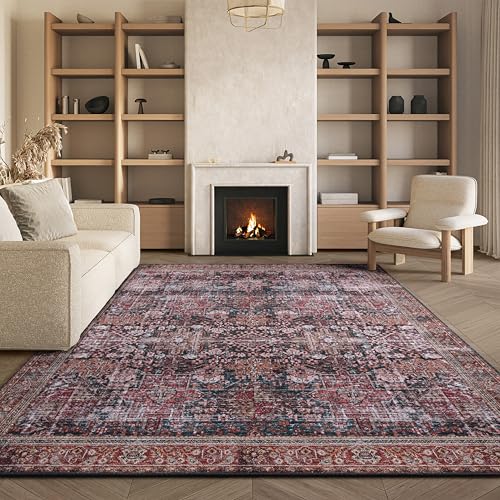 SAFAVIEH Tucson Washable RugThe best non-shedding rug for a whole room, because there is barely a pile to shed from: power-loomed polyester at a listed 1/8 inch, which is among the lowest profiles anything sold as an area rug has. It is a continuous machine-made face rather than tufted yarn ends, so nothing works loose. It is also the rare non-shedding option that covers a living room - listed at 8 by 10 feet and roughly 13.5 pounds, and the whole rug washes cold and dries flat. At 1/8 inch you feel the floor through it. | A whole room, with no fibre loss at all | Power-loomed polyester, listed at a 1/8 inch pile, whole-rug machine washable | $79.88$98.99View on Amazon #ad We earn a commission · Price as of November 24, 2026 |
| 2 | 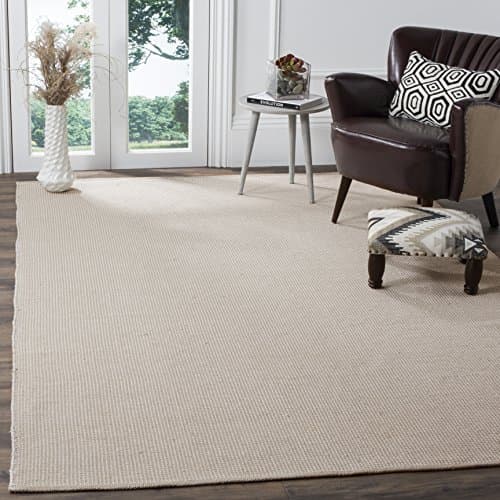 Safavieh Montauk Cotton Flatweave RugThe pick if you want a non-shedding rug that is also a natural fibre, which is a genuinely narrow category. Handwoven 100 percent cotton in a flat weave with no applied backing: a flatweave has no cut yarn ends, so the only fibre that can escape is a thread that has already broken. Ikat and tie-dye patterns across area, square and runner sizes. No backing means the maker recommends a pad, and cotton at this weight does crush in a traffic lane. | Natural fibre with no shedding | Handwoven 100 percent cotton flatweave, no applied backing | $246.00View on Amazon #ad We earn a commission · Price as of November 24, 2026 |
| 3 | 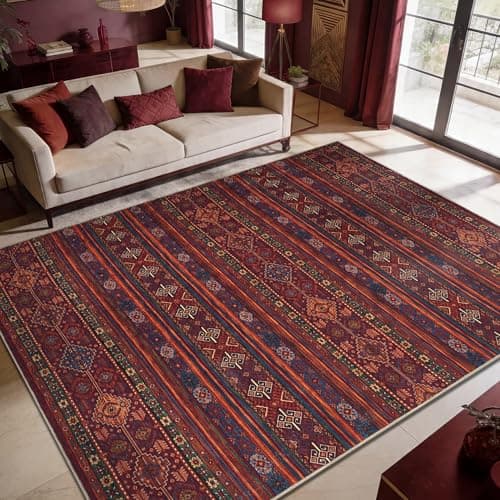 Keen Home Design Vintage Washable RugThe best-looking option here by some distance, and the reason is the construction: a flat chenille weave of 75 percent recycled cotton and 25 percent polyester, under 0.2 inch, so the vintage pattern is woven into a flat face rather than printed on a pile. OEKO-TEX Standard 100 certified, machine washable cold on gentle, laid flat to dry, in eleven listed sizes from 2x3 to 10x14. Chenille can fuzz slightly at a cut edge in the first weeks - that is edge wear rather than pile shedding, and it stops. | A pattern rug with no pile to lose | Flat chenille weave of recycled cotton and polyester, non-slip underside | $160.99View on Amazon #ad We earn a commission · Price as of November 24, 2026 |
| 4 | 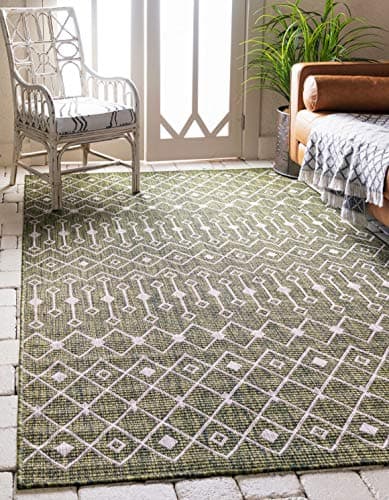 Unique Loom Outdoor Trellis RugThe non-shedding choice for a room where the rug has to take abuse: polypropylene pile on a polypropylene backing, machine-woven, with an overall listed height of about 0.13 inch on the 6x9. Continuous synthetic filament has no staple fibre to work loose, which is why indoor-outdoor constructions never shed, and the maker rates it for homes with children and pets. The trade is that it feels like what it is - a hard, thin, utilitarian surface - and the maker recommends a pad on hard floors. | Pets, kids and hard use | Machine-woven polypropylene pile and backing, indoor-outdoor | $63.75$75.00View on Amazon #ad We earn a commission · Price as of November 24, 2026 |
| 5 | 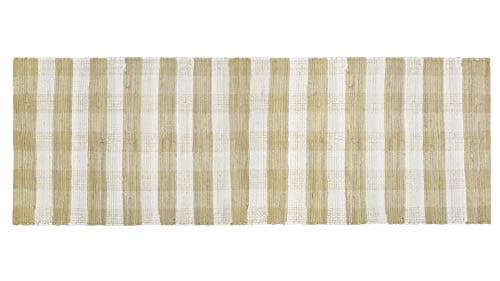 GLAMBURG Cotton Reversible Runner RugThe budget pick, and structurally the purest answer on the page: a handwoven cotton flatweave, fully reversible, with no backing of any kind, listed at 2 by 6 feet. There is no pile, no adhesive and no yarn end anywhere in it, so there is literally nothing to shed. Reversible means both faces wear, which doubles the life of a cheap rug. It also has zero grip on a hard floor, so a pad is a real line item, and at runner size only. | The cheapest truly shed-free option | Handwoven cotton flatweave, reversible, no backing | $20.86View on Amazon #ad We earn a commission · Price as of November 24, 2026 |
The verdict. If you need a non-shedding rug for a whole room, the SAFAVIEH Tucson is the pick: at a listed 1/8 inch there is almost no pile to shed from, it covers an 8x10 footprint, and the whole rug machine washes. The GLAMBURG cotton reversible runner is the budget pick and in structural terms the most shed-proof thing here - a handwoven flatweave with no pile, no backing and no yarn ends, so there is nothing that can come loose. The principle behind the whole page: shedding is loose staple fibre escaping from a cut pile, so the fix is to buy a construction that has no cut pile, not to hunt for a fibre that sheds less.
SAFAVIEH Tucson Washable Rug
A whole room, with no fibre loss at all
Product photo and price from Amazon, refreshed daily.
#ad We earn a commission · Price as of November 24, 2026
The best non-shedding rug for a whole room, because there is barely a pile to shed from: power-loomed polyester at a listed 1/8 inch, which is among the lowest profiles anything sold as an area rug has. It is a continuous machine-made face rather than tufted yarn ends, so nothing works loose. It is also the rare non-shedding option that covers a living room - listed at 8 by 10 feet and roughly 13.5 pounds, and the whole rug washes cold and dries flat. At 1/8 inch you feel the floor through it.
What it is
- Power-loomed polyester, stated on the listing
- Listed pile height of 1/8 inch - among the lowest profiles sold as an area rug
- The whole rug machine washes cold on gentle and dries flat; there is no separate cover
- Listed at 8 by 10 feet and roughly 13.5 pounds
What it does well
- A one-piece washable in a true 8 by 10, which very little else in this price bracket offers
- At 1/8 inch it lies flat under furniture and lets dining and desk chairs move across it
- Safavieh prints a weathered medallion rather than a flat solid, so traffic and crumbs disappear into the pattern
Don't buy it if
- 13.5 pounds of wet polyester is at the top of what a domestic washer should take - check the drum rating before you buy the 8x10
- A 1/8 inch pile gives almost no cushioning; this is a floor covering, not something soft to sit on
- Printed color sits on the surface, so a scuff that abrades the face shows pale underneath
The cheapest honest route to a washable rug that actually covers a living room, as long as your washer can take it.
Safavieh Montauk Cotton Flatweave Rug
Natural fibre with no shedding
Product photo and price from Amazon, refreshed daily.
#ad We earn a commission · Price as of November 24, 2026
The pick if you want a non-shedding rug that is also a natural fibre, which is a genuinely narrow category. Handwoven 100 percent cotton in a flat weave with no applied backing: a flatweave has no cut yarn ends, so the only fibre that can escape is a thread that has already broken. Ikat and tie-dye patterns across area, square and runner sizes. No backing means the maker recommends a pad, and cotton at this weight does crush in a traffic lane.
What it is
- 100 percent cotton, handwoven in India
- Flat weave with no backing applied - the maker recommends a separate rug pad
- Ikat and tie-dye patterns across area, square and runner sizes
What it does well
- Cotton is the one flatweave fiber a normal washing machine can handle at small and runner sizes
- No pile and no backing means it is genuinely thin - doors and dining chairs clear it
- Takes dye softly, so the patterns read as faded textile rather than printed graphic
Don't buy it if
- Cotton absorbs, so a spill soaks in instead of beading - the opposite of a synthetic flatweave
- No backing at all: without a pad it slides, and the maker says so on the listing
- Lighter colors show traffic lanes faster than wool or sisal in the same spot
The cotton flatweave to buy if you want a thin, soft-patterned rug you can actually launder at runner size.
Keen Home Design Vintage Washable Rug
A pattern rug with no pile to lose
Product photo and price from Amazon, refreshed daily.
#ad We earn a commission · Price as of November 24, 2026
The best-looking option here by some distance, and the reason is the construction: a flat chenille weave of 75 percent recycled cotton and 25 percent polyester, under 0.2 inch, so the vintage pattern is woven into a flat face rather than printed on a pile. OEKO-TEX Standard 100 certified, machine washable cold on gentle, laid flat to dry, in eleven listed sizes from 2x3 to 10x14. Chenille can fuzz slightly at a cut edge in the first weeks - that is edge wear rather than pile shedding, and it stops.
What it is
- Chenille woven from 75% recycled cotton and 25% polyester, certified to OEKO-TEX Standard 100
- Under 0.2 in thick — a flat weave, not a plush pile
- Machine wash cold on gentle, lay flat to dry; no tumble dryer and no rug shampooer
- Listed in 11 sizes from 2x3 up to 10x14
What it does well
- Washable at sizes most washable lines stop short of, which is the whole problem in a playroom
- Flat enough that ride-on toys roll over it and a door still clears it
- A distressed vintage pattern hides marks between washes better than any solid color can
Don't buy it if
- Thin. On a slab or a basement floor you will want a felt pad under it for anyone sitting down
- A 10x14 will not fit a domestic washer — check your drum before you buy the big one
- The non-slip underside is a coating, and the maker still recommends a pad on top of it
The rug that solves the actual playroom problem: it covers the room, and it goes in the machine when something lands on it.
Unique Loom Outdoor Trellis Rug
Pets, kids and hard use
Product photo and price from Amazon, refreshed daily.
#ad We earn a commission · Price as of November 24, 2026
The non-shedding choice for a room where the rug has to take abuse: polypropylene pile on a polypropylene backing, machine-woven, with an overall listed height of about 0.13 inch on the 6x9. Continuous synthetic filament has no staple fibre to work loose, which is why indoor-outdoor constructions never shed, and the maker rates it for homes with children and pets. The trade is that it feels like what it is - a hard, thin, utilitarian surface - and the maker recommends a pad on hard floors.
What it is
- Polypropylene pile and polypropylene backing, machine woven in Turkey
- Very low pile — the 6x9 listing gives an overall height of about 0.13 in
- Rated by the maker for indoor or outdoor use and for homes with children and pets
- Care is vacuum and spot clean; the maker recommends a pad on hard floors
What it does well
- One of the cheapest ways to get a 6x9 or larger onto a floor, which is what a playroom usually needs
- Polypropylene sheds water instead of soaking it, so a juice cup is a wipe rather than an event
- Flat enough that blocks stand up on it and a toy car actually rolls
Don't buy it if
- It is an outdoor rug indoors. Underfoot it is firm and slightly plasticky, and a pad does not disguise that
- Arrives rolled and creased, and the creases take weeks to drop out
- No grip at all on its own — budget for a pad on top of the purchase price
The square-footage answer: the right rug when the job is covering a whole play floor in something that wipes clean, and the wrong one if anyone has to sit on it for long.
GLAMBURG Cotton Reversible Runner Rug
The cheapest truly shed-free option
Product photo and price from Amazon, refreshed daily.
#ad We earn a commission · Price as of November 24, 2026
The budget pick, and structurally the purest answer on the page: a handwoven cotton flatweave, fully reversible, with no backing of any kind, listed at 2 by 6 feet. There is no pile, no adhesive and no yarn end anywhere in it, so there is literally nothing to shed. Reversible means both faces wear, which doubles the life of a cheap rug. It also has zero grip on a hard floor, so a pad is a real line item, and at runner size only.
What it is
- Handwoven cotton in a checked or plaid flatweave
- Fully reversible — the maker's own selling point is twice the wear
- Listed at 2 by 6 feet, the standard kitchen and hallway runner footprint
- Listing states vacuum, hand wash or machine wash
What it does well
- A cotton runner at runner size fits a domestic washing machine, which a cotton area rug does not
- Reversible with no backing at all, so both faces wear and both faces wash
- Thin enough to sit under a door and flat enough not to trip a foot in a hallway
Don't buy it if
- No backing means no grip. Without a pad it will travel across a hard floor within a week
- Cotton absorbs, so it is the wrong runner for the strip in front of a sink
- Handwoven cotton shrinks a little on its first hot wash — wash cold
The cotton rug most people should actually buy first: runner size, reversible, and small enough that washing it is a chore rather than a project.
What shedding actually is
In a tufted or hand-knotted rug, short lengths of fibre - staple fibre - are twisted into yarn, and the yarn is cut to form the pile. Every cut end holds a few fibres that were never fully bound into the twist, and foot traffic works them out. That is shedding. It is not a defect, it is not a sign of a cheap rug, and on a new wool rug it is not even a sign of a problem: it is the loose fibre left over from manufacture, and most of it leaves in the first three to six months.
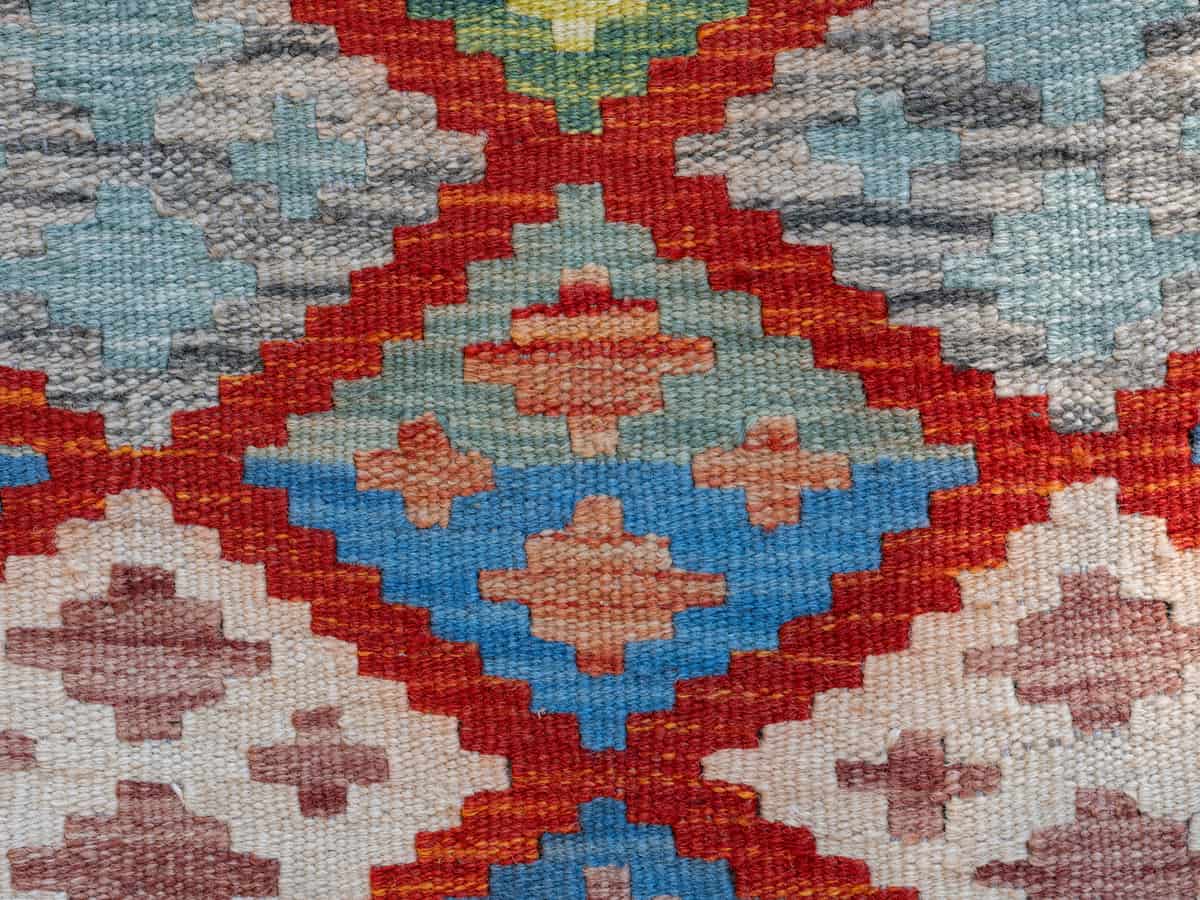
Two things follow. First, a rug made from continuous filament rather than staple fibre cannot shed, which is why synthetics like polypropylene and polyester generally do not. Second, a rug with no cut pile - a flatweave, a chenille flat weave, a woven low-profile face - has no cut ends for fibre to escape from, so the fibre becomes almost irrelevant. That is why a cotton flatweave does not shed while a cotton cut-pile rug does.
| Construction | Sheds? | What to expect |
|---|---|---|
| Flatweave (cotton, wool kilim, chindi) | No | No cut pile. Occasional broken thread at the edge, not fibre loss |
| Chenille flat weave | Barely | Slight fuzzing at a cut edge for a few weeks, then nothing |
| Machine-woven low pile under 0.2 in | No | A continuous synthetic face with nothing to work loose |
| Power-loomed synthetic cut pile | Very little | Filament rather than staple fibre; a little fluff at first |
| Hand-tufted wool | Yes, heavily | Three to six months of visible shedding, then it settles |
| Jute and sisal | Yes | Coarse plant fibre sheds and sprouts indefinitely, not just at first |
| Shag and high pile | Yes, most of all | The longest fibres, the most of them, and they go everywhere |
If the question that brought you here was about a rug you already own, the honest answer may be that it is normal and finite. Do wool rugs shed? and do jute rugs shed? set out the timelines, and do sisal rugs shed? covers the fibre where the answer is briefest.
The fibres to avoid if shedding is the dealbreaker
- Hand-tufted wool. The best feel of any rug and the worst shedder. A new one fills a vacuum canister weekly for months. Worth it in a bedroom, painful in an open-plan room with a dark floor.
- Jute and sisal. Coarse plant fibre that sheds continuously rather than settling, and also sprouts - individual fibres standing up out of the weave. The best jute rugs is honest about where to put one, and the answer is rarely a bedroom.
- Shag and high pile. Long fibres, loosely bound, in quantity. Any shag will shed; the best shag rugs exists because the feel is worth it to some people, not because the shedding is overstated.
- Viscose. Sheds and does worse than shed - it crushes, yellows and sheds in sheets when wet. Avoid in any room that matters.
What you give up by buying non-shedding
This is the honest cost of the whole page: every non-shedding construction is thin. Flatweaves have no pile by definition, and low-profile woven faces are 0.1 to 0.2 inch. You are trading softness underfoot for a floor that stays clean, and in a bedroom that trade is often the wrong way round.
There is a fix, and it is a pad rather than a different rug. A half-inch felt pad under a flatweave gives most of the cushioning a pile rug would have given, at a fraction of the price, and it extends the life of the rug by taking the abrasion that would otherwise reach the weave. Felt vs rubber rug pads explains which to buy for which floor, and the best non-slip rug pads has the picks - the backing-free flatweaves on this page genuinely need one.
How to manage shedding on a rug you are keeping
Vacuum with the beater bar off
On anything under a quarter inch, a rotating brush abrades the weave instead of lifting fibre. Suction only. On a new wool rug, suction only as well - a beater bar pulls fibre out faster than traffic does.
Vacuum often for the first three months, then less
On a new cut-pile rug, twice a week beats once a week by a wide margin, because the loose fibre is finite and you are removing it rather than redistributing it. After that, weekly.
Never pull a sprouted fibre
Cut it level with scissors. Pulling a long fibre out of a weave takes its neighbours with it, and on a tufted rug it can open a hole in the backing.
Take it outside twice a year
Shaking a rug out does more for embedded fibre and grit than any vacuum, and grit is what cuts yarn and causes shedding that is not just the manufacturing residue.
Keep it off the worst traffic line
Shedding scales with footfall. Rotating a rug 180 degrees once a year spreads the wear and halves the rate at which the busiest lane gives up fibre.
Vacuuming rugs has the settings by construction, and how long do rugs last puts the shedding period in context - a wool rug that sheds for six months may still be on your floor in twenty years, and a non-shedding printed face will not be.
Questions people actually ask
Which rugs do not shed at all?
Flatweaves and machine-woven low-profile faces. A flatweave has no cut pile, so there are no loose yarn ends for fibre to escape from, and a continuous synthetic filament face has no staple fibre in the first place.
Do polypropylene rugs shed?
Essentially no. Polypropylene is extruded as continuous filament rather than spun from short staple fibre, so there is nothing loose to work out of the yarn. You may see a little fluff from manufacturing in the first fortnight.
How long does a new wool rug shed for?
Typically three to six months of noticeable shedding, decreasing throughout, with a slow trickle after that. It is loose fibre left over from manufacture rather than the rug failing, and frequent vacuuming shortens the period.
Is shedding a sign of a cheap rug?
No - in wool it is often the opposite, because a dense hand-tufted pile holds more loose fibre than a thin machine-made one. What shedding reliably indicates is a cut pile made from staple fibre, at any price.
Can I stop a rug from shedding?
You can shorten it, not stop it. Vacuum with suction only and do it twice a week for the first few months, so you remove loose fibre instead of letting traffic grind it in. Cut sprouted fibres level rather than pulling them.
Are non-shedding rugs less comfortable?
Yes, and that is the honest trade - every non-shedding construction is thin. A half-inch felt pad underneath recovers most of the cushioning for a fraction of what a pile rug costs.
Sources
- Amazon - SAFAVIEH Tucson washable listing (1/8 in pile, polyester, 8x10 weight)
- Amazon - Safavieh Montauk cotton flatweave listing (100% cotton, no backing, pad recommended)
- Amazon - GLAMBURG cotton reversible runner listing (handwoven cotton, reversible, dimensions)
- Carpet and Rug Institute - vacuuming and routine maintenance guidance
Read next
- Do Wool Rugs Shed?Yes - heavily for the first weeks and lightly for three to six months. What is normal, what is a construction fault, and how to get through it faster.
- Do Jute Rugs Shed?Yes, heavily, for four to six weeks. What is normal, how to speed it up, and the constructions that shed least.
- The Best Flatweave RugsFlatweave rugs across cotton, wool, sisal and polypropylene, judged on what each fiber does when there is no pile to hide behind.
- Non-Slip Rug PadsWhy rugs slide, which pad constructions genuinely hold, and the thin options for tight door clearances.
- Rug MaterialsWool, jute, sisal, polypropylene, cotton, viscose and the traditional weaves — compared on wear, feel, water and cost.