Rugs by Room
Stair Runners
The only rug in the house where getting it wrong is a fall. Fixed installation is not optional.
Heads up: we earn a commission when you buy through links on this page, at no extra cost to you. It never changes which rug we put first — see how we choose and our affiliate disclosure.
Quick picks
The whole answer, before the detail. Tap any row to jump to that rug's full write-up further down the page.
| # | Rug | Best for | Construction | Price |
|---|---|---|---|---|
| 1 | SIXHOME Non-Slip Stair TreadsIndividual treads are the realistic route for most people: no rods, no professional fitting, and one damaged tread can be replaced on its own. They look less finished than a true runner, and adhesive versions can mark a stair finish when removed. | Stairs without a full runner | Individual tread pieces with a grip or adhesive backing | |
| 2 |  Ottomanson Flatweave RunnerIf you are fitting a continuous runner properly with rods or staples, a low-profile bonded flatweave is the right construction — thin enough to wrap a nosing cleanly and dense enough to take stair traffic. | A fitted continuous runner | Flatwoven polypropylene, bonded rubber backing | |
| 3 | 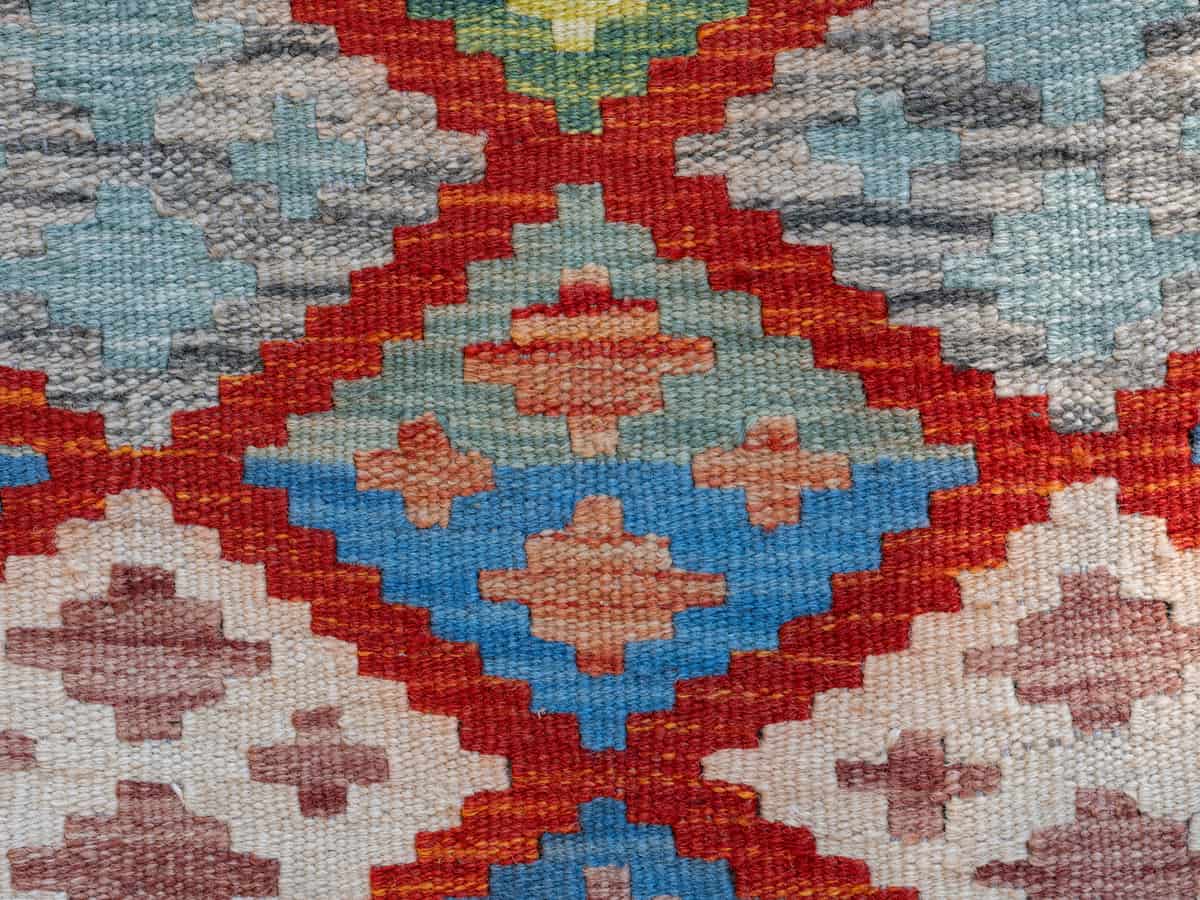 Safavieh Wool Flatweave Kilim RugWool is the traditional stair fiber for good reason: it recovers from the concentrated compression on a stair nosing far better than any synthetic. Worth it on a staircase you will keep for decades. | Wool, properly fitted | Flatwoven wool, effectively no pile |
The short answer
A stair runner must be fixed in place — rods, staples, or adhesive treads. Never lay a loose runner on stairs. Measure (tread depth + riser height) x number of steps and add about 10 percent for the nosing wrap and settling. Width should leave 3 to 4 inches of bare stair showing on each side.
The safety point, stated once and plainly
A loose rug on a flat floor that slides is an annoyance. A loose runner on stairs that slides is a fall down a staircase. There is no version of this where an unfixed runner is acceptable, including a heavy one, including one with a rubber backing. Stairs are the one place in the house where rug installation is a safety system rather than a preference.
SIXHOME Non-Slip Stair Treads
Stairs without a full runner
Illustrative photo of this rug type — not manufacturer imagery. Current product photos are on the Amazon listing.
Individual treads are the realistic route for most people: no rods, no professional fitting, and one damaged tread can be replaced on its own. They look less finished than a true runner, and adhesive versions can mark a stair finish when removed.
What it is
- Sold as individual treads rather than a continuous runner
- Grip or adhesive backing depending on the version
- Standard tread widths
What it does well
- Far easier to fit than a continuous runner and needs no stair rods
- One damaged tread can be replaced without touching the rest
- Leaves the riser exposed, which suits a painted staircase
Don't buy it if
- Individual treads look less finished than a true runner, close up and at a distance
- Adhesive versions can mark a stair finish when removed
- Edges are a trip risk if a tread lifts, so they need checking
The pragmatic stair solution. A real runner looks better; this one you can install yourself on a Saturday.
Ottomanson Flatweave Runner
A fitted continuous runner
Illustrative photo of this rug type — not manufacturer imagery. Current product photos are on the Amazon listing.
If you are fitting a continuous runner properly with rods or staples, a low-profile bonded flatweave is the right construction — thin enough to wrap a nosing cleanly and dense enough to take stair traffic.
What it is
- Rubber backing bonded to the rug — no separate pad needed
- Cut-to-length runners in many lengths
- Very low profile, under a quarter inch
What it does well
- The backing means it stays put on tile and laminate without a pad
- Low enough that an interior door still clears it
- Available in awkward lengths standard sizing does not cover
Don't buy it if
- Rubber backings can discolor vinyl plank flooring over time — check the fiber before laying it on LVP
- Firm and thin; comfort is not part of the proposition
- The backing eventually hardens and cracks after several years
The most practical hallway runner in the set, with one real caveat about which floor you put it on.
Safavieh Wool Flatweave Kilim Rug
Wool, properly fitted
Illustrative photo of this rug type — not manufacturer imagery. Current product photos are on the Amazon listing.
Wool is the traditional stair fiber for good reason: it recovers from the concentrated compression on a stair nosing far better than any synthetic. Worth it on a staircase you will keep for decades.
What it is
- Flatwoven — effectively no pile at all
- Wool fiber with a handwoven geometric pattern
- Reversible on many of the kilim patterns
What it does well
- Chairs slide over it instead of catching, which is exactly what a dining room needs
- No pile means nothing to crush, so furniture leaves no permanent dents
- Wool's soil resistance without wool's shedding
Don't buy it if
- Thin and firm underfoot — it will not feel luxurious
- Flatweaves need a good pad or they creep across the floor
- Spilled liquid goes straight through to the floor below
The correct rug shape for a dining room, in the correct fiber. Almost nobody buys this and regrets it.
Continuous runner or individual treads
| Continuous runner | Individual treads | |
|---|---|---|
| Look | Finished, traditional | Visibly modular |
| Installation | Rods or staples; often professional | DIY in an afternoon |
| Cost | Higher, plus fitting | Lower |
| Repair | Whole runner comes up | Replace one tread |
| Riser | Covered | Left exposed |
| Best for | A staircase you are committing to | Rentals, quick safety fix, painted stairs |
Measuring, which is where mistakes happen
Measure one tread depth and one riser height
Tread is the horizontal part you step on; riser is the vertical face between steps. Measure both to the nearest quarter inch.
Add them together, then multiply by the number of steps
That gives the base length for a runner that covers both the tread and the riser on every step.
Add about 10 percent
The runner has to wrap the nosing on each step, which consumes more length than the flat measurement suggests, and a little slack lets it settle.
Add extra for a landing or a winder
Turning steps are fan-shaped and consume considerably more material. Measure them individually rather than estimating.
Set the width by the narrowest tread
Leave 3 to 4 inches of bare stair on each side. Stairs are rarely perfectly consistent, so use the narrowest one.
Fiber for stairs
Stairs concentrate wear on the nosing of each step, where a narrow strip takes every footfall. Wool is the traditional choice because it recovers from that compression; dense low-pile synthetic is the value alternative. Avoid loop pile entirely — a caught loop on a staircase is both a repair problem and a trip risk. And avoid jute and sisal, which are too coarse and too slippery underfoot for stairs.
Questions people actually ask
Can I put a loose runner on stairs?
No. Stair runners must be fixed with rods, staples or adhesive treads. A loose runner on stairs is a fall risk regardless of its weight or backing.
How do I measure for a stair runner?
(Tread depth + riser height) x number of steps, plus about 10 percent for the nosing wrap. Measure landings and winders separately.
How wide should a stair runner be?
Leave 3 to 4 inches of bare stair showing on each side, sized to the narrowest tread on the staircase.
Are stair treads as good as a runner?
Safer than nothing and far easier to fit, but less finished-looking and they leave the riser exposed. They are the right answer for a rental or a quick fix.
What pile height works on stairs?
Low pile or flatweave. Thick pile bunches at the nosing and creates a raised lip exactly where you do not want one.
Read next
- Runner RugsRunners for hallways, kitchens, bedsides and stairs — widths, clearance rules and which backing suits which floor.
- Hallway RunnersHallway runners that stay put under directional traffic, in constructions that survive the busiest floor in the house.
- Wool RugsWhat wool physically does that synthetics cannot — crimp recovery and lanolin — and what that buys you.
- The Best Rug Material for High TrafficThe two properties that decide high-traffic performance, the three fibers that have both, and why construction matters as much.
- Non-Slip Rug PadsWhy rugs slide, which pad constructions genuinely hold, and the thin options for tight door clearances.
- Rugs by RoomLiving room, bedroom, kitchen, bathroom, entryway, stairs and runners — the fiber, size and pile each room actually needs.