Rug Materials
The Best Nylon Rugs
Nylon outlasts every other common rug fiber under foot traffic. It is also the hardest one to actually buy, because the rug market stopped making it. This is what is left, and when it is worth the hunt.
Heads up: we earn a commission when you buy through links on this page, at no extra cost to you. It never changes which rug we put first — see how we choose and our affiliate disclosure.
Quick picks
The whole answer, before the detail. Tap any row to jump to that rug's full write-up further down the page.
| # | Rug | Best for | Construction | Price |
|---|---|---|---|---|
| 1 | 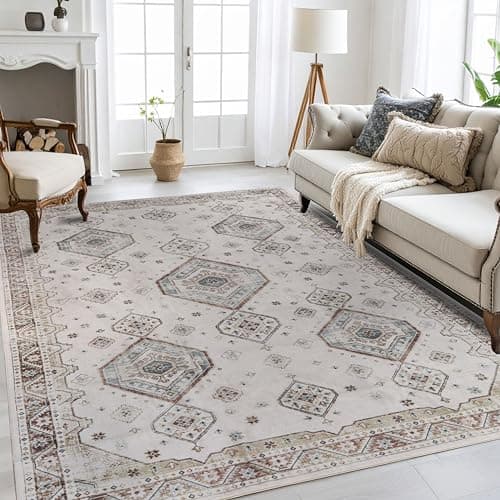 SUPERIOR Burj Washable Nylon RugThe closest thing to a normal living-room rug that is genuinely nylon. Superior states the face fiber on the listing instead of leaving you to guess, which is already unusual in this category, and the backing is cotton rather than latex - the reason this one folds and the reason it has no grip whatsoever. The vintage print is the compromise: a printed pile shows wear in the one lane you always walk, which is a strange weakness in the fiber you chose specifically for wear. Buy it for the pile, not for the pattern, and buy a pad with it. | A nylon rug at living-room size | Nylon pile on a cotton backing, machine washable | $111.64View on Amazon #ad We earn a commission · Price as of November 2, 2026 |
| 2 | 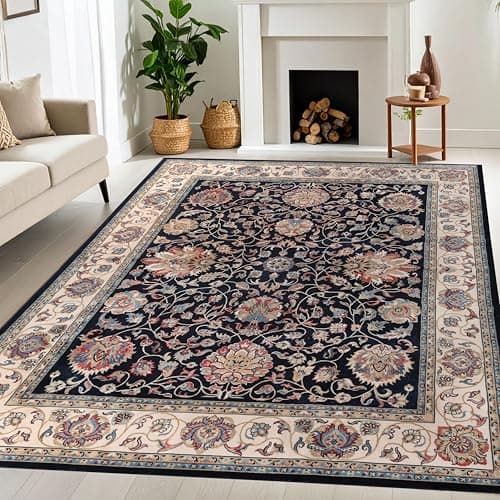 SUPERIOR Zadar Washable Nylon RugThe same construction with a formal pattern, and it is on this page for a reason that says more about the category than about the rug: two of the five picks here are the same brand because almost nobody else sells nylon in area-rug form. Dense traditional patterning is a real functional advantage on a hard-working rug - it hides soil and traffic marks far better than a faded print - but the premium over the vintage line buys you the pattern and nothing structural. Same fiber, same cotton back, same need for a pad. | Formal patterning, same construction | Nylon pile on a cotton backing, traditional patterning | $266.18View on Amazon #ad We earn a commission · Price as of November 2, 2026 |
| 3 | 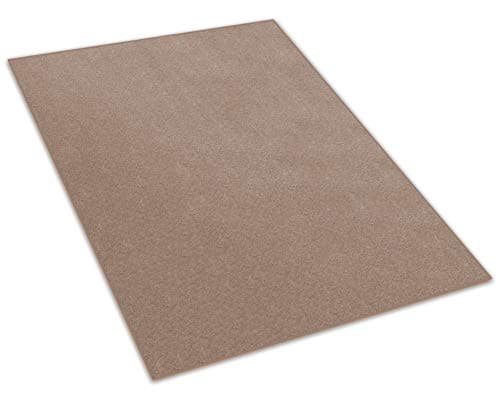 KOECKRITZ Sage Brush Indoor Outdoor Nylon RugThe pick for the shapes the rug market refuses to make. This is broadloom nylon cut to size with a bound edge, which makes a runner, a stair tread or a square possible in a fiber you otherwise cannot get those shapes in - and stairs are where nylon's abrasion resistance pays for itself fastest, because a stair nose takes more wear per square inch than anything else in a house. It reads as carpet rather than as a rug, the color range is a handful of solids and heathers, and every size is its own listing, so price comparison is genuinely tedious. | Stairs, runners and square sizes | Cut-to-size nylon carpet with bound, finished edges | $114.28View on Amazon #ad We earn a commission · Price as of November 2, 2026 |
| 4 | 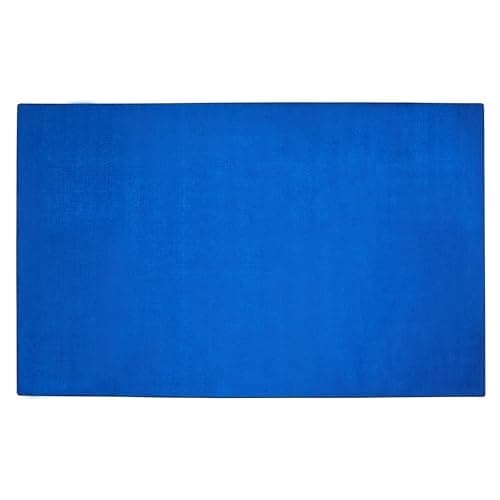 KIDCARPET.COM Classroom RugCommercial nylon, specified for a room where a class of children sits on the floor all day, which is a harder brief than any domestic living room writes. The two certifications on the listing - a Class 1 fire rating and OEKO-TEX - are the ones worth having in a space children use, and the edge binding is specified for institutional wear rather than for a photograph. The costs are honest and large: it looks like contract carpet, the sizes are classroom sizes rather than domestic ones, and you pay commercial money for a plain solid field. | Playrooms and real abuse | Commercial-grade nylon pile with reinforced edging | $191.99View on Amazon #ad We earn a commission · Price as of November 2, 2026 |
| 5 | 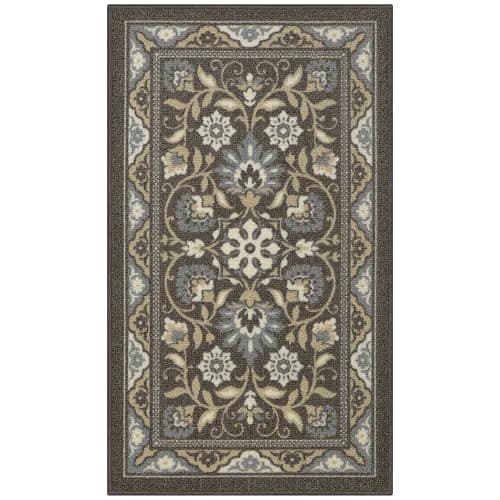 Maples Rugs Florence Accent RugThe cheapest and easiest way to put nylon somewhere it will earn its keep, which at accent size is a doorway, a bedside or the strip in front of a sink. The non-skid backing is bonded to the rug rather than sold separately, so there is nothing to buy or trim before it is safe to walk on, and it is made in the USA. Two real limits: the pattern is printed rather than woven, so it wears visibly in the exact spot you always step, and the line stops at two accent sizes - there is no 3x5 or 4x6 version of this to grow into. | Accent sizes, grip included | Printed nylon pile bonded to a non-skid backing | $26.99View on Amazon #ad We earn a commission · Price as of November 2, 2026 |
The short answer
Buy nylon when the rug has to survive traffic rather than look expensive: stairs, hallways, playrooms and doorways. Expect to hunt for it - most rugs sold as durable synthetics are polypropylene or polyester, and only a handful of listings are genuinely nylon. Check the listing states the fiber, and budget for a pad.
Nylon is the strange case in the rug aisle. Ask anyone who specifies flooring for a living which fiber takes the most foot traffic before it looks tired and the answer is nylon, without much hesitation. Then go looking for a nylon area rug and you will find perhaps four or five listings in a market that offers tens of thousands of rugs. The fiber that wins on the one property people say they care about has almost no presence in the category.
That gap is the whole subject of this page. It is not a mystery - there are good commercial reasons for it, and they are worth understanding before you decide whether to chase nylon or buy something else on purpose. But it does mean a nylon roundup cannot work like a wool or a jute roundup. There is no deep field to rank. There is a short list of things that genuinely are nylon, and a decision about whether your room is one of the rooms where that matters.
Why nylon wins, and why nobody sells it
Nylon's advantage is resilience: the fiber bends under a footfall and springs back, over and over, far longer than polyester or polypropylene manage. That is what abrasion resistance actually means in a rug. It is not about resisting a knife; it is about whether the pile in a traffic lane is still standing up after three years of being walked on in the same six-inch strip. Wool does this too, by a different mechanism, which is why wool and nylon are the two fibers specified for places that take real use. The best rug material for high traffic ranks all of them against each other.
The reason you cannot buy it is that nylon is expensive to make and it has to be dyed, where its competitors do not. Polypropylene is solution-dyed - the color is in the plastic before the fiber is extruded - which makes it cheap, colorfast and almost immune to bleach. Polyester is cheap and takes a brilliant color. Nylon has to be dyed after the fact, costs more per pound than either, and gains none of polypropylene's inherent stain resistance in the process. For a rug sold on a photograph at a price point, nylon loses on every commercial axis. It only wins on the axis you discover three years later.
So nylon retreated to where its durability is specified rather than sold: wall-to-wall residential carpet, commercial and institutional carpet, stair carpet, and small printed utility rugs with bonded backings. Three of the five picks on this page come from exactly those worlds - a cut-to-size broadloom product, a classroom rug and a printed kitchen accent - and that is not an accident of this roundup. It is the shape of the market.
The five things we judged these on
- Whether the listing actually states nylon. This is the first filter and it eliminated almost everything. A rug described only as durable or as a soft synthetic pile is not evidence of nylon, and we did not treat it as such.
- Whether the thing is a rug at all. Several of the few nylon products you can buy are carpet cut to size, mats or individual stair treads. Those are legitimate purchases and we have included one, but a reader deserves to be told which they are getting before it arrives.
- Backing, and what it costs you. Nylon turns up on cotton backs, on bonded non-skid backs and on commercial backings, and the choice governs whether the rug grips the floor, whether it can be folded, and whether it can be washed. Nothing about the face fiber tells you any of that.
- Woven pattern against printed pattern. A printed pile is a decoration applied to the surface, so it abrades away exactly where traffic is heaviest. On a fiber bought for traffic, that is a real deduction, and three of these five are printed.
- Edge construction. A nylon rug almost never fails in the field. It fails at the border, or where a bound edge or a bonded backing lets go. On a cut-to-size or commercial product the edge finish is most of what you are paying for.
What we compared was published fiber content, construction, backing material, stated sizes, certifications and the maker's own care instructions on current listings, plus the general fiber properties documented by the carpet industry. We do not walk on rugs for three years and we claim no testing - how we choose sets out the method and its limits plainly.
SUPERIOR Burj Washable Nylon Rug
A nylon rug at living-room size
Product photo and price from Amazon, refreshed daily.
#ad We earn a commission · Price as of November 2, 2026
The closest thing to a normal living-room rug that is genuinely nylon. Superior states the face fiber on the listing instead of leaving you to guess, which is already unusual in this category, and the backing is cotton rather than latex - the reason this one folds and the reason it has no grip whatsoever. The vintage print is the compromise: a printed pile shows wear in the one lane you always walk, which is a strange weakness in the fiber you chose specifically for wear. Buy it for the pile, not for the pattern, and buy a pad with it.
What it is
- Nylon face fiber, stated on the listing rather than inferred
- Cotton backing rather than latex or rubber, which is what makes it foldable
- Listed by Superior as machine washable
- Stocked in large sizes, including 10 by 14 feet
What it does well
- One of the very few nylon rugs sold in area-rug sizes at all, let alone a washable one
- A cotton backing folds into a drum, where a latex-backed rug of the same size cannot
- Nylon is the most abrasion-resistant of the common rug fibers, so a traffic lane takes far longer to form
Don't buy it if
- Washable at this size is theoretical for most households - a 10x14 will not go in a domestic machine no matter what the backing is made of
- The pattern is a printed vintage look, and printed pile wears visibly where you always step
- A cotton backing offers no grip at all, so a pad is mandatory rather than advisable
The nylon rug to buy if you want the fiber's abrasion resistance in a living-room size, as long as you treat the washability as a bonus rather than the reason.
SUPERIOR Zadar Washable Nylon Rug
Formal patterning, same construction
Product photo and price from Amazon, refreshed daily.
#ad We earn a commission · Price as of November 2, 2026
The same construction with a formal pattern, and it is on this page for a reason that says more about the category than about the rug: two of the five picks here are the same brand because almost nobody else sells nylon in area-rug form. Dense traditional patterning is a real functional advantage on a hard-working rug - it hides soil and traffic marks far better than a faded print - but the premium over the vintage line buys you the pattern and nothing structural. Same fiber, same cotton back, same need for a pad.
What it is
- Nylon face fiber with a cotton backing, the same construction as the Burj line
- Traditional medallion and border patterning rather than a faded vintage wash
- Listed by Superior as machine washable
- Stocked in large sizes, including 10 by 14 feet
What it does well
- The only realistic way to get a traditional-looking rug in nylon rather than in polypropylene or wool
- Denser, busier patterning hides soil and traffic marks better than a solid or a faded print
- The same foldable cotton backing as the rest of the line
Don't buy it if
- Noticeably more expensive than the vintage-print line for the same construction
- Traditional patterning dates faster than a plain or abstract rug, which matters on a rug meant to last
- No grip in the backing, so budget for a pad on top of the rug price
Worth the premium over the vintage print only if you specifically want a formal pattern; the fiber and the construction underneath are the same.
KOECKRITZ Sage Brush Indoor Outdoor Nylon Rug
Stairs, runners and square sizes
Product photo and price from Amazon, refreshed daily.
#ad We earn a commission · Price as of November 2, 2026
The pick for the shapes the rug market refuses to make. This is broadloom nylon cut to size with a bound edge, which makes a runner, a stair tread or a square possible in a fiber you otherwise cannot get those shapes in - and stairs are where nylon's abrasion resistance pays for itself fastest, because a stair nose takes more wear per square inch than anything else in a house. It reads as carpet rather than as a rug, the color range is a handful of solids and heathers, and every size is its own listing, so price comparison is genuinely tedious.
What it is
- Premium nylon face fiber, listed for indoor and limited outdoor use
- Cut from broadloom and finished with a bound edge rather than woven as a rug
- Sold in rectangles, squares, runners and stair treads
- Each size is its own listing, so the price depends on which size the link opens
What it does well
- Solves the problem nylon normally cannot: a runner or a stair tread in the fiber that actually survives stairs
- Finished edges on a cut piece, so it does not fray the way a carpet remnant does
- The size range goes well past what woven rugs offer, including squares and long runs
Don't buy it if
- It is carpet with a bound edge, not a woven rug, and it reads as carpet in a room
- Pattern and color choice is narrow - this is a solid or heathered field, not a design
- Because every size is a separate listing, comparing prices across sizes takes real work
The practical answer for stairs, hallways and any dimension the rug market skips, bought for the fiber rather than for the look.
KIDCARPET.COM Classroom Rug
Playrooms and real abuse
Product photo and price from Amazon, refreshed daily.
#ad We earn a commission · Price as of November 2, 2026
Commercial nylon, specified for a room where a class of children sits on the floor all day, which is a harder brief than any domestic living room writes. The two certifications on the listing - a Class 1 fire rating and OEKO-TEX - are the ones worth having in a space children use, and the edge binding is specified for institutional wear rather than for a photograph. The costs are honest and large: it looks like contract carpet, the sizes are classroom sizes rather than domestic ones, and you pay commercial money for a plain solid field.
What it is
- Commercial-grade nylon, specified for institutional use rather than domestic
- Listed as Class 1 fire rated
- Listed as OEKO-TEX certified
- Reinforced edge binding; sold in classroom rectangles such as 6 feet by 8 feet 6 inches
What it does well
- Built for a room where a class of children sits on the floor every day, which is a harder brief than any living room
- The two certifications on the listing - Class 1 fire rating and OEKO-TEX - are the ones that matter in a space used by children
- Edge binding is the first thing to fail on a cheap rug, and this one is specified for institutional wear
Don't buy it if
- It looks like what it is: contract carpet, in flat solid colors
- Classroom sizes are not domestic sizes, so it may not land on the dimension your room wants
- Priced as a commercial product, which is a lot to pay for a plain solid rug
The pick when the rug has to survive children rather than merely tolerate them, and you are prepared to accept a contract-carpet look.
Maples Rugs Florence Accent Rug
Accent sizes, grip included
Product photo and price from Amazon, refreshed daily.
#ad We earn a commission · Price as of November 2, 2026
The cheapest and easiest way to put nylon somewhere it will earn its keep, which at accent size is a doorway, a bedside or the strip in front of a sink. The non-skid backing is bonded to the rug rather than sold separately, so there is nothing to buy or trim before it is safe to walk on, and it is made in the USA. Two real limits: the pattern is printed rather than woven, so it wears visibly in the exact spot you always step, and the line stops at two accent sizes - there is no 3x5 or 4x6 version of this to grow into.
What it is
- Nylon pile, printed rather than woven, on a bonded non-skid backing
- Maples lists its accent rugs as machine washable on a gentle cycle
- Sold in the two accent sizes: 1 ft 8 in by 2 ft 10 in, and 2 ft 6 in by 3 ft 10 in
- Made in the USA
What it does well
- The backing is bonded, not a separate pad, so there is nothing to buy or trim before the rug is safe to walk on
- Nylon is the most abrasion-resistant of the common rug fibers, which is what a doorway or a sink mat is up against
- Low profile enough to clear a door that swings over it
Don't buy it if
- The pattern is printed on the surface, so it wears visibly in the one spot you always step on
- Bonded non-skid backings stiffen and eventually crumble with age and heat — keep it out of a hot dryer
- Two sizes only. If you want 3x5 or 4x6, this line does not go there
The small rug to buy when the thing you actually want is grip: the non-skid backing is part of the rug rather than an accessory you might not get around to.
Nylon against the fibers it competes with
| Against | Nylon wins on | Nylon loses on |
|---|---|---|
| Polypropylene | Abrasion resistance, pile recovery, how it looks after years of traffic | Price, inherent stain resistance, bleach and fade tolerance, outdoor use |
| Polyester | Durability under traffic, resistance to crushing, long-term appearance | Price, color brilliance, deep plush softness |
| Wool | Price, no shedding period, no moth risk | Feel underfoot, soil resistance, the way it ages, flame behavior |
| Cotton | Everything that involves wear | Washability at size, softness, natural fiber |
The polypropylene row is the comparison most buyers are really making, and it is closer than nylon's reputation suggests. Polypropylene is hydrophobic and solution-dyed, which means it shrugs off water-based spills and survives cleaners that would strip the color out of nylon - the reason it owns the outdoor and kitchen categories outright. What it does not do is recover from compression, so a polypropylene rug in a hallway flattens into a visible lane while a nylon one is still standing up. Polypropylene rugs covers that fiber properly, and polypropylene versus polyester settles the cheaper half of the synthetic question.
Against polyester the gap is wider and simpler. Polyester is softer, brighter and much cheaper, and it has no resilience at all - a polyester pile that gets crushed stays crushed, which is precisely the failure nylon is bought to avoid. The best polyester rugs covers where that trade is worth making, which is most bedrooms and no hallways.
Against wool the argument is different and mostly about money. Wool matches nylon for resilience, beats it for feel and for soil resistance, and ages into something better rather than merely intact. It also costs several times as much, sheds for months, and can be eaten. The best wool rugs makes the case for paying for it; nylon is the answer when you want wool's durability on a stair or in a playroom and have no intention of spending wool money on either.
The four places nylon is worth hunting for
Stairs, first and most clearly. A stair nose concentrates more wear into a narrower strip than any other surface in a house, and it is also the place where replacing a worn covering is the most disruptive job. That combination is exactly what nylon is for, and it is why stair carpet has been predominantly nylon for decades. The cut-to-size option on this page exists because woven rug makers do not sell stair treads. Stair runners covers the fitting problem, which is the harder half of that purchase.
Hallways and landings, second. A hallway is a traffic lane with nothing else in it - no furniture to break the path, no reason for anyone to walk anywhere but down the middle. Within two years most fibers show that lane. Nylon shows it latest. Hallway runners covers sizing a runner to a corridor, and durable runner choices for a hall covers the wider category.
Playrooms and children's rooms, third, and here the case is partly about certification rather than fiber. A rug that children sit on all day should have a documented fire rating and a textile-safety certification, and commercial and institutional products carry those as a matter of course where domestic ones often do not. The best rug material for kids works through the fiber decision for a child's room, and playroom rugs handles the floor-area version of the same question.
Doorways and sink mats, fourth, where the rug is small, the wear is concentrated and the grip matters more than the appearance. This is the one bracket where nylon is easy to buy, because printed nylon with a bonded non-skid back is a standard utility product. Entryway rugs and rugs for the kitchen sink cover both spots.
Where nylon is the wrong answer
Outdoors, emphatically. Nylon is dyed rather than solution-dyed, so sustained UV fades it in a way polypropylene resists, and it absorbs more water than an outdoor fiber should. Everything on a patio or a deck should be polypropylene or a recycled plastic weave. The best outdoor rugs covers that category, and fade-resistant outdoor rugs covers the UV problem specifically.
Anywhere the cleaning is going to be aggressive. Because the color in nylon is dye rather than pigment locked into the fiber, strong cleaners and bleach-based products can lift it, and some household products will take color out of a nylon pile permanently. Polypropylene tolerates treatment that nylon does not, which is a large part of why a kitchen rug or a pet-accident rug is usually better off being polypropylene. Rugs for pets and high traffic weighs that trade, and pet stains and odors covers what the cleaning actually involves.
And anywhere you want a rug to be the beautiful object in the room. Nylon's design range in area-rug form is a handful of printed patterns and a handful of solids. If the rug is the thing you want people to notice, the honest answer is a different fiber: the best wool rugs for quality, the best modern rugs for design, the best shag rugs for texture.
How to tell a real nylon listing from a hopeful one
There is no way to identify a fiber from a photograph, and the marketing language is deliberately unhelpful, so this comes down to reading the specification rather than the description. Four things are worth checking before you commit:
- The fiber field, not the headline. Amazon listings carry a material or fiber specification separate from the title. Nylon and polyamide are the same thing; nylon 6 and nylon 6,6 are both nylon. Soft touch, microfiber, premium synthetic and durable polyester blend are not.
- Whether it says blend. A nylon blend can be mostly something else. If the proportion is not stated, treat the rug as the cheaper fiber, because that is usually what the bulk of it is.
- Whether it is a rug, a carpet or a mat. Cut broadloom with a bound edge, individual stair treads and foam-cored mats are all sold alongside rugs and none of them behave like one. Check the construction line.
- What the backing is. Cotton, latex, rubber, foam and commercial secondary backings all appear under nylon faces, and the backing decides grip, washability and whether the thing can be folded. This is also what tells you whether you need to buy a pad - and with a cotton back, you do.
Printed pile is the catch on three of these five
It is worth dwelling on, because it is the one place nylon's own advantage gets undercut. In a woven or tufted rug the color goes through the yarn, so wear removes material but not pattern. In a printed rug the design sits on the surface of the pile, and the traffic lane that nylon is so good at resisting will still, eventually, scuff the print off. You end up with a rug whose structure is fine and whose face looks worn - the opposite failure mode from a cheap woven rug, which looks fine and goes flat.
That is not a reason to avoid printed nylon. At accent size it is the right buy, because the thing is cheap and the alternative is a woven accent rug that slides across the floor. It is a reason to keep a printed nylon rug off the single busiest strip in the house, and a reason that a plain commercial field - dull as it looks - is the better choice in a room that genuinely takes punishment. Rug pile height covers how pile depth interacts with all of this.
Living with nylon
Vacuum it like you mean it. Nylon's resilience is only an advantage if the grit that causes abrasion gets removed rather than ground in, and the fiber is tough enough to take a beater bar on anything other than a deep shag pile. Weekly on a traffic lane is not excessive. Vacuuming rugs covers technique and the settings that matter.
Blot spills rather than scrubbing, and be conservative with cleaners. Nylon is not naturally stain-resistant the way polypropylene is, so a spill has to be lifted rather than waited out, and the strong products that would be safe on polypropylene can take color out of a dyed nylon pile. Plain water and a mild detergent, tested on a corner first, is the right default. How to clean an area rug covers the general procedure.
And use a pad, which on a cotton-backed nylon rug is not optional. A cotton back has no grip at all, so the rug will travel and its corners will lift within a week or two on a hard floor. A pad also keeps grit off the back of the rug, which is where most premature rug wear actually happens. Non-slip rug pads covers the types, and rug pads for hardwood covers what is safe on a finished floor.
What we would buy
For a stair or a hallway - the two places nylon is genuinely worth the trouble - the cut-to-size broadloom, accepting that it will read as carpet. For a playroom, the commercial classroom product, because the certifications are worth more there than the appearance is. For a living room or a bedroom where you want the fiber in a normal rug shape, the washable nylon with the cotton back, bought with a pad and with no expectation of ever getting it into a domestic washing machine at room size. For a doorway or a sink, the printed accent rug with the bonded non-skid back, which is cheap enough that its printed surface is not a problem.
And honestly: for most rooms in most houses, buy polypropylene or wool instead and spend the difference on a decent pad. Nylon is the right answer in four specific places and an expensive, visually limited answer everywhere else. The rug materials hub is the way into every other fiber, and the best rugs overall is the shortest route to a decision if you came here from a durability question rather than a fiber one.
Questions people actually ask
Are nylon rugs good?
Nylon is the most abrasion-resistant of the common rug fibers and recovers from compression better than polyester or polypropylene, so it looks acceptable after years of traffic where they do not. It is also more expensive, not naturally stain-resistant, and barely sold in area-rug form.
Why are nylon area rugs so hard to find?
Nylon costs more per pound than its competitors and has to be dyed after the fiber is made, so it gains none of polypropylene's built-in colorfastness for the extra money. For a rug sold on a photograph at a price, it loses commercially. It survives in wall-to-wall carpet, commercial carpet and small utility rugs.
Is nylon or polypropylene better for a rug?
It depends on the failure you care about. Nylon resists abrasion and crushing far better, so it wins in hallways, on stairs and in playrooms. Polypropylene is hydrophobic, solution-dyed and tolerates harsh cleaning, so it wins outdoors, in kitchens and anywhere spills and bleach-based cleaners are likely.
Is nylon the same as polyamide?
Yes. Polyamide is the generic name and nylon is the familiar one, so a listing specifying polyamide is specifying nylon. Nylon 6 and nylon 6,6 are both nylon and both behave like it in a rug.
Do nylon rugs stain easily?
More easily than polypropylene. Nylon takes dye, which is exactly why it also takes staining agents, and unlike polypropylene it is not hydrophobic. Blot spills promptly rather than letting them sit, and go gently with cleaners - strong products can lift the dye along with the stain.
Can you put a nylon rug outside?
No. Nylon is dyed rather than solution-dyed, so sustained sunlight fades it, and it holds more water than an outdoor fiber should. Use polypropylene or a recycled plastic weave on a patio or deck.
Are nylon rugs washable?
Some are, and the backing decides it rather than the fiber. A cotton-backed nylon rug can go in a machine at small sizes; a latex, rubber or foam-backed one should not. At room sizes the real limit is your machine, not the rug.
Is nylon good for a rug with pets?
For claws and abrasion, yes - it is one of the toughest options. For accidents, less so: polypropylene tolerates the aggressive cleaning a pet accident calls for, and nylon's dye does not always survive it. If the problem is wear, choose nylon. If the problem is mess, choose polypropylene or a washable rug.
Sources
- Amazon - SUPERIOR Burj Collection washable nylon rug listing
- Amazon - SUPERIOR Zadar Collection washable nylon rug listing
- Amazon - KOECKRITZ Sage Brush nylon indoor-outdoor rug listing
- Amazon - KIDCARPET.COM commercial-grade nylon classroom rug listing
- Amazon - Maples Rugs Florence printed nylon accent rug listing
- Carpet and Rug Institute - carpet fiber characteristics and selection
- OEKO-TEX - STANDARD 100 textile certification
Read next
- The Best Rug Material for High TrafficThe two properties that decide high-traffic performance, the three fibers that have both, and why construction matters as much.
- Polypropylene RugsWhy solution-dyeing and water repellency make polypropylene the default budget and outdoor fiber — and its real limits.
- The Best Wool Rugs (October 2026)Tufted, flatwoven and blended wool compared on pile, shedding and the room each one belongs in - with the honest cost of each.
- Stair RunnersStair runners fitted safely — measuring treads and risers, the individual-tread alternative, and what never to do.
- Non-Slip Rug PadsWhy rugs slide, which pad constructions genuinely hold, and the thin options for tight door clearances.
- Rug MaterialsWool, jute, sisal, polypropylene, cotton, viscose and the traditional weaves — compared on wear, feel, water and cost.