Rug Materials
The Best Polyester Rugs
Polyester is why a deep, bright, genuinely soft rug can cost less than a rug pad. The bill comes due in two places: under furniture, and anywhere grease lands.
Heads up: we earn a commission when you buy through links on this page, at no extra cost to you. It never changes which rug we put first — see how we choose and our affiliate disclosure.
Quick picks
The whole answer, before the detail. Tap any row to jump to that rug's full write-up further down the page.
| # | Rug | Best for | Construction | Price |
|---|---|---|---|---|
| 1 | 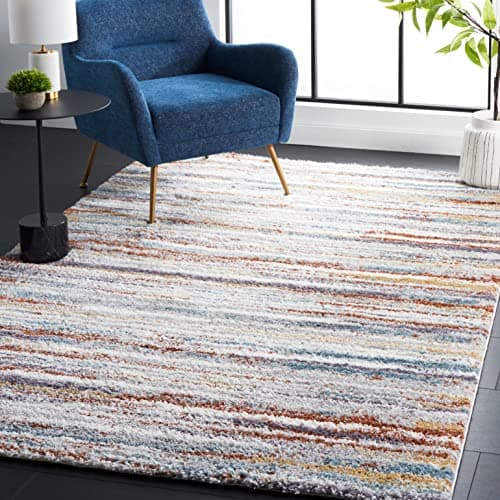 SAFAVIEH Berber Shag RugThe polyester pile height that can actually live in a living room. At a listed inch and a quarter it is deep enough to read as a shag and shallow enough to survive the legs of a sofa, which is the trade the whole category turns on - the deep-plush lines feel better and crush permanently. The berber-style flecking is the other quiet advantage: it hides crumbs and pet hair in a way a solid plush cannot, and it costs less per square foot than the thicker line above it. Still too deep for a dining chair to move across, and the flecked colorways look busier in a room than they do in a photograph. | A shag you can put furniture on | Power-loomed polyester, listed at a 1.25 inch pile, made in Turkey | $137.58$161.86View on Amazon #ad We earn a commission · Price as of November 2, 2026 |
| 2 | 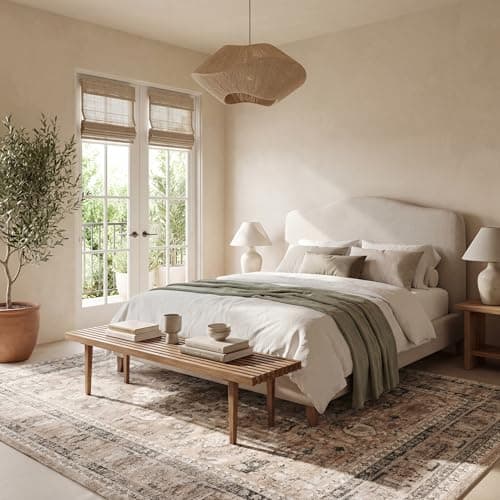 nuLOOM Washable Area RugThe low-pile end of polyester, which is where the fiber stops being a plush purchase and becomes a practical one. One-piece construction with the non-slip backing built in, thin enough to fit a domestic drum at the smaller sizes, and cheap enough that replacing it one day is not a decision you have to think about. It is also the honest answer to the question people ask about polyester at this price: there is essentially no cushioning here, the stain repellency is a surface coating that weakens with each wash, and if you wanted natural fiber this is the opposite of that. | Washing it, at a low price | One-piece low-pile polyester, machine washable | $201.00View on Amazon #ad We earn a commission · Price as of November 2, 2026 |
| 3 | 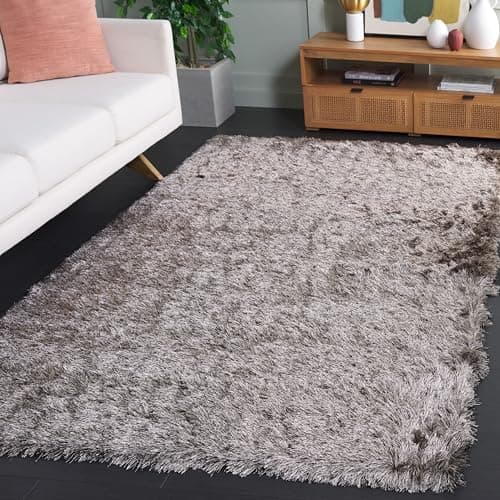 SAFAVIEH Paris Shag RugThe reason polyester exists as a rug fiber at all. At a listed two and a half inches this is the deepest common shag on the market, and polyester is the only fiber that delivers that depth, that softness and that color saturation for a price a normal person pays - no wool plush comes close on cost and no polypropylene shag comes close on feel. The constraints are absolute rather than negotiable: a furniture leg crushes a pile this deep permanently, the pile traps everything and needs repeated vacuuming with the beater bar off, and it sheds noticeably for the first several weeks. A bedside, not a living room floor plan. | Deep plush, nothing standing on it | Power-loomed polyester shag, listed at a 2.5 inch pile | $137.00View on Amazon #ad We earn a commission · Price as of November 2, 2026 |
| 4 | 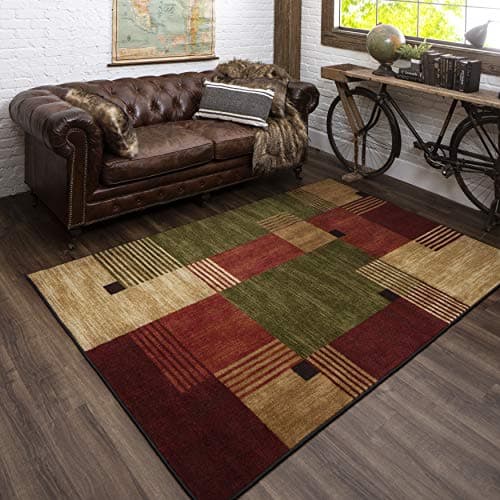 Mohawk Home Alliance Geometric RugPolyester as a working rug rather than a soft one. This is a low-profile printed polyester pile on a textured latex backing, sold on stain resistance, fade resistance and high-traffic tolerance rather than on how it feels, and it is the shape of polyester rug that belongs in a hallway or a kitchen where a plush would be ruined in a month. The printed surface is the catch, and it is a real one - the pattern is applied to the face, so it scuffs away precisely in the strip you always walk. Low profile also means low comfort; this one wants a felt pad underneath it. | Traffic, at low pile | Low-profile synthetic cut pile on a textured latex backing | $101.99$109.99View on Amazon #ad We earn a commission · Price as of November 2, 2026 |
| 5 | 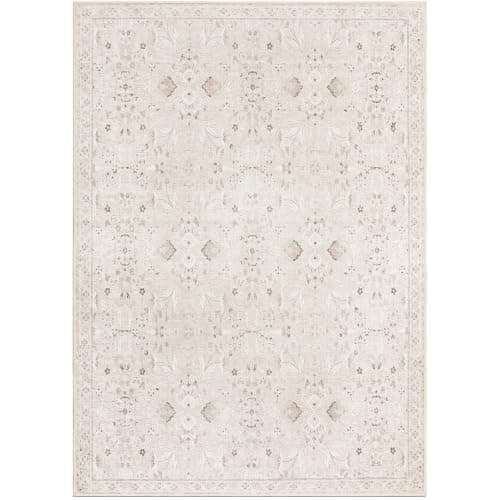 Tumble Washable RugPolyester with a stain treatment on top, bundled as a two-piece washable system, and the pick if the room in question is one where food and drink genuinely land. Liquids bead and sit on the treated surface noticeably longer than on untreated polyester, which is the difference between blotting a spill and owning it, and the included pad is thicker than the entry-level competition. Two honest deductions: the treatment is a coating rather than a property of the fiber, so it fades with repeated washing, and the design catalog is small next to the two-piece market leader. | Rooms where things get spilled | Two-piece with a stain-shedding surface treatment | $199.00View on Amazon #ad We earn a commission · Price as of November 2, 2026 |
The short answer
Polyester is the right fiber when you want soft and bright for little money, and the wrong one where furniture stands or grease lands. Buy it at a low pile for traffic and a deep pile for a bedside, and accept that an oily mark is the one stain polyester does not give back.
Polyester is the fiber most people have underfoot without knowing it. If you own a rug that is plush, brightly colored, surprisingly cheap and sold on words like soft, fluffy and stain-resistant, the odds are overwhelming that it is polyester. It is the default of the modern rug market, and like most defaults it is genuinely good at the thing it was chosen for and quietly bad at two others nobody puts on the listing.
This site has pages comparing polyester against wool and against polypropylene, which is how most people arrive at the fiber - by elimination. This page is the other direction: you have decided on polyester, or you have discovered the rug you already like is polyester, and the question is which one and for which room.
What polyester is, in a rug
Polyester is a hydrophobic synthetic, which means it repels water rather than absorbing it. That single property explains most of its behavior: a water-based spill beads on the surface instead of wicking into the fiber, which gives you time to blot it, and the fiber does not hold moisture, so it does not develop the musty problem a damp natural fiber does. It also takes dye exceptionally well and holds color against sunlight, which is why the brightest and most saturated rugs in any catalog are usually polyester.
What polyester does not have is resilience. The fiber does not spring back from compression the way nylon and wool do, so a crushed pile stays crushed. That is not a defect in manufacturing and no amount of grooming fixes it: it is the fiber. Everything useful about choosing a polyester rug follows from accepting that one limit and then deciding how much pile you can afford to lose.
The five things we judged these on
- Pile height against the room. This is the first decision and it matters more than brand. A two-and-a-half-inch plush and a quarter-inch printed pile are the same fiber behaving like two unrelated products, and putting either in the other's room is the most common polyester mistake.
- Whether the listing states the fiber. Soft, fluffy and microfiber are not fiber content. We only included rugs whose listings specify polyester, because a blend behaves like whatever it is mostly made of and you cannot tell by looking.
- What the stain resistance actually is. Polyester is naturally water-repellent, which is a property of the fiber and permanent. A surface stain treatment is a coating, which is not permanent. Both are worth having; only one survives the wash.
- The backing. Latex, rubber, a separate pad or nothing at all - this decides grip, washability and whether the rug can be folded into a machine. A one-piece rug with a bonded non-slip back and a two-piece cover-and-pad system are different purchases with different real costs.
- Honest size limits. A rug sold as machine washable is only washable in the size your machine will take. We note where that line falls rather than repeating the care label.
What we compared was published fiber content, stated pile heights, backing construction, size ranges, stain-treatment claims and the makers' own care instructions on current listings, plus the documented behavior of the fiber itself. We do not run wear tests and claim none - how we choose sets out what that does and does not entitle us to say.
SAFAVIEH Berber Shag Rug
A shag you can put furniture on
Product photo and price from Amazon, refreshed daily.
#ad We earn a commission · Price as of November 2, 2026
The polyester pile height that can actually live in a living room. At a listed inch and a quarter it is deep enough to read as a shag and shallow enough to survive the legs of a sofa, which is the trade the whole category turns on - the deep-plush lines feel better and crush permanently. The berber-style flecking is the other quiet advantage: it hides crumbs and pet hair in a way a solid plush cannot, and it costs less per square foot than the thicker line above it. Still too deep for a dining chair to move across, and the flecked colorways look busier in a room than they do in a photograph.
What it is
- Power-loomed polyester, stated on the listing
- Listed pile height of 1 1/4 inches - half the depth of a true plush shag
- Made in Turkey
- Stocked in the standard room sizes: 8 by 10, 9 by 12 and 10 by 14 feet
What it does well
- The pile height is the compromise that makes polyester usable in a living room rather than only in a bedroom
- Berber-style flecking hides crumbs and pet hair far better than a solid plush does
- Costs meaningfully less per square foot than the deep-pile line
Don't buy it if
- Still too deep for a dining chair or a desk chair to move across
- Polyester's weakness is oil, not water - a greasy mark is the one stain that does not come out
- Flecked colorways read busier in a room than they do in a listing photograph
The polyester to buy if the rug has to carry furniture: enough pile to feel like a shag, not enough to be destroyed by a sofa leg.
nuLOOM Washable Area Rug
Washing it, at a low price
Product photo and price from Amazon, refreshed daily.
#ad We earn a commission · Price as of November 2, 2026
The low-pile end of polyester, which is where the fiber stops being a plush purchase and becomes a practical one. One-piece construction with the non-slip backing built in, thin enough to fit a domestic drum at the smaller sizes, and cheap enough that replacing it one day is not a decision you have to think about. It is also the honest answer to the question people ask about polyester at this price: there is essentially no cushioning here, the stain repellency is a surface coating that weakens with each wash, and if you wanted natural fiber this is the opposite of that.
What it is
- One-piece construction with an integrated non-slip backing; no separate pad included
- Ultra-thin low pile sized to fit a domestic washer
- Wide size range including runners and rounds
- Machine wash cold on gentle; line dry or air-only, never on heat
What it does well
- The cheapest honest route into a washable rug
- One piece, so there is no cover to shift out of alignment
- The non-slip backing means it stays put without buying a pad first
- Sizes go down to accent and runner dimensions the two-piece systems often skip
Don't buy it if
- Ultra-thin, with essentially no cushioning — a felt pad is still worth it for comfort
- The stain repellency is a surface coating, and coatings weaken with every wash
- 100% polyester, which is the wrong answer entirely if you wanted natural fiber
The value pick: it does the one job the category exists for and does not pretend to do anything else.
SAFAVIEH Paris Shag Rug
Deep plush, nothing standing on it
Product photo and price from Amazon, refreshed daily.
#ad We earn a commission · Price as of November 2, 2026
The reason polyester exists as a rug fiber at all. At a listed two and a half inches this is the deepest common shag on the market, and polyester is the only fiber that delivers that depth, that softness and that color saturation for a price a normal person pays - no wool plush comes close on cost and no polypropylene shag comes close on feel. The constraints are absolute rather than negotiable: a furniture leg crushes a pile this deep permanently, the pile traps everything and needs repeated vacuuming with the beater bar off, and it sheds noticeably for the first several weeks. A bedside, not a living room floor plan.
What it is
- Polyester fibers, stated on the listing
- Listed pile height of 2 1/2 inches - the deepest common shag on the market
- Described by Safavieh as kid and pet friendly, easy care
- Wide size range from 5 by 7 feet upward
What it does well
- Polyester takes dye brilliantly and holds a deep pile's luster, which is the whole reason shag is a polyester product
- Genuinely soft underfoot in a way no polypropylene shag matches
- A hydrophobic fiber, so a water-based spill sits on the surface long enough to blot
Don't buy it if
- A 2.5 inch pile crushes permanently under a furniture leg, so this belongs where nothing heavy stands on it
- Deep shag traps dust and crumbs and needs repeated vacuuming with the beater bar off
- Polyester sheds badly for the first several weeks at this pile height
Buy it for a bedside or a seating area with nothing standing on it; it is the softest thing in the category and the worst possible rug under furniture.
Mohawk Home Alliance Geometric Rug
Traffic, at low pile
Product photo and price from Amazon, refreshed daily.
#ad We earn a commission · Price as of November 2, 2026
Polyester as a working rug rather than a soft one. This is a low-profile printed polyester pile on a textured latex backing, sold on stain resistance, fade resistance and high-traffic tolerance rather than on how it feels, and it is the shape of polyester rug that belongs in a hallway or a kitchen where a plush would be ruined in a month. The printed surface is the catch, and it is a real one - the pattern is applied to the face, so it scuffs away precisely in the strip you always walk. Low profile also means low comfort; this one wants a felt pad underneath it.
What it is
- Synthetic cut pile with the maker's soil and stain protection, listed as fade resistant
- Low-profile pile — the 5x8 listing gives an overall height of about 0.4 in
- Textured latex backing for grip on hard floors
- Care line is vacuum, spot clean with mild detergent, or clean professionally
What it does well
- Cut pile rather than loop, which is the single most important thing on a rug a dog walks on
- Low profile means a vacuum head reaches the backing, which is where hair collects
- The latex backing holds it still without a separate pad on tile or laminate
Don't buy it if
- Spot clean only. If your problem is accidents rather than hair, a washable rug beats it outright
- Polyester pile mats down in a traffic lane faster than wool or nylon does
- Individual colorways and sizes go in and out of stock, so the exact variant you see may change
The rug to buy when the dog problem is claws, grit and hair rather than accidents — cut pile, low, and cheap enough to replace.
Tumble Washable Rug
Rooms where things get spilled
Product photo and price from Amazon, refreshed daily.
#ad We earn a commission · Price as of November 2, 2026
Polyester with a stain treatment on top, bundled as a two-piece washable system, and the pick if the room in question is one where food and drink genuinely land. Liquids bead and sit on the treated surface noticeably longer than on untreated polyester, which is the difference between blotting a spill and owning it, and the included pad is thicker than the entry-level competition. Two honest deductions: the treatment is a coating rather than a property of the fiber, so it fades with repeated washing, and the design catalog is small next to the two-piece market leader.
What it is
- Two-piece system like Ruggable, with a thicker pad included
- Surface carries a water-based stain-resistant treatment
- Sold as a bundle rather than cover and pad priced separately
What it does well
- Liquids bead and sit on the surface longer than on untreated polyester, which buys you time to blot
- The included pad is noticeably thicker than the entry-level competition
- Bundled pricing makes the real cost obvious up front
Don't buy it if
- A much smaller design catalog than Ruggable
- The stain treatment is a coating, not a permanent property of the fiber — it fades with repeated washing
- Fewer size options, especially at the very large end
The one to buy if the rug is going somewhere food and drink actually land — a dining room, a playroom.
Pile height is the decision
| Pile | What it feels like | Where it belongs | What kills it |
|---|---|---|---|
| Under half an inch, printed or flat | Thin. Comfort comes from the pad, not the rug | Hallways, kitchens, under a desk chair, over carpet | Abrasion wearing the print off the traffic lane |
| Half to one inch | Substantial underfoot without being soft | Living rooms, dining rooms, anywhere with furniture | Nothing quickly - this is the durable bracket |
| One to one and a half inches | Soft, reads as a shag | Living rooms if the furniture is light, bedrooms | Heavy furniture legs, and a desk or dining chair |
| Two inches and up | Deep plush, the reason you bought polyester | Bedsides, nurseries, a seating area with nothing on it | Any furniture at all, and food |
Almost every complaint about polyester rugs is a pile-height mismatch rather than a quality problem. A deep plush under a sofa is destroyed in a season and the buyer blames the rug; the same rug beside a bed lasts years and the buyer recommends it. Rug pile height covers the measurement and the door-clearance arithmetic, and the best shag rugs covers the deep end of the category across fibers.
The oil problem
Here is the thing listings never say. Polyester repels water and attracts oil. The same chemistry that makes a glass of water bead on the surface makes an oily substance bond to the fiber readily, and once it has, ordinary cleaning does not lift it. Cooking grease, salad dressing, body oils, the residue on a dog's coat, hand lotion, a pizza box - these are the stains that stay.
Practically, that means two things. First, polyester is a poor choice for a kitchen floor despite being advertised as stain-resistant, because kitchen stains are oily and the resistance is to the wrong kind. Rugs for a kitchen covers what belongs there instead, and washable kitchen rugs covers the case where you want to launder the problem away rather than resist it. Second, oily soil in a polyester rug is a job for a solvent-based spotter rather than water and detergent, and it needs doing before it sets rather than at the weekend. How to clean an area rug covers the general procedure.
Where polyester genuinely belongs
Bedrooms, first and best. Low traffic, no food, and the one strip of floor in the house you stand on barefoot every morning. Softness is worth more here than durability, which inverts the usual ranking and puts polyester at the top of it. The best rug material for a bedroom makes the full argument, and bedroom rugs covers placement.
Nurseries and children's rooms, second. A child on the floor wants cushioning, and polyester at depth provides more of it per dollar than anything else. The caveat is that children's messes are frequently food, which brings the oil problem into the room, so this is the place to prefer a washable low-pile polyester over a deep plush. The best rug material for kids and nursery and kids' room rugs both work through that compromise.
Living rooms, third, at the right pile. A polyester rug in the half-inch to one-inch bracket is a perfectly sensible living room rug: it carries furniture, it feels better than polypropylene, and it costs a fraction of wool. What does not work is bringing the bedroom plush into the room with the sofa. Living room rugs covers the sizing, and the best cheap rugs covers the broader value question, since polyester is most of that market.
And over existing carpet, where a thin polyester rug is the standard solution and the low pile is the whole point. Washable rugs on carpet covers the slippage problem that comes with it.
Where it does not
Kitchens, for the oil reason above. Dining rooms are the marginal case: the rug is under a table where food lands, which argues against polyester, but it is also under chairs that get pushed back, which argues for a low pile of some kind. A low-pile polyester there is defensible; a plush one is not. Rugs under a dining table and what size rug for a dining table cover the rest of that decision.
Outdoors and in damp rooms, where polypropylene's solution-dyed colorfastness and faster drainage make it the right synthetic instead. The best outdoor rugs covers that category properly.
And anywhere that takes sustained heavy traffic - a hallway, a stair, a landing, an entry. Polyester has no resilience, so a traffic lane forms and stays. The best rug material for high traffic ranks the fibers that survive there, and the best nylon rugs covers the one fiber that is genuinely better at it, along with why it is so hard to buy.
Polyester against the alternatives
| Against | Polyester wins on | Polyester loses on |
|---|---|---|
| Polypropylene | Softness, color depth, how deep a pile it can carry | Price, oily-stain behavior, bleach and sun tolerance, outdoor use |
| Nylon | Price, color brilliance, plush softness | Abrasion resistance, pile recovery, long-term appearance in traffic |
| Wool | Price, no shedding period, no moth risk, color range | Resilience, soil resistance, feel, how it ages |
| Cotton | Water resistance, pile depth, abrasion | Washability at size, natural fiber, reversibility |
The wool comparison is the one worth thinking hardest about, because it is the only row where polyester's loss column contains the things that decide whether a rug is still in the room in ten years. Wool versus polyester works through it at length, and the best wool rugs is where to go if the answer turns out to be wool.
Recycled polyester, and what the claim is worth
A large share of polyester rug fiber is PET recovered from plastic bottles, and many listings say so. The claim is usually true and it is a real environmental positive at the input end, but it is worth being clear about what it does not mean. Recycled PET is chemically the same fiber as virgin PET, so it performs the same, crushes the same and attracts oil the same. It is not a softer, tougher or cleaner rug; it is the same rug made from a better feedstock.
What it also does not mean is that the rug is recyclable at the end of its life. A tufted rug with a latex backing is a laminated composite and is extremely difficult to separate, which is true of nearly every synthetic rug regardless of feedstock. If longevity is the thing you actually care about environmentally, the honest lever is buying a rug that lasts - which usually points at wool or nylon rather than at polyester. How long do rugs last sets out realistic lifespans by fiber.
Living with polyester
Vacuum regularly but gently, and on anything above about an inch of pile turn the beater bar off - an aggressive brush pulls fiber out of a deep polyester pile and accelerates the shedding the rug does anyway for its first few weeks. Expect that shedding; it is loose fiber from manufacture working its way out, not the rug failing. Vacuuming rugs covers the settings.
Blot water-based spills and they will mostly come up, because the fiber was never going to absorb them. Treat oily marks as urgent and reach for a solvent-based spotter rather than more water and more detergent, which will spread the problem. And rotate the rug: since crushing is permanent, the only real defense is not letting the same square foot carry the same sofa leg for five years.
Use a pad, especially under the low-pile end of the range, where the rug contributes almost no cushioning on its own and the pad is doing all of it. A pad also keeps grit from grinding against the backing, which is where a cheap rug usually fails first. Felt versus rubber rug pads covers the choice, and non-slip rug pads covers the grip question on a hard floor.
What we would buy
For a living room, the mid-pile berber-style shag: deep enough to feel like something, shallow enough to carry furniture, and flecked enough to hide a week of life. For a bedside or a nursery, the deep plush, with nothing standing on it and no illusions about what a chair would do to it. For a hallway, a kitchen or the top of existing carpet, the low-pile printed line, with a felt pad doing the comfort. For a room where things get spilled, the treated two-piece washable, understanding that the treatment is a coating with a finite life. And for the cheapest honest route in, the one-piece washable low pile, which does exactly one job and does not pretend otherwise.
If what you actually want is a rug that will still look good in a decade, polyester is the wrong aisle and no pick on this page changes that - the rug materials hub is the way into the fibers that do, and the best rugs overall is the short version of the whole decision.
Questions people actually ask
Are polyester rugs any good?
For softness, color and price, yes - polyester is the best value in the category and the only cheap fiber that carries a genuinely deep plush pile. It has no resilience, so it crushes permanently under furniture and flattens in traffic lanes, and it holds oily stains in a way no cleaning fully reverses.
Do polyester rugs stain easily?
It depends entirely on the stain. Water-based spills bead on the surface and blot out easily, because the fiber repels water. Oily substances - cooking grease, dressings, lotions, body oils - bond to the fiber and generally do not come out with water and detergent. Use a solvent-based spotter on those, promptly.
Is polyester or polypropylene better for a rug?
Polyester is softer, takes a deeper pile and holds richer color. Polypropylene is cheaper, solution-dyed so its color survives bleach and sun, and better outdoors or in a kitchen. Choose polyester where people sit on the floor and polypropylene where water and harsh cleaning happen.
Do polyester rugs shed?
New ones do, for roughly the first few weeks, and more at deeper pile heights. That is loose fiber left from manufacture rather than the rug coming apart. Vacuum gently with the beater bar off and it settles down.
Are polyester rugs safe for kids and pets?
Polyester itself is an inert synthetic with low static and no natural allergens. The things to check are the backing, any applied stain treatment, and whether the rug carries a textile-safety certification such as OEKO-TEX, since those vary from listing to listing while the fiber does not.
Can you put a polyester rug in the washing machine?
Only if the rug was built for it and only at a size your machine will take. Thin one-piece washables and two-piece cover systems are designed for it; a tufted plush with a latex backing is not, and washing one will delaminate the backing.
Why is my polyester rug flat?
Because polyester does not recover from compression. Once the pile is crushed by a furniture leg or a traffic lane it stays crushed, and no grooming, steaming or vacuuming brings it back. Rotating the rug and moving furniture occasionally is the only real prevention.
Is recycled polyester better than regular polyester in a rug?
Environmentally at the input end, yes. In performance, no - recycled PET is the same fiber and behaves identically, so it crushes and holds oil just like virgin polyester. Treat the recycled claim as a feedstock fact rather than a quality one.
Sources
- Amazon - SAFAVIEH Berber Shag power-loomed polyester rug listing
- Amazon - SAFAVIEH Paris Shag polyester rug listing
- Amazon - Mohawk Home Alliance polyester pile area rug listing
- Amazon - nuLOOM Davi washable polyester area rug listing
- Amazon - Tumble washable rug listing
- Carpet and Rug Institute - carpet fiber characteristics and selection
- Safavieh - shag rug collections, pile heights and care
Read next
- Wool vs Polyester RugsWhere wool's premium is justified against polyester, and the specific rooms where polyester is the better buy.
- Polypropylene vs Polyester RugsThe two cheap synthetics compared on water, fading, softness and stain behavior - plus which one to buy per room.
- The Best Shag RugsThe polypropylene shag to buy for a bedside, the wool upgrade that lasts longer, and why a shag is wrong in every busy room.
- The Best Nylon RugsNylon is the most abrasion-resistant common rug fiber and almost absent from the area-rug market. The listings that really are nylon, and the four places it is worth hunting one down.
- Rug Pile HeightWhat low, medium and high pile mean in inches, which rooms each suits, and the door-clearance and desk-chair rules that catch people out.
- Rug MaterialsWool, jute, sisal, polypropylene, cotton, viscose and the traditional weaves — compared on wear, feel, water and cost.