Rug Materials
The Best Persian-Style Rugs
Every rug here is a reproduction, and we say so. The question is which reproductions are worth owning.
Heads up: we earn a commission when you buy through links on this page, at no extra cost to you. It never changes which rug we put first — see how we choose and our affiliate disclosure.
Quick picks
The whole answer, before the detail. Tap any row to jump to that rug's full write-up further down the page.
| # | Rug | Best for | Construction | Price |
|---|---|---|---|---|
| 1 | 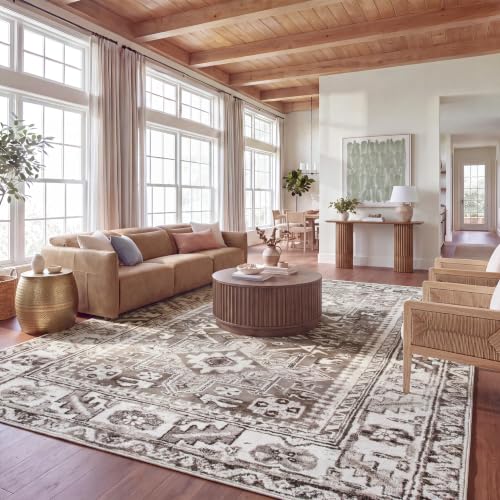 SAFAVIEH Vintage Hamadan RugThe best impression of the real thing in this group, and the reason is simply pile depth: 5/8 inch is nearly double what most Persian-style reproductions carry, and depth is what stops a detailed medallion looking printed. Named for one of the oldest Persian weaving regions. The cost is that chairs catch on it and it weighs 39.5 pounds. | The most convincing look | Power-loomed polypropylene, listed at a 5/8 inch pile | $187.69View on Amazon #ad We earn a commission · Price as of November 24, 2026 |
| 2 | 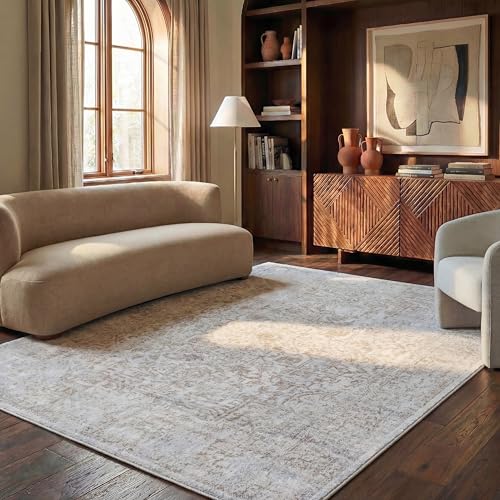 SAFAVIEH Evoke Vintage Medallion RugThe most useful rug here rather than the prettiest. At 3/8 inch a dining chair or a desk chair moves across it instead of snagging, which is where most traditional rugs fail in a real room. The deliberate distressing hides traffic. You trade away some of the depth that makes the Hamadan read as expensive. | Under a table or a desk chair | Power-loomed polypropylene, listed at a 3/8 inch low pile, made in Turkey | $132.12$169.99View on Amazon #ad We earn a commission · Price as of November 24, 2026 |
| 3 | 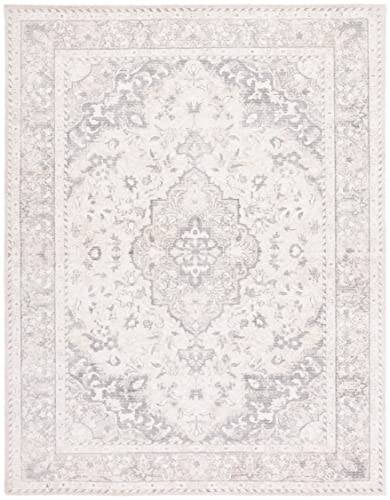 SAFAVIEH Restoration Vintage Wool RugThe only genuine wool rug on this page, hand-loomed in India, and the only one that will still look right in fifteen years - wool recovers from furniture dents instead of flattening under them. The catch is real and disqualifying in some rooms: it contains viscose, and plain water marks viscose permanently. | Real wool, in a dry room | Hand-loomed wool and viscose, listed at a 3/8 inch pile, made in India | $349.44$411.99View on Amazon #ad We earn a commission · Price as of November 24, 2026 |
| 4 | 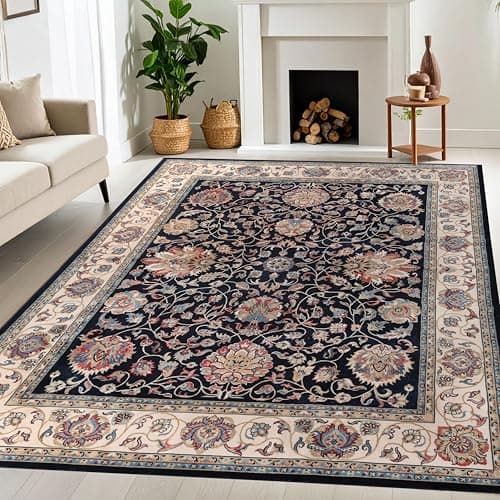 SUPERIOR Zadar Washable Nylon RugThe traditional pattern for a house where the rug is going to get something spilled on it. Nylon is the most abrasion-resistant of the common rug fibers, the cotton backing folds into a washing machine, and the drawing is a proper traditional one rather than a modern abstract. Washability at room size is more theoretical than the listing implies. | A traditional rug you can wash | Nylon pile on a cotton backing, traditional patterning | $175.36View on Amazon #ad We earn a commission · Price as of November 24, 2026 |
| 5 | 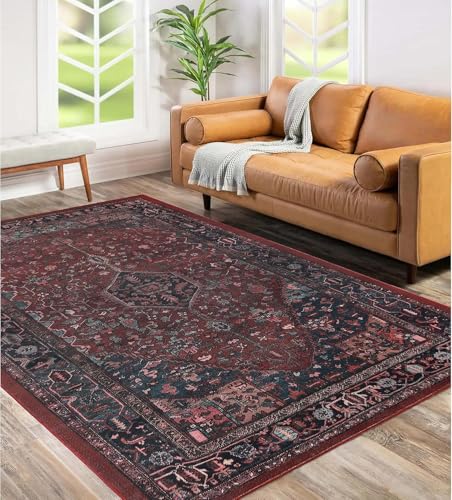 SUPERIOR Cardinal Floral Medallion Washable RugThe budget pick, and genuinely surprising: an elaborate floral medallion is the hardest pattern to find in a washable rug, and at 8 pounds this one actually fits a domestic drum. The price buys you no pile at all and a cotton backing with zero grip, so add a pad to the real cost. | The lowest price that still looks traditional | Low-pile polyester face on a cotton backing, machine washable | $70.11View on Amazon #ad We earn a commission · Price as of November 24, 2026 |
Say the obvious thing first: none of these is a Persian rug. A Persian rug is hand-knotted in Iran, takes months to make, and starts in the thousands. Everything on this page is a machine-made rug that reproduces that drawing - the medallion, the border, the corner spandrels - at a hundredth of the labor. That is not a criticism, it is the category. What varies enormously is how well a given reproduction holds up as an object, and that comes down to three things: pile depth, fiber, and whether the pattern was designed for the loom or just scaled down onto it.
SAFAVIEH Vintage Hamadan Rug
The most convincing look
Product photo and price from Amazon, refreshed daily.
#ad We earn a commission · Price as of November 24, 2026
The best impression of the real thing in this group, and the reason is simply pile depth: 5/8 inch is nearly double what most Persian-style reproductions carry, and depth is what stops a detailed medallion looking printed. Named for one of the oldest Persian weaving regions. The cost is that chairs catch on it and it weighs 39.5 pounds.
What it is
- Power-loomed polypropylene, stated on the listing
- Listed pile height of 5/8 inch - the deepest in this group, and closest to a hand-knotted feel
- Named for Hamadan, one of the oldest Persian weaving regions, and drawn from that tradition
- Listed at 8 by 10 feet and 39.5 pounds; also made in 9x12, 7x9, 4x6 and runner
What it does well
- A 5/8 inch pile gives the rug body, which is what most cheap Persian-style reproductions lack entirely
- The denser pile holds a detailed pattern without the drawing going mushy at the edges
- Polypropylene means a spill sits on the surface, which a real Persian wool rug cannot promise
Don't buy it if
- At 5/8 inch a dining chair or a desk chair will catch rather than roll
- 39.5 pounds is a two-person rug to move or to take outside for a shake
- It is a machine-made reproduction of a hand-knotted form, and at close range the uniformity shows
The pick if the look matters more than anything else: enough pile to read as a real rug, at a fraction of a hand-knotted price.
SAFAVIEH Evoke Vintage Medallion Rug
Under a table or a desk chair
Product photo and price from Amazon, refreshed daily.
#ad We earn a commission · Price as of November 24, 2026
The most useful rug here rather than the prettiest. At 3/8 inch a dining chair or a desk chair moves across it instead of snagging, which is where most traditional rugs fail in a real room. The deliberate distressing hides traffic. You trade away some of the depth that makes the Hamadan read as expensive.
What it is
- Power-loomed polypropylene, stated on the listing
- Listed pile height of 3/8 inch - low enough that chairs move across it
- Made in Turkey
- Classical Persian medallion composition with a deliberately distressed finish
- Listed at 8 by 10 feet and 38 pounds
What it does well
- The distressed finish is doing real work: it hides traffic and crumbs the way a crisp new pattern cannot
- 3/8 inch is the sweet spot for a traditional pattern you want to put a dining table or a desk chair on
- Polypropylene holds color in sunlight, which is where a lot of traditional rugs fade first
Don't buy it if
- The pile leans, so the rug has a light side and a dark side - decide which faces the door before you unroll it
- Lower pile means less of the texture that makes a traditional rug feel expensive
- Synthetic sheen is visible under a window on a bright day
The most useful traditional rug here: the pattern you want at a pile height that does not fight your furniture.
SAFAVIEH Restoration Vintage Wool Rug
Real wool, in a dry room
Product photo and price from Amazon, refreshed daily.
#ad We earn a commission · Price as of November 24, 2026
The only genuine wool rug on this page, hand-loomed in India, and the only one that will still look right in fifteen years - wool recovers from furniture dents instead of flattening under them. The catch is real and disqualifying in some rooms: it contains viscose, and plain water marks viscose permanently.
What it is
- Hand-loomed from wool and viscose, stated on the listing
- Listed pile height of 3/8 inch
- Made in India
- Classic Persian medallion drawing with a distressed finish
- Listed at 8 by 10 feet and 39.5 pounds
What it does well
- Wool recovers from furniture dents and ages into the pattern instead of flattening out of it
- Hand-loomed construction gives small irregularities that are exactly what the synthetics are imitating
- The one rug here that will still look right in fifteen years rather than five
Don't buy it if
- It contains viscose, and viscose marks permanently where plain water sits on it - so this does not belong in a dining room or anywhere near a kitchen
- Suction only, no beater bar, and whole-rug cleaning means a professional
- Costs roughly two and a half times the polypropylene reproductions on this page
Worth it only in a low-risk room, and only if you want the fiber: the viscose content rules out the places where a Persian-style rug usually ends up.
SUPERIOR Zadar Washable Nylon Rug
A traditional rug you can wash
Product photo and price from Amazon, refreshed daily.
#ad We earn a commission · Price as of November 24, 2026
The traditional pattern for a house where the rug is going to get something spilled on it. Nylon is the most abrasion-resistant of the common rug fibers, the cotton backing folds into a washing machine, and the drawing is a proper traditional one rather than a modern abstract. Washability at room size is more theoretical than the listing implies.
What it is
- Nylon face fiber with a cotton backing, the same construction as the Burj line
- Traditional medallion and border patterning rather than a faded vintage wash
- Listed by Superior as machine washable
- Stocked in large sizes, including 10 by 14 feet
What it does well
- The only realistic way to get a traditional-looking rug in nylon rather than in polypropylene or wool
- Denser, busier patterning hides soil and traffic marks better than a solid or a faded print
- The same foldable cotton backing as the rest of the line
Don't buy it if
- Noticeably more expensive than the vintage-print line for the same construction
- Traditional patterning dates faster than a plain or abstract rug, which matters on a rug meant to last
- No grip in the backing, so budget for a pad on top of the rug price
Worth the premium over the vintage print only if you specifically want a formal pattern; the fiber and the construction underneath are the same.
SUPERIOR Cardinal Floral Medallion Washable Rug
The lowest price that still looks traditional
Product photo and price from Amazon, refreshed daily.
#ad We earn a commission · Price as of November 24, 2026
The budget pick, and genuinely surprising: an elaborate floral medallion is the hardest pattern to find in a washable rug, and at 8 pounds this one actually fits a domestic drum. The price buys you no pile at all and a cotton backing with zero grip, so add a pad to the real cost.
What it is
- Polyester face, stated on the listing
- Cotton backing rather than latex, which is what lets it fold into a drum
- Certified OEKO-TEX Standard 100
- Machine wash separately and line dry, per the listing; a separate rug pad is recommended
- Listed at 5 by 7 feet and 8 pounds
What it does well
- An elaborate floral medallion is the hardest pattern to find in a washable rug, and this is one of the few
- Eight pounds dry means it genuinely fits a domestic washer, unlike most traditional rugs at this size
- Costs a fraction of the power-loomed reproductions while running the same kind of drawing
Don't buy it if
- A cotton backing has no grip at all, so a pad is mandatory rather than advisable
- Line dry only - no tumble drying, which in winter means a day with the rug off the floor
- Low pile and a printed-depth look: up close it reads as a textile, not as a woven rug
The budget pick here, and the only one on the page you can put in a washing machine - at the cost of all the pile.
How we chose these
We compared published pile height, stated fiber content, construction method and weight on live listings, and we picked for coverage rather than rank: the deepest pile, the most practical pile, the one real-wool option, the washable one and the budget one. Weight is a genuinely useful proxy here - a heavier rug at the same footprint has more material in it. We have not physically tested these rugs and do not claim to have; how we choose sets out what we do and do not do.
Pile depth is what separates a good reproduction from a flat one
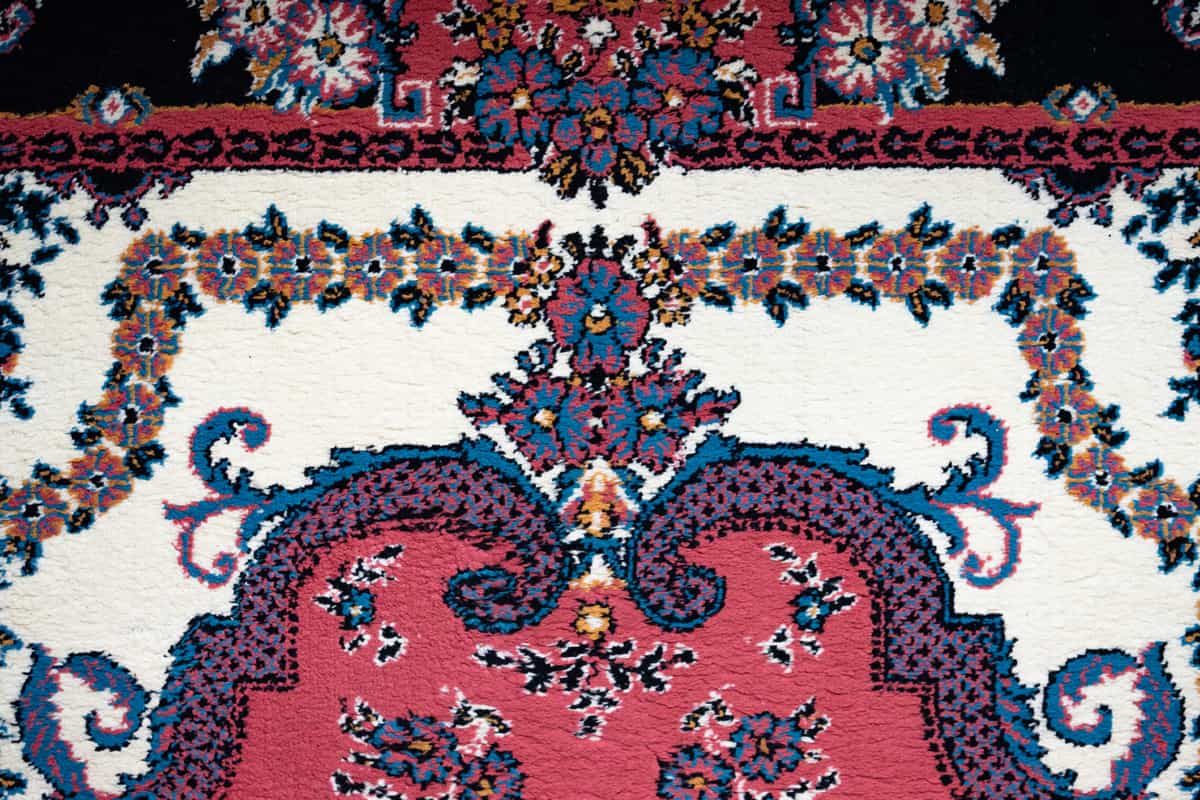
A Persian drawing is dense. Medallions, vine scrolls, repeating boteh, a multi-band border - all of it depends on fine detail holding its shape. On a shallow pile that detail flattens into something that reads as a printed picture of a rug rather than a rug.
| Pile | How the pattern reads | What it costs you |
|---|---|---|
| 1/8 inch and under | Visibly printed; the drawing has no depth | Nothing underfoot, but it goes anywhere and washes |
| 3/8 inch | Credible at standing height; soft focus up close | Little - this is the practical middle |
| 5/8 inch | Holds fine detail; reads as a woven object | Chairs catch, and the rug gets heavy |
| 3/4 inch and over | Closest to hand-knotted | Too deep for dining rooms and offices entirely |
The practical rule: buy the deepest pile the room allows. A living room with nothing but sofa legs on the rug can take 5/8 inch. A dining room or a home office cannot - see the best flatweave rugs if that is your room. Rug pile height covers the measurement in full.
The fiber question, in this category specifically
Persian-style rugs are sold in four fibers and the trade-offs are not the usual ones, because here you are also buying how the fiber takes a complicated dye pattern.
- Polypropylene is most of this market. It takes saturated color, holds it in sunlight better than wool does, and sheds a water-based spill rather than absorbing it. Its weakness is a faint sheen in direct light that no amount of pattern hides. Polypropylene rugs is the full guide.
- Wool is the fiber the originals were woven in, and it still looks the most correct. It also recovers from furniture dents, which nothing synthetic does. It costs several times as much and asks for suction-only vacuuming. The best wool rugs covers the fiber on its own terms.
- Nylon is rare in traditional patterns and genuinely the most abrasion-resistant of the four - the right call for a hallway or a heavily used room. The best nylon rugs explains why it is so scarce.
- Polyester is the budget route and the one used in washable traditional rugs. It takes dye brilliantly but is weak against oily marks specifically, which is the one stain that does not blot out. Polypropylene vs polyester is the direct comparison.
How to read a Persian-style listing honestly
Listings in this category lean hard on the romance of the original. A few words tell you what is actually being sold.
- Power-loomed or machine-woven means a machine made it. This is the honest default and covers most of the category.
- Hand-loomed is a middle ground: a person operates the loom, but it is not knot-by-knot work. It usually means small irregularities and a higher price.
- Hand-knotted is the real thing, and it is not a sub-$500 product in an 8x10. If a listing says hand-knotted at a machine-made price, that is the claim to be skeptical about.
- Persian-style, vintage, distressed, traditional and Oriental are all design words, not origin words. They describe a drawing, not where or how the rug was made. Oriental rugs and Persian rugs explain what the terms properly mean.
- Named after a Persian city - Hamadan, Kashan, Tabriz, Kerman - tells you which regional drawing is being reproduced, which is genuinely useful. It says nothing about where the rug was made.
Distressed or crisp?
Most Persian-style rugs sold now are distressed: the pattern is printed or woven with a deliberately faded, worn look. It is a style, but it is also a practical choice, and it is the right one for most households.
A crisp, high-contrast traditional pattern shows every traffic lane, every crumb and every sun-faded edge, because there is a clean reference tone to compare against. A distressed one has already absorbed that variation into the design, so wear and soil disappear into it. If the rug is going anywhere busy, distressed is not a fashion decision - it is the version that will still look acceptable in three years.
The exception is a formal room that nobody walks through, where a crisp pattern gives you the sharpness the distressed versions deliberately give up.
Pattern scale, and the mistake people make with it
A Persian drawing is composed around a central medallion with a border framing it. That composition only works if the whole thing is visible, which makes scale a real constraint rather than a preference.
- Do not put a large-medallion rug under a sofa and a coffee table if the medallion ends up hidden. You paid for the drawing and then covered it.
- In a small room, choose an all-over repeating pattern rather than a single medallion. The repeat survives being partly covered; a medallion does not.
- Under a dining table the medallion is always hidden by definition, so buy for the border and the field, not the center.
- Size up rather than down. A traditional border needs room to read, and a rug that is one size too small makes the border crowd the furniture. What size rug for a living room has the measuring method.
What you are actually giving up versus a hand-knotted rug
Three things, and only one of them matters day to day.
First, irregularity. A hand-knotted rug has small variations in line and color - abrash, where a dye lot shifts mid-rug - and those are what the eye reads as authentic. A power-loomed rug is perfectly uniform, and at close range that uniformity is the giveaway. Distressing is the industry's answer to this and it works better than it has any right to.
Second, lifespan. A good hand-knotted wool rug is a fifty-year object. A power-loomed polypropylene reproduction in a busy room is a five-to-ten-year one. That changes the arithmetic less than it sounds: five rugs over fifty years at this price still costs a fraction of one hand-knotted rug.
Third, resale. A machine-made rug has none. If you are thinking of a rug as something that holds value, this is the wrong category entirely and the honest advice is to buy vintage from a dealer instead.
What you are not giving up is appearance at normal viewing distance, which is where a rug is actually seen. That is the whole case for the category, and it is a strong one.
If the appeal is the traditional look rather than the Persian drawing specifically, the best modern rugs covers the contemporary end and Turkish rugs covers the neighboring tradition, whose Oushak and Kilim drawings are looser and read better in a casual room.
If the drawing you actually want is the open, large-scale botanical rather than the dense medallion, that is a different tradition with its own page: the best Oushak-style rugs covers it, including why nothing buyable at these prices is a real Oushak.
Questions people actually ask
What is the difference between a Persian rug and a Persian-style rug?
A Persian rug is hand-knotted in Iran and costs thousands. A Persian-style rug is a machine-made reproduction of that drawing, usually in polypropylene or polyester, and costs a hundredth as much. Every rug on this page is the second kind.
Are machine-made Persian-style rugs any good?
At normal viewing distance, yes - that is the whole case for them. Up close the perfect uniformity gives them away, and they last five to ten years in a busy room rather than decades. For most households that trade is clearly worth making.
What pile height should a Persian-style rug have?
The deepest the room allows. 5/8 inch holds the fine detail of a traditional drawing; 3/8 inch is the practical middle and the only sensible choice if chairs move across the rug. Below 1/4 inch the pattern starts to read as printed.
Should I buy a distressed or a crisp traditional pattern?
Distressed for anywhere busy - the faded look has already absorbed the wear, soil and sun-fade that would show plainly on a crisp pattern. Crisp only in a formal room that nobody walks through.
Is wool worth the extra for a Persian-style rug?
In a low-risk room, yes: wool recovers from furniture dents and ages into the pattern rather than flattening out of it. Check the fiber line first, though - many wool traditional rugs are blended with viscose, which marks permanently when it gets wet.
What size Persian-style rug should I buy?
Size up rather than down. A traditional border needs space to read, and a medallion composition only works when the medallion is visible - so in a small room, or under a dining table, choose an all-over repeating pattern instead of a central medallion.
Can you put a Persian-style rug in a dining room?
Yes, if you pick for pile height rather than for looks: 3/8 inch or lower so chairs move across it, polypropylene rather than wool or viscose, and an all-over pattern since the medallion will be under the table anyway.
Sources
- Amazon - SAFAVIEH Vintage Hamadan listing (fiber, pile height, dimensions)
- Amazon - SAFAVIEH Evoke vintage medallion listing (fiber, pile height, origin)
- Amazon - SAFAVIEH Restoration vintage wool listing (fiber blend, construction, origin)
- Amazon - SUPERIOR Cardinal floral medallion washable rug listing (fiber, backing, care)
- Amazon - SUPERIOR Zadar washable nylon rug listing
- Carpet and Rug Institute - carpet and rug fiber characteristics
Read next
- Persian RugsWhat 'Persian' actually denotes, how to tell hand-knotted from machine-woven, and what you are paying for.
- Oriental RugsWhat the umbrella term covers, how the regional traditions differ, and what actually determines value.
- The Best Wool Rugs (October 2026)Tufted, flatwoven and blended wool compared on pile, shedding and the room each one belongs in - with the honest cost of each.
- Rug Pile HeightWhat low, medium and high pile mean in inches, which rooms each suits, and the door-clearance and desk-chair rules that catch people out.
- The Best 8x10 Rugs Under $200Five 8x10 rugs with a live price under $200, sorted by what each one is for and what the ceiling costs.
- Rug MaterialsWool, jute, sisal, polypropylene, cotton, viscose and the traditional weaves — compared on wear, feel, water and cost.